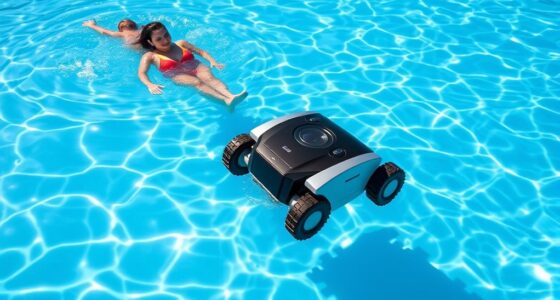
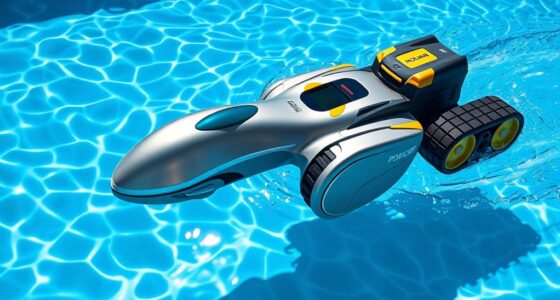
If you’re choosing between above-ground and in-ground pool robots, you’ll notice key differences: above-ground models are portable, battery-powered, and great for smaller pools or lighter cleaning tasks, while in-ground units are corded, offer longer run times, and handle larger or more complex pools with better coverage. In-ground robots typically provide more thorough cleaning, but come at a higher cost. To discover which suits your pool and maintenance needs best, keep exploring the details.

Get home appliances delivered free with Prime
- Fast, free delivery on millions of items
- Prime Video, Amazon Music and more included
- Member-only deals all year
Key Takeaways
- Above-ground robots are portable, battery-powered, and suitable for smaller pools, while in-ground models are stationary, corded, and better for large, complex pools.
- Battery life limits above-ground units to about one hour, whereas in-ground robots can operate continuously without power constraints.
- In-ground pool robots have larger brushes and advanced navigation for thorough cleaning, including walls and steps, unlike smaller above-ground models.
- Above-ground robots are generally more affordable and convenient, ideal for light cleaning, whereas in-ground models offer superior performance for heavy-duty tasks.
- Choice depends on pool size, debris level, and maintenance needs, balancing cost, portability, and cleaning efficiency.
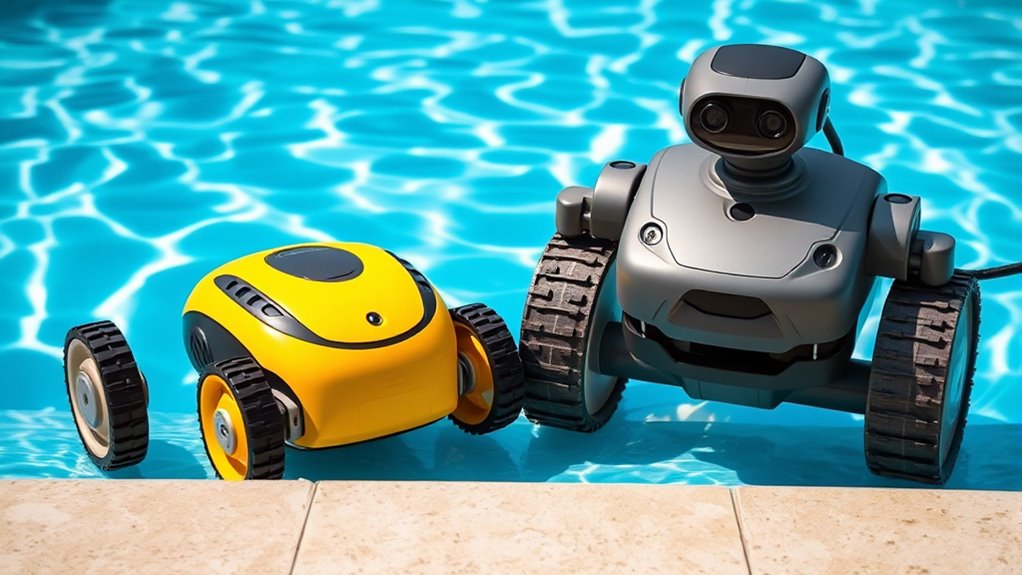
When choosing a pool robot, understanding the differences between above-ground and in-ground models is essential. These distinctions considerably impact the robot’s performance, especially regarding battery life and cleaning efficiency. Above-ground pool robots are typically designed with portability in mind, so they often feature rechargeable batteries that allow you to move them easily around your pool. Because of their compact size and battery-powered operation, their battery life tends to be shorter, usually lasting about an hour on a full charge. This can be enough for smaller pools, but if your pool is larger or dirtier, you might need to recharge the robot more frequently, which can interrupt cleaning sessions. On the flip side, in-ground pool robots generally rely on direct power sources, often via a dedicated cord connected to an outlet. This setup means they can operate continuously without worrying about battery life limitations, allowing for longer, more thorough cleaning cycles. As a result, in-ground models often provide superior cleaning efficiency because they can dedicate more time and energy to scrubbing and vacuuming every inch of your pool.
In terms of cleaning efficiency, above-ground robot models are quite capable but tend to be more suited for light to moderate debris and smaller pools. Their smaller brushes and limited battery capacity mean they might miss stubborn dirt or algae in larger pools or heavily contaminated water. However, advances in battery technology have improved their performance, and many newer models now include smart navigation and multiple cleaning modes to maximize their efficiency within their constraints. In-ground pool robots, on the other hand, are generally more powerful, equipped with larger brushes and stronger suction capabilities. They are designed to handle more complex cleaning tasks, including scrubbing algae, dirt, and debris from all surfaces—walls, floors, and even steps. Their continuous operation ensures thorough cleaning, making them ideal if you want a comprehensive job without frequent interruptions. Furthermore, many in-ground models feature advanced navigation systems that help them cover the entire pool area more efficiently.
Ultimately, your choice depends on your pool type, size, and cleaning needs. Above-ground models offer convenience and portability, perfect for smaller pools or those with lighter cleaning requirements. In-ground models, though potentially more expensive, provide longer operation, higher cleaning efficiency, and better coverage for larger or more heavily used pools. By understanding these differences, you can select a pool robot that best fits your pool’s size and your maintenance expectations.
As an affiliate, we earn on qualifying purchases.
Frequently Asked Questions
How Long Do Pool Robots Typically Last?
Pool robots typically last between 3 to 7 years, depending on robot lifespan and durability factors. You can prolong their life by regularly cleaning filters, avoiding debris overload, and storing them properly. The durability of your robot also depends on water conditions and frequency of use. Proper maintenance ensures your pool robot performs well and lasts longer, giving you more value and reliable cleaning over the years.
Are There Eco-Friendly Pool Robot Options Available?
Think of eco-friendly pool robots as the green superheroes of your backyard. Yes, solar-powered cleaning options are available, harnessing sunlight to run efficiently without draining your energy bill. Many models also feature biodegradable filter options, reducing plastic waste. These eco-conscious choices help you keep your pool pristine while caring for the environment. So, yes, greener pool robots are out there, making your swimming space cleaner and more sustainable.
Can Pool Robots Handle Algae-Heavy Pools Effectively?
Yes, pool robots can handle algae-heavy pools effectively. Look for models with strong algae removal features and heavy debris handling capabilities. These robots are designed to scrub surfaces thoroughly and pick up stubborn algae, making maintenance easier. Regular use helps prevent algae buildup, keeping your pool cleaner and healthier. Choose a robot with advanced brushes and filtration systems for the best results in algae-prone pools.
What Maintenance Is Required for Pool Robots?
You need to regularly clean the filter and check for debris to keep your pool robot running smoothly. Replace the batteries as needed, usually every 1-2 years, depending on usage. Also, rinse the filters after each use and inspect for wear. Proper maintenance guarantees peak performance and extends your robot’s lifespan, so stay on top of filter maintenance and battery replacement to enjoy a clean pool effortlessly.
Do Pool Robots Work Equally Well in Saltwater Pools?
Ever wondered if your pool robot can handle saltwater? The good news is, many models are designed with saltwater compatibility and robot corrosion resistance, so they work well in saltwater pools. However, you should check specific features to guarantee your robot’s suited for it. Proper maintenance, like rinsing after use, can extend its lifespan and keep it functioning at its best in saltwater environments.
As an affiliate, we earn on qualifying purchases.
Conclusion
Choosing between above-ground and in-ground pool robots is like picking the right tool for a job—you want efficiency and reliability. I once watched a friend’s robotic cleaner effortlessly glide through his in-ground pool, like a skilled dancer. That moment showed me how the right robot can make pool maintenance feel almost effortless. No matter your pool type, investing in the right robot means you’ll spend less time cleaning and more time enjoying your backyard oasis.
As an affiliate, we earn on qualifying purchases.
As an affiliate, we earn on qualifying purchases.
Fall Picks
fall essentials
As an affiliate, we earn on qualifying purchases.