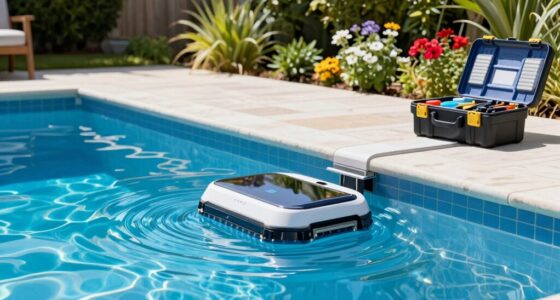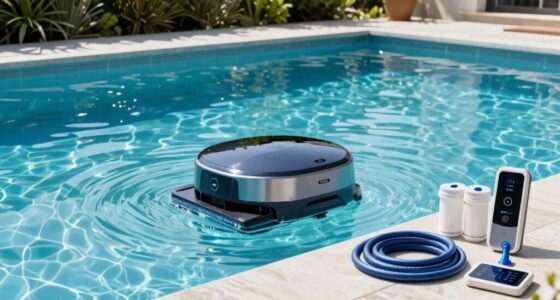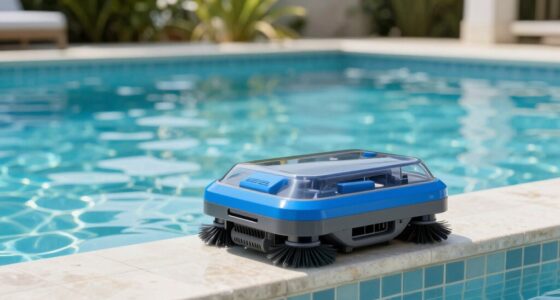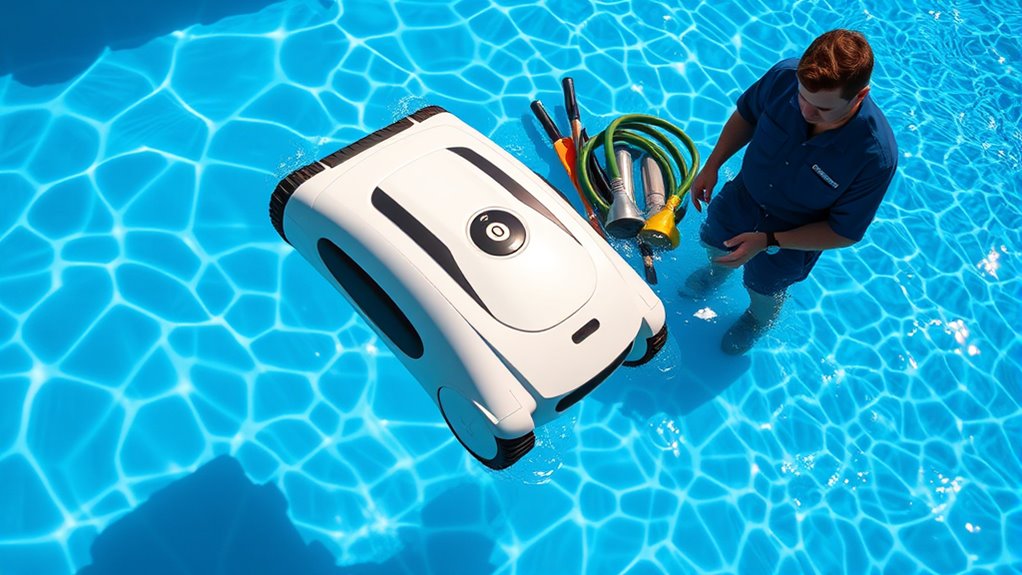

Robotic pool cleaners are a great, low-maintenance option for routine surface and floor cleaning, and they’re cost-effective for smaller or straightforward pools. However, they can’t handle complex tasks like chemical balancing, deep cleaning, or repairs that a professional pool service provides. While a robot can reduce your dependence on a pool guy, it might not fully replace the need for expert maintenance, especially for larger, more intricate pools. To see what’s best for your pool, keep exploring.

Get home appliances delivered free with Prime
- Fast, free delivery on millions of items
- Prime Video, Amazon Music and more included
- Member-only deals all year
Key Takeaways
- Robotic cleaners handle basic surface cleaning but cannot perform chemical balancing or deep maintenance tasks.
- Pool service offers comprehensive care, including repairs and chemical treatments, beyond robotic capabilities.
- Robots are cost-effective for small or straightforward pools, reducing ongoing maintenance costs.
- Professional pool service is better suited for large, complex, or heavily used pools with special features.
- Robots enhance convenience with automated scheduling but cannot fully replace expert technical and chemical management.
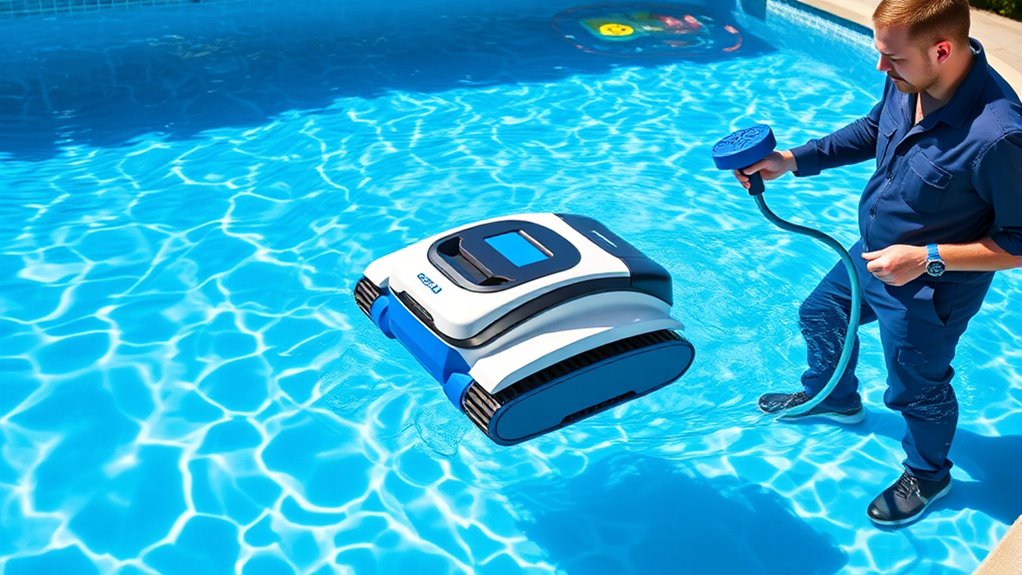
When it comes to maintaining a clean and healthy pool, you have two main options: investing in a robotic pool cleaner or hiring a professional pool service. Each choice has its own advantages and drawbacks, especially when it comes to cost comparison and maintenance requirements. If you’re considering a robotic cleaner, you’ll find that the initial investment can be significant, but it may pay off in the long run. These devices typically cost between a few hundred to over a thousand dollars, depending on the features and brand. Once purchased, their ongoing maintenance tends to be minimal, mainly involving regular cleaning of the filter, removal of debris, and occasional replacement of parts. This can be appealing if you prefer a hands-off approach and want to cut down on recurring expenses. Additionally, robotic pool cleaners often incorporate automatic scheduling, making routine cleaning more convenient.
On the other hand, hiring a pool service involves a recurring expense, usually on a weekly or bi-weekly basis. The cost comparison shows that professional service can add up over time, especially during peak swimming season. However, it often covers more than just skimming the surface; it includes detailed cleaning, water chemistry balancing, equipment inspection, and repairs if needed. The maintenance requirements of a pool service are minimal for you, as the experts handle all technical tasks. Still, you need to factor in the ongoing costs and the inconvenience of scheduling appointments or waiting for technicians.
If you prefer a more DIY approach, a robotic pool cleaner can be a cost-effective and convenient option, especially if your pool is relatively small or has straightforward cleaning needs. They’re easy to set up and operate, often with programmable features that allow you to automate cleaning schedules. However, if your pool is large, heavily used, or has complex features like waterfalls or extensive plumbing, a professional pool service might be more efficient. They can handle complex maintenance tasks that a robot can’t, such as chemical balancing or cleaning hard-to-reach areas.
robotic pool cleaner with automatic scheduling
As an affiliate, we earn on qualifying purchases.
As an affiliate, we earn on qualifying purchases.
Frequently Asked Questions
How Long Does a Robotic Pool Cleaner Typically Last?
A robotic pool cleaner typically lasts around 3 to 5 years. Its battery lifespan usually ranges from 2 to 4 years, depending on usage and maintenance. Motor durability is key, with quality models often lasting longer if you keep the brushes and filters clean. Proper care can extend your robot’s life, so regularly check the components and replace parts as needed to maximize its lifespan and performance.
Can Robotic Cleaners Handle Large or Uneven Pool Surfaces?
Robotic cleaners can handle large or uneven pool surfaces, but navigation challenges may arise, especially in complex areas. Your robot’s battery life affects its ability to clean thoroughly without needing a recharge, so choose a model with sufficient runtime. While they excel at regular surfaces, uneven pools might require manual intervention or a more advanced robot with smart navigation features to guarantee complete cleaning coverage.
Are Robotic Pool Cleaners Effective in All Types of Pool Debris?
Robotic pool cleaners are quite effective at handling various pool debris, but their efficiency depends on factors like pool chemistry and water temperature. They excel at removing leaves, dirt, and small debris, but may struggle with heavy or stubborn materials. Proper water chemistry guarantees ideal cleaning performance, while appropriate water temperature helps the robot work efficiently. Regular maintenance and monitoring maximize their debris removal capabilities, keeping your pool clean and inviting.
What Maintenance Is Required for Robotic Pool Cleaners?
You’ll find that maintaining your robotic pool cleaner involves keeping an eye on its battery life and replacing parts as needed. Regularly clean the brushes and filters to guarantee peak performance. Occasionally inspect the power cord and wheels for wear, replacing parts to prolong the life of your robot. Proper maintenance keeps the device running smoothly, making your pool cleaning experience more enjoyable and less of a chore.
How Does the Cost of a Robotic Cleaner Compare Long-Term to Pool Service?
The cost comparison shows that a robotic pool cleaner can save you money long-term compared to regular pool service. While the initial investment is higher, maintenance costs are lower over time, making it more budget-friendly. You can plan your budget better by considering repair and replacement expenses for the robot versus ongoing service fees. Ultimately, a robotic cleaner offers a cost-effective option that reduces your ongoing expenses and simplifies pool maintenance.
best robotic pool cleaner for small pools
As an affiliate, we earn on qualifying purchases.
As an affiliate, we earn on qualifying purchases.
Conclusion
Imagine your pool as a shimmering oasis, effortlessly maintained by a sleek robotic cleaner gliding like a silent guardian. While it handles the dirt and debris with precision, it can’t replace the human touch—like a pool pro who reads the water’s mood and knows when a gentle touch is needed. Both have their place, working together like sun and shade, to keep your pool pristine, inviting, and perfectly balanced for your endless summer days.
professional pool service near me
As an affiliate, we earn on qualifying purchases.
As an affiliate, we earn on qualifying purchases.
As an affiliate, we earn on qualifying purchases.
Fall yard work Picks
leaf blowers
As an affiliate, we earn on qualifying purchases.