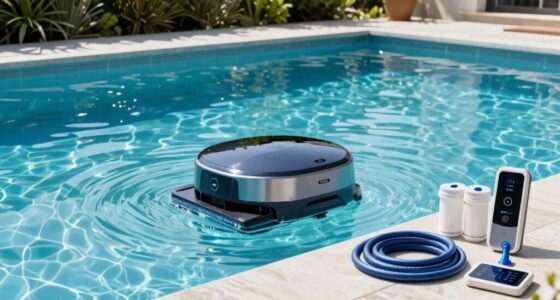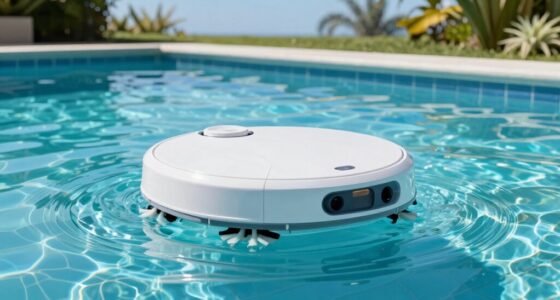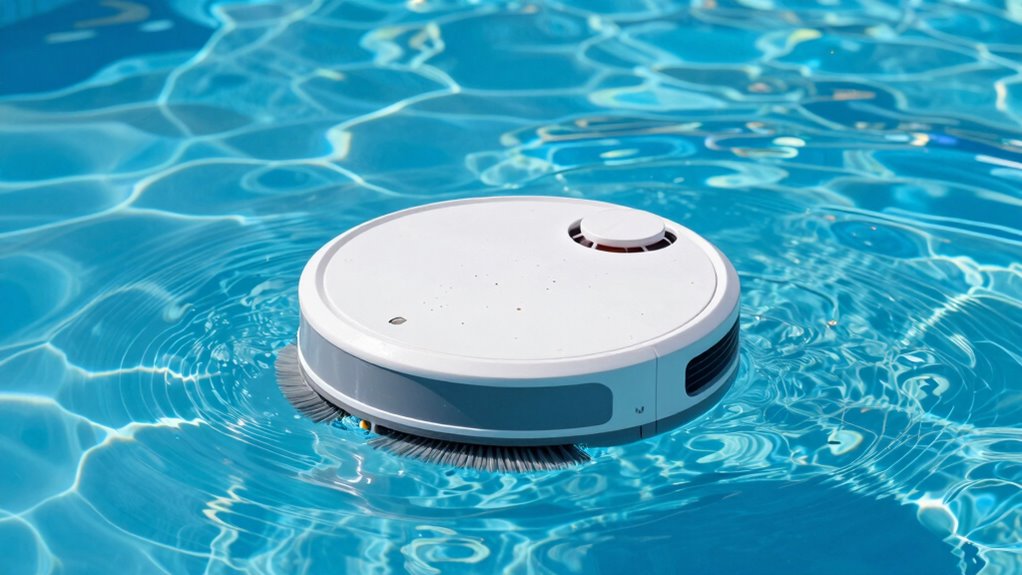

A good pool cleaning robot can effectively handle fine dirt and dust, especially if it’s designed with strong suction and scrubbing capabilities. Look for models equipped with ultra-fine filters to trap tiny particles and guarantee your water stays clear. Regular maintenance, like cleaning or replacing filters, helps maintain peak performance for dust removal. For more tips on optimizing your robot’s cleaning power and keeping your pool spotless, keep exploring these essential details.
Key Takeaways
- Pool cleaning robots equipped with powerful suction and scrubbing mechanisms can effectively remove fine dirt and dust particles.
- Specialized filters like fine or ultra-fine mesh are essential for trapping tiny dust particles.
- Regular maintenance of filters and mechanical parts ensures optimal dust and dirt removal.
- Longer battery life and quick-charging features enhance the robot’s ability to perform thorough cleaning.
- Overall effectiveness depends on the robot’s design, features, and proper maintenance practices.
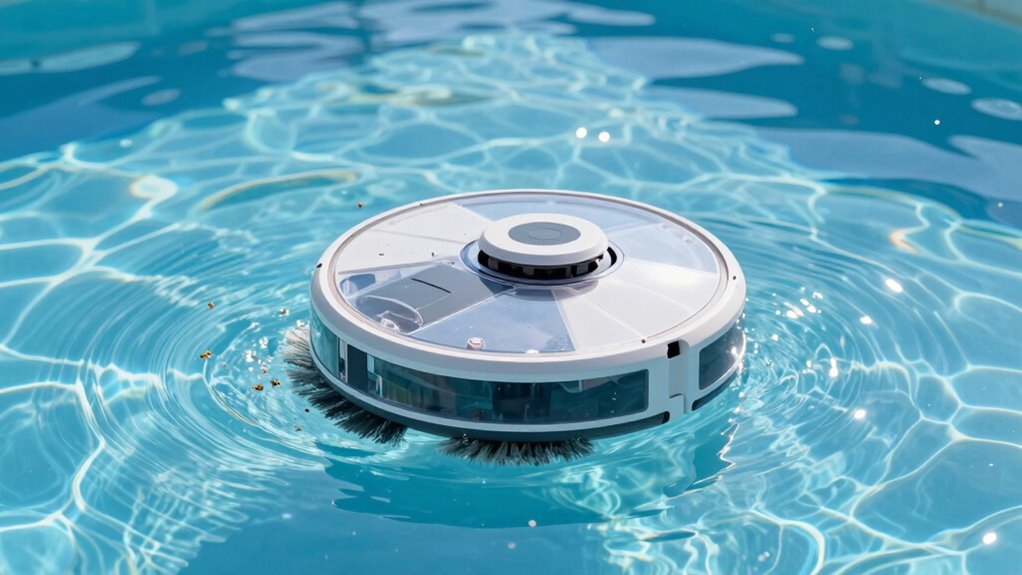
Keeping your pool spotless can be challenging, especially when fine dirt and dust settle at the bottom and cling to surfaces. That’s where a pool cleaning robot comes into play. These devices are designed to handle various types of debris, including the tiny particles that traditional skimmers might miss. But can a pool cleaning robot effectively manage fine dirt and dust? The answer largely depends on the robot’s design and features. Modern robots are equipped with powerful suction and scrubbing mechanisms capable of picking up minute particles, ensuring your pool remains clear and inviting. They often come with specialized filters, such as fine or ultra-fine mesh, that trap even the smallest dust particles, preventing them from recirculating into the water.
However, to keep your robot functioning at its best, regular robot maintenance is essential. Over time, filters can clog, reducing suction power and diminishing cleaning efficiency. Cleaning or replacing filters as recommended by the manufacturer ensures your robot maintains ideal performance. Additionally, inspecting brushes and wheels for wear and tear helps prevent mechanical issues that could compromise its ability to pick up fine dirt. Proper maintenance not only prolongs the lifespan of your device but also guarantees it continues to handle dust and dirt effectively. Regularly updating the filter system through routine maintenance can help optimize its capacity to capture fine particles.
Battery life is another critical aspect when it comes to cleaning robots. Most models operate on rechargeable batteries, and their runtime can vary from about 1 to 3 hours depending on the size of your pool and the robot’s power capacity. If your robot has a short battery life, it might need multiple charging cycles to complete a thorough cleaning, especially if your pool accumulates a lot of fine dust. Investing in a robot with longer battery life means fewer interruptions and ensures a more thorough clean. Some advanced models come with quick-charging features, allowing you to recharge the battery quickly between cleaning cycles, which is particularly useful if your pool requires frequent maintenance. Regularly checking the filter system helps optimize the robot’s ability to handle fine dirt and dust effectively.

Dolphin Nautilus CC Plus Wi-Fi Robotic Pool Vacuum Cleaner Includes Ultra-Fine Filters for an Ultimate Clean, Ideal for In-Ground Pools up to 50 FT in Length
ULTRA-FINE FILTRATION: Let the Dolphin Nautilus CC Plus Wi-Fi get your pool pristine with added ultra-fine filter panels,…
As an affiliate, we earn on qualifying purchases.
As an affiliate, we earn on qualifying purchases.
Frequently Asked Questions
How Often Should I Run My Pool Cleaning Robot for Best Results?
You should run your pool cleaning robot at least once a week for proper pool maintenance, but frequency depends on usage and debris levels. If your robot has advanced features like fine dirt and dust handling, you might run it more often, especially during heavy use or after storms. Regular runs ensure your robot’s brushes and filters stay effective, keeping your pool clean and inviting while extending its lifespan.
Can the Robot Clean Algae or Biological Contaminants?
You might be surprised, but most pool cleaning robots aren’t designed to fully handle algae or biological contaminants. About 80% of algae can grow unnoticed, spreading quickly. While some advanced models can assist with algae removal, they often need supplementary chemical treatment. Robots mainly excel at scrubbing the pool’s surfaces, but for complete algae control, you should combine their use with proper chemical balance and biological contamination management.
Are There Specific Models Better at Handling Dust Than Others?
Yes, some models excel at handling dust due to advanced robot navigation and specialized dust filtration systems. Look for robots with precise navigation features, like obstacle avoidance and mapping, which guarantee thorough cleaning of fine dirt and dust. Models equipped with high-quality filters specifically designed for dust filtration will perform better. Investing in a robot with these features guarantees more effective removal of fine dirt and dust from your pool.
How Does the Robot Perform on Different Pool Surface Types?
Did you know that 85% of pool owners find robots effective on various surfaces? Your pool cleaning robot adapts well across different pool surface types, thanks to advanced robot navigation. It’s designed to handle smooth concrete, tile, or vinyl with ease, ensuring thorough cleaning without damaging delicate surfaces. Just make sure to select a model compatible with your pool’s surface, and your robot will efficiently navigate and clean every corner.
What Maintenance Is Required for Optimal Fine Dirt Cleaning?
To keep your robot cleaning fine dirt and dust effectively, you need regular filter maintenance by cleaning or replacing filters as recommended. This prevents clogs and guarantees ideal suction. Additionally, caring for the battery by avoiding overcharging and storing the robot properly helps maintain its longevity. Regularly inspecting and maintaining these components ensures your robot performs at its best, keeping your pool spotless with minimal effort.

Robotic Pool Cleaner, Cordless Pool Vacuum for Above Ground & Inground Pools, 200mins Runtime Automatic Pool Vacuum Robot for Leaves & Dirt, Powerful Suction up to 2500 sq.ft, Self Parking-Sky
[Powerful Dual-Suction System] The Zebary C1 Cordless Robotic Pool Cleaner features a high-speed motor and dual-suction ports for…
As an affiliate, we earn on qualifying purchases.
As an affiliate, we earn on qualifying purchases.
Conclusion
So, yes, a pool cleaning robot can handle fine dirt and dust, but don’t expect it to be a magic wand. Think of it as a diligent gardener, tirelessly raking leaves and sweeping away the tiniest specks. While it’s a trusty sidekick in keeping your pool pristine, some stubborn dust may still linger like a whisper in the wind. Trust the robot, but remember, a little extra care never hurts!

Cordless Robotic Pool Vacuum UBoter E10, Dual-Layer Filtration, Powerful Edge Corner Cleaning, 120–150 Mins Runtime, Auto Parking, No Debris Leakage, for Above Ground Flat Bottom Pools Up to 860 Sq.Ft
🔋 【120–150 Mins Long Runtime & Smart Auto Parking, Effortless Retrieval】 This cordless battery-powered pool vacuum delivers 120–150…
As an affiliate, we earn on qualifying purchases.
As an affiliate, we earn on qualifying purchases.
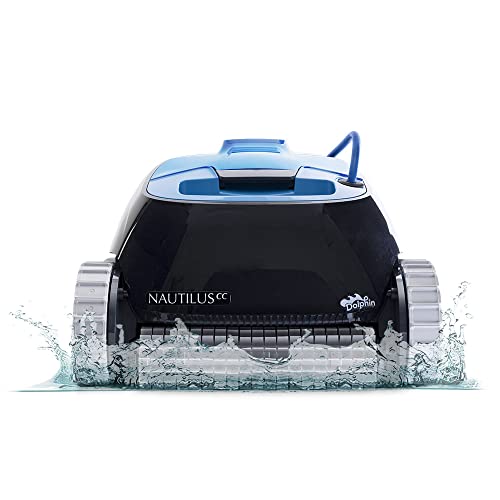
Dolphin Nautilus CC Automatic Robotic Pool Vacuum Cleaner, Wall Climbing Scrubber Brush, Top Load Filter Access, Ideal for Above/In-Ground Pools up to 33 FT in Length
WALL-SCRUBBING POWER: Dolphin Nautilus CC climbs walls efficiently, ensuring thorough cleaning on any pool surface, no matter the…
As an affiliate, we earn on qualifying purchases.
As an affiliate, we earn on qualifying purchases.