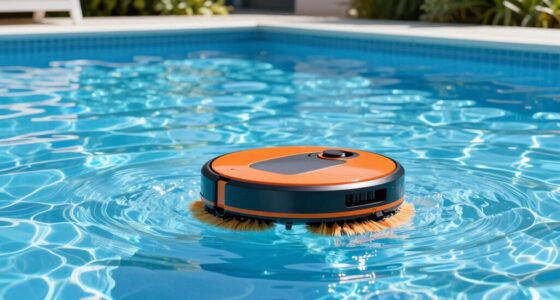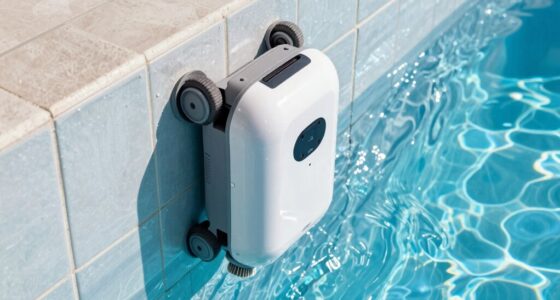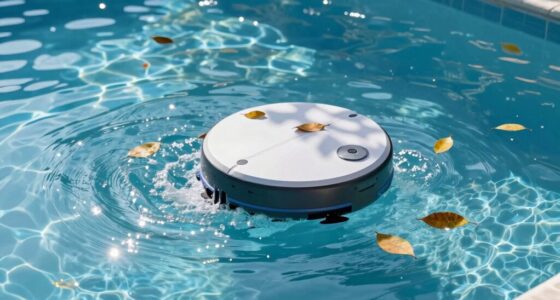
Even with a robotic pool cleaner, you still need to brush your pool regularly. Robots do a great job cleaning floors and walls, but they can miss spots like corners, fittings, and steps. Manual brushing helps remove stubborn stains, algae, and dirt that robots might overlook. It also allows you to inspect the pool’s surface for cracks or damage. To keep your pool in top shape, there’s more to contemplate beyond just using the robot.

Get home appliances delivered free with Prime
- Fast, free delivery on millions of items
- Prime Video, Amazon Music and more included
- Member-only deals all year
Key Takeaways
- Manual brushing reaches hard-to-clean areas missed by robotic cleaners.
- Brushing helps prevent algae buildup and stubborn stains effectively.
- Regular manual cleaning allows inspection for cracks or damage on pool surfaces.
- Chemical testing and balancing are essential, which robotic cleaners cannot perform.
- Combining manual brushing with robotic cleaning ensures comprehensive pool maintenance.
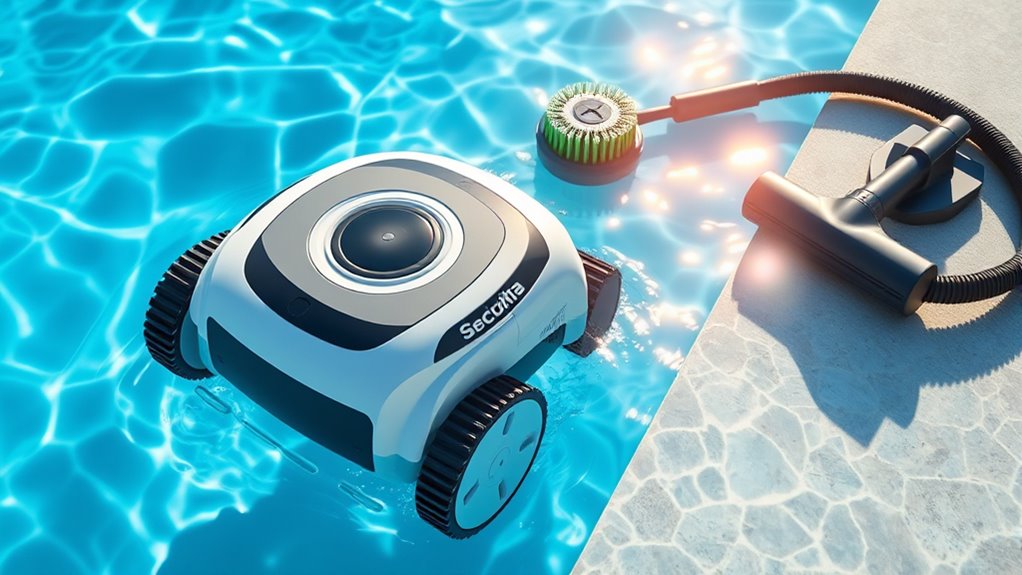
Ever wondered how to keep your pool spotless without spending hours scrubbing? Even with a robot cleaner doing most of the work, manual cleaning still plays a crucial role in maintaining your pool’s health and appearance. While robotic devices excel at scrubbing floors, walls, and removing debris, they don’t replace the need for regular manual upkeep. You’ll want to periodically brush those hard-to-reach corners, steps, and around fittings that a robot might miss. This helps prevent algae buildup and stubborn stains, ensuring your pool stays inviting and safe. Additionally, manual cleaning allows you to inspect the pool surface for cracks, chips, or damage that might otherwise go unnoticed until it worsens. Regularly testing and balancing chemical levels** is also vital, as it maintains water clarity and prevents issues that a robot cannot address. Maintaining proper chemical balance is equally essential. A robot can’t adjust pH levels or sanitize the water—it simply cleans the surfaces. If the water’s chemistry isn’t in check, algae and bacteria can thrive, making your pool look cloudy and unsafe. Regularly testing and balancing the chemical levels ensures that the water remains clean and healthy, reducing the workload for your robotic cleaner. Proper chemical balance also helps prevent algae growth and mineral deposits**, which can cling stubbornly to surfaces and hinder the robot’s efficiency. So, even if your robot is doing a great job cleaning the pool, neglecting chemical maintenance can undo all that effort.
You might think that having a robot means you can skip manual cleaning altogether, but that’s not the case. Robots are fantastic at routine cleaning, but they don’t replace the need for occasional manual brushing and chemical checks. A good routine involves running the robot on a regular schedule, then manually brushing the pool weekly or biweekly to reach spots the robot might miss. Meanwhile, testing your water at least once a week and adjusting the chemicals as needed keeps everything in balance. Proper chemical levels protect your equipment and prolong the life of your pool.
As an affiliate, we earn on qualifying purchases.
Frequently Asked Questions
How Often Should I Manually Brush My Pool if I Have a Robot?
You should manually brush your pool once a week to guarantee proper manual maintenance and maintain pool safety. Even with a robot, debris and algae can accumulate in hard-to-reach spots or stubborn areas. Regular brushing helps prevent buildup and keeps your pool clean and safe. Combine this routine with your robot’s cleaning schedule for peak results, and always check for any signs of algae or dirt that need extra attention.
Can a Robot Clean the Pool Walls Effectively?
Imagine your robot gliding seamlessly up your pool walls, like a tiny underwater explorer. Yes, many robots can clean walls effectively with proper wall cleaning techniques, but they still need regular robot maintenance to keep performance *ideal*. While they handle most tasks, occasional manual brushing can reach stubborn spots your robot might miss. Trust your robot’s design and maintain it well to *guarantee* your pool stays sparkling, wall-to-wall.
Does a Robotic Cleaner Eliminate the Need for Chemical Balancing?
A robotic cleaner doesn’t guarantee the need for chemical balancing. You still need to regularly check your pool’s chemical balance and sanitizer levels to prevent algae and bacteria growth. While the robot keeps your pool clean physically, maintaining proper chemical levels ensures safe, healthy water. Without proper chemical balance, debris removal alone won’t keep your pool safe or clear, so continue monitoring and adjusting your chemicals regularly.
Are There Pool Types That Robots Can’t Clean?
Some pool types totally stump robots, like very rough or uneven surfaces, and those with intricate corners or tight spaces. Robot limitations mean they can’t tackle every inch of every pool surface, especially textured or pebble finishes. So, even with a robot, you might still need manual brushing for stubborn spots or complex shapes. Don’t rely solely on your robot—know its limits to keep your pool sparkling!
How Does Manual Brushing Impact Overall Pool Maintenance?
Manual brushing plays a crucial role in pool maintenance by helping you remove algae and prevent buildup that robots might miss. Regular manual scrubbing ensures surfaces stay clean and reduces the strain on your filtration system. Even with a robot, occasional manual brushing keeps your pool in top shape, especially in hard-to-reach areas. It’s a simple way to boost your pool’s clarity and prevent algae growth effectively.
As an affiliate, we earn on qualifying purchases.
Conclusion
So, now that you have a robot cleaning your pool, you might wonder if brushing is still necessary. The truth is, even the smartest robots can’t catch every stubborn spot or algae buildup. Skipping manual brushing could leave hidden grime behind, waiting to cause trouble later. Are you willing to risk missing those trouble spots? Or will you keep brushing just in case—trusting your robot, but not entirely? The choice is yours.
As an affiliate, we earn on qualifying purchases.
As an affiliate, we earn on qualifying purchases.
Halloween Picks
halloween
As an affiliate, we earn on qualifying purchases.