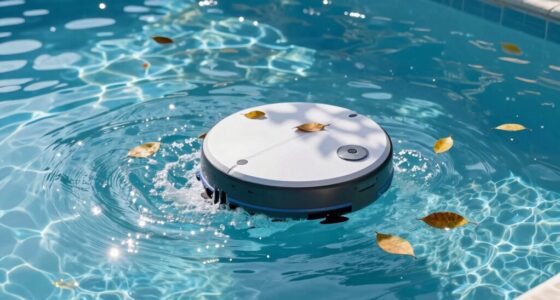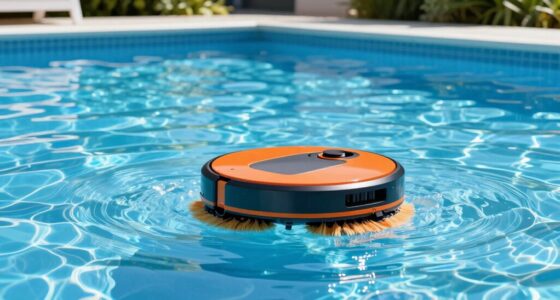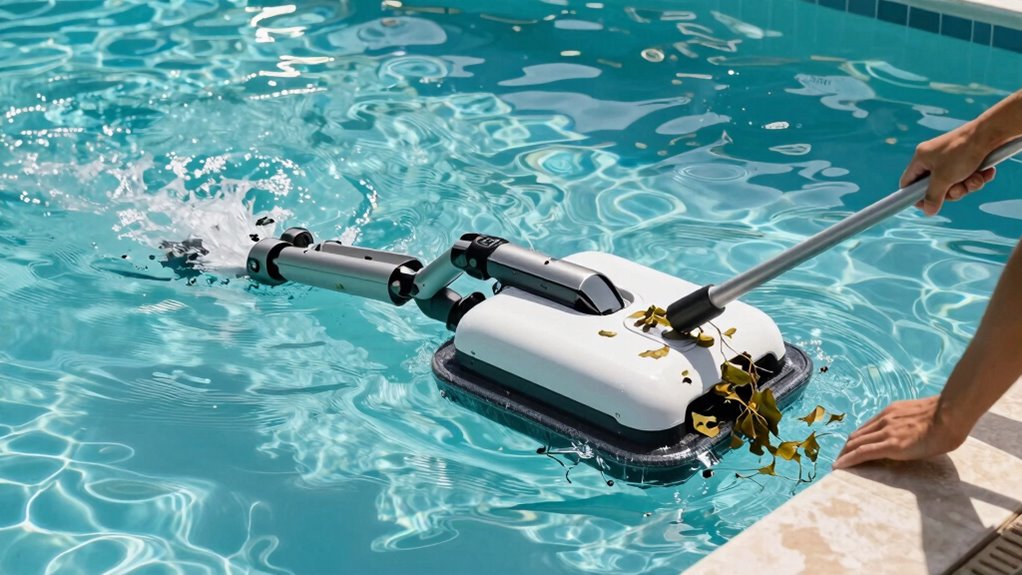

Pool robots still need your help because they struggle with complex pool shapes, heavy debris, and tight corners, which can cause them to get stuck or miss spots. Sensors and navigation systems can be confused or malfunction, requiring you to supervise and clear obstacles. Regular maintenance like cleaning filters and fixing parts is also essential to keep them working well. Want to learn more about how you can support your pool robot effectively?

Get home appliances delivered free with Prime
- Fast, free delivery on millions of items
- Prime Video, Amazon Music and more included
- Member-only deals all year
Key Takeaways
- Complex or irregular pool shapes can confuse robot sensors, requiring human guidance for thorough cleaning.
- Heavy debris like large leaves can clog filters and jam moving parts, needing manual removal.
- Sensor inaccuracies and technological limitations can cause navigation errors, needing human supervision.
- Battery life and mechanical issues require human intervention for recharging and repairs.
- Regular maintenance of filters, brushes, and sensors is essential to sustain optimal robot performance.

Pool robots have revolutionized the way you maintain your swimming pool, making cleaning faster and more efficient than ever before. They handle routine tasks like scrubbing the floor, walls, and steps, freeing you from hours of manual labor. However, despite their impressive capabilities, these devices aren’t entirely autonomous. There are still times when you need to step in and lend a hand. Understanding the automation limitations of pool robots and the maintenance challenges they present helps you keep your pool in the best shape possible.
One key reason pool robots sometimes need human help is that automation isn’t perfect. While they can navigate most pools and clean effectively, they can struggle in certain situations. For instance, complex or unusually shaped pools with tight corners or intricate features can confuse the robot’s sensors or navigation system. You might find that your robot misses spots or gets stuck in corners, requiring you to intervene and manually guide it or clear obstructions. Additionally, debris like large leaves or heavy dirt can clog filters or jam moving parts, slowing down the cleaning process or rendering the robot temporarily useless. These limitations highlight that, despite their smart design, pool robots still rely on human oversight to ensure thorough cleaning.
Pool robots can struggle with complex pool shapes and heavy debris, requiring manual help to ensure thorough cleaning.
Maintenance challenges also play a role in why your pool robot sometimes needs your help. Over time, the device’s filters, brushes, and sensors accumulate dirt and debris, which can reduce its efficiency. Regular maintenance, such as cleaning filters and checking for wear and tear, is essential to keep it functioning properly. If you neglect these tasks, your robot may underperform, leaving your pool less clean than it should be. Sometimes, mechanical issues like motor failures or sensor malfunctions occur, requiring troubleshooting or professional repairs. In these cases, your involvement is necessary to diagnose the problem and perform or arrange necessary fixes. This ongoing upkeep means that even with automation, you can’t fully abdicate responsibility for your pool’s cleanliness. Moreover, technological limitations such as sensor inaccuracies can cause the robot to misjudge its surroundings, emphasizing the need for human supervision. You should also be aware that battery life can impact how long your robot can operate before needing a recharge, which requires manual intervention. Ultimately, while pool robots considerably ease the burden of pool cleaning, they aren’t completely independent. Their automation limitations mean you still have to monitor their operation and step in when they encounter obstacles or technical issues. Regular maintenance challenges also demand your attention to keep the device running smoothly. By understanding these realities, you can better manage your expectations and ensure your pool remains inviting and clean, enjoying the benefits of technology without losing sight of the importance of human involvement.
Products Worth Considering

Ring Alarm 5-Piece Wireless Security System

Roborock Q7 L5 Robot Vacuum and Mop Combo

Levoit Vital 100S-P Air Purifier with Washable Pre-Filter
As an affiliate, we earn on qualifying purchases.
Frequently Asked Questions
How Often Should I Manually Clean My Pool Despite Using a Robot?
You should manually clean your pool about once a month, even with a pool robot. Regular pool robot maintenance, like checking brushes and filters, guarantees peak performance. Manual cleaning tips include skimming debris, vacuuming stubborn dirt, and brushing walls that the robot might miss. This routine prevents buildup and keeps your pool sparkling. Combining manual cleaning with your robot’s efforts guarantees a cleaner, healthier swimming environment.
Can Pool Robots Handle All Types of Pool Debris Effectively?
Pool robots can’t handle all types of debris effectively due to their limitations in debris type compatibility. They excel at cleaning leaves, dirt, and small particles but often struggle with larger or heavier debris like twigs or algae mats. Pool robot limitations mean you might need to manually remove stubborn debris or perform regular maintenance to guarantee your pool stays pristine. Always check your robot’s specifications to understand its debris handling capabilities.
Do Pool Robots Require Regular Software Updates?
Yes, pool robots require regular software updates to stay efficient. In fact, about 60% of users find that updates improve navigation and debris detection. You’ll want to keep your robot’s software current via remote control updates, which often include new features or bug fixes. Additionally, regular battery maintenance is crucial for peak performance. Updating the software ensures your pool robot stays smart and reliable, reducing the need for human intervention.
Are There Specific Pool Sizes or Shapes That Pool Robots Struggle With?
Pool robots can struggle with certain pool sizes or shapes, especially those with intricate designs or unusual dimensions. Pool shape considerations, like irregular or multi-level pools, often challenge their navigation. Additionally, pool size limitations mean larger pools might require more time or multiple cleaning cycles. You might find that complex shapes or extensive areas still benefit from human oversight to guarantee every corner gets cleaned thoroughly.
How Can I Troubleshoot if My Pool Robot Stops Working?
When your pool robot suddenly stops, it’s a sign to give it some gentle attention. First, check the robot’s power source and clean its filters, as clogged filters can hinder performance. Next, perform routine robot maintenance, including troubleshooting sensors—sometimes dirt or debris can mislead them. If issues persist, reset the device or consult the manufacturer’s troubleshooting guide. Regular maintenance guarantees smooth operation and prolongs your robot’s lifespan.
Conclusion
Even with the latest pool robots, remember they’re just tools—like a compass in uncharted waters. They can clean, navigate, and save you time, but they lack the intuition and adaptability only humans possess. Sometimes, you need to step in and guide the process, for it’s in those moments that true mastery reveals itself. Embrace the synergy; after all, it’s not about replacing human touch but enhancing it, ensuring your pool’s perfection remains in your hands.