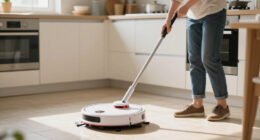
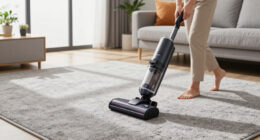
If you already have a robot vacuum, it handles dust, pet hair, and light stains well but falls short on deep or sticky messes. Adding a robot mop can boost your cleaning routine by tackling wet spills and sticky stains on hard floors, giving you a more thorough clean. Depending on your home’s needs and floor types, a robot mop might be a smart upgrade. Keep exploring to find out if it’s the right choice for you.
Prime for Young Adults — start your free trial
Fast free delivery, streaming and member deals for eligible 18–24 year olds.
As an affiliate, we earn on qualifying purchases.
Key Takeaways
- Robot vacuums excel at dry dust and pet hair removal but can’t effectively clean stains or sticky spills.
- A robot mop complements vacuuming by handling wet messes and deep cleaning hard floors.
- Combining both devices offers comprehensive cleaning but increases initial costs and maintenance.
- If your floors frequently get stains or require regular wet cleaning, a robot mop is beneficial.
- For light cleaning needs, a robot vacuum alone may suffice without the added expense of a mop.
As an affiliate, we earn on qualifying purchases.
How Robot Vacuums Handle Different Types of Dirt and Stains

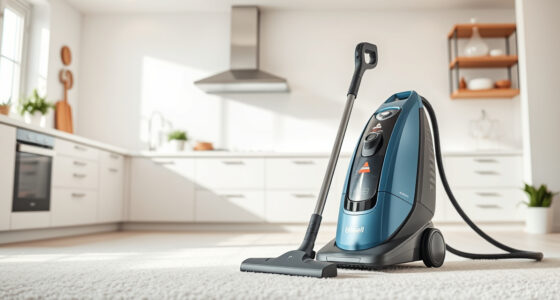
Robot vacuums are designed to tackle a variety of dirt and stains, but their effectiveness depends on the type of debris. For dust accumulation, you’ll find that most models excel at picking up fine particles from surfaces and corners. They use specialized brushes and suction power to clear dust effectively, keeping your space tidy. When it comes to pet hair removal, some robot vacuums perform better than others, especially those with strong suction and rubber bristles that prevent hair from tangling. Regular use helps prevent hair buildup and dust settling deep into carpets or upholstery. While robot vacuums handle daily cleaning tasks efficiently, certain stubborn stains or heavy debris may require manual intervention. Overall, choosing a model tailored to your dust and pet hair needs makes a noticeable difference.
As an affiliate, we earn on qualifying purchases.
The Benefits of Combining a Robot Vacuum With a Robot Mop

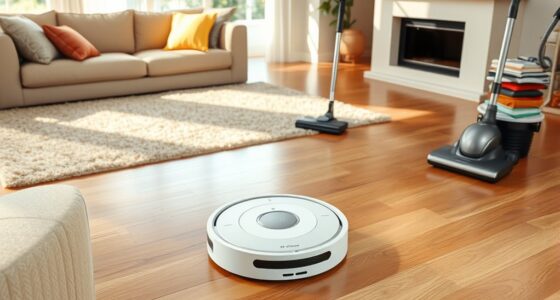
Combining a robot vacuum with a robot mop creates a thorough cleaning system that handles both dry and wet messes efficiently. This combo allows you to set smart scheduling, ensuring your floors are cleaned regularly without manual intervention. The vacuum tackles pet hair removal and dust, while the mop handles stains and spills. Together, they provide a seamless cleaning experience that saves time and effort. Here’s how they complement each other:
| Benefit | How It Helps | Key Feature |
|---|---|---|
| Pet Hair Removal | Keeps floors free of pet fur | Powerful suction |
| Wet and Dry Cleaning | Handles different mess types efficiently | Automated mopping |
| Smart Scheduling | Maintains cleanliness on your timetable | Custom routines |
| Deep Clean Potential | Combines dry and wet cleaning for thoroughness | Enhanced results |
As an affiliate, we earn on qualifying purchases.
Limitations of Robot Vacuums in Achieving a Deep Clean

While robot vacuums excel at quick surface cleaning, they often fall short when it comes to achieving a deep clean. They typically can’t replace manual scrubbing, especially for stubborn stains or heavily soiled areas. Their brushes and suction may pick up surface debris, but dirt embedded deep in carpets or grout lines remains. Additionally, robot vacuums aren’t always effective at allergen removal, as many allergens cling to carpet fibers or settle into hard-to-reach spots. Without thorough manual effort, these allergens can linger, affecting indoor air quality. This limitation means you might still need to do some manual cleaning, especially for a truly deep, hygienic clean. A robot vacuum alone doesn’t fully substitute for traditional cleaning methods when deep cleaning is necessary.
As an affiliate, we earn on qualifying purchases.
Cost-Effectiveness and Maintenance Considerations

Although robot vacuums are convenient for quick surface cleaning, their long-term cost and upkeep are important factors to contemplate. Over time, replacing filters, brushes, and batteries can add up, impacting your overall cost savings. Additionally, some models feature technical complexity, which may require professional repairs or upgrades, increasing maintenance expenses. While a robot vacuum can reduce the need for manual sweeping, it’s essential to consider whether the ongoing costs align with your budget. Investing in a reliable model with durable parts can minimize maintenance issues. However, if you find yourself frequently repairing or replacing components, these costs can outweigh the initial savings. Ultimately, weighing the upfront price against long-term maintenance is key to determining if a robot vacuum suits your budget.
Factors to Consider When Deciding to Add a Robot Mop

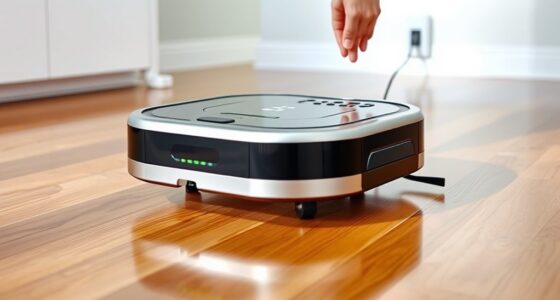
Deciding whether to add a robot mop depends on evaluating your specific cleaning needs and household environment. Consider your cleaning schedules—if you need frequent, deep cleaning of sticky or muddy messes, a robot mop can be a valuable addition. Also, think about your floor type; hardwood, tile, and laminate floors benefit from mopping, while carpets may not. If your floors tend to accumulate spills or dirt that a vacuum alone can’t fully address, a robot mop can fill that gap. Additionally, assess how often you want to maintain and run cleaning routines, ensuring the robot mop fits into your lifestyle. By weighing these factors, you’ll make a more informed decision on whether a robot mop complements your existing cleaning setup.
Frequently Asked Questions
Can Robot Mops Clean Carpets Effectively?
Robot mops aren’t effective on carpets; they’re designed for hard floors. You’ll need to maintain your robot mop regularly, including cleaning the brushes and checking the robot mop battery life, to keep it functioning well on tile or hardwood. While a robot vacuum excels on carpets, a robot mop can’t replace it for deep cleaning. Use both for ideal cleaning, but don’t expect a robot mop to handle carpets effectively.
How Often Should I Use a Robot Mop?
You should use your robot mop once a week for a typical cleaning schedule. For example, if you have pets that shed, you might increase mopping frequency to twice a week to keep floors spotless. Regular mopping helps prevent grime buildup and maintains cleanliness. Adjust your mopping schedule based on foot traffic and household needs, ensuring your floors stay fresh without overdoing it.
Do Robot Mops Work on Stubborn Stains?
Robot mops can tackle some stubborn stains, but their stain removal effectiveness has limitations. They work well on light dirt and minor spills, but for deep-set or tough stains, you might need to pre-treat or scrub manually. Keep in mind the robot mop’s limitations, as they may not fully eliminate all stubborn stains. Use them regularly for maintenance, but don’t expect perfect results on heavily stained floors.
Are Robot Mops Safe Around Pets?
Robot mop safety is generally good around pets when you choose a pet-friendly cleaning model. You should always supervise initial use and verify the water tank isn’t too full to prevent leaks. Using a robot mop with non-toxic, pet-safe cleaning solutions keeps your furry friends safe. Regularly check for any hazards, and keep pets away during cleaning until you’re sure the robot is functioning properly.
Can a Robot Mop Replace Traditional Mopping Entirely?
Think of a robot mop as a skilled pianist, but not a concert pianist. It can handle routine spills, yet has limitations compared to traditional cleaning. While it’s convenient, a robot mop can’t fully replace manual mopping, especially for stubborn stains or deep cleaning. You’ll still need to address those areas with traditional methods, as robot mops excel at maintaining cleanliness but can’t match the thoroughness of hands-on scrubbing.
Conclusion
While a robot vacuum handles daily dust and crumbs effortlessly, it can’t substitute the deep clean a robot mop provides. Think of it as the difference between quick dusting and thorough scrubbing—both matter. You might save money now, but a mop ensures longer-lasting cleanliness. Sometimes, investing in both means you’re not just cleaning—you’re caring for your space, balancing convenience with the need for a truly spotless home.
Fall yard work Picks
leaf blowers
As an affiliate, we earn on qualifying purchases.