
Before using a robot mop, clear your floors of loose dirt, toys, cables, and obstacles to prevent interference and missed spots. Use a broom or vacuum for larger particles and pet hair, ensuring filters and brushes stay free of debris. Keep the floor free of clutter for maximum cleaning and check sensors for any obstructions. Choosing the right cleaning solutions and maintaining your robot will boost its performance. Keep going to discover more tips for a thorough, efficient clean.

Get home appliances delivered free with Prime
- Fast, free delivery on millions of items
- Prime Video, Amazon Music and more included
- Member-only deals all year
Key Takeaways
- Clear the floor of loose dirt, toys, cables, and obstacles to prevent navigation issues.
- Vacuum or sweep to remove pet hair and debris for optimal mopping results.
- Ensure the floor is dry and free of spills or excessive moisture before starting.
- Use appropriate, mild cleaning solutions compatible with your floor type and robot.
- Regularly inspect and clean robot sensors and brushes for efficient operation.
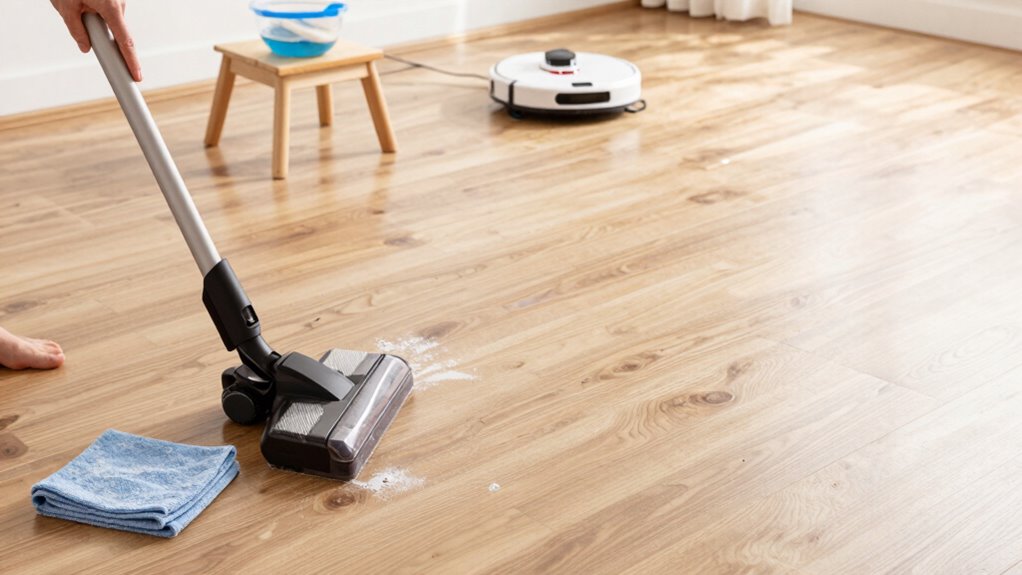
Have you ever wondered why your robot mop isn’t cleaning as effectively as you’d like? The secret often lies in how well you prepare your floors before starting the cleaning process. To get the best results, you need to focus on removing debris, selecting the right cleaning solutions, and tackling pet hair removal. These steps guarantee your robot mop can glide smoothly over your floors and do its job thoroughly.
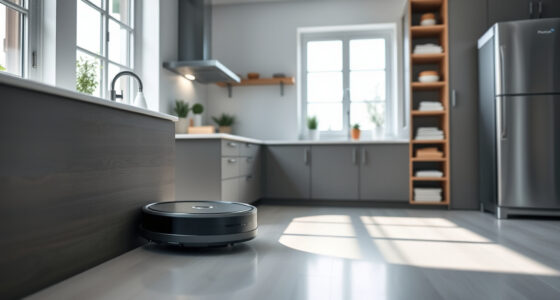
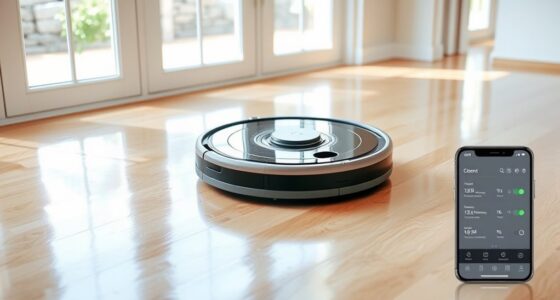
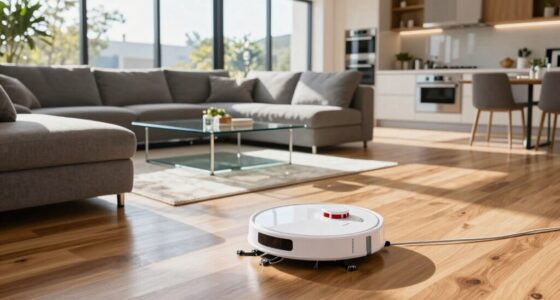
First, clear the floors of loose dirt, toys, cables, and other obstacles. Even small objects can interfere with the robot’s navigation or cause it to miss spots. Use a broom or vacuum to pick up any larger particles that might be left behind. This not only helps your robot cover the entire area without interruption but also prevents unnecessary wear on its brushes and wheels. When your floors are free of clutter, your robot can focus on cleaning instead of maneuvering around obstructions. Additionally, regularly inspecting and maintaining your robot’s sensors can help it better detect obstacles and avoid navigation issues.
Clear clutter and debris to help your robot mop clean efficiently and prevent damage.
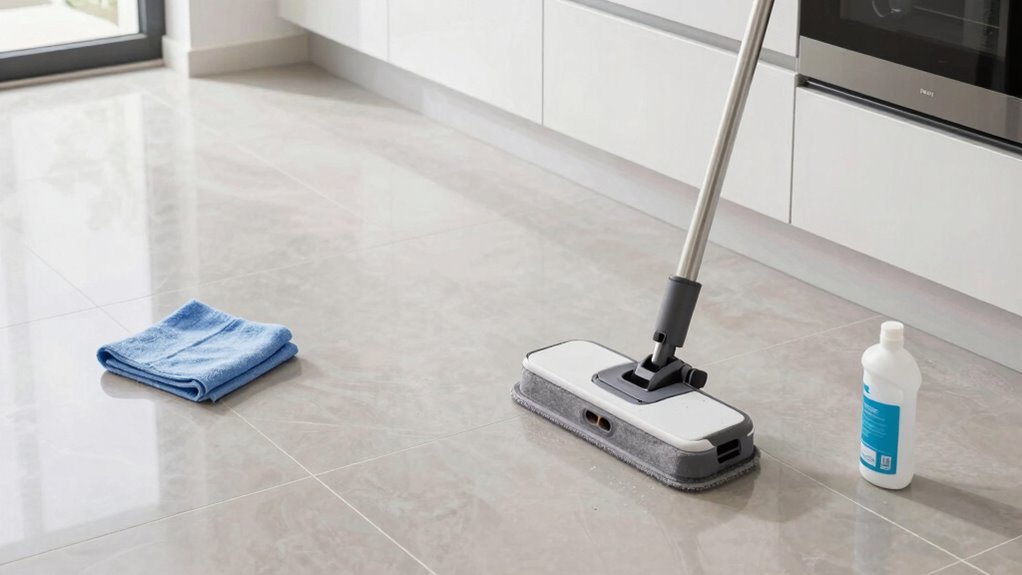
Next, consider the type of cleaning solutions you use. Many robot mops work best with water or mild, store-bought cleaning solutions designed for hard floors. Avoid harsh chemicals that could damage your floors or clog your robot’s mechanism. Instead, choose solutions that are compatible with your flooring material and specifically formulated for robotic cleaning devices. Proper cleaning solutions help loosen dirt and grime, making your robot’s job easier and more effective. Using the right cleaning solutions also reduces the risk of residue buildup, which can impair the robot’s performance over time. Additionally, choosing solutions that are eco-friendly can contribute to a healthier home environment and better floor maintenance.
Pet hair removal is another critical aspect of floor preparation. If you have pets, you know how stubborn pet hair can be. Before running your robot mop, do a quick sweep or vacuum to remove excess pet hair from the surface. While many robot mops have brushes designed to pick up hair, heavy accumulations can still hinder their efficiency. Removing pet hair beforehand helps prevent it from clogging filters or getting tangled in brushes, ensuring continuous, smooth operation. Regularly cleaning your robot’s brushes and filters also helps maintain excellent pet hair removal and overall cleaning performance. Additionally, using HEPA filters can improve air quality and further assist in capturing pet dander and hair during cleaning.
Products Worth Considering

Shark Pet Cordless Stick Vacuum, 40-Minute Runtime, Grey, IX141

Dreame H12 Pro Wet and Dry Vacuum Mop

Shark HydroVac MessMaster Corded Wet Dry Vacuum and Mop (WD161)
As an affiliate, we earn on qualifying purchases.
Frequently Asked Questions
Can I Use a Robot Mop on Hardwood Floors Daily?
Yes, you can use a robot mop on hardwood floors daily if it’s vacuum compatible and you consider floor texture. Make sure your robot has gentle cleaning settings to prevent damage. Check that your hardwood is sealed to avoid moisture issues. Regular use can keep your floors clean without wear, but avoid excessive moisture, especially on unsealed or textured surfaces, to maintain their integrity and appearance.
How Do I Prevent Furniture From Obstructing the Robot?
Think of your furniture as guardians of your clean floors. To prevent obstruction, carefully plan your furniture placement, giving your robot mop clear pathways. Remove or move any items that could block its sensors or movement. Regularly check for new obstructions and rearrange furniture if needed. With thoughtful obstruction prevention and strategic furniture placement, your robot can glide smoothly, ensuring a thorough clean without interruptions or mishaps.
Is It Necessary to Sweep Before Mopping With a Robot?
Yes, sweeping before mopping is necessary for effective floor maintenance and cleaning routines. By removing loose dirt, debris, and dust, you allow the robot mop to clean more thoroughly and efficiently. Skipping this step can lead to streaks, missed spots, or even damage to the mop’s sensors. Regular pre-mopping sweeping helps keep your floors spotless, prolongs the life of your appliance, and guarantees ideal cleaning performance every time.
How Do I Handle Spills or Sticky Substances?
When faced with spills or sticky residue, you’re the hero in spill cleanup. First, gently lift or scoop up excess liquid or sticky stuff to prevent smudges. Wipe away stubborn spots with a damp cloth or paper towel, ensuring the surface is as dry as possible. This prep makes your robot mop’s journey smoother, helping it avoid spreading messes and ensuring your floors stay spotless and gleaming.
Are There Specific Cleaning Solutions Safe for Robot Mops?
Yes, you should use eco-friendly solutions and pet-safe cleaners to keep your robot mop functioning safely. Look for cleaning solutions labeled as safe for pets and environmentally friendly, as these won’t harm your furry friends or the planet. Always check the manufacturer’s recommendations before adding any solution to your robot mop’s water tank. Using the right cleaners guarantees effective cleaning without risking damage to your device or your household.
Conclusion
Think of preparing your floors before mopping as laying a solid foundation for a house. When you clear debris and secure loose rugs, you’re setting the stage for a smooth, effective clean. Skipping these steps is like trying to build on quicksand—you’ll struggle to get good results. So, take a few moments to prep your floors. It’s the secret to turning your robot mop into a diligent, reliable partner that keeps your home shining bright.