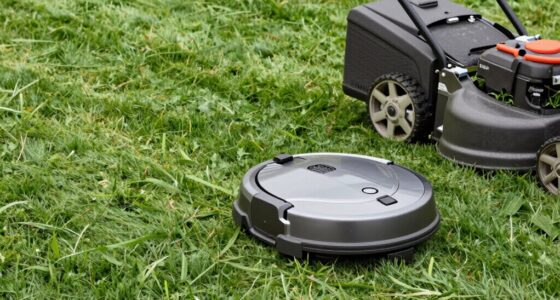
To see if your yard is ready for a robotic lawn mower, check if it’s relatively flat, open, and free of tight corners or complex landscaping. Make sure there are minimal obstacles like flower beds and toys, and that steep slopes are limited. Consider your yard’s size—larger areas need longer battery life. If your terrain is suitable and obstacles are manageable, you’re on the right track. For more tips, keep exploring how to optimize your mower’s performance.
Get ready for Prime Big Deal Days — try Prime free
Exclusive member deals on October 6–7, plus fast free delivery. Cancel anytime.
As an affiliate, we earn on qualifying purchases.
Key Takeaways
- Ensure the yard is relatively flat and free of steep slopes for safe mower operation.
- Check for obstacles like furniture or flower beds that may require obstacle detection features.
- Confirm the lawn size matches the mower’s battery capacity and coverage area.
- Clear the yard of toys and debris to facilitate smooth navigation and mowing.
- Assess if the terrain is even, with minimal clutter, for optimal mower efficiency.
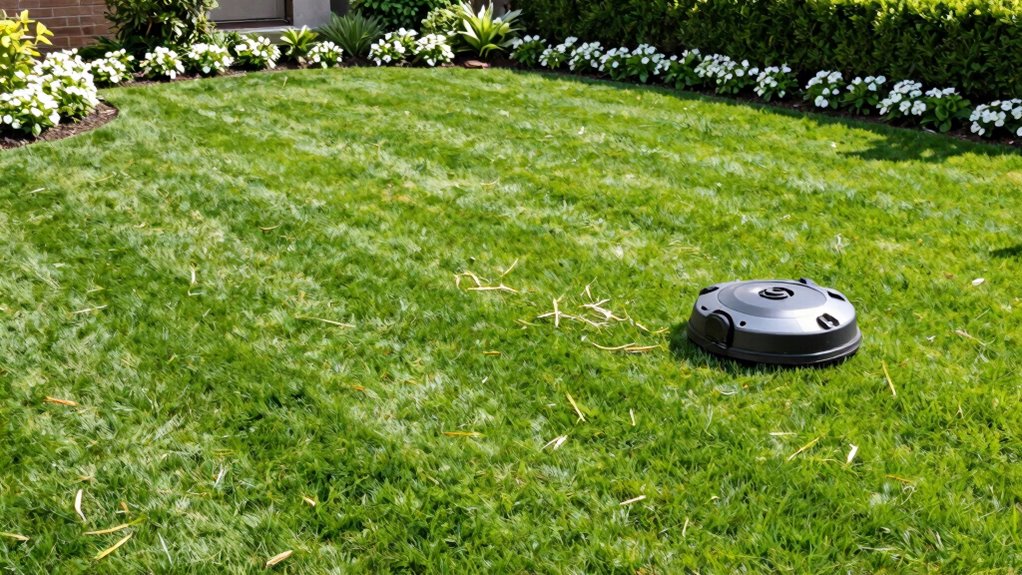
Are you wondering if your yard is suitable for a robotic lawn mower? The first thing to factor in is the size and shape of your yard. Robotic mowers work best on lawns that are relatively flat and free of complex landscaping features. Large, open spaces are ideal because they allow the mower to operate efficiently without constantly steering around obstacles. If your yard has a lot of tight corners, flower beds, or steep slopes, you’ll need to evaluate whether the mower can handle these challenges or if additional adjustments are necessary.
Next, think about the battery life of the mower you’re considering. Modern robotic mowers typically have enough battery capacity to cover a specified area in one charge, but this varies from model to model. If you have a larger yard, you’ll want a mower with a longer battery life that can complete mowing sessions without frequent recharges. Some models are equipped with automatic docking stations that enable the mower to return and recharge when needed, ensuring continuous operation. For smaller yards, shorter battery life isn’t usually an issue, but for bigger properties, it’s vital to choose a mower that can keep up with your mowing schedule.
Mowing frequency is another key factor to evaluate. Robotic mowers are designed to mow frequently—sometimes daily—so your grass can stay consistently neat and healthy. If you prefer a very manicured lawn, you’ll want a mower that can handle frequent mowing without overworking the battery or causing unnecessary wear. Check the recommended mowing frequency for the model you’re interested in and compare it with your desired schedule. If your grass grows quickly, a mower with a high mowing frequency capability is a smart choice to maintain a uniform look. Conversely, if your grass grows slowly or you prefer less frequent mowing, a model with a longer battery life that can handle less frequent sessions may suffice.
Finally, consider the overall terrain and any obstacles in your yard. Even with ideal battery life and mowing frequency, a yard cluttered with toys, garden furniture, or uneven terrain can complicate robotic mower operation. You might need to clear the area regularly or select a model with obstacle sensors that can navigate around objects safely. Additionally, understanding the yard’s terrain and its impact on mower performance is essential for optimal operation. It’s also helpful to review robotic mower features to ensure the model you choose has the necessary capabilities for your specific yard conditions. Being aware of obstacle detection technology can help you select a mower that safely handles your yard’s unique features. Another consideration is the terrain itself, as uneven ground can affect the efficiency and safety of robotic mowers. Incorporating sensor technology can improve navigation and obstacle avoidance, making your robotic mower more effective. By paying attention to these factors—yard size and shape, battery life, mowing frequency, and obstacles—you’ll be better equipped to determine if a robotic lawn mower fits your yard’s needs and can help you maintain a lush, well-manicured lawn with minimal effort.
robotic lawn mower obstacle sensors
As an affiliate, we earn on qualifying purchases.
As an affiliate, we earn on qualifying purchases.
Frequently Asked Questions
Can Robotic Mowers Handle Uneven Terrain?
Robotic mowers can handle uneven terrain, but their effectiveness depends on the model. Some are designed with adjustable blades and better navigation systems to maintain garden aesthetics on tricky surfaces. However, you need to take into account mower maintenance, like clearing debris and checking sensors, to keep it running smoothly. If your yard has steep slopes or significant bumps, choose a robotic mower specifically built for rugged terrains to guarantee consistent mowing.
How Do Obstacles Like Trees Affect Mower Navigation?
Obstacles like trees can challenge your robotic mower’s navigation, but with proper tree clearance and obstacle detection features, you’re covered. Most models detect and avoid trees and other obstacles automatically, preventing damage. Make sure you trim branches and clear the area around your trees beforehand. This way, your mower can navigate smoothly, mowing efficiently without getting stuck or causing damage, keeping your yard well-maintained and safe.
What Is the Ideal Grass Height for Robotic Mowers?
The ideal grass height for robotic mowers is around 2.5 to 3 inches, which promotes healthy grass maintenance. Keep your lawn within this range by adjusting your mowing frequency based on growth rates, usually once a week during peak season. This helps the mower operate efficiently, reduces strain on the blades, and guarantees a neat, uniform appearance without over- or under-mowing.
Do Robotic Mowers Work Well on Sloped Lawns?
Like a brave explorer conquering uncharted territory, your robotic mower can handle sloped lawns, but with some caution. Gentle slopes under 15 degrees work best, especially around decorative landscaping, guaranteeing smooth operation. Steeper inclines may require seasonal maintenance or alternative solutions. Keep the mower’s sensors clean and consider installing boundary wires to prevent slipping or uneven cuts. Always monitor initial runs to ensure peak performance on your hilly terrain.
How Noisy Are Robotic Lawn Mowers During Operation?
Robotic lawn mowers are generally quiet during operation, making them perfect for noise-sensitive areas. Their noise levels are much lower than traditional mowers, often comparable to a conversation. Battery life varies by model, but most can run for an hour or more on a single charge. You won’t need to worry about excessive noise disrupting your day, as these mowers operate discreetly while efficiently maintaining your yard.
best robotic lawn mower for large yards
As an affiliate, we earn on qualifying purchases.
As an affiliate, we earn on qualifying purchases.
Conclusion
When your yard is ready for a robotic mower, it’s a sign of progress—your grass is healthy, and your workload is lightening. Yet, it also reminds you that even the most advanced technology relies on a well-prepared foundation. Embrace the balance: automation can ease your chores, but only if your yard’s conditions are right. Sometimes, simplicity and effort today pave the way for effortless beauty tomorrow.
As an affiliate, we earn on qualifying purchases.
automatic docking station for robotic mower
As an affiliate, we earn on qualifying purchases.
As an affiliate, we earn on qualifying purchases.
Fall yard work Picks
leaf blowers
As an affiliate, we earn on qualifying purchases.