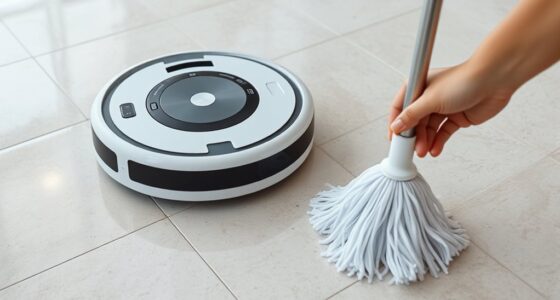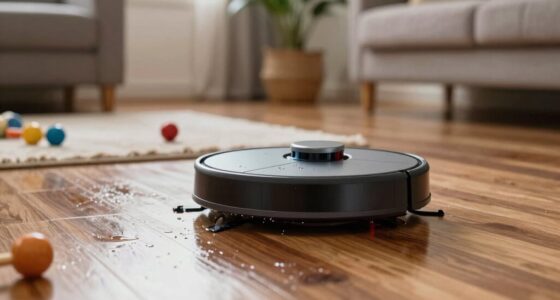
A robot mop can help keep your floors cleaner in dry climates by maintaining surface freshness, but it doesn’t do well with fine dust particles that easily become airborne or settle into cracks. Since dust resettles quickly and ultra-fine particles are hard to pick up, the device’s effectiveness is limited without additional cleaning methods. If you’re interested, you’ll discover more about how to maximize your cleaning routine and what solutions work best for dust control.
Play games included with Prime
Start a Prime free trial and play with Amazon Luna on your devices.
As an affiliate, we earn on qualifying purchases.
Key Takeaways
- Robot mops are primarily designed for wet cleaning and are less effective at removing ultra-fine dry dust particles.
- In dry climates, dust resettles quickly, limiting the robot mop’s ability to maintain dust-free surfaces.
- Combining vacuuming with a robot mop improves overall dust control in dry environments.
- Regular sweeping or vacuuming is essential before using a robot mop for better dust management.
- Robot mops help maintain surface cleanliness but cannot fully eliminate airborne or settled dry dust.
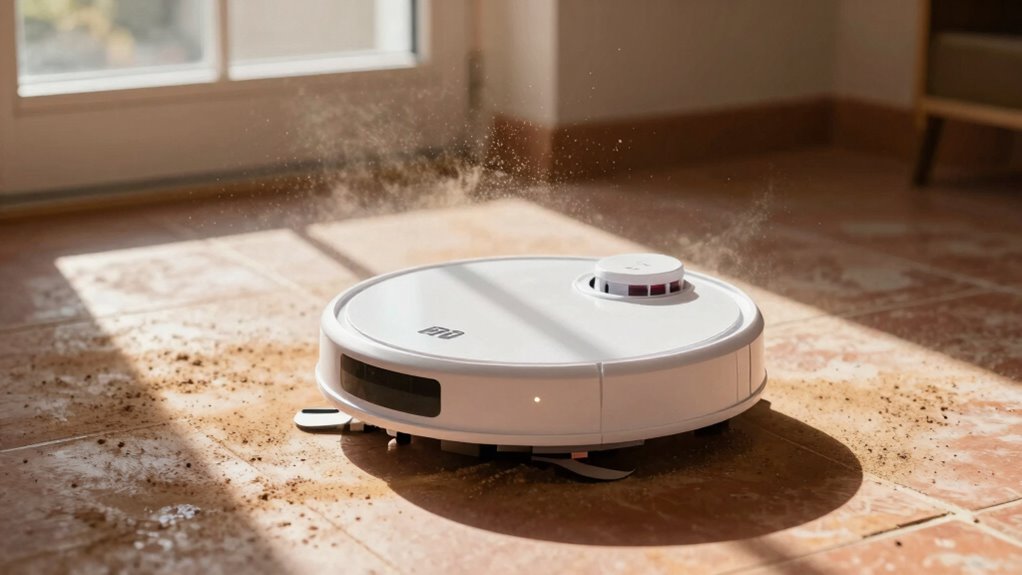
In dry climates where dust constantly settles on surfaces, keeping your home clean can feel like an uphill battle. You might wonder if a robot mop can genuinely help with the persistent dust problem or if it’s just another gadget that falls short. While robot mops are designed to make cleaning more convenient, they do have limitations, especially when it comes to tackling dust. One key factor is dust particle size. Dust particles are tiny, often less than 10 micrometers in diameter, which makes them easy to become airborne and difficult to pick up with traditional mopping methods. Robot mops typically rely on mopping pads and dampness to lift dirt and dust from hard floors, but their ability to manage ultra-fine dust particles directly depends on the device’s design and cleaning technology.
You might find that robot mops excel at removing larger debris and sticky spills, but they often struggle with the smallest dust particles. Because dust particle size can be so minuscule, they tend to settle into small cracks and uneven surfaces that some robot mops might not reach effectively. Furthermore, the mops’ cleaning pads can only pick up a limited amount of dust before needing replacement or cleaning themselves. This means, in environments with constant dust accumulation, a robot mop alone can’t keep your floors completely dust-free. You’ll still need to do regular sweeping or vacuuming to remove the bulk of dust before relying on the robot mop for maintenance. Additionally, understanding dust particle size can help you choose the most effective cleaning tools for your environment. Recognizing the limitations of robot mop technology can help set realistic expectations for its performance. Using the appropriate dust removal methods can significantly improve overall cleanliness in dusty settings.
In environments with high dust levels, the effectiveness of a robot mop can be further limited by the type of flooring, as some surfaces are more prone to trapping dust particles than others. Another consideration is the robot mop’s ability to handle dry dust versus damp mopping. Many models are optimized for wet mopping, which can be effective against sticky spots, but they’re less effective at lifting dry dust particles. Since dry dust tends to cling to surfaces, a robot mop’s damp cloth might not always be enough. You might notice that dust resettles quickly after mopping, especially in a climate where dust is constantly in the air. This is where a vacuum cleaner, particularly one with a good HEPA filter, can complement your robot mop by removing airborne dust and larger particles before you perform your mopping routine.
As an affiliate, we earn on qualifying purchases.
Frequently Asked Questions
How Often Should I Run a Robot Mop in Dry Climates?
You should run your robot mop at least once a day in dry climates to manage dust accumulation effectively. Frequent mopping helps prevent dust from settling and keeps your floors cleaner. Remember to perform regular mop maintenance, like emptying the dustbin and cleaning the brushes, to guarantee it works efficiently. Adjust the frequency if you notice more dust or dirt buildup, maintaining a cleaner, healthier environment for you.
Can Robot Mops Handle Fine Dust Particles Effectively?
Yes, robot mops can handle fine dust particles effectively, aiding dust suppression and improving air quality. They often come with microfiber pads or mopping techniques designed to trap tiny particles, preventing them from becoming airborne. Regular use keeps surfaces cleaner and reduces dust buildup, which is especially beneficial in dry climates. While they’re not a complete solution, robot mops contribute greatly to maintaining a healthier indoor environment.
Do Robot Mops Require Special Filters for Dusty Environments?
No, most robot mops don’t require special filters for dusty environments, but you should pay attention to filter maintenance. Regularly cleaning or replacing filters guarantees peak dust collection and prevents clogging. Using a robot mop with a good filtration system helps keep dust and fine particles out of its motor and sensors, maintaining its efficiency. So, while no special filters are usually needed, proper filter upkeep is essential for best performance.
Are Robot Mops Suitable for Outdoor Dusty Areas?
Robot mops aren’t ideal for outdoor cleaning on dusty terrain because they’re designed mainly for indoor use. Dirt and dust can clog their filters and sensors, making them less effective. If you want to tackle outdoor dust, consider a dedicated outdoor cleaner or a garden vacuum. For indoor dusty areas, robot mops work well, but for outdoor dusty terrain, you need equipment built specifically for those conditions.
How Does Dry Climate Affect Robot Mop Battery Life?
In dry climates, your robot mop’s battery life can decrease due to battery degradation caused by heat and dust. Dust accumulation on the device’s components may also lead to overheating, further impacting performance. To prolong battery life, regularly clean dust from sensors and vents, and avoid exposing the robot to extreme temperatures. Proper maintenance helps mitigate the effects of dry air and dust, ensuring your robot mop operates efficiently longer.
vacuum and mop combo for dust control
As an affiliate, we earn on qualifying purchases.
As an affiliate, we earn on qualifying purchases.
Conclusion
In dry climates, a robot mop can be a game-changer for managing dust, keeping your floors cleaner with less effort. Research shows that homes in arid regions can see up to 30% less dust buildup with regular use of robotic cleaning devices. So, if you’re tired of constantly battling dust, investing in a robot mop might be your best move. It’s an easy way to maintain a cleaner, healthier living space without the manual effort.
As an affiliate, we earn on qualifying purchases.
floor cleaning robot for fine dust
As an affiliate, we earn on qualifying purchases.
As an affiliate, we earn on qualifying purchases.
Fall yard work Picks
leaf blowers
As an affiliate, we earn on qualifying purchases.