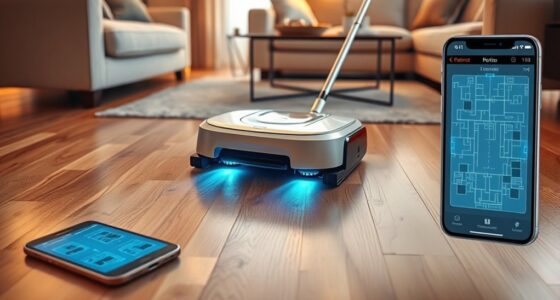
If your robot mop isn’t spraying water, start by checking the water reservoir to verify it’s filled and properly seated. Inspect the spray nozzles for clogs or debris and clear them with a pin if needed. Make sure the internal tubing isn’t kinked or blocked and that the pump sound is normal when activated. Regular maintenance and careful assembly can prevent issues. Keep exploring to learn more about fixing water spray problems effectively.

Get home appliances delivered free — and shop member deals
- Fast, free delivery on millions of items
- Access to Prime Big Deal Days deals on October 6–7
- Prime Video, Amazon Music and more included
Key Takeaways
- Check that the water reservoir is full, properly seated, and free of leaks or blockages.
- Inspect spray nozzles for clogs or mineral deposits and clear any obstructions.
- Ensure water tubing is kink-free, properly connected, and not damaged or clogged.
- Verify the pump is functioning correctly by listening for operational sounds during use.
- Perform routine cleaning and maintenance to prevent buildup and maintain consistent water flow.
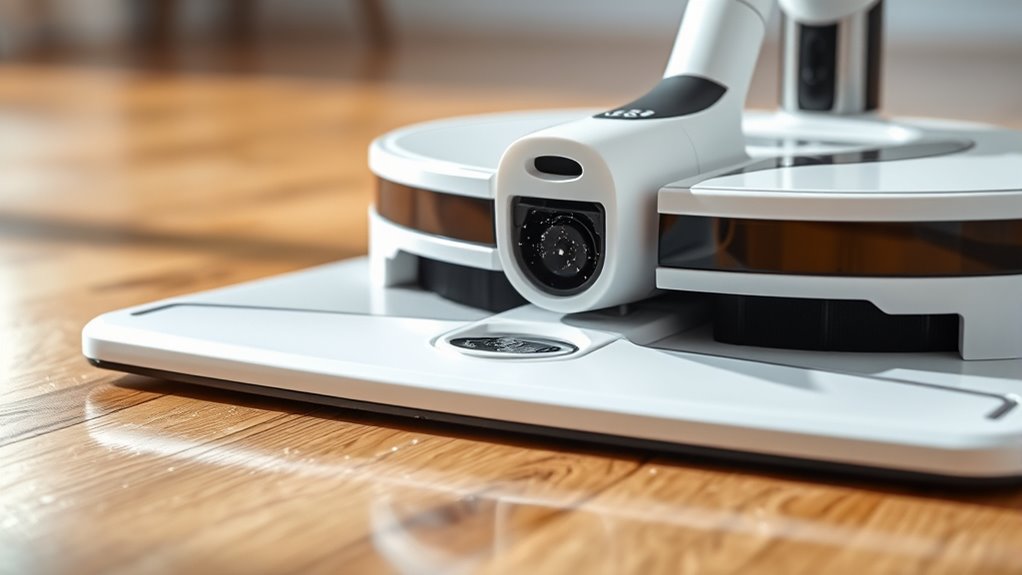
If your robot mop isn’t spraying water as it should, it can be frustrating, especially when you’re counting on it to clean your floors effectively. The first thing to check is the mop water supply. Sometimes, the water reservoir might be empty or improperly seated, preventing water from reaching the spray mechanism. Make sure the tank is filled with clean water and securely placed in its compartment. If the reservoir isn’t seated correctly, the spray may not activate, so double-check that it clicks into place properly. Also, inspect the water inlet for any blockages or buildup, which can hinder water flow. Clearing out any debris ensures the water can pass freely from the tank to the spray nozzles.
Once you’ve confirmed that the water supply is adequate, focus on the spray mechanism repair. Over time, mineral deposits or dirt can clog the spray nozzles, preventing water from spraying evenly or at all. Use a pin or a small needle to gently clear out any obstructions in the spray holes. If the spray mechanism has a filter, remove and clean it thoroughly. Sometimes, the spray system’s internal tubing can become kinked or clogged, so inspect those parts and straighten or clear any blockages. If the spray system has a pump, listen for sounds indicating it’s working when activated. If you don’t hear the pump, it might be malfunctioning or broken, requiring further repair or replacement.
Check and clean spray nozzles, filters, and tubing; listen for pump sounds to troubleshoot water spray issues effectively.
Another common issue is a faulty or jammed spray mechanism. If cleaning doesn’t restore water flow, you might need to disassemble the spray assembly carefully, following the manufacturer’s instructions. Check for any damaged parts like cracked tubing, broken nozzles, or worn-out seals. Replacing these parts often restores functionality without needing to buy an entirely new unit. For more complex repairs, consider consulting the user manual or contacting customer support. Sometimes, the spray mechanism repair involves resetting internal components or updating firmware to resolve software-related glitches that prevent water spraying.
Regular maintenance also helps prevent future issues. Clean the water reservoir regularly, and inspect the spray nozzles periodically for debris. Keeping the internal components free from buildup ensures consistent water flow. Additionally, understanding the water flow system and how it interacts with the device’s electronics can help troubleshoot issues more effectively. By systematically checking the mop water supply and performing spray mechanism repair as needed, you’ll restore your robot mop’s water spray function and keep it cleaning effectively. Remember, addressing these issues promptly saves you time and extends the lifespan of your device.
robot mop water reservoir replacement
As an affiliate, we earn on qualifying purchases.
As an affiliate, we earn on qualifying purchases.
Frequently Asked Questions
Can I Use Tap Water in My Robot Mop?
Yes, you can use tap water in your robot mop, but you should consider water quality concerns. Tap water is generally safe, but if your water has high mineral content or impurities, it could clog or damage your device over time. Check your robot mop’s manufacturer guidelines on tap water safety, and consider using filtered or distilled water for better results and to prolong your mop’s lifespan.
How Often Should I Clean the Spray Nozzle?
Oh, the thrill of spray nozzle maintenance! You should clean your nozzle weekly to dodge clogging chaos. Regular upkeep prevents buildup, keeps your robot mop spraying happily, and turns mop maintenance into a breeze. Skip this step, and you risk clogging, poor spray performance, and frustration. So, set a reminder—your spray nozzle deserves love and attention to keep your cleaning routine smooth and clog-free.
Is It Safe to Use Cleaning Solutions?
You should avoid using harsh cleaning solutions in your robot mop because of chemical safety concerns. Stick to eco-friendly cleaning options to keep your device safe and maintain its performance. Check the manufacturer’s instructions for compatible cleaning agents, and always dilute concentrated solutions properly. Using gentle, environmentally friendly cleaners helps prevent damage to the spray nozzle, ensuring your robot mop continues to spray water effectively without risking harm to your home or the environment.
What Should I Do if the Water Tank Leaks?
If your water tank leaks, act quickly before it causes damage. First, turn off your robot and remove the water tank carefully. Check for cracks or loose connections, especially around the spray nozzle, which may need cleaning or maintenance. Tighten any fittings and replace damaged parts. Regular spray nozzle maintenance prevents leaks, so keep an eye on it. Addressing leaks promptly guarantees your robot’s peak performance and longevity.
How Do I Reset the Spray Function?
To reset the spray mechanism, start by turning off your robot mop and removing the water tank. Locate the reset button or perform a power cycle by unplugging it for 30 seconds. Afterward, reassemble the water tank, press the reset button if available, and turn the device back on. This reset procedure often restores the spray function, ensuring the spray mechanism works properly again.
robot mop spray nozzle cleaning kit
As an affiliate, we earn on qualifying purchases.
As an affiliate, we earn on qualifying purchases.
Conclusion
When your robot mop stops spraying water, it can feel like your cleaning routine is halted. But just like a stubborn stain, this issue isn’t permanent. With a quick check of the water tank or nozzle, you can restore its spray function. Remember, even high-tech gadgets face glitches—what matters is your patience and troubleshooting. Soon enough, your robot will be back to spotless floors, proving that a small fix can make a big difference.
robot mop internal tubing repair parts
As an affiliate, we earn on qualifying purchases.
As an affiliate, we earn on qualifying purchases.
As an affiliate, we earn on qualifying purchases.
Fall yard work Picks
leaf blowers
As an affiliate, we earn on qualifying purchases.