To keep carpets dry when using a robot mop, choose models with sensors that detect rugs and adjust water flow accordingly. Always calibrate the mop’s sensors to prevent over-wetting and manage the water reservoir carefully. Before mopping, vacuum thoroughly and remove loose objects. Regularly clean and maintain your robot to guarantee maximum performance. For extra protection, consider spot cleaning and deep carpet cleaning methods; more tips follow to safeguard your rugs effectively.
Key Takeaways
- Choose robot mops with advanced navigation and sensors to detect and avoid carpeted areas effectively.
- Calibrate sensors and set water flow to gentle to prevent over-wetting delicate or thick rugs.
- Prepare rugs by vacuuming thoroughly and removing objects to minimize moisture absorption and damage risk.
- Regularly maintain the robot mop’s sensors, brushes, and pads to ensure precise navigation and reduce over-wetting chances.
- Use spot cleaning or alternative deep-cleaning methods for carpets, complementing robot mopping to maintain dryness.
Choosing the Right Robot Mop for Carpeted Areas
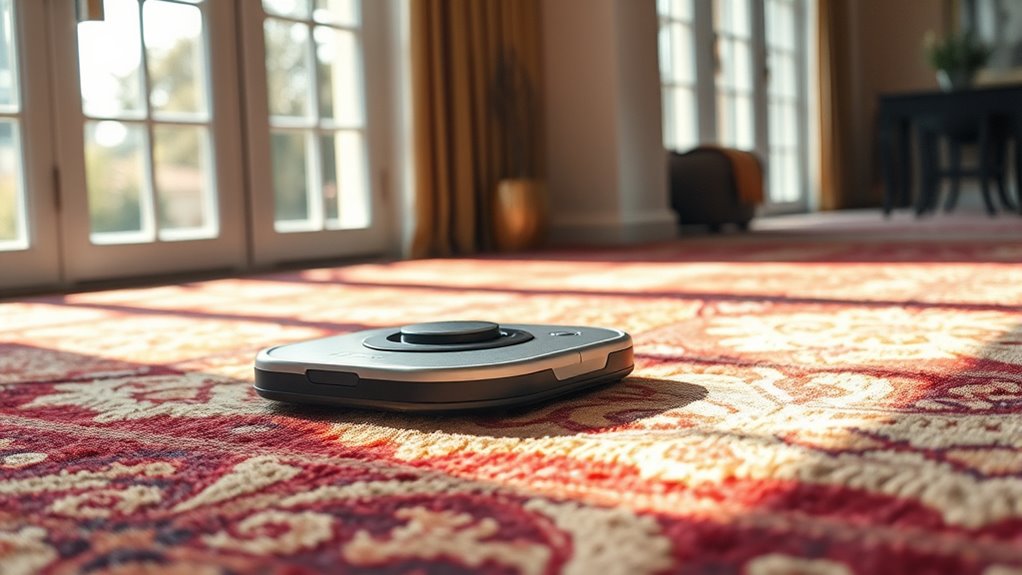
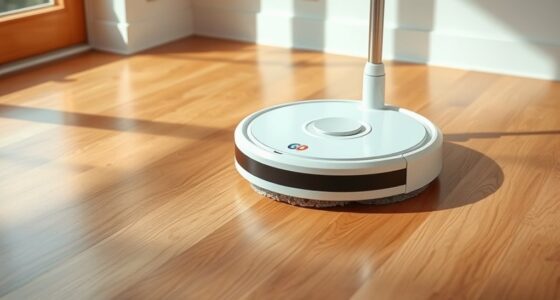
Are robot mops suitable for carpeted areas? Not all are, but some models can handle rugs effectively. When choosing one, look for automatic navigation features that allow precise movement around carpets, avoiding over-wetting or damage. Good navigation helps the mop detect carpet edges and avoid unnecessary contact. Battery life is another critical factor; longer-lasting batteries ensure thorough cleaning without frequent recharges. If your carpets are extensive, opt for a robot with a robust battery to cover larger areas in one session. Some models even have sensors to adjust cleaning intensity when shifting from hard floors to rugs. Selecting a robot mop with these features ensures efficient cleaning while protecting your carpets from excess moisture.
Adjusting Settings to Prevent Over-Wetting
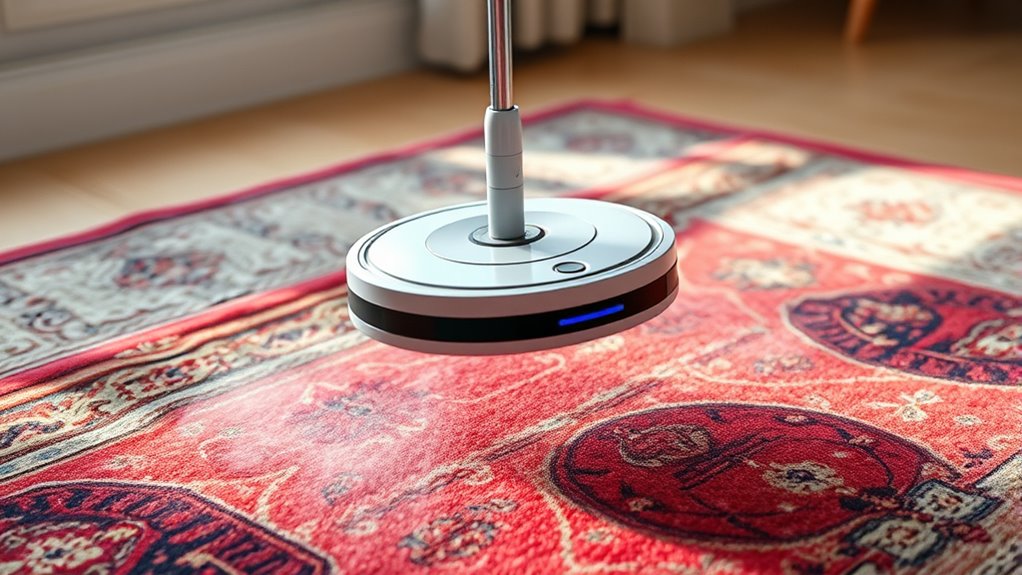
To prevent over-wetting your carpets when using a robot mop, adjusting the device’s settings is key. Start by calibrating the sensors to ensure accurate detection of carpeted areas, so the mop avoids excessive water application. Proper sensor calibration helps the robot recognize when it’s on a rug versus a hard floor, preventing unnecessary mopping. Additionally, manage the water reservoir carefully; fill only the recommended amount and consider using lower water flow settings for sensitive rugs. Many robot mops allow you to customize water output, so set it to a gentle level for carpets. Regularly check and adjust these settings based on your rug’s material and thickness to ensure a clean, dry carpet without over-wetting.
Preparing Your Rug Before Mopping

Before you start mopping, it’s important to prepare your rug to prevent damage and guarantee effective cleaning. Begin with proper vacuuming techniques to remove loose dirt and debris, which can cause streaks or scratches during mopping. Pay attention to rug material considerations; delicate fibers like wool or silk may require gentle vacuuming and less wet cleaning, while sturdier materials like nylon or polypropylene can handle more thorough cleaning. Ensure your rug is completely dry and free from loose dust before mopping, as residual dirt can smudge or embed deeper into fibers when wet. Removing any small objects, toys, or loose threads also helps prevent potential damage. Proper preparation minimizes the risk of over-wetting and keeps your rug in the best condition for a thorough, safe clean.
Monitoring and Maintaining Your Robot Mopper
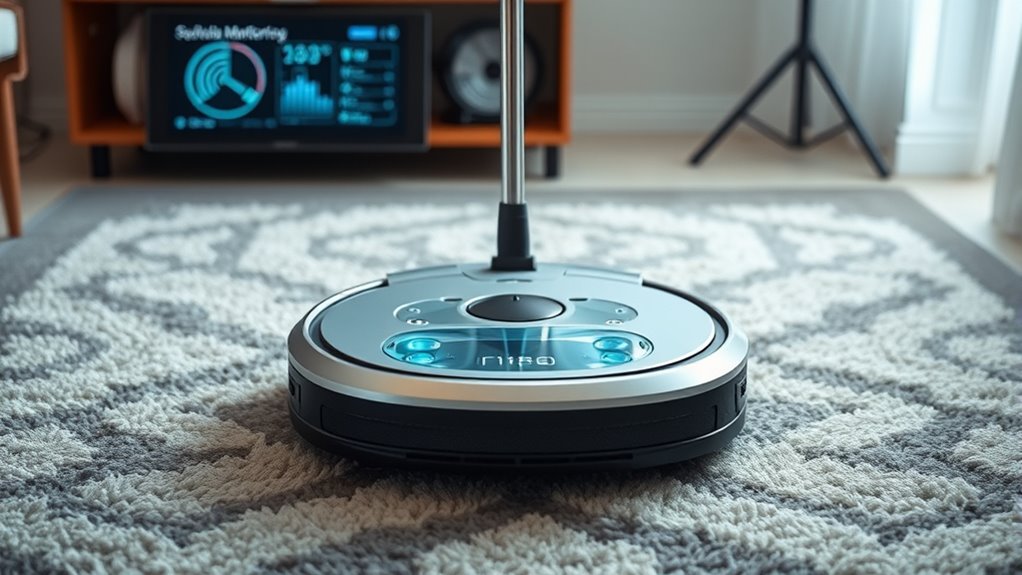
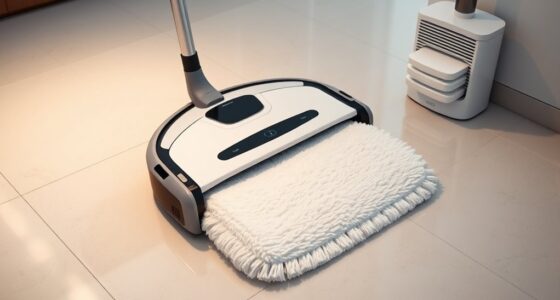
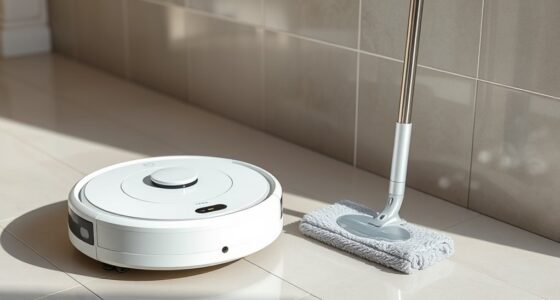
Regularly monitoring your robot mopper guarantees it operates efficiently and extends its lifespan. Start by checking the mop pad maintenance; clean or replace the pad regularly to guarantee top-notch cleaning and prevent dirt buildup. Keep an eye on the mop’s sensors and brushes to avoid blockages that could hinder performance. Additionally, perform robot mop calibration as recommended by the manufacturer to maintain accurate navigation and effective mopping patterns. Regular calibration helps your device adapt to different floor types and surface conditions, preventing missed spots or overly wet areas. By staying attentive to these maintenance tasks, you ensure your robot mopper works reliably, keeps carpets dry, and reduces the risk of potential malfunctions. Consistent upkeep maximizes your investment and keeps your home cleaner.
Alternative Cleaning Options for Carpets

While robot moppers are excellent for hard floors, carpets often require alternative cleaning methods to achieve thorough results. Spot cleaning is essential for targeted stain removal, especially for spills or accidents. Use a carpet stain remover or a mixture of mild detergent and water to treat affected areas promptly. Blot rather than rub stains to prevent spreading and embedding dirt deeper. For more stubborn stains, consider using a steam cleaner or renting a carpet shampooer for a deep clean. Regularly vacuum carpets to remove surface dirt and prevent stains from setting. These methods complement your robot mopper’s capabilities, ensuring your carpets stay clean and dry. Taking these extra steps helps maintain your carpets’ appearance and prolongs their lifespan.
Frequently Asked Questions
Can Robot Mops Handle Different Rug Textures Effectively?
Yes, robot mops can handle different rug textures effectively. You’ll find that their mop effectiveness varies based on rug texture; smoother surfaces like low-pile rugs are cleaned more thoroughly, while shaggy or high-pile rugs may require extra care. To guarantee ideal results, choose a robot mop with adjustable settings and avoid overly plush rugs. Regular maintenance and spot cleaning help keep your rugs dry and well-maintained.
What Indicators Show if a Robot Mop Has Over-Wet the Carpet?
If your robot mop over-wets the carpet, you’ll notice moisture sensors alerting you to excessive dampness. You might see visible signs of carpet saturation, such as dark patches or a damp smell. The mop may also pause or slow down unexpectedly. Keep an eye on these indicators to prevent water damage, and always monitor the robot during cleaning to ensure it avoids over-wetting delicate rugs.
How Often Should I Replace the Mop Pads on My Robot Cleaner?
For effective mop pad maintenance, replace your robot cleaner’s mop pads every 2-3 months, or sooner if they show signs of wear or heavy dirt buildup. Regular replacement ensures peak cleaning and prevents bacterial growth. Keep an eye on pad performance, and don’t wait too long—doing so maintains cleaning efficiency and protects your carpets from over-wetting. Staying proactive with replacement frequency keeps your floors fresh and hygienic.
Are There Specific Carpet Types Incompatible With Robot Mopping?
Think of your carpet as a delicate garden needing gentle care. Some rug materials, like plush or shaggy ones, resemble fragile flowers that can’t withstand robot mopping, risking damage and moisture issues. In contrast, durable carpets with tight fibers handle mopping better. Check your carpet’s durability and rug material before using a robot mop, ensuring you protect your home’s beauty while keeping it dry and well-maintained.
Can Robot Mops Be Used on Delicate or Antique Rugs Safely?
You can use robot mops on delicate fabrics and antique rugs, but you should proceed with caution. Test a small, hidden area first to check for colorfastness and fabric sensitivity. Use gentle cleaning settings and avoid excessive moisture to protect antique preservation. Keep the robot’s water reservoir minimal and avoid high suction. Regularly monitor the process to prevent damage, ensuring your delicate or antique rugs stay safe and preserved.
Conclusion
With mindful modifications and meticulous monitoring, you master the art of maintaining dry, damage-free carpets. By choosing the right robot mop, adjusting settings, and preparing your rugs properly, you prevent puddles and preserve plushness. Regularly review and maintain your device, and consider alternative options when needed. With this careful, consistent approach, you create a clean, cozy, and carpeted haven—free from wet woes and worry, welcoming warmth with every spotless step you take.