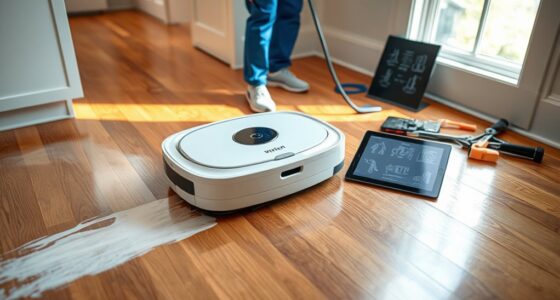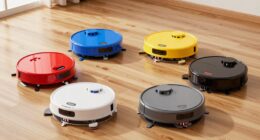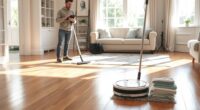
Robot mops are great for regular cleaning but struggle with sticky spills like syrup or pet hair clinging to residues. They rely on sensors and scrubbing brushes, which aren’t designed to tackle stubborn, thick messes. Pre-treat and manually scrub tough spots for best results, as robot mops can’t fully handle extreme stickiness. Want to learn more about tackling sticky messes effectively and how to get the most out of your robot mop?
Key Takeaways
- Robot mops can handle light sticky spills with proper pre-cleaning and regular maintenance.
- They may struggle with thick or stubborn residues requiring manual scrubbing.
- Pre-treating stains and removing debris improves robot mop effectiveness on sticky messes.
- Sensor limitations can cause missed spots or incomplete cleaning of sticky spills.
- Combining manual cleaning methods with robot mops provides the most thorough results.
How Robot Mops Work and Their Cleaning Mechanisms
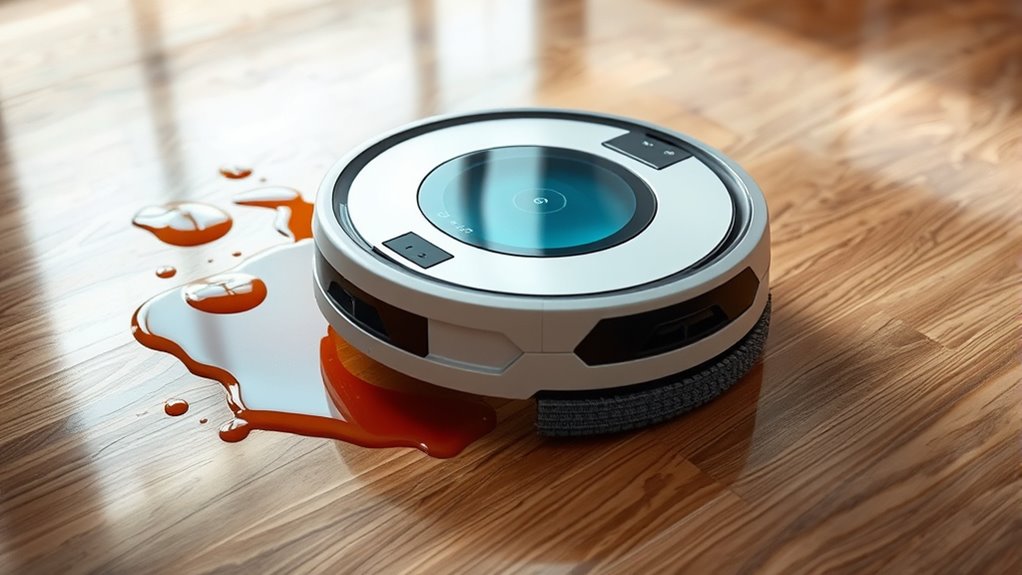
Robot mops are designed to make cleaning sticky spills easier by combining smart technology with effective cleaning mechanisms. They use sensors to detect dirt and navigate around obstacles, ensuring thorough coverage. The cleaning process involves a combination of mopping pads, spray functions, and sometimes scrubbing brushes, which work together to loosen and lift sticky residues from floors. Proper robot mop maintenance, like regular cleaning of the pads and sensors, helps keep it functioning effectively. Battery life also plays a vital role; a longer-lasting battery means more extensive cleaning sessions without interruption. Most models include recharge and resume features, allowing them to return to their dock when low on power and pick up where they left off. This integration of technology makes handling sticky spills more efficient and less labor-intensive.
Types of Sticky Spills and Why They Challenge Robot Mops
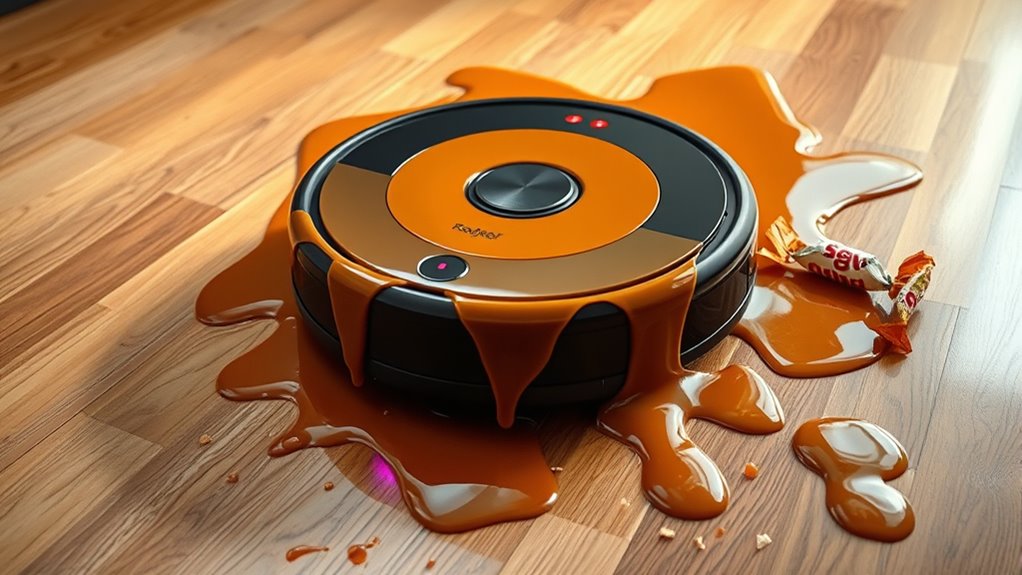
Sticky spills come in various forms, each presenting unique challenges for robot mops. For instance, pet hair often clings to sticky substances, creating tangled messes that are difficult for robot brushes to remove efficiently. When spills involve sticky liquids like syrup or jam, the viscosity can cause the mop’s sensors to struggle, leading to missed spots or incomplete cleaning. Additionally, spills on hardwood floors threaten the floor’s durability; excessive moisture or harsh cleaning can cause warping or damage over time. Robot mops may lack the necessary scrubbing power to break down stubborn sticky residues or effectively lift pet hair embedded in sticky messes. Understanding these different types of spills helps explain why some sticky situations are tougher for robot mops to handle without human intervention.
Strengths and Limitations of Robot Mops on Sticky Messes
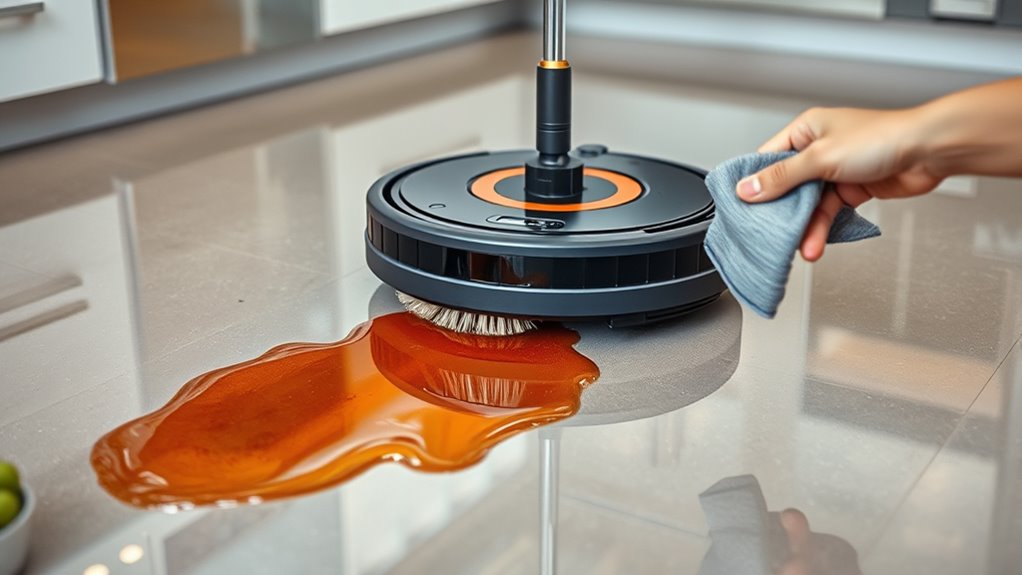
While robot mops have made significant advances, their ability to handle sticky messes still varies. They excel at quick cleanups and maneuvering tight spaces, but sticky spills often pose challenges. For example:
Robot mops handle quick cleanups well but struggle with stubborn sticky spills.
- Effective cleaning: Some models can loosen sticky substances with specialized brushes, reducing manual effort.
- Robot mop maintenance: Regular cleaning of brushes and sensors is essential to keep performance optimal on sticky messes.
- Battery life: Sticky spills typically require longer cleaning cycles, which can drain batteries faster, limiting coverage.
- Limitations: Thick or stubborn adhesions may require manual intervention, as robot mops struggle with extreme stickiness.
Tips for Using Robot Mops Effectively on Sticky Stains
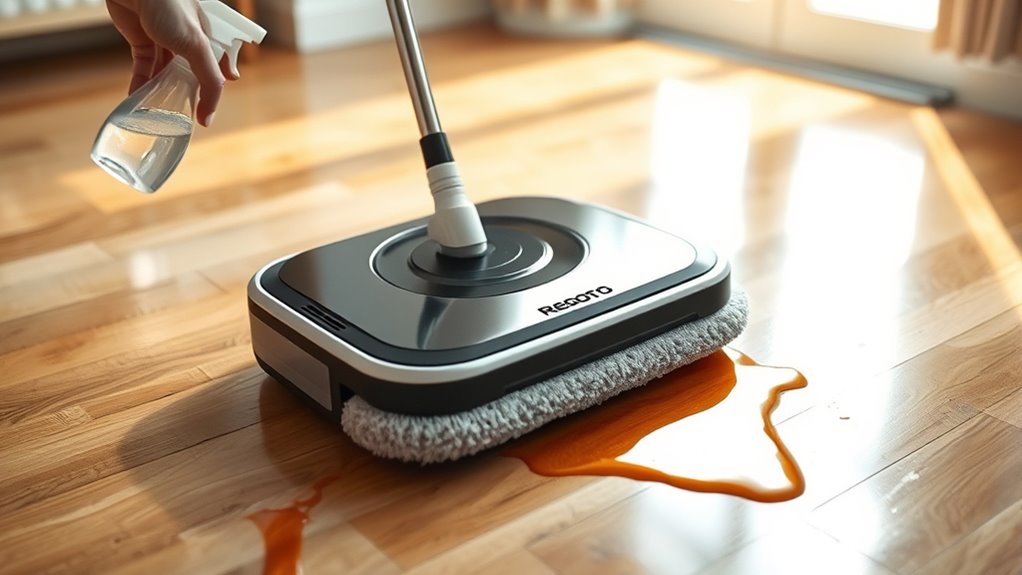
To get the best results when tackling sticky stains with a robot mop, you need to prepare the area and the device properly. Start by removing loose debris and vacuuming the surface to prevent dirt from spreading. Make certain your robot mop is well-maintained; clean the brushes and sensors regularly to keep it functioning efficiently. Use eco friendly cleaning solutions compatible with your device to promote eco friendly cleaning practices and reduce chemical use. For stubborn sticky stains, consider pre-treating the area with a small amount of warm water or a mild cleaning agent before running the mop. Proper maintenance and mindful cleaning methods help your robot perform better on sticky messes, extending its lifespan and ensuring effective, eco-conscious cleaning every time.
Alternatives and Additional Strategies for Tackling Sticky Spills

If a robot mop struggles with stubborn or particularly deep sticky spills, trying alternative cleaning methods can improve results. Manual scrubbing often proves more effective for tough spots, allowing you to directly target the residue. Additionally, using specialized cleaning solutions designed for sticky stains can loosen the grip of the spill. Here are some strategies:
For stubborn spills, manual scrubbing and specialized solutions often outperform robot mops alone.
- Apply a cleaning solution directly to the spill and let it sit for a few minutes before scrubbing.
- Use a scrub brush or sponge to manually loosen sticky residues.
- Warm water and mild detergent can help break down stubborn spots.
- Combine manual scrubbing with a clean cloth to wipe away loosened debris thoroughly.
These alternatives help guarantee a deeper, more effective clean when robot mops fall short.
Frequently Asked Questions
Can Robot Mops Identify Different Types of Sticky Spills Automatically?
Robot mops generally can’t identify different types of sticky spills automatically. Their sensor accuracy is limited, which affects spill detection. They rely on basic sensors to navigate and detect dirt, but distinguishing various spill types requires advanced AI and image recognition capabilities. So, while they can detect some messes, they don’t yet have the ability to identify specific sticky spills or adjust their cleaning methods accordingly.
How Do Robot Mops Handle Textured or Uneven Flooring With Sticky Residues?
Robot mops struggle with textured surfaces and uneven floors that have sticky residues. You’ll find that their sensors and brushes may miss spots or spread the mess further. To get better results, you should pre-clean heavily sticky areas, especially on uneven or textured surfaces. Regular maintenance and choosing models with adjustable mopping settings can also help guarantee a more thorough clean on challenging floors.
Are There Specific Cleaning Solutions Recommended for Robot Mops on Sticky Stains?
You should opt for gentle cleaning solutions designed for robot mops to guarantee effective stain removal without causing damage. Stick to mild, enzymatic cleaners or diluted dish soap, avoiding harsh chemicals that might harm your device or leave residues. Always check your mop’s manufacturer recommendations before applying any cleaning solutions, and test a small area first to see how well it handles sticky stains, keeping your floors spotless and your robot happy.
What Maintenance Is Required for Robot Mops After Cleaning Sticky Spills?
After cleaning sticky spills, you should regularly check your robot mop’s battery and replace it if it no longer holds a charge. Also, clean the brushes thoroughly to remove any residue or debris that can hinder performance. Keep the sensors clean and dust-free for maximum navigation. Performing these maintenance steps ensures your robot mop stays effective, prolongs its lifespan, and keeps your floors spotless after every spill.
Can Robot Mops Be Programmed for Targeted Cleaning of Stubborn Sticky Areas?
Yes, you can program your robot mop for targeted cleaning of stubborn sticky areas. Many models feature spill detection technology, allowing them to recognize and focus on problem spots. You simply set a specific zone or use app controls to prioritize cleaning. This targeted cleaning ensures your floors get extra attention where needed, making your cleaning routine more efficient and effective without manual intervention.
Conclusion
Think of your robot mop as a brave knight facing a sticky dragon. While it’s great at routine battles, stubborn spills may need your extra sword—manual cleaning. By understanding its strengths and limits, you can be the hero who keeps your floors shining. Use your robot wisely, and when a sticky mess appears, don’t hesitate to step in. Together, you and your robot can conquer even the toughest spills with ease.