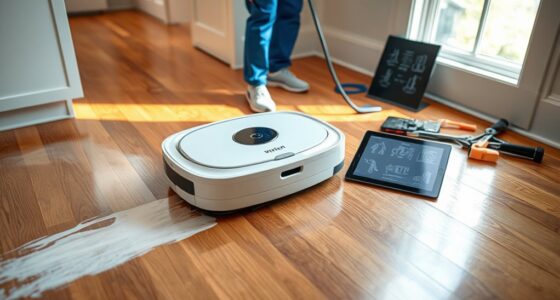
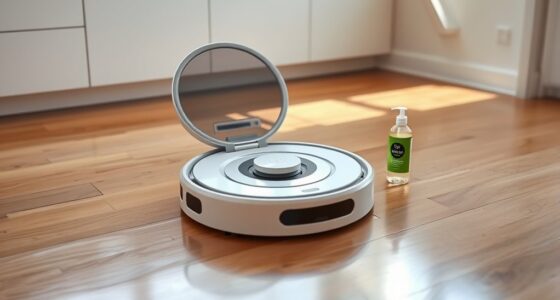
Robot mops are autonomous devices that navigate your floors using sensors and mapping technology, making them perfect for regular, hands-off cleaning. Steam mops use hot steam to sanitize and deep clean surfaces, without chemicals, and often require manual operation. Both have different strengths: robot mops excel at covering large areas consistently, while steam mops are better for deep cleaning and sterilization. To find out which one suits your needs best, keep exploring their features and differences.
Key Takeaways
- Robot mops autonomously navigate and clean large areas, while steam mops require manual operation for targeted cleaning.
- Robot mops use sensors for obstacle avoidance and efficiency, whereas steam mops use hot steam for sanitizing surfaces directly.
- Robot mops are ideal for regular maintenance and convenience, while steam mops excel at deep cleaning and disinfecting surfaces.
- Robot mops typically have higher upfront costs but lower ongoing effort, whereas steam mops are more affordable with simpler maintenance.
- Robot mops are better suited for busy households and pet owners, while steam mops are preferred for thorough sanitation on sealed floors.
How Robot Mops Work and Their Key Features
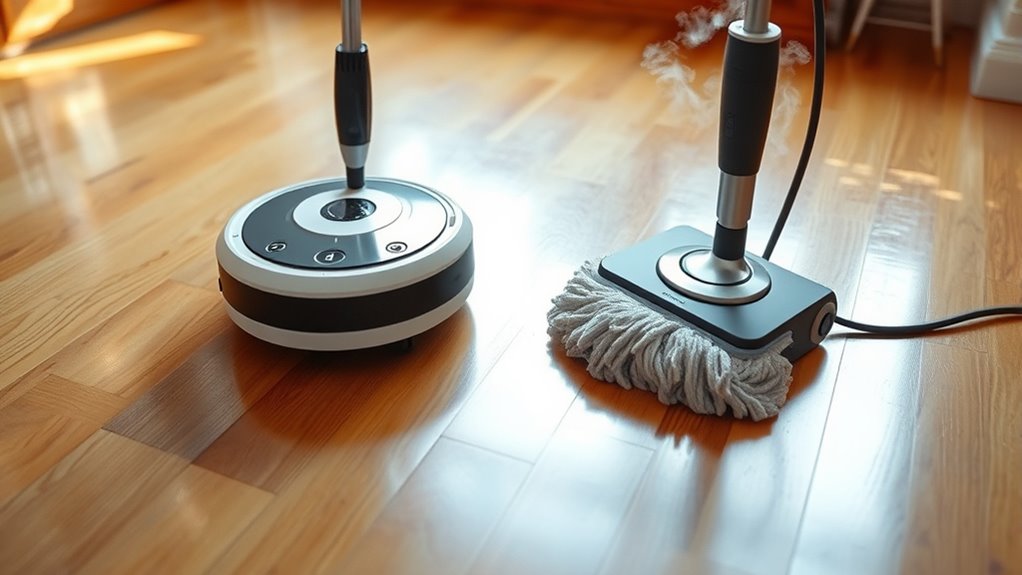
Robot mops work by autonomously maneuvering your floors using sensors and mapping technology, so you don’t have to lift a finger. You’ll find that advanced robot navigation helps these devices efficiently clean different floor plans, avoiding obstacles and covering every spot. Their sensors detect edges and furniture, ensuring they don’t bump or fall. Battery life is vital because it determines how long your robot can clean before needing a recharge. Most models feature rechargeable batteries that can last from 60 to 120 minutes, depending on the model and cleaning area. Some robots return to their charging stations automatically when the battery runs low, then resume cleaning once recharged. These key features make robot mops convenient, precise, and effective for maintaining clean floors with minimal effort.
The Functionality of Steam Mops and Their Benefits
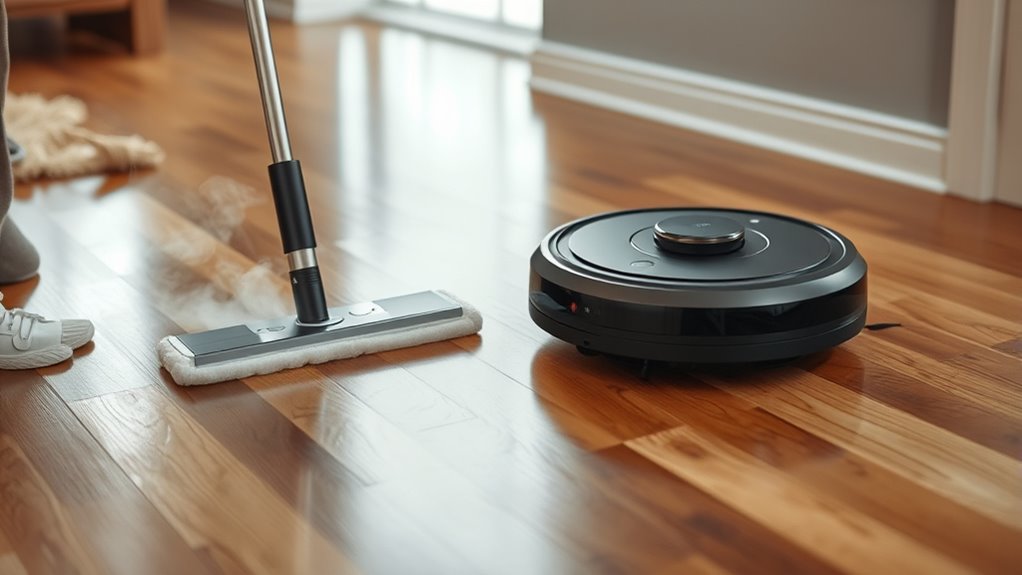
Steam mops utilize hot steam to effectively sanitize and clean your floors, providing a chemical-free alternative to traditional mopping. The powerful steam heat loosens dirt and grime, making your mopping techniques more efficient and easier. With adjustable steam levels, you can tailor cleaning to different surfaces, ensuring thorough results. Plus, steam mops dry quickly, reducing downtime and preventing streaks. Here’s how they compare:
| Feature | Benefit |
|---|---|
| Steam heat | Deep cleans without chemicals |
| Adjustable steam | Customizable for various surfaces |
| Quick drying | Floors are ready faster |
| No chemicals | Safe for kids and pets |
| Easy mopping techniques | Less effort and more effective cleaning |
This method delivers a healthier, eco-friendly clean while simplifying your mopping routine.
Comparing Cleaning Performance and Effectiveness

When it comes to cleaning performance, both robot mops and steam mops deliver strong results, but their effectiveness varies depending on the task. Robot mops excel at covering large areas quickly and maintaining consistent cleaning, thanks to their long battery life. Steam mops, on the other hand, use high-temperature steam to loosen dirt and sanitize surfaces effectively, especially on stubborn stains. Noise levels differ too; robot mops operate quietly, while steam mops can be noisier during use. Consider these points:
- Battery life impacts how long a robot mop can clean without recharging
- Steam mops provide deep cleaning with steam for tough grime
- Robot mops are better for regular maintenance
- Steam mops are more effective on sealed, hard surfaces
- Noise levels are generally lower with robot mops
This comparison helps you determine which tool suits your cleaning needs best.
Convenience, Maintenance, and Cost Considerations
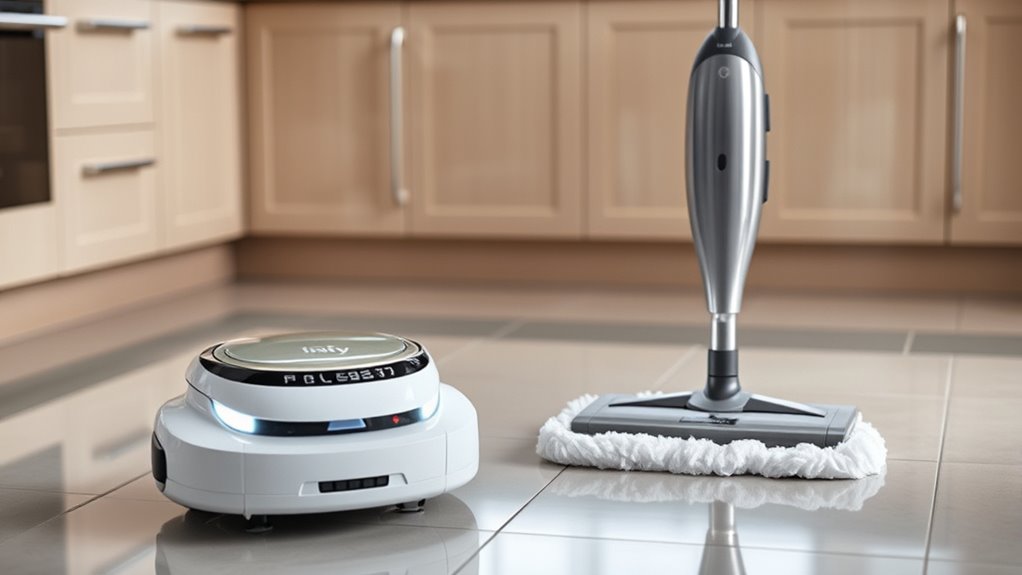
Both robot mops and steam mops offer distinct advantages when it comes to convenience, maintenance, and overall cost. Robot mops excel in cleaning speed, as they operate automatically and cover large areas without your input, saving you time. They also tend to be energy-efficient because they use minimal power during their cleaning cycles. Steam mops require less maintenance, as they have fewer moving parts and don’t rely on batteries, but they need regular refilling of water and occasional descaling. Cost-wise, robot mops often have a higher upfront price but can reduce ongoing cleaning effort, while steam mops are generally more affordable initially and cheaper to operate in the long run. Both options can fit different budgets, depending on your priorities for convenience and efficiency.
Which Device Fits Different Living Situations and Needs
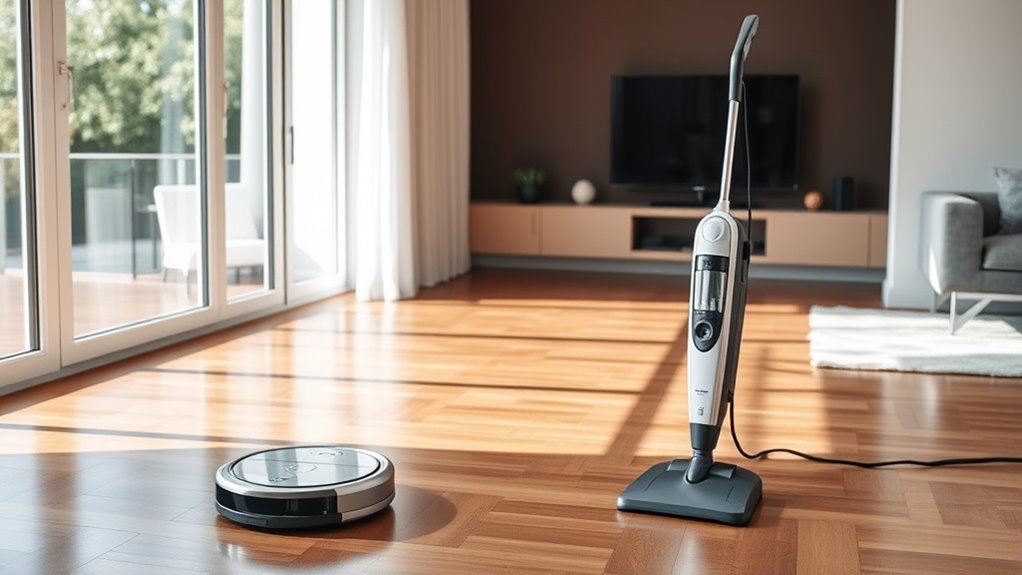
Choosing between a robot mop and a steam mop depends heavily on your living situation and cleaning needs. If you have pets shedding hair, a robot mop can navigate around furniture and pick up pet hair efficiently, saving you time. For allergy management, a steam mop offers high-temperature steam that kills germs and dust mites, perfect for sensitive individuals. Consider your space: a robot mop is ideal for busy households or large areas, while a steam mop suits smaller spaces or deep cleaning routines. If you need quick, consistent cleaning without much effort, a robot mop is convenient. Conversely, if you prefer targeted cleaning for stubborn stains or allergens, a steam mop provides powerful, chemical-free sanitation. Your choice hinges on your lifestyle and specific cleaning priorities.
Frequently Asked Questions
Are Robot Mops Suitable for All Types of Flooring?
Robot mops are suitable for many types of flooring because of their flooring versatility, but they may not work equally well on all surfaces. They excel in cleaning effectiveness on tile, laminate, and hardwood floors, yet could struggle with thick carpets or uneven surfaces. You should consider your flooring type and specific cleaning needs to determine if a robot mop will deliver the results you want without causing damage.
How Long Do Steam Mops Typically Last Before Needing Replacement?
You might worry about your steam mop’s durability, but typically, a good steam mop lasts about 2 to 3 years before needing replacement. The mop lifespan depends on usage and maintenance, with proper care extending its life. Most models require replacement every 2 to 3 years, though frequent use or heavy cleaning might shorten that period. Regularly check for wear and tear to guarantee maximum performance and delay the need for replacement.
Can Robot Mops Handle Pet Hair and Dander Effectively?
Yes, robot mops can handle pet hair and dander effectively. You’ll find that many models are equipped with powerful brushes and suction capabilities designed to pick up robot hair and pet dander from various surfaces. Regular maintenance, like cleaning brushes and filters, guarantees peak performance. While they may not replace deep cleaning, robot mops are a convenient way to keep your floors cleaner and reduce pet-related allergens daily.
Are There Environmental Impacts Associated With Steam or Robot Mops?
You might wonder if steam or robot mops impact the environment. Steam mops are eco-friendly since they use only water, reducing chemical emissions and avoiding harsh cleaners. Robot mops, however, often rely on electricity and cleaning solutions, which can contribute to environmental impact through energy consumption and chemical runoff. Choosing a steam mop minimizes your carbon footprint and chemical emissions, making it a more sustainable option for eco-conscious cleaning.
Which Mop Type Is Better for Allergy Sufferers?
If you’re after allergy relief, a steam mop is your best bet because it kills germs and reduces dust particles, improving dust containment. Its hot steam penetrates deep into surfaces, making it easier to eliminate allergens. Robot mops are convenient but may not clean as thoroughly, leaving dust behind. So, for allergy sufferers, choosing a steam mop can markedly improve your home’s air quality and reduce allergy symptoms.
Conclusion
Choosing between a robot mop and a steam mop is like picking your ultimate cleaning sidekick—each promises to transform your mess into perfection. Whether you want a tireless robot that never sleeps or a steam mop that blasts away dirt with fiery passion, your decision shapes your entire home. Imagine never worrying about spills again, with spotless floors that gleam brighter than the sun. Whichever you pick, prepare for a cleaning revolution that’ll make your old methods look ancient!