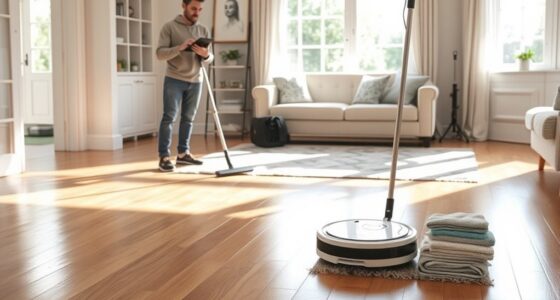
Robot mops can be safe for hardwood floors if they have features like adjustable water levels, soft pads, and obstacle sensors to prevent damage. Using proper cleaning solutions and maintaining your device regularly also helps protect your floors. Be sure to monitor the robot during use and keep floors free of debris. Want to learn more about choosing a safe and effective robot mop for your hardwoods? Keep exploring for helpful tips.
Key Takeaways
- Most robot mops are designed with soft bumpers and sensors to prevent scratches on hardwood floors.
- Adjustable water levels and gentle cleaning modes help avoid over-wetting and damage.
- Regular maintenance and debris removal protect floors from scratches caused by trapped dust or dirt.
- Using compatible, gentle cleaning solutions minimizes the risk of damaging delicate finishes.
- Proper supervision and setting virtual barriers prevent device mishaps near fragile inlays or trim.
Understanding How Robot Mops Work on Hardwood Surfaces
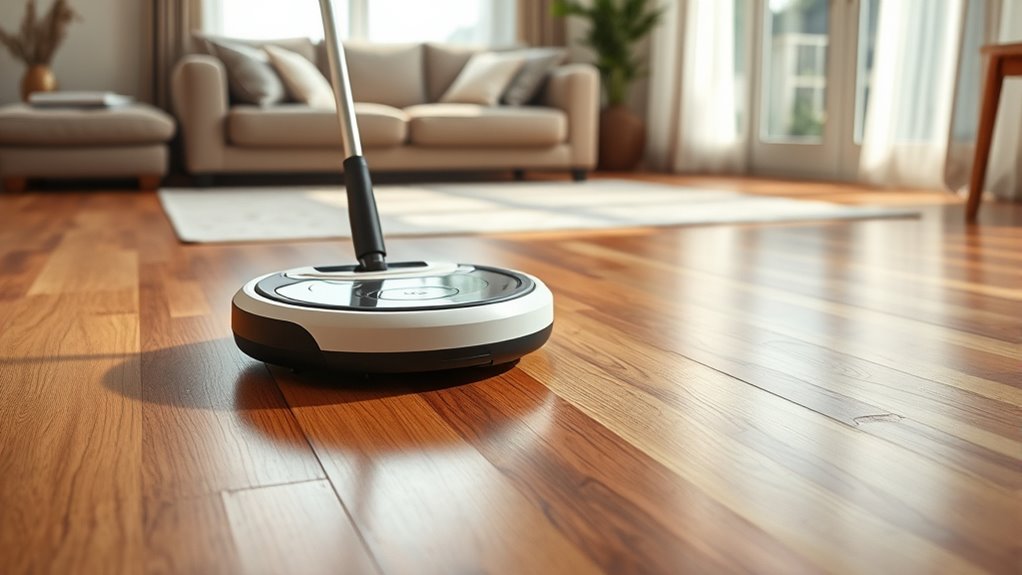
Robot mops are designed to effectively clean hardwood floors by combining intelligent navigation with specialized cleaning techniques. With advanced navigation systems, they can map your space, avoid obstacles, and target dirty spots efficiently. This technology guarantees thorough cleaning without missing areas or causing damage. Battery longevity is vital because it determines how long your robot can operate before needing a recharge. High-quality models optimize power use, allowing for longer cleaning sessions and faster recharge times. As a result, you get consistent performance with minimal interruptions. By understanding how these features work together, you can better appreciate how robot mops maintain your hardwood floors safely and effectively, making your cleaning routine more convenient and less stressful.
Safety Features to Look for in Robot Mops

When choosing a robot mop for hardwood floors, safety features should be a top priority. Look for models with robust robot mop durability—this guarantees the device can handle frequent use without risking damage to your floors. A durable design means fewer malfunctions that could cause scratches or gouges. Additionally, consider battery life; longer battery life allows the mop to clean larger areas securely without interruptions, reducing the chance of the device stopping mid-clean and causing mishaps. Safety features like auto shut-off when lifting, bump sensors to prevent collisions, and soft-touch bumpers are essential. These features help protect your hardwood floors from scratches, dents, or accidental damage, giving you peace of mind during every cleaning session.
Potential Risks of Using Robot Mops on Hardwood Floors

Despite their convenience, robot mops can pose risks to hardwood floors if not used carefully. One concern is that excessive robot mop noise might disturb pets or cause them stress, leading to potential accidents or scratches if they react suddenly. Additionally, pet allergies can be aggravated by trapped dust and allergens that linger in the device’s brushes or filters, especially if not cleaned regularly. Some robot mops use harsh cleaning solutions that could damage delicate finishes over time. Scratches or dents may occur if the device bumps into furniture or edges repeatedly. Using a robot mop without proper supervision or maintenance increases the risk of damaging your hardwood floors, so staying attentive and ensuring the device is suited for your flooring is essential.
Best Practices for Using Robot Mops Safely

To guarantee your hardwood floors stay protected while using a robot mop, it’s essential to follow some simple safety practices. First, ensure your floors are free of debris to prevent scratches and maintain robot mop durability. Regularly check the mop’s brushes and sensors for dust buildup. Use a compatible cleaning solution that doesn’t harm hardwood finishes, preserving your floor’s aesthetics. Set boundaries or virtual barriers if your device allows, avoiding areas with delicate inlays or trim. Keep an eye on the robot during initial uses to learn its movements and prevent mishaps.
Types of Cleaning Solutions Suitable for Hardwood Floors
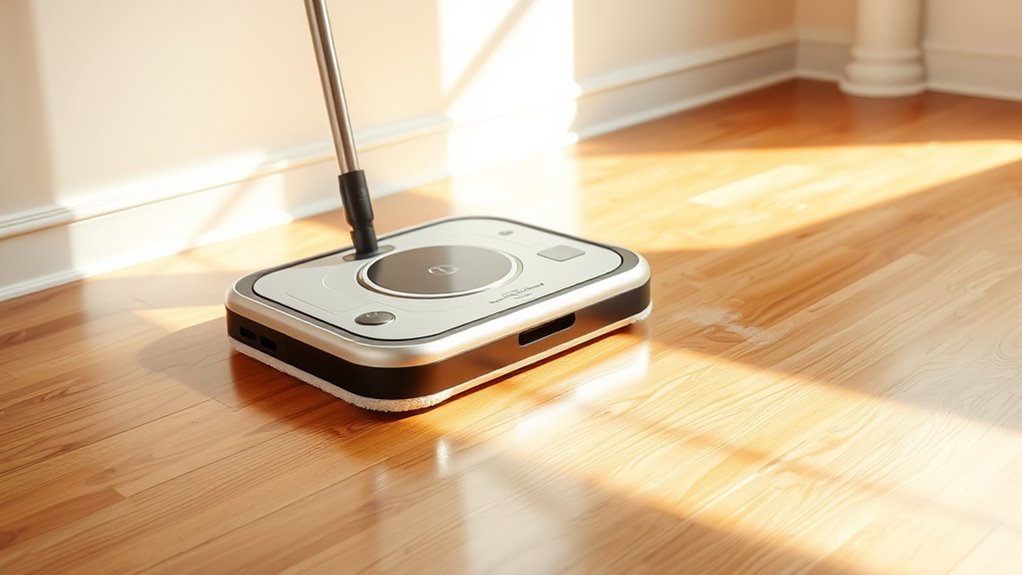
Choosing the right cleaning solution is essential to protect your hardwood floors while using a robot mop. You want cleaning solutions that are gentle yet effective, avoiding harsh chemicals that can damage the wood’s finish. Stick to pH-neutral cleaners or ones specifically formulated for hardwood. When using vacuum attachments, make sure they’re set to gentle suction to prevent scratching or denting your floors. Dusting methods are equally important; regularly remove dust and debris with a soft dusting cloth or a vacuum designed for hardwood, ensuring dirt doesn’t get ground into the surface during mopping. Always check the manufacturer’s recommendations for your robot mop and cleaning solutions to avoid voiding warranties or causing damage. Properly chosen solutions keep your floors looking beautiful and safeguard their longevity.
Maintenance and Upkeep of Robot Mops to Protect Hardwood
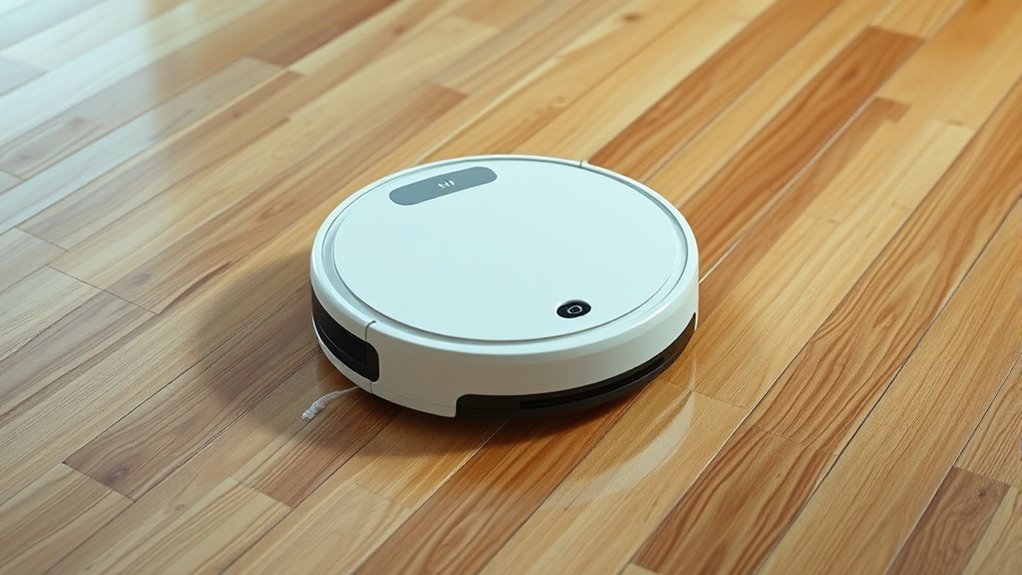
To keep your robot mop working effectively on hardwood floors, you need to follow proper cleaning techniques and perform regular maintenance. Simple tips like cleaning the brushes and replacing filters can prevent damage and guarantee peak performance. Staying on top of these tasks helps protect your floors and extends your device’s lifespan.
Proper Cleaning Techniques
Regularly maintaining your robot mop is essential for protecting your hardwood floors. Proper cleaning techniques help prevent unnecessary wear and keep the device functioning efficiently. Before each use, clear debris from the mop’s cloth and ensure the floor is free of loose dirt. Adjust the robot mop’s settings to avoid excessive water, which can damage wood surfaces. Pay attention to robot mop noise—loud sounds may indicate issues that could harm your floors or reduce efficiency. Keep the battery life in mind; a well-charged robot ensures thorough cleaning without interruptions. Avoid overusing the same area repeatedly, as this can cause scratches or dullness. Using gentle cleaning modes and regular inspections will help your robot mop work smoothly and protect your hardwood floors for years to come.
Regular Maintenance Tips
Maintaining your robot mop regularly guarantees it continues to protect your hardwood floors effectively. Keep the device clean by wiping down sensors and brushes with a damp cloth to ensure peak performance. Perform DIY cleaning of the mop’s brushes and water tank to prevent dirt buildup that could scratch your floors. Check for loose parts or worn-out components and replace them as needed. Regularly empty and clean the dustbin to avoid clogs. To enhance pet safety, remove pet hair and debris frequently, preventing potential jams or damage. Also, ensure the mop’s pads are clean and free of residue, avoiding streaks or residue left behind. Proper maintenance extends your robot mop’s lifespan and keeps your hardwood floors safe and spotless.
Comparing Different Robot Mops for Hardwood Floor Compatibility
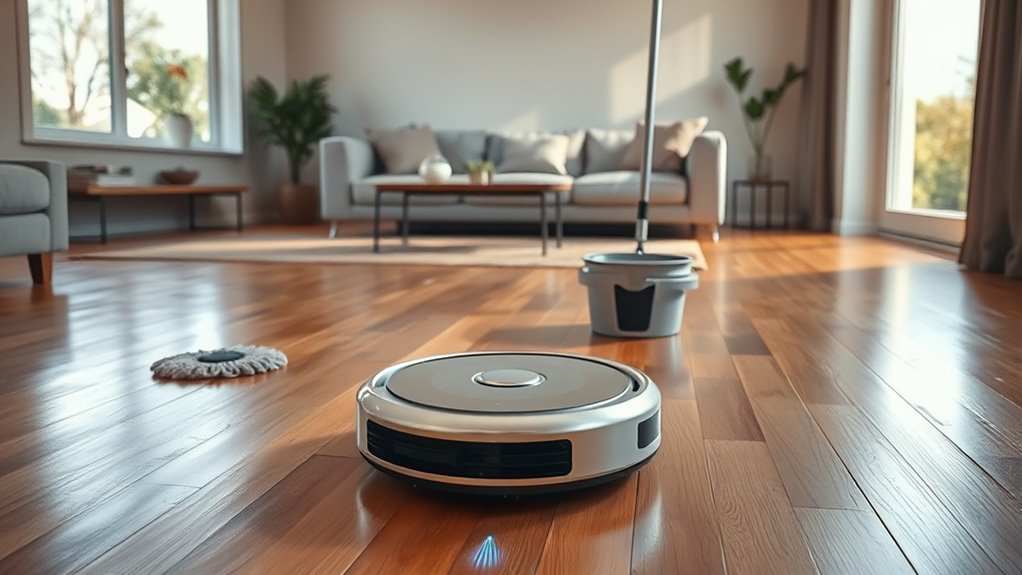
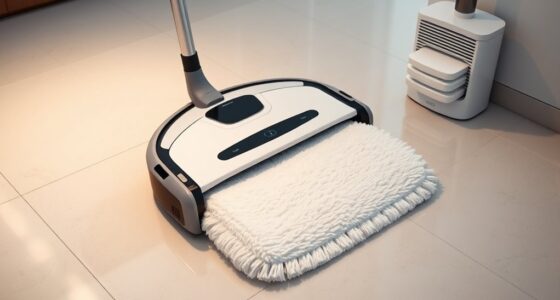
When choosing a robot mop for hardwood floors, it’s essential to take into account their compatibility with delicate surfaces. Different robot mop models vary in features designed to protect your hardwood. Some models offer adjustable water flow, ensuring you don’t oversaturate the floor, while others have soft microfiber pads that gently clean without scratching. Look for models specifically labeled as suitable for hardwood or with customizable cleaning settings. Hardwood compatibility also involves considering the device’s brush type and water tank capacity. Cheaper or generic models may lack the gentle cleaning features necessary for hardwood, risking damage over time. Comparing these factors helps you select a robot mop that delivers effective cleaning while safeguarding your floors’ integrity.
Signs That Your Hardwood Floor May Be Affected

If your hardwood floors start to look dull, scratched, or develop uneven patches, it’s a sign that they may be experiencing damage. You might notice areas where the finish has worn down or scratches that weren’t there before. These signs indicate that your floor’s protective layer could be compromised, making it vulnerable to further harm. Regular floor polishing helps restore shine and adds a protective barrier, reducing the risk of scratches. If scratches become deep or widespread, it’s a sign to take action quickly. Proper scratch prevention methods, like using pads on furniture and avoiding harsh cleaning tools, can help preserve your floors’ integrity. Staying attentive to these signs ensures you catch damage early and maintain a beautiful, durable surface.
Alternatives to Robot Mops for Hardwood Floor Cleaning
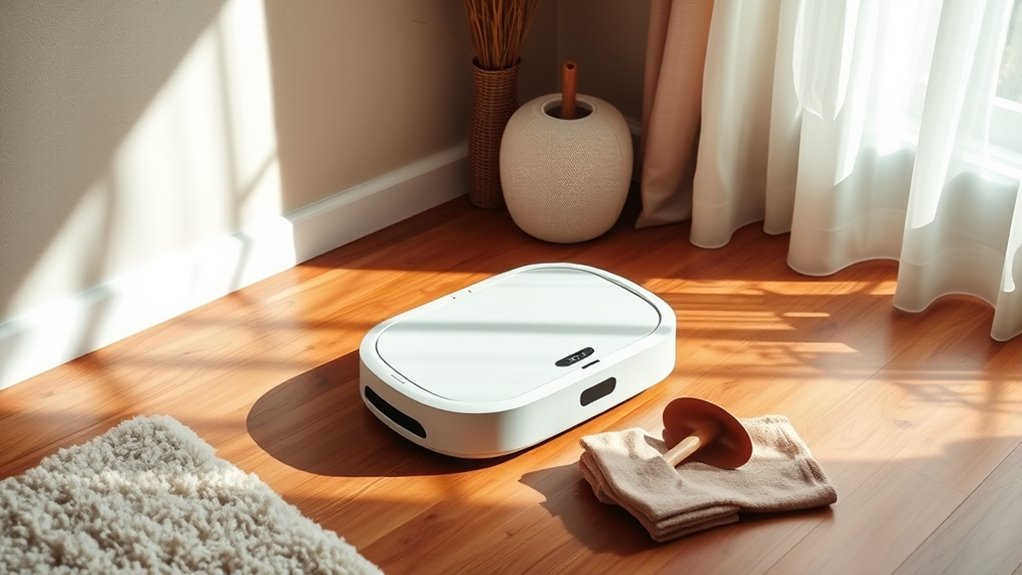
While robot mops offer convenience, there are several effective alternatives for cleaning hardwood floors that you might consider. Traditional mopping with a microfiber cloth or sponge mop is gentle and allows you to control the amount of moisture, reducing the risk of damage. Vacuuming with a soft-bristled attachment removes loose dirt and debris without scratching the surface. For deeper cleaning, use hardwood floor alternatives like specially formulated wood floor cleaners or steam mops designed for delicate surfaces. When choosing a robot mop brand, look for options with adjustable water levels and soft pads to prevent harm. These alternatives give you more control over how much moisture and pressure you use, helping preserve your hardwood floors while maintaining cleanliness.
Frequently Asked Questions
Can Robot Mops Cause Scratches on Hardwood Floors?
Robot mops can cause scratches on hardwood floors if you don’t perform proper robot mop maintenance and hardwood floor protection. To prevent this, guarantee your robot mop’s pads are clean and free of debris, and use soft, non-abrasive pads designed for hardwood. Regularly check and maintain your device, and always follow the manufacturer’s guidelines. Proper care keeps your floors safe, shiny, and scratch-free during robot mop use.
Are There Specific Robot Mops Designed for Delicate Hardwood Surfaces?
Imagine a gentle breeze caressing your hardwood floors—there are indeed robot mops designed for delicate surfaces. Look for models with specific robot mop compatibility that prioritize hardwood surface protection. These mops feature soft brushes, adjustable settings, and gentle cleaning modes, ensuring your floors stay scratch-free and gleaming. Choosing the right robot mop means you can enjoy spotless floors without worry, as it’s tailored to safeguard your delicate hardwood.
How Often Should I Inspect My Hardwood Floors After Using a Robot Mop?
You should inspect your hardwood floors after each cleaning, especially if you notice any dullness or scratches. Regularly check the floor finish for wear or damage and verify the robot mop’s pads are clean and gentle. Adjust your cleaning frequency based on foot traffic—more often in busy areas. This helps maintain your floor’s beauty and prevents unnecessary wear, ensuring your hardwood stays protected and looking great.
Do Robot Mops Handle Pet Hair and Debris Effectively on Hardwood?
Robot mops handle pet hair removal and debris management well on hardwood floors, especially models with powerful suction and specialized brushes. They efficiently pick up pet hair, dust, and small debris, keeping your floors clean. Regular maintenance, like emptying the dustbin and cleaning brushes, guarantees ideal performance. Just make sure your robot mop is designed for hardwood to prevent scratches and damage, and you’ll enjoy spotless floors with minimal effort.
Can Robot Mops Be Used on Sealed Versus Unsealed Hardwood Floors?
Yes, you can use robot mops on both sealed and unsealed hardwood floors, but with caution. For sealed finishes, robot mops are generally safe and effective, as the sealant guards the wood. However, on unsealed surfaces, you should avoid excessive moisture, which can cause damage. Always check your robot mop’s settings and manufacturer guidelines to guarantee safe cleaning, especially on unsealed floors to prevent warping or staining.
Conclusion
In short, while robot mops can be a convenient cleaning companion, caution is key. Check for safety features, choose suitable solutions, and follow proper practices to protect your hardwood floors. Regular maintenance and mindful monitoring help prevent problems and prolong your floors’ longevity. By balancing benefits with precautions, you can confidently keep your hardwoods happy and healthy, avoiding unnecessary issues. Ultimately, mindful management makes cleaning a lot more manageable and much more satisfying.