Robot vacuums can be a real convenience, effortlessly cleaning hardwood floors and low-pile carpets. However, they have limitations—navigation isn’t perfect, and they struggle with clutter or thick carpets. Maintenance, battery life, and hidden costs add up over time. Noise and compatibility with your home layout also matter. If you want to know how to make the most of these devices and avoid surprises, explore further for more insights.
Key Takeaways
- Robot vacuums are effective on hard floors but may struggle with thick carpets and clutter, requiring careful feature matching.
- Navigation and obstacle detection can be imperfect, leading to missed spots or getting stuck, especially in complex layouts.
- Ongoing costs like filter replacements, battery upgrades, and repairs can add significantly to long-term expenses.
- Battery life declines over time, reducing cleaning cycles and necessitating replacements within 1-2 years.
- High-priced models do not always guarantee better cleaning; budget options can be equally effective for standard needs.
How Effective Are Robot Vacuums on Different Surfaces
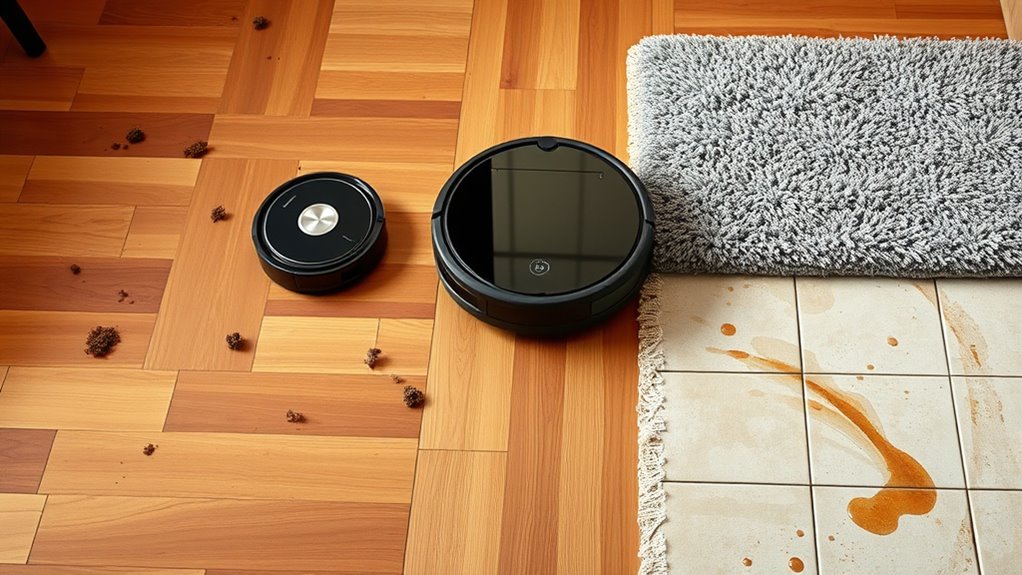
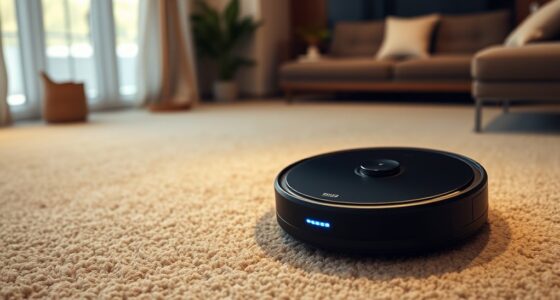
Robot vacuums are generally effective across various surfaces, but their performance can vary depending on the material. Your robot’s surface adaptability is key to achieving optimal cleaning precision. On hardwood floors, most models glide smoothly, picking up dust and debris efficiently. When shifting to low-pile carpets, some vacuums may need adjustments or stronger suction to maintain cleaning effectiveness. Thick or shaggy carpets can challenge even high-end models, reducing cleaning precision. To get the best results, choose a vacuum designed to handle multiple surfaces or that offers adjustable settings. This guarantees your robot can adapt quickly and clean thoroughly, regardless of the material. Ultimately, understanding your surfaces helps you select a robot vacuum that delivers consistent, reliable performance across your entire home.
The Limitations of Navigation and Mapping Technologies

While navigation and mapping technologies have advanced considerably, they still face notable limitations that can affect your robot vacuum’s performance. Mapping inaccuracies may cause it to miss spots or revisit areas unnecessarily. Obstacle detection isn’t foolproof, especially with transparent objects or complex clutter, risking collisions or incomplete cleaning. These issues can result in inefficient cleaning cycles and frustration. To help visualize, consider this table:
| Limitation | Impact | Example |
|---|---|---|
| Mapping inaccuracies | Missed spots or repeated cleaning | Furniture misrepresented |
| Obstacle detection | Collisions, missed debris | Transparent or small objects |
| Navigation issues | Getting stuck, incomplete routes | Dark or reflective surfaces |
Understanding these limitations helps set realistic expectations for your robot vacuum’s capabilities.
Maintenance and Long-Term Reliability Concerns
As you rely on your robot vacuum, you’ll notice regular cleaning can become a challenge, especially as parts wear out over time. Battery life tends to decline, requiring more frequent charges or replacements to keep it running smoothly. Additionally, the costs of replacing filters and other components can add up, impacting its long-term reliability.
Regular Cleaning Challenges
Despite their convenience, robot vacuums often face challenges with regular cleaning and long-term reliability. Pet hair can clog filters and brushes, reducing suction and efficiency over time. Hardwood floors, while easy to clean, require frequent maintenance to prevent scratches or debris buildup that can hinder performance. You might find yourself needing to clear hair from brushes or empty dustbins more often than expected. Some models struggle with deep cleaning carpets or steering through tight spaces, leading to missed spots and extra manual effort. Regular maintenance is essential to keep your vacuum functioning properly, but it can be time-consuming. Over time, wear and tear may cause parts to break or degrade, impacting durability. This ongoing upkeep can diminish the long-term reliability you initially expected from your investment.
Battery Life Decline
Over time, the battery life of your robot vacuum can decline, impacting how often and how long it operates on a single charge. Battery degradation occurs naturally with repeated use, leading to shorter cleaning sessions and increased recharge challenges. As the battery weakens, you might notice the vacuum struggles to complete full runs or needs frequent recharging, disrupting your cleaning routine. This decline isn’t usually reversible, making it frustrating when your device doesn’t perform as it once did. To combat this, some owners opt for battery replacements or maintenance, but these solutions can be costly or complicated. Understanding that battery health diminishes over time helps set realistic expectations for your robot vacuum’s long-term reliability and performance.
Part Replacement Costs
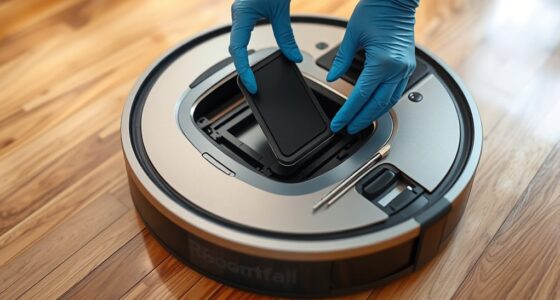
Replacing parts in your robot vacuum can quickly add up in cost, especially if you need frequent repairs or upgrades. Battery replacement is one of the most common expenses, as batteries tend to degrade over time and may need swapping every one to two years. This can be a significant expense, depending on the model. Additionally, filter costs can also add up, since filters need regular replacement to maintain suction and cleaning efficiency. Some models require specific filters that aren’t cheap, leading to ongoing expenses. Keep in mind that neglecting timely part replacements can cause the vacuum to underperform or break down prematurely, leading to even higher repair costs. Planning for these ongoing expenses helps you understand the true long-term costs of owning a robot vacuum.
Noise Levels and Disruptiveness During Operation

While robot vacuums are praised for their convenience, their noise levels can sometimes be disruptive, especially if you need to focus or have quiet time. The noise disturbance varies by model, with some emitting loud sounds that interrupt conversations or work. This can cause operational disruptions, making it difficult to concentrate or relax. To help you compare, here’s a quick overview:
| Model A | Model B | Model C |
|---|---|---|
| Quieter operation | Moderate noise | Noisier, louder |
| Suitable for quiet environments | Best for busy areas | Less ideal for quiet time |
| Noise level: 55dB | Noise level: 65dB | Noise level: 70dB |
Choosing a quieter model minimizes noise disturbance, ensuring your cleaning doesn’t interfere with daily activities.
Battery Life and Rechargeability Challenges
You might notice that your robot vacuum doesn’t run as long as you’d like before needing a recharge. Long recharge times can interrupt your cleaning schedule, especially if it’s a large space. Over time, the battery’s capacity decreases, so you may find yourself replacing it sooner than expected.
Limited Operating Duration
Despite their many advantages, robot vacuums often struggle with limited battery life, which can interrupt cleaning sessions before the job is complete. The battery lifespan declines over time, reducing run time and forcing you to recharge more frequently. This creates recharge challenges, especially if your space is large or has multiple rooms. You might find yourself needing to pause cleaning to let the vacuum recharge, delaying the process. Some models attempt to mitigate this with larger batteries, but that often adds weight and increases recharge time. As a result, your robot vacuum may not finish cleaning in one go, forcing you to juggle recharging and vacuuming schedules. Limited operating duration is a key factor to ponder when evaluating if a robot vacuum fits your cleaning needs.
Long Recharge Times
Long recharge times can considerably disrupt your cleaning routine, especially if your robot vacuum’s battery takes a lengthy period to regain full power. Poor battery performance during recharge affects how quickly your vacuum is ready for the next session, often requiring hours before it’s fully charged again. Longer recharge durations mean you might have to pause your cleaning schedule or manually intervene to restart the device. This can be frustrating if you expect a seamless, autonomous cleaning experience. Additionally, some models struggle with battery efficiency, causing prolonged recharge times that limit their overall convenience. If you’re relying on your robot vacuum to keep your floors tidy regularly, these recharge challenges can undermine its effectiveness, making it less of a time-saver and more of a source of inconvenience.
Battery Degradation Over Time
Over time, the battery capacity of robot vacuums naturally diminishes, leading to shorter cleaning cycles and more frequent recharges. This decline is due to the battery’s limited lifespan and the degradation rate that occurs with repeated use. As the battery ages, it can’t hold as much charge, which impacts how long your vacuum can operate before needing a recharge. Typically, a robot vacuum’s battery lifespan ranges from 1 to 2 years, depending on usage and maintenance. The degradation rate varies between models and brands, but it generally results in reduced runtime over time. To maintain maximum performance, you might need to replace the battery or upgrade your vacuum sooner than expected. Understanding this decline helps manage expectations about long-term reliability and cost.
Cost Versus Actual Cleaning Performance

While some expensive robot vacuums come with advanced features, their higher price tags don’t always guarantee better cleaning results. When you do a cost comparison, you might find that mid-range models often deliver comparable cleaning effectiveness to premium options. Cheaper units may lack fancy sensors or powerful suction, but many still efficiently pick up dirt and debris on standard surfaces. On the other hand, spending more doesn’t always mean a significant boost in performance; sometimes, it’s just extra bells and whistles. To determine if a higher-priced model is worth it, consider your specific cleaning needs and the environment you’re cleaning. Ultimately, a well-chosen budget model can perform just as well as a costly one, making the price difference less relevant for everyday cleaning.
Compatibility With Various Home Layouts and Clutter

When choosing a robot vacuum, it’s important to contemplate how well it adapts to your home’s layout and clutter level. Some models excel in open spaces, while others handle tight corners or furniture obstacles better. Clutter management is key—excess items can hinder cleaning and cause jams. Consider your home’s layout and clutter density to select a compatible device.
| Home Layout | Clutter Level | Recommended Features |
|---|---|---|
| Open floor plans | Low | Wide cleaning path, mapping |
| Small rooms | Moderate | Edge cleaning, compact design |
| Crowded spaces | High | Strong suction, obstacle sensors |
Matching your home layout and clutter level ensures efficient cleaning and less frustration.
Hidden Costs of Accessories and Repairs
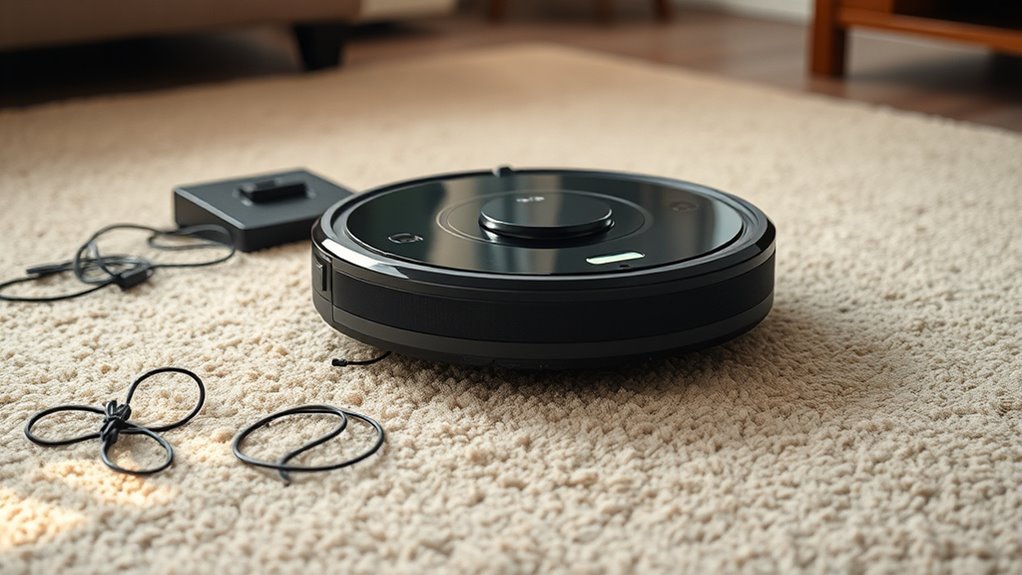
Although robot vacuums often seem like a cost-effective solution, many users overlook the hidden expenses associated with accessories and repairs. Over time, you might find yourself shelling out extra money for replacement brushes, filters, or batteries—these accessory expenses can add up quickly. Repairs, especially for more complex components, can also be costly if the device encounters issues beyond basic maintenance. Keep in mind that warranties often don’t cover all repair costs, so you might need to pay out of pocket more often than expected. Additionally, some accessories are proprietary, forcing you to buy from specific brands or suppliers, which can inflate costs. Recognizing these hidden costs helps you better understand the true long-term investment involved in owning a robot vacuum.
Impact on Allergies and Indoor Air Quality
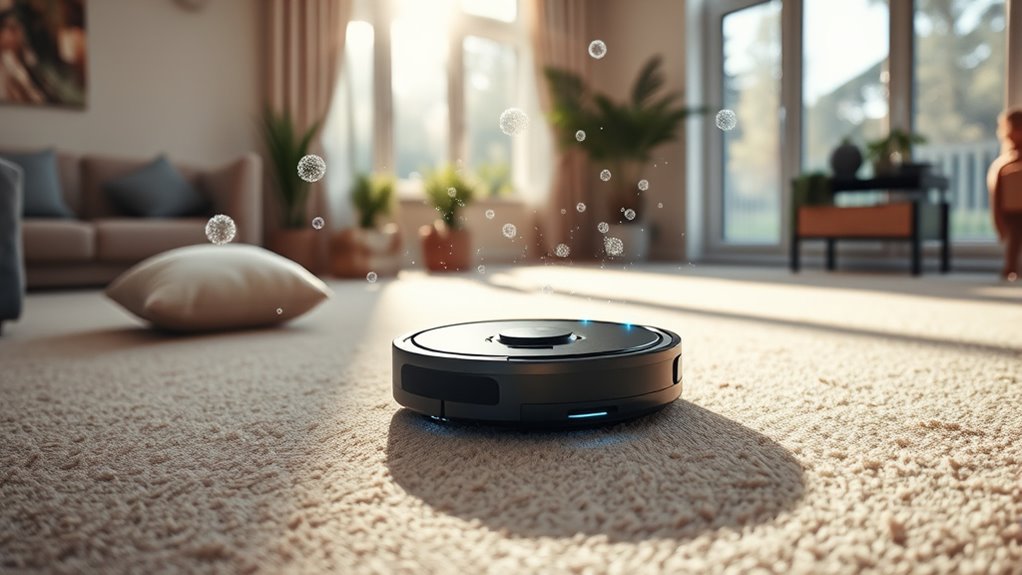
Robot vacuums can help reduce allergens by picking up dust, pet hair, and other particles more thoroughly. Many models also feature air purification capabilities that improve indoor air quality. However, some residual dust may remain if the vacuum isn’t regularly maintained or equipped with advanced filters.
Allergen Pickup Efficiency
Thanks to their advanced filtration systems and precise navigation, robot vacuums can effectively reduce allergens in your home. Their robot vacuum design often includes HEPA filters that trap tiny dust mites, pollen, and pet dander, preventing these allergens from recirculating. Smart navigation ensures thorough cleaning by targeting hard-to-reach spots and avoiding obstacles, which means more complete allergen pickup. Regular use of a robot vacuum can considerably lower airborne allergens, easing allergy symptoms and improving indoor air quality. However, the efficiency depends on the quality of the vacuum and its filtration system. While not a complete allergy solution, a well-designed robot vacuum can be a valuable part of your allergy management routine. Consistent cleaning helps maintain a cleaner, healthier environment indoors.
Air Purification Capabilities
Many modern robot vacuums go beyond just cleaning surfaces by incorporating air purification features that further enhance indoor air quality. With built-in air filtration systems, these vacuums can help remove airborne allergens like dust mites, pet dander, and pollen, improving overall air quality. As they work, they trap allergens in HEPA filters or similar media, reducing their circulation in your home. This means you can breathe easier, especially if you suffer from allergies or respiratory issues. While they don’t replace dedicated air purifiers, robot vacuums with allergen removal capabilities contribute to a cleaner environment. Keep in mind, consistent maintenance of filters ensures ideal air filtration. Overall, these features make robot vacuums a helpful tool in promoting healthier indoor air.
Residual Dust Concerns
Despite their advanced cleaning features, residual dust can still pose a challenge for indoor air quality and allergy sufferers. Robot vacuums may reduce dust buildup, but they often leave behind residual particles that can worsen allergies. These leftover particles can become airborne again, impacting air quality. To understand this better, consider the table below:
| Issue | Impact on Indoor Air Quality |
|---|---|
| Dust Buildup | Accumulates in corners and under furniture, not always fully removed |
| Residual Particles | Remain on surfaces or become airborne, aggravating allergies |
| Filtration Limits | Some vacuums lack HEPA filters, allowing tiny particles to escape |
While robot vacuums are convenient, they aren’t foolproof for allergy sufferers concerned about dust buildup and residual particles.
Real User Experiences and Common Complaints
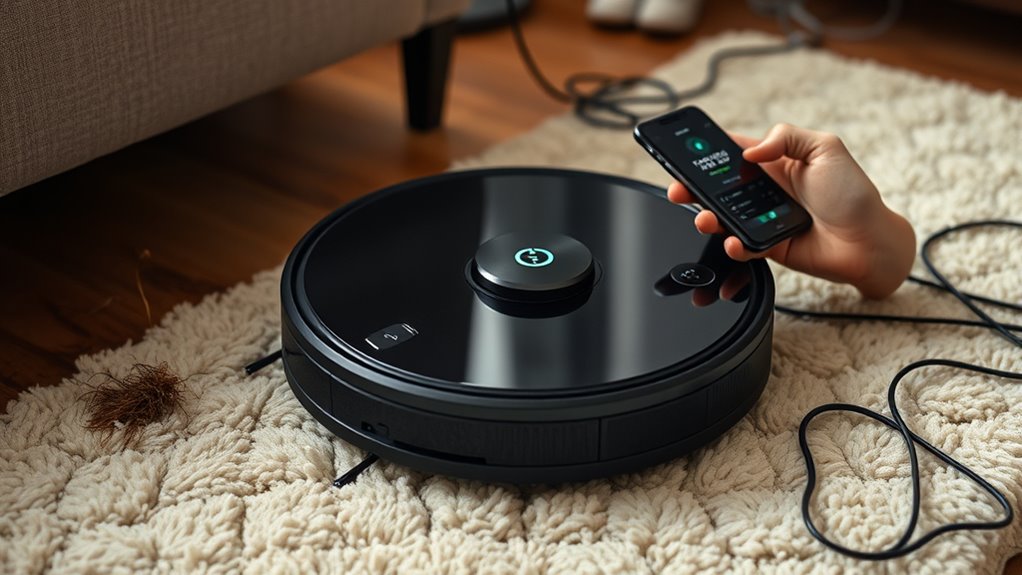
While robot vacuums often deliver impressive cleaning performance, user experiences reveal a mix of satisfaction and frustration. Many users appreciate the sleek robot vacuum design, but some find it challenging to navigate tight spaces or uneven floors. Common complaints involve user interface usability; confusing controls or difficult app setup can hinder the overall experience. You might struggle with customizing cleaning schedules or adjusting settings, leading to frustration. Additionally, some users notice that the vacuum misses spots or gets stuck frequently. While others enjoy the convenience, these recurring issues highlight that robot vacuum performance can vary. Overall, your experience depends heavily on the model’s design and how intuitive its controls are, shaping whether you’ll be satisfied or disappointed with your investment.
Frequently Asked Questions
How Do Robot Vacuums Handle Pet Hair Effectively?
Robot vacuums handle pet hair effectively by using strong suction and specialized brushes designed for pet hair removal. They efficiently pick up loose fur from carpets and hard floors, while their allergen capture filters trap pet dander and allergens. Regular maintenance keeps them functioning *at their best*, ensuring your space stays clean and allergen-free. This makes robot vacuums a convenient tool for managing pet hair and improving air quality in your home.
Can Robot Vacuums Clean Under All Types of Furniture?
You’ll be amazed at how robot vacuums conquer even the tightest spots under furniture. With impressive edge access and precise furniture clearance, they can slide under beds, sofas, and other low-clearance pieces you never thought possible. No more bending or lifting—these vacuums expertly navigate under almost all furniture types, leaving your floors spotless. It’s like having a tiny, unstoppable cleaning army at your command!
Are Robot Vacuums Safe for Homes With Small Children?
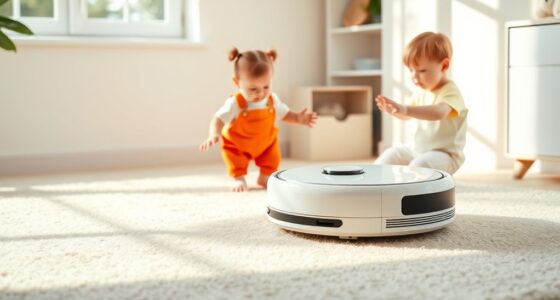
Robot vacuums can be safe for homes with small children if you choose models with child safety features. Look for ones with secure covers and automatic shut-off to prevent battery hazards. Always supervise your kids around the device, especially during charging. Regularly check for any damage or loose parts, and keep the vacuum out of reach when not in use. This helps minimize risks and guarantees a safer cleaning experience.
Do Robot Vacuums Work Well on Thick Carpets or Rugs?
Think of your thick carpets or rugs as mountains to conquer, and your robot vacuum as a brave explorer. It can handle carpet deep cleaning pretty well, especially with good rug pile management. While it might not match a deep clean from a professional, it still sweeps away surface dirt and pet hair effectively. Just keep an eye on those higher piles, and your robot will do its best to clear the terrain.
How Do Robot Vacuums Perform in Homes With Multiple Floors?
Robot vacuums generally handle multi-floor homes well thanks to multi-floor navigation. They automatically detect and adapt to different levels, avoiding the need to move manually. However, most models lack stair climbing capabilities, so you’ll need to carry them between floors. For homes with multiple levels, look for a vacuum with advanced navigation and consider manually transporting it for stairs, ensuring thorough cleaning across all your floors.
Conclusion
So, are robot vacuums worth the hype? Think of them as helpful but not perfect—they’ll clean your floors, but won’t replace good old-fashioned scrubbing or careful planning. Like any gadget, they’ve got quirks and limits. Before you buy, weigh their convenience against potential frustrations. Remember, no device is a magic wand—sometimes, you get what you pay for. Are you ready to accept the trade-offs in exchange for effortless cleaning?