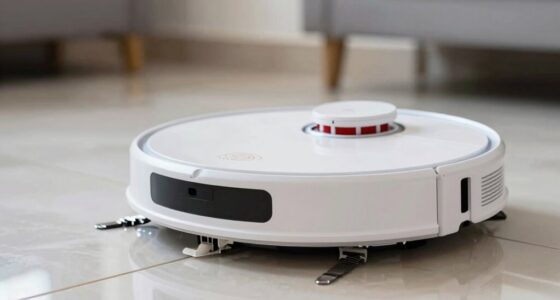
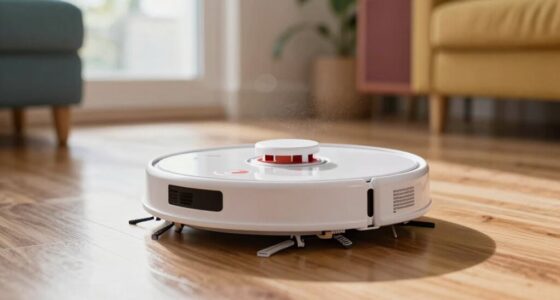
Hard surfaces like hardwood, tile, and laminate work best for robot vacuums because they allow for smooth navigation and easy cleaning. Carpets and rugs, especially thicker ones, often cause struggles, trapping debris and frustrating sensors. Textured or uneven surfaces can also hinder performance. To keep your robot functioning well, regular maintenance is key. Keep exploring to discover which floors suit your robot vacuum best and how to optimize its cleaning power.
Key Takeaways
- Hard surfaces like hardwood, tile, and laminate are ideal for robot vacuums due to smooth navigation and easy maintenance.
- Carpets and thick rugs challenge robot vacuums, especially with deep debris and dense textures that can cause jams or inefficient cleaning.
- Tile and laminate floors allow quick cleaning but grout lines and uneven surfaces may hinder movement and dirt removal.
- Surfaces with uneven or textured materials can reduce navigation accuracy and cleaning effectiveness, requiring regular sensor and brush upkeep.
- Proper maintenance of sensors, brushes, and wheels is essential for optimal performance across all floor types.

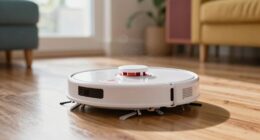
Choosing the right floor type is essential to getting the most out of your robot vacuum. The type of flooring in your home directly impacts how well your robot navigates and cleans. For crucial performance, you need to contemplate how different surfaces interact with your device’s sensors and brushes. Good robot vacuum navigation relies heavily on a clear path and the ability to detect obstacles, which varies depending on your floors. Hard surfaces like hardwood, tile, or laminate usually allow for smooth navigation and thorough cleaning, since the robot can easily move across these surfaces without getting stuck. However, maintaining these floors is just as vital; regular maintenance tips include clearing debris from sensors, cleaning brushes, and ensuring wheels aren’t clogged with dust or hair, all of which help your vacuum navigate better and prolong its lifespan. Additionally, choosing floors with energy-efficient materials can contribute to a more sustainable home environment.
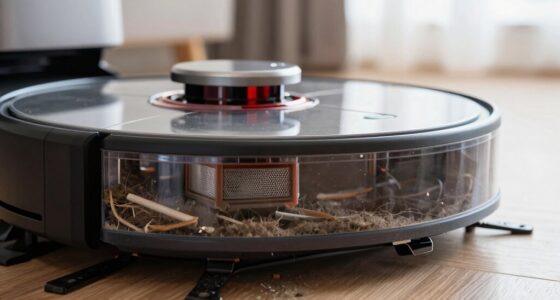
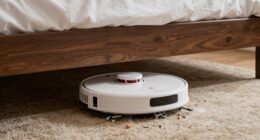
When it comes to carpets and rugs, your robot vacuum often faces more challenges. Thicker carpets can trap debris, and some models struggle to lift dirt from deep fibers. Navigation can also be trickier because dense textures may obscure sensors or cause the vacuum to get stuck or miss spots. To improve your robot’s navigation on carpets, think about using models with higher suction power or adjustable brush height. Regular maintenance tips for carpets involve emptying dustbins frequently, cleaning brushes, and checking sensors for dust buildup, which can interfere with obstacle detection. Some robot vacuums have trouble with transition strips or uneven flooring between different surface types, so it’s imperative to keep those clear to prevent jams or navigation errors.
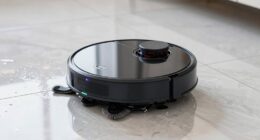
Tile and laminate floors are generally easier for robot vacuums to handle, offering flat, smooth surfaces that facilitate quick and efficient cleaning. Still, grout lines can sometimes trap dirt or cause the vacuum to slow down or change direction. Maintaining these floors involves sealing grout lines if possible and keeping the surface free from loose debris. For floors with uneven or textured surfaces, such as certain stone tiles or patterned laminates, navigation might become inconsistent, and cleaning effectiveness may decrease. Regularly inspecting and cleaning sensors and brushes will help your robot navigate these tricky areas more confidently.
Top picks for "floor robot vacuum"
Open Amazon search results for this keyword.
As an affiliate, we earn on qualifying purchases.
Frequently Asked Questions
Do Robot Vacuums Handle Outdoor or Semi-Outdoor Floors?
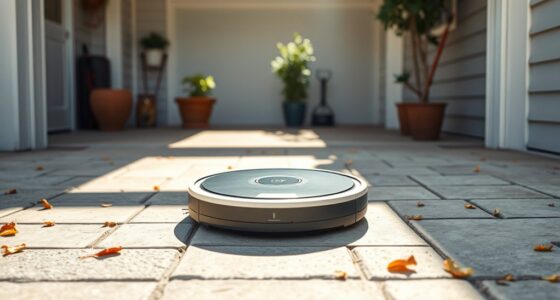
Robot vacuums generally aren’t designed for outdoor cleaning or semi-outdoor floors. You’ll find they struggle with dirt, debris, and uneven surfaces outside or on semi-outdoor floors like patios and decks. If you try to use them in these areas, they might get stuck, jammed, or damaged. For outdoor cleaning, it’s best to use a specialized outdoor cleaner or broom instead of relying on your robot vacuum.
Can Robot Vacuums Clean Hardwood Floors Without Scratching?
Can your robot vacuum clean hardwood floors without scratching? Yes, but only if you take precautions. You should look for models with hardwood scratch prevention features, like soft brush rolls or rubber blades. Also, consider robot vacuum coatings that protect delicate surfaces. These enhancements help prevent scratches, ensuring your hardwood floors stay pristine while your robot does its job. Don’t overlook these details—your floors will thank you.
Are Robot Vacuums Effective on High-Pile or Shag Carpets?
Robot vacuums often struggle with high-pile and shag carpets because their brushes and suction can’t effectively penetrate thick fibers. You might find that they miss debris or get stuck more frequently on these surfaces. To keep your high-pile or shag carpets clean, consider a model specifically designed for deep cleaning or use a handheld vacuum for thorough maintenance. Regularly check the brushes and sensors to improve performance.
How Do Robot Vacuums Perform on Uneven or Textured Surfaces?
Controlling uneven or textured surfaces is like steering through a rugged mountain trail—you need steady surface grip and sharp navigation skills. Robot vacuums can struggle with these surfaces, as uneven bumps challenge their sensors and wheels, causing frequent navigation challenges. You might notice missed spots or frequent stalls. Choosing models with robust suspension and enhanced sensors helps them adapt better, but some terrains remain a tough climb for even the smartest robots.
What Maintenance Is Required for Robot Vacuums on Different Floor Types?
You should regularly check your robot vacuum’s battery longevity and recharge it as needed to prevent power loss. For different floor types, keep brushes clean and free of hair or debris to guarantee peak performance. On textured or uneven surfaces, brush maintenance might need to be more frequent. Additionally, inspect wheels and sensors often, especially on rough floors, to keep your vacuum running smoothly and efficiently.
Conclusion
While no floor is perfect, understanding how your robot vacuum performs on different surfaces helps you care for your home’s delicate beauty. With a little patience and proper maintenance, you can keep your floors looking their best without worry. Remember, every surface has its own story, and your robot’s gentle touch can help preserve that story for years to come. Embrace the journey of cleaning, knowing it’s a small act of love for your space.