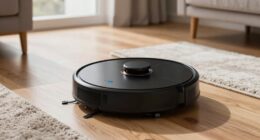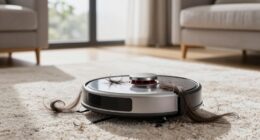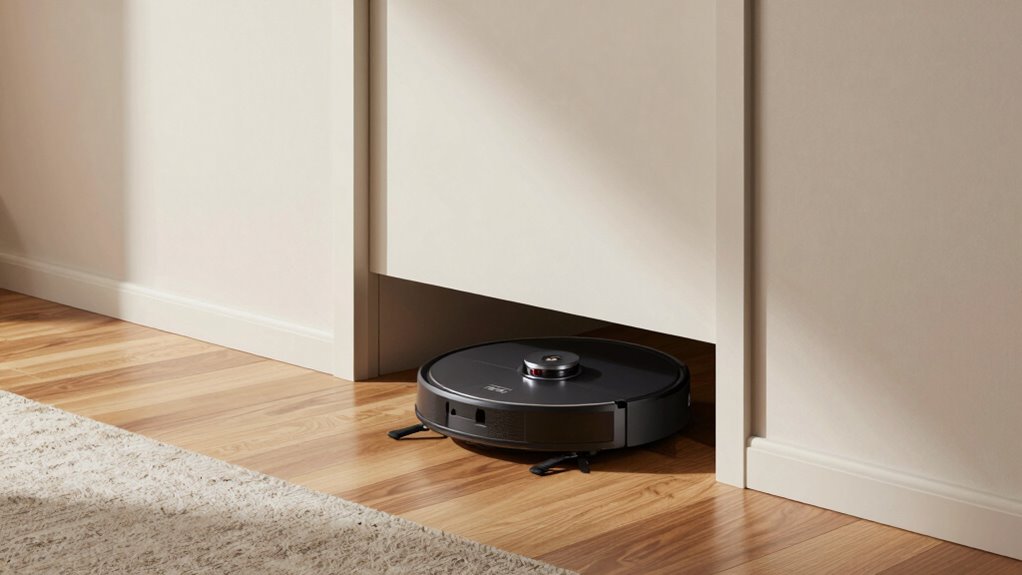

To make your entryways easier for your robot vacuum, clear clutter, loose cords, and small objects that could block its path. Lower thresholds and remove thick rugs or adjust their suction settings for better movement. Install barriers or door sweeps to guide the robot and guarantee doorways are wide enough. Regularly update its software, clean sensors, and maintain floors to help it navigate smoothly. Want to discover more tips to optimize your robot’s performance? Keep exploring to learn additional strategies.
Key Takeaways
- Clear clutter, cords, and small objects from entryways to prevent obstacles for the robot vacuum.
- Lower or remove thresholds and rugs that hinder smooth passage.
- Use barriers or door sweeps to guide the vacuum and prevent it from getting stuck.
- Regularly update firmware and calibrate sensors to improve obstacle detection and navigation.
- Implement mapping and advanced navigation features for precise route planning and efficient cleaning.
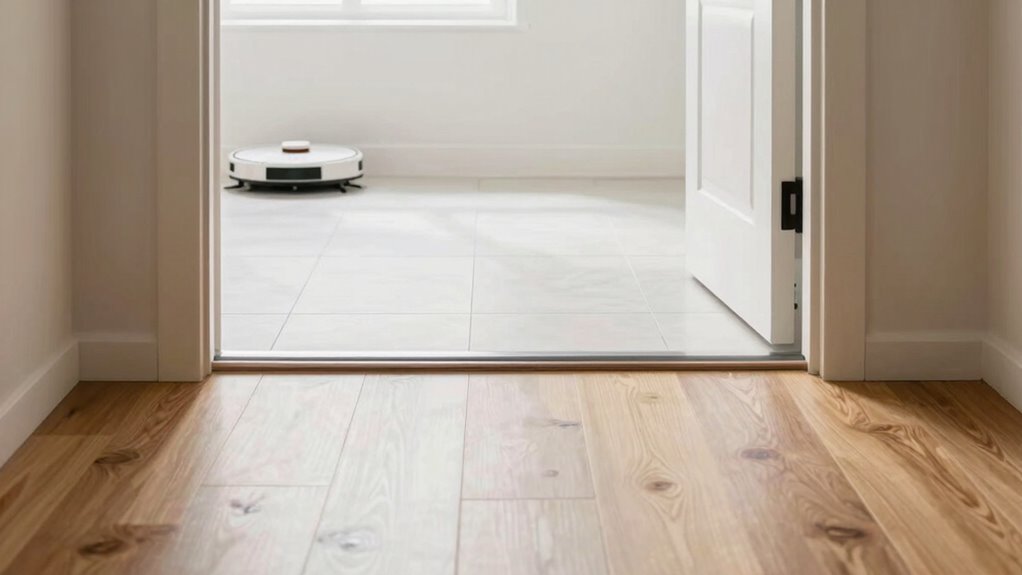
Setting up effective entryways for your robot vacuum can markedly improve its cleaning efficiency. When your robot encounters obstacles or tight spaces, its ability to navigate smoothly depends on how well you prepare these entry points. Clear pathways allow your vacuum to move freely, reducing the chances of getting stuck or missing spots. Start by removing any clutter or objects near doorways or narrow passages. This not only helps your robot obstacle navigation but also prevents it from wasting battery power trying to get around obstacles or getting caught on loose cords or small items.
If you have thresholds or rugs at entry points, consider lowering or removing them. High thresholds can impede your vacuum’s movement, forcing it to bump repeatedly or stop altogether. For those with thick rugs, check if your robot vacuum has adjustable settings for vacuum suction power. Lowering the suction in certain areas can help prevent your device from struggling to pass over thicker surfaces, ensuring smoother navigation. Conversely, in areas that require deeper cleaning, increasing the vacuum suction power can improve cleaning effectiveness without risking getting stuck.
To make entryways even more robot-friendly, consider installing barriers or door sweeps that guide your vacuum through the desired paths. These can help direct your robot’s movement, especially if it tends to favor certain routes or avoids specific areas. Ensure that doorways aren’t too narrow for your vacuum to pass through comfortably. If necessary, use a wider opening or remove doorstops that could block entry. You want your robot to access every corner without frequent manual intervention. Additionally, regularly updating your robot’s firmware can optimize its navigation algorithms and sensor calibration, improving obstacle detection. Proper maintenance of navigation sensors helps your robot avoid unnecessary collisions and enhances overall efficiency. Regularly checking and maintaining your robot’s sensors and wheels, as well as cleaning the floor surface, can further improve its navigation and cleaning performance, especially in entryways with varying surfaces. Including routine maintenance as part of your cleaning schedule can also prolong your device’s lifespan and ensure consistent performance. To further enhance navigation, consider using mapping technology, which can create more precise routes and avoid common obstacles.

Foldable Robot Vacuum Barrier | Compact Emergency Wall for Toy & Small Object Protection | Portable Virtual Fence
INSTANT EMERGENCY BARRIER: Creates an immediate physical block for your robot vacuum, acting as a "red button" to…
As an affiliate, we earn on qualifying purchases.
As an affiliate, we earn on qualifying purchases.
Frequently Asked Questions
Can Robot Vacuums Handle Uneven or Textured Entryway Floors?
Robot vacuums can handle uneven or textured entryway floors, but their efficiency depends on the model. Many have automatic docking features that help them recharge before tackling tough spots, preserving battery longevity. Keep in mind, textured surfaces may slow cleaning or require more frequent maintenance. Choosing a model with strong suction and good navigation guarantees better performance, making it easier for your robot vacuum to clean even challenging entryways effectively.
Do Door Thresholds Need to Be Modified for Better Vacuum Access?
Think of your door threshold as a mountain pass—smooth and accessible, or rugged and impassable. To improve vacuum access, you should consider threshold modification, lowering or smoothing it. This makes it easier for your robot vacuum to cross without getting stuck. By creating a gentle incline or seamless passage, you guarantee the vacuum can clean entryways thoroughly without obstacles, transforming your home’s flow into a well-oiled journey.
How Do Rugs or Mats Affect Robot Vacuum Cleaning in Entryways?
Rugs and mats can impact your robot vacuum’s cleaning, especially if they’re thick or placed poorly. Thick rugs might be too high for the vacuum’s brushes and wheels, causing it to get stuck or miss spots. To improve cleaning, choose thinner rugs or mats and position them where the robot can easily access, avoiding thick or uneven mats that block its path. Proper placement guarantees efficient, thorough cleaning.
Are There Specific Entryway Designs That Improve Vacuum Efficiency?
Think of your entryway as a well-orchestrated stage for your robot vacuum. Opt for a streamlined design with smooth, level flooring, minimal clutter, and clear pathways. Incorporate smart home integration to schedule cleaning times and monitor battery life management, so your vacuum works efficiently without interruptions. Using a consistent, clutter-free layout helps your robot navigate seamlessly, boosting vacuum efficiency and keeping your entryway spotless with less effort.
Can Pet Hair or Debris Block Robot Vacuum Sensors at Entry Points?
Yes, pet hair and debris can block your robot vacuum sensors, especially if debris accumulates around entry points. Regular sensor calibration helps your vacuum detect obstacles accurately, reducing the chances of sensor blockage. Keep entryways clear of hair and debris, and clean sensors often with a soft cloth. Doing so guarantees your robot vacuum navigates smoothly, avoids obstacles, and cleans efficiently without getting stuck or missing spots.

eufy Robot Vacuum 11S MAX, Super Thin, Powerful Suction, Quiet, Self-Charging Robotic Vacuum Cleaner, Cleans Hard Floors to Medium-Pile Carpets, Black
1. Compact and Quiet Operation: With a slim 2.85" profile, the eufy robot vacuum operates quietly, offering a…
As an affiliate, we earn on qualifying purchases.
As an affiliate, we earn on qualifying purchases.
Conclusion
By simplifying your entryways, you’re fundamentally clearing a welcoming runway for your robot vacuum, allowing it to glide effortlessly across your home. I once watched my robot navigate a cluttered hallway like a skier on uneven terrain, struggling to find balance. When I decluttered, it moved smoothly and efficiently, saving me time and energy. Think of your entryway as the red carpet—make it unobstructed, and your robot will deliver sparkling results every time, with ease.
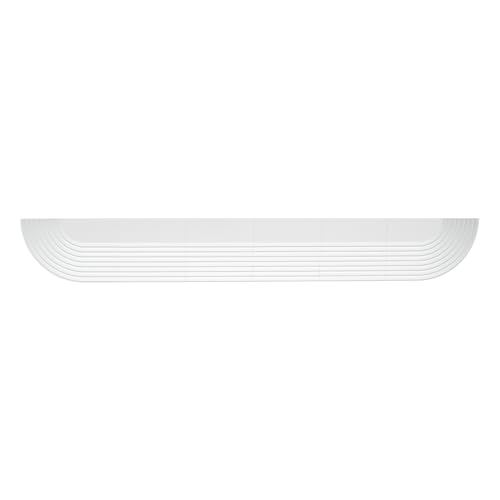
roborock Threshold Strip for All Series Robot Vacuums
Compatible Model: Compatible with All roborock Robot Vacuums.
As an affiliate, we earn on qualifying purchases.
As an affiliate, we earn on qualifying purchases.
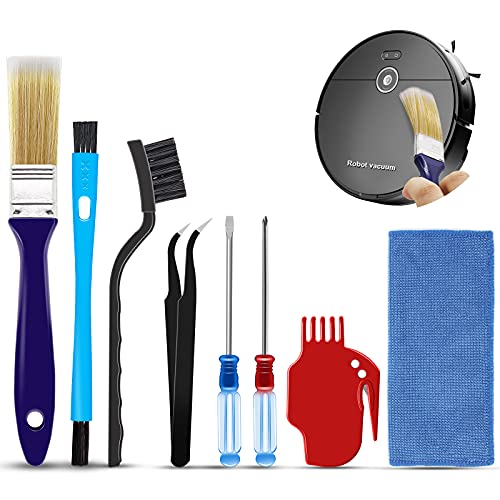
Midukit Vacuum Attachments Accessories for Robot Vacuum Cleaner,Cleaning Brush roll Cleaning Tool Replacement Parts, Part kit Tool for Vacuums Cleaner Replacement Include Vacuum Cleaning Cloth
Midukit vacuum cleaning kit for robot, dyson. Vacuum cleaning tool includes Cleaning Brush, tweezers, screwdriver (Phillips, Slotted), double-end…
As an affiliate, we earn on qualifying purchases.
As an affiliate, we earn on qualifying purchases.