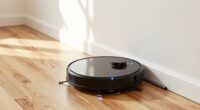
To pick a robot vacuum for allergies and dust control, choose one with HEPA filters that trap tiny particles like pollen and pet dander. Look for models with strong suction and multi-surface capabilities for thorough cleaning. Make sure it has advanced sensors for thorough coverage and easy maintenance features like accessible filters and dustbins. Consider also its ability to handle pet hair and allergens effectively while minimizing chemical emissions. Keep exploring for more tips to find the best fit for your home.

Get home appliances delivered free — and shop member deals
- Fast, free delivery on millions of items
- Access to Prime Big Deal Days deals on October 6–7
- Prime Video, Amazon Music and more included
Key Takeaways
- Choose a model with HEPA filters to effectively trap allergens like pollen, pet dander, and dust mites.
- Prioritize strong suction power and multi-surface capabilities for thorough cleaning of various flooring types.
- Ensure the vacuum has advanced sensors and smart navigation for comprehensive coverage and hard-to-reach areas.
- Opt for easy maintenance features, including accessible filters and dustbin, to maintain optimal allergen control.
- Select eco-friendly models designed to handle pet hair and dander while minimizing chemical emissions.
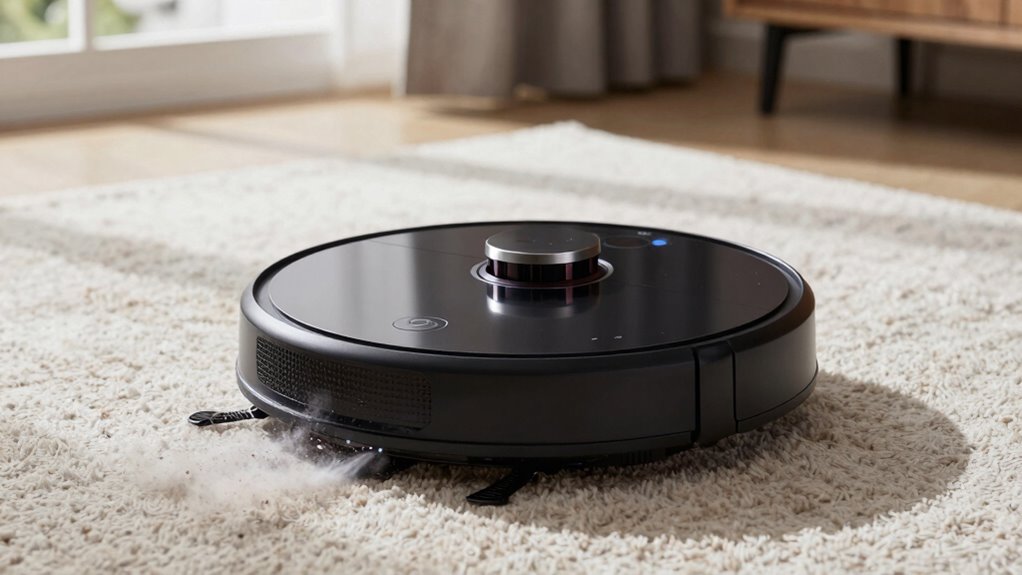
If you suffer from allergies or are concerned about dust, choosing the right robot vacuum is essential for maintaining a healthier home. The key is to find one with features specifically designed to reduce allergens and improve indoor air quality. When evaluating different models, look closely at the robot vacuum features that support allergy prevention tips. For instance, HEPA filters are crucial because they trap tiny particles like pollen, pet dander, and dust mites, preventing them from recirculating into the air. Make sure the vacuum you select either has a built-in HEPA filter or is compatible with one, as this can substantially cut down allergens circulating in your space.
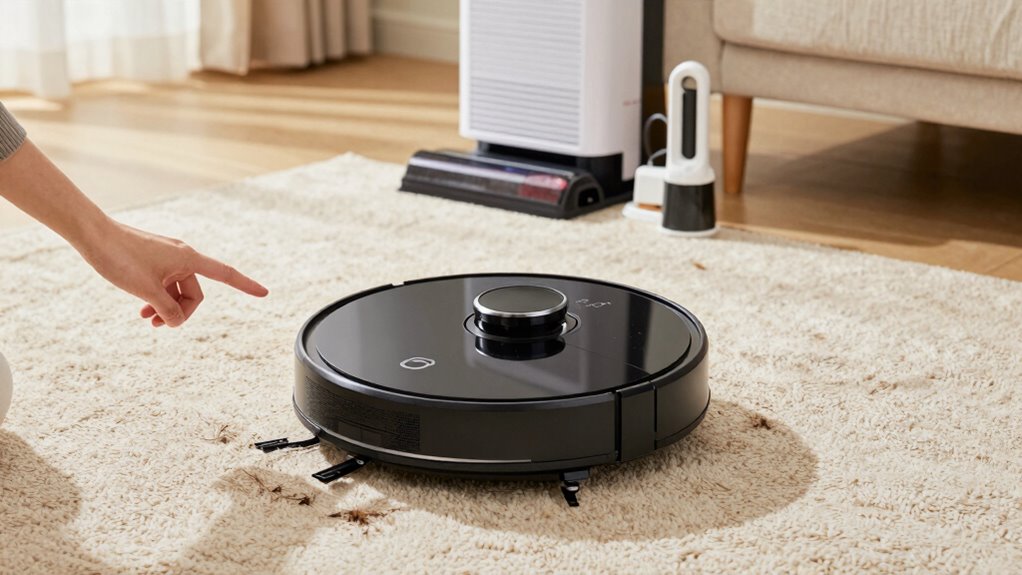
Another important aspect is the vacuum’s suction power. Strong suction ensures deep cleaning, which is essential for removing embedded dust and debris from carpets and rugs. If the robot vacuum has adjustable suction settings, you can tailor its performance to your specific needs, especially if you have thick carpets or sensitive respiratory health. Additionally, consider models with multi-surface capabilities, so they can effectively clean different flooring types without missing spots or spreading dust around.
Choose a robot vacuum with strong, adjustable suction and multi-surface cleaning for optimal allergy-friendly results.
Navigation technology also plays a role in allergy prevention. Choose a robot vacuum with advanced sensors and mapping features that allow it to thoroughly cover your space without missing areas or repeatedly running over the same spots. A well-organized cleaning path reduces the chances of dust accumulation, especially in hard-to-reach corners and under furniture. Some models come with edge-cleaning brushes or side brushes that sweep dust out from edges and baseboards, which are common areas for allergens to settle. Incorporating smart navigation technology can further optimize cleaning paths and reduce missed areas. Regularly updating your home’s cleaning routines and choosing vacuums with effective allergen capture features can significantly enhance indoor air quality. Additionally, using allergy-friendly cleaning practices around your home, such as reducing clutter and using hypoallergenic bedding, can complement your vacuuming efforts for better allergy control. It’s also beneficial to select a vacuum with a sealed cleaning system that prevents dust from escaping back into the environment during operation.
Incorporate allergy prevention tips into your routine by regularly maintaining your robot vacuum. Clean or replace filters as recommended by the manufacturer, and empty the dustbin frequently to prevent dust buildup. Opt for models with easy-to-clean dust compartments, so you’re more likely to stay consistent with maintenance. If your home has pets, look for a robot vacuum that specifically tackles pet hair and dander, which are common allergens.
Additionally, choosing a vacuum with natural materials or eco-friendly components can help reduce chemical emissions that might trigger allergies or sensitivities. Ultimately, selecting a robot vacuum with the right features makes a noticeable difference in allergy control. Prioritize models with HEPA filters, strong suction, good navigation, and ease of maintenance. By doing so, you’ll create a cleaner, healthier environment and markedly reduce allergy symptoms, making your home a safer space for everyone.
HEPA filter robot vacuum for allergies
As an affiliate, we earn on qualifying purchases.
As an affiliate, we earn on qualifying purchases.
Frequently Asked Questions
Are HEPA Filters Essential for Allergy-Friendly Robot Vacuums?
Yes, HEPA filters are essential for allergy-friendly robot vacuums because they excel at allergen filtration. These filters trap tiny particles like pollen, pet dander, and dust mites, preventing them from recirculating into your air. When choosing a robot vacuum, make sure it has a true HEPA filter to improve air quality and reduce allergy symptoms. This feature makes a significant difference in keeping your home cleaner and healthier for allergy sufferers.
How Often Should I Schedule My Robot Vacuum for Dust Control?
Think of your robot vacuum as a diligent sentinel guarding your space. Scheduling frequency depends on dust accumulation; if you notice more dust settling, run it every day or every other day. For lighter dust, every three to four days works well. Regular cleaning keeps allergens at bay, ensuring a healthier home. Adjust your schedule based on your environment’s dust levels, and your home stays fresh and allergy-friendly.
Can Robot Vacuums Effectively Remove Pet Dander?
Robot vacuums can effectively remove pet dander when equipped with strong suction and HEPA filters. They excel at pet hair removal and help with allergen containment in your home. Regularly scheduling your vacuum guarantees dust and dander don’t accumulate, improving air quality. Choose a model with allergen-focused features, and your robot will help keep pet allergens under control, making your space healthier for allergy sufferers.
Do Robot Vacuums With Multiple Brushes Perform Better on Allergies?
Yes, robot vacuums with multiple brushes generally perform better on allergies because they pick up more dust and pet dander. You should look for models with high sensor accuracy to detect dust and dirt effectively. Also, consider battery life; longer-lasting batteries guarantee the vacuum cleans thoroughly without interruption. Multiple brushes combined with precise sensors and strong batteries make for a more efficient allergy-friendly cleaning process.
Are There Allergy-Specific Features to Look for in Robot Vacuums?
You should look for robot vacuums with HEPA filters, which trap allergy triggers like dust mites and pet dander. For example, a family with dust mite allergies found that a vacuum with a sealed filtration system markedly reduced allergy symptoms. Features like allergen seals and customizable cleaning schedules help you target dust and allergens effectively. These allergy-specific features make your vacuum a powerful tool against airborne dust and allergy triggers.
robot vacuum with strong suction and multi-surface cleaning
As an affiliate, we earn on qualifying purchases.
As an affiliate, we earn on qualifying purchases.
Conclusion
Choosing the right robot vacuum can genuinely improve your allergy and dust situation. While some believe that robotic vacuums can’t match traditional cleaning, newer models with HEPA filters and powerful suction actually trap more allergens. So, don’t dismiss the idea—technology is advancing rapidly. If you pick wisely, you’ll reduce dust and allergen buildup, making your home healthier. It might surprise you how much easier allergy season becomes with just a smart, well-chosen robot vacuum working silently in the background.
smart navigation robot vacuum for dust control
As an affiliate, we earn on qualifying purchases.
As an affiliate, we earn on qualifying purchases.
robot vacuum with accessible dustbin and filter
As an affiliate, we earn on qualifying purchases.
As an affiliate, we earn on qualifying purchases.
Fall yard work Picks
leaf blowers
As an affiliate, we earn on qualifying purchases.