
To prevent falls when using a robot vacuum in a home with stairs, make sure it has functioning sensors to detect edges and drops. Use physical barriers like gates or objects at stair entrances, and create no-go zones through the app to keep the vacuum away from dangerous areas. Regularly check sensors and update firmware for better obstacle detection. Ensuring safety needs planning—keep exploring for more tips to keep your home secure.
Key Takeaways
- Use physical barriers like gates or objects to block stair access during robot cleaning.
- Equip the robot with sensors and ensure cliff detection features are active and clean.
- Map your home layout and create virtual boundaries to restrict stair areas.
- Supervise initial cleaning runs to verify the robot’s stair navigation abilities.
- Regularly update firmware and maintain sensors for optimal obstacle and drop-off detection.
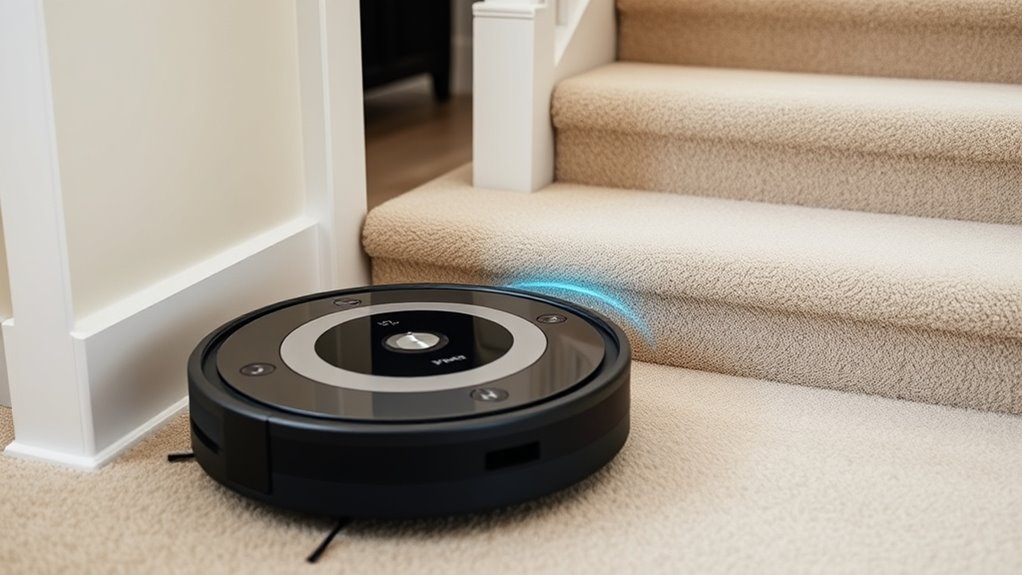
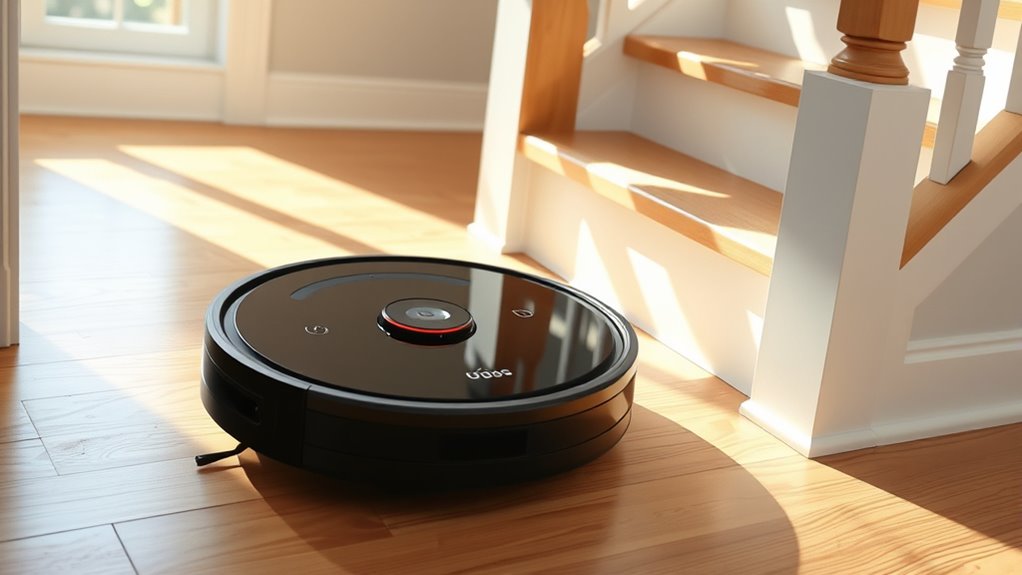
Moving through stairs can be a challenge when using a robot vacuum, but with the right strategies, you can keep your entire home clean without risking falls or damage. Safety precautions are essential for successful stair navigation. Before setting your robot loose on multi-level areas, ensure that your device is equipped with sensors designed to detect edges and drop-offs. Many modern robot vacuums come with cliff sensors that prevent them from falling down stairs. However, it’s worth double-checking that these sensors are clean and functioning properly, as dirt or debris can impair their effectiveness. Additionally, some models incorporate navigation algorithms that enhance their ability to recognize and avoid stair edges more reliably. To improve safety, consider physically blocking stairways when the robot is operating on floors above or below. Using baby gates, door barriers, or even placing objects at the top and bottom of stairs can prevent accidental drops. This simple step acts as an extra layer of security, especially if your vacuum doesn’t have advanced stair navigation features. Additionally, setting a designated cleaning schedule during times when you’re around can help you monitor the robot’s progress and intervene if necessary. Always supervise initial runs to see how well your vacuum handles stair areas, and be ready to stop it immediately if it gets too close to an edge. Another effective safety measure is to map out your home’s layout using your robot’s app or control system. Many models allow you to create virtual boundaries or no-go zones, which you can use to restrict stair access. By marking off staircases, you prevent the vacuum from attempting to clean near dangerous edges. Regularly updating these boundaries ensures the robot adapts to any furniture rearrangements or changes in your home’s layout. In terms of stair navigation, prioritize choosing a robot with advanced sensors and algorithms that help it detect stairs reliably. Some models feature cameras or laser mapping technology, making stair detection more precise. When setting up your cleaner, make sure the device’s firmware is up to date, as manufacturers often improve obstacle detection in software updates. If your robot vacuum struggles with stairs despite these precautions, consider manually cleaning stair areas or using a handheld vacuum for those spots.
Frequently Asked Questions
Can Robot Vacuums Detect and Avoid Stair Edges Automatically?
Robot vacuums often can’t fully detect and avoid stair edges automatically due to sensor limitations. While many models feature edge detection sensors, they may not be perfect, especially on uneven or dark stairs. You should supervise initial use and consider additional safety measures, like boundary strips or barriers, to prevent falls. Regularly check your vacuum’s sensors and software updates to guarantee the best edge detection and safety in your home.
What Safety Features Do Robot Vacuums Have to Prevent Falls?
Like a modern-day knight guarding your home, robot vacuums come equipped with advanced safety features. They use navigation sensors and obstacle detection to spot stairs and edges, preventing falls. Some models feature cliff sensors that stop the vacuum before it drops, while others pause upon detecting a sudden change in height. These safety measures guarantee your vacuum cleans effectively without risking a tumble down the stairs.
Are There Specific Models Better Suited for Homes With Stairs?
Yes, some models are better suited for homes with stairs because of their advanced stair navigation and compatibility features. Look for robot vacuums with sensors designed to detect edges and obstacles, preventing falls. Models like the iRobot Roomba i7+ and Roborock S7 offer improved model compatibility and precise stair navigation. These features help guarantee safe cleaning around stairs, giving you peace of mind while maintaining a tidy home.
How Should I Set up Boundary or No-Go Zones for Stairs?
You should set up boundary markers or no-go zones around your stairs to prevent falls. Use your robot vacuum’s app to draw virtual boundaries or place physical no-go zone markers near the staircase edges. This way, the vacuum automatically avoids the stairs, keeping your home safe. Regularly update these zones if your stairs or furniture move, ensuring the vacuum stays clear of dangerous areas.
Can Robot Vacuums Be Safely Used on Stair Landings or Narrow Steps?
Think of stair landings and narrow steps as delicate dance partners—best approached with caution. Robot vacuums aren’t usually safe on these areas because they can slip or fall. To keep your staircase maintenance safe, avoid scheduling vacuuming on tricky spots or use boundary zones to restrict access. Stick to flat, open surfaces for vacuuming, and manually clean stairs to prevent accidents and keep your home safe.
Conclusion
Think of your robot vacuum as a diligent guardian, quietly watching over your home’s every step. With careful planning, it navigates the stairs like a trusted sentinel, preventing falls and protecting your loved ones. Just as a lighthouse guides ships safely ashore, your vigilant robot keeps your home’s path clear and secure. Embrace this tiny hero, and let it symbolize safety and peace of mind, illuminating your home with its silent, steadfast devotion.