
To keep your robot vacuum working well, you need to clean the brushes regularly. Dirt, hair, and dust can clog the brushes, making the vacuum work harder and less efficiently. This can also drain the battery faster and cause louder operation. Regular cleaning prevents damage, reduces wear, and extends the vacuum’s lifespan. If you want to discover how to keep your vacuum performing at its best, keep exploring these tips and tricks.

Get home appliances delivered free with Prime
- Fast, free delivery on millions of items
- Prime Video, Amazon Music and more included
- Member-only deals all year
Key Takeaways
- Regular cleaning prevents hair, dust, and debris buildup, ensuring the brushes function effectively.
- Clean brushes reduce motor strain, conserving battery life and maintaining optimal power usage.
- Removing debris minimizes noise during operation, enhancing user comfort.
- Routine maintenance prevents uneven wear and mechanical damage, extending the vacuum’s lifespan.
- Consistent inspection and cleaning ensure the vacuum performs thoroughly and avoids costly repairs.
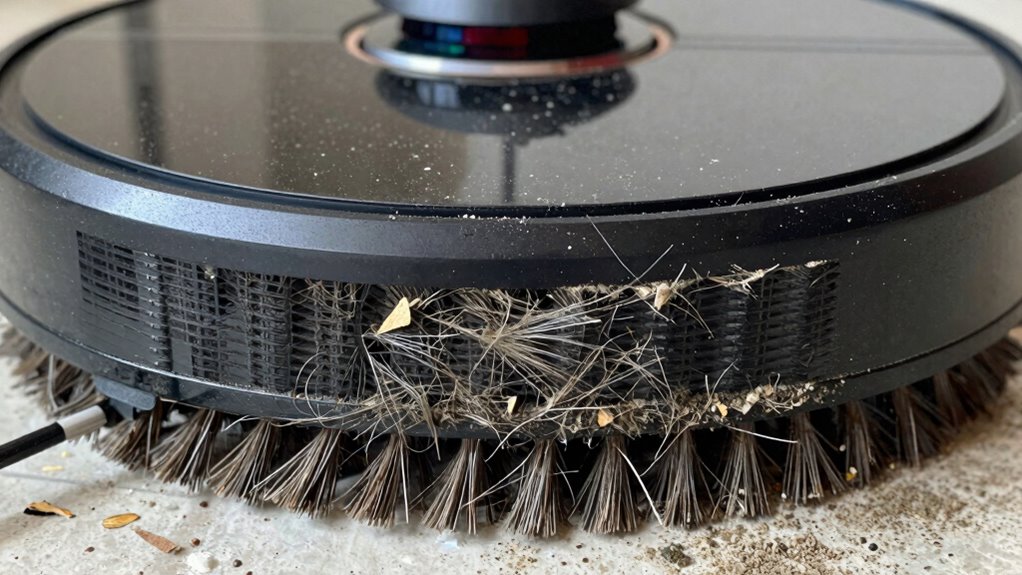
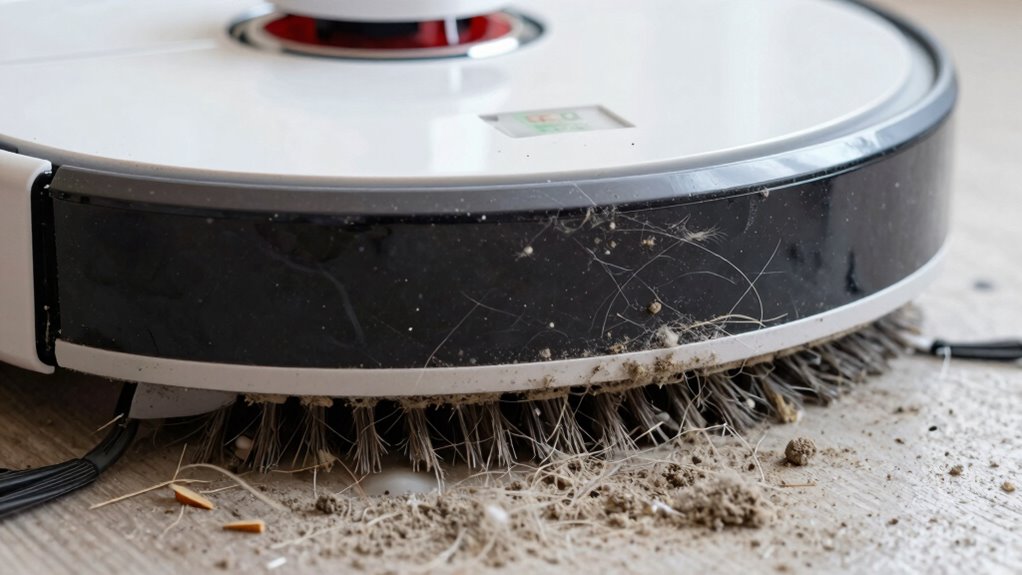
Regularly cleaning the brushes on your robot vacuum is vital to keep it running efficiently and prolong its lifespan. When the brushes are clogged with hair, dust, or debris, your vacuum has to work harder to pick up dirt, which can drain the battery faster and reduce overall battery life. By maintaining clean brushes, you help guarantee that your vacuum operates at peak efficiency, saving you time and energy in the long run. A well-maintained brush system allows your robot to clean more thoroughly with each pass, meaning fewer passes are needed to cover the same area, further conserving battery power.
Regularly cleaning your robot vacuum’s brushes ensures optimal performance and extends its lifespan efficiently.
In addition to battery concerns, dirty brushes can greatly impact noise levels during operation. When debris gets tangled in the brushes, the motor has to exert more effort to turn them, resulting in louder noise. This can be disruptive, especially if you run your vacuum while working or during quiet hours. Regular cleaning minimizes this extra effort, keeping noise at a more tolerable level and making your cleaning routine less intrusive. Staying on top of brush maintenance helps your robot operate smoothly and quietly, enhancing your overall experience.
Neglecting to clean your robot vacuum’s brushes can also lead to mechanical issues over time. Debris buildup can cause the brushes to wear unevenly or become damaged, which might lead to costly repairs or the need for replacement parts. Furthermore, if hair or fibers are wrapped tightly around the brushes, they can prevent the brushes from spinning freely, reducing cleaning effectiveness and putting strain on the motor. This strain not only shortens your unit’s lifespan but can also cause the vacuum to overheat or shut down prematurely. Regularly checking and calibrating the brushes ensures optimal performance and prevents unnecessary damage. Additionally, understanding the importance of regular maintenance can help you avoid costly repairs and keep your vacuum functioning properly for years to come. Proper maintenance also involves understanding how dust and debris can affect the overall health of your robot vacuum, further emphasizing the importance of consistent cleaning routines. Incorporating a cleaning schedule can help you stay consistent and ensure your vacuum remains in top condition. Moreover, routine inspection of the brushes can help you detect early signs of wear and tear, enabling timely replacements before major malfunctions occur.
robot vacuum brush cleaning tools
As an affiliate, we earn on qualifying purchases.
As an affiliate, we earn on qualifying purchases.
Frequently Asked Questions
How Often Should I Replace the Brush on My Robot Vacuum?
You should replace the brush on your robot vacuum every 6 to 12 months, depending on its brush lifespan and your cleaning frequency. Regularly inspecting the brush for wear and tear helps determine if it’s time for a replacement. If you notice decreased cleaning performance, increased noise, or tangled debris, it’s a sign to change the brush sooner. Maintaining this schedule guarantees peak cleaning and prolongs your vacuum’s life.
Can I Clean the Brushes With Water or Should I Use a Dry Method?
Think of your robot vacuum’s brushes as the heart of its cleaning dance—keep them in rhythm by choosing the right cleaning method. You should avoid water cleaning because moisture can cause damage or rust. Instead, dry methods like brushing off debris or using a vacuum attachment work best. This way, your vacuum’s brushes stay sharp and efficient, ensuring it keeps up its cleaning performance without getting bogged down.
What Tools Are Best for Removing Hair and Debris From the Brushes?
You should use alternative cleaning tools like a small comb, scissors, or a brush with stiff bristles to remove hair and debris from the brushes. These tools help you efficiently clear tangled hair and dirt without damaging the bristles. Incorporate brush maintenance tips like regularly inspecting and gently detangling the brushes to keep your robot vacuum working smoothly. Avoid using water, as dry tools are best for preserving the brush’s condition.
Does Regular Brush Cleaning Improve Battery Life?
Yes, regular brush cleaning can improve your robot vacuum’s battery efficiency. When you keep the brushes free of hair and debris through consistent brush maintenance, the motor doesn’t work as hard, reducing strain on the battery. This means your vacuum uses less power for each cleaning session, extending battery life and ensuring peak performance. Regularly cleaning the brushes is a simple way to keep your device running smoothly and efficiently.
Are There Different Cleaning Routines for Different Types of Brushes?
Yes, different brushes often require tailored cleaning routines. For example, soft brushes benefit from gentle alternative cleaning techniques like using a toothbrush for gentle dislodging, while stiff brushes might need more thorough maintenance tips, such as removing tangled hair. By adjusting your brush maintenance tips based on the type, you guarantee your robot vacuum performs at its best. Regularly checking and adapting your cleaning routine keeps your device humming smoothly, making cleaning effortless.
As an affiliate, we earn on qualifying purchases.
Conclusion
Just like a garden needs tending to flourish, your robot vacuum’s brushes require regular cleaning to keep your home spotless. Think of the brushes as the roots of a healthy garden—if neglected, they can become clogged and weak, choking off their potential. When you take the time to clean them, you’re nurturing a cleaner, more efficient machine that can truly thrive. Keep the roots healthy, and your home will always be a shining example of care.
As an affiliate, we earn on qualifying purchases.
As an affiliate, we earn on qualifying purchases.
Halloween Picks
halloween
As an affiliate, we earn on qualifying purchases.