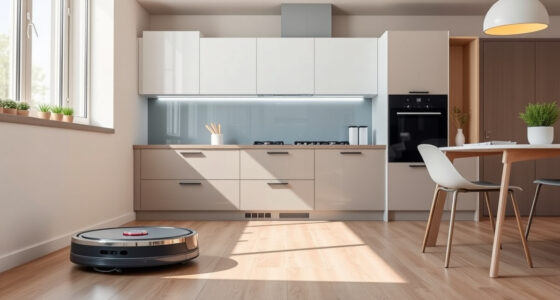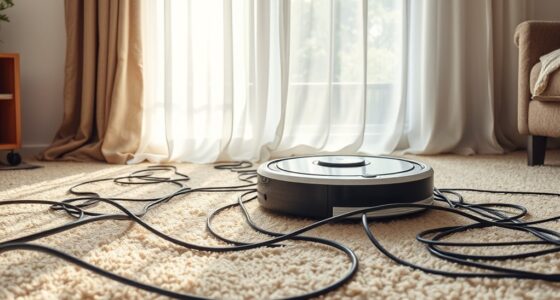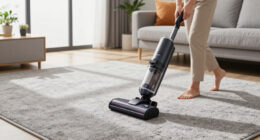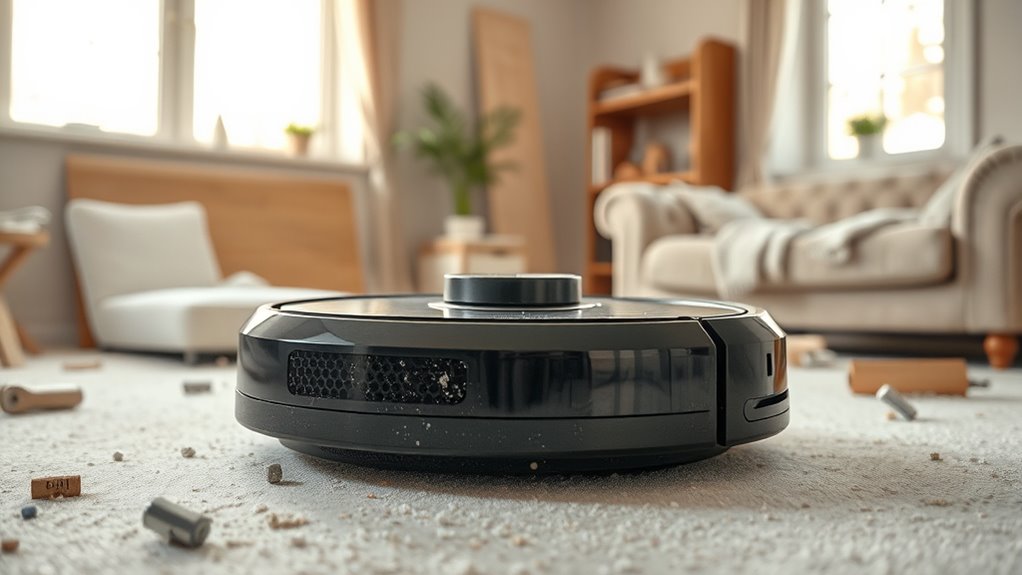

Robot vacuums usually aren’t enough for drywall dust because it’s super fine and lightweight, which can clog filters and overwhelm their suction power. You’ll get better results by using a traditional vacuum or broom first to remove the bulk of dust, then rely on your robot for routine cleaning. Adding air purifiers and wiping surfaces before vacuuming also helps. Keep exploring for more tips to make cleanup easier and more effective.
Prime for Young Adults — start your free trial
Fast free delivery, streaming and member deals for eligible 18–24 year olds.
As an affiliate, we earn on qualifying purchases.
Key Takeaways
- Drywall dust is fine and lightweight, often clogging robot vacuum filters, making full cleanup challenging.
- Initial heavy dust removal typically requires a traditional vacuum or broom before using a robot vacuum.
- High-quality robot vacuums with strong filters may handle some drywall dust but often are insufficient alone.
- Using air purifiers with HEPA filters during cleanup reduces airborne dust, easing vacuum workload.
- Combining surface wipe-downs, initial cleanups, and ongoing vacuuming improves overall drywall dust management.

Renovations can transform your space, but the mess that comes afterward can be overwhelming. One of the biggest challenges is dealing with drywall dust, which tends to spread everywhere and settle into every corner. To make cleanup easier, you need to focus on effective dust containment during the project. Using plastic sheeting or temporary barriers around the work area helps contain the dust, preventing it from migrating into other parts of your home. The more control you have over dust containment, the less cleanup you’ll face afterward.
Once the work is done, it’s time to tackle the dust that’s accumulated. You might wonder if your robot vacuum can handle drywall dust, but the answer isn’t straightforward. Drywall dust is fine and lightweight, which can clog some vacuums or reduce their effectiveness. While some high-quality robot vacuums are equipped with strong filters, they may still struggle with the volume and fineness of drywall particles. It’s often best to do a thorough initial cleanup with a traditional vacuum or broom before relying on your robot to keep the area tidy.
Drywall dust can clog vacuums; thorough initial cleaning with a traditional vacuum or broom is recommended.
In addition to vacuuming, using air purifiers is a smart move. Air purifiers with HEPA filters are especially effective because they can capture tiny drywall particles that settle in the air and on surfaces. Placing an air purifier in the renovation zone helps reduce airborne dust, making the environment safer and cleaner for you and your family. It also lessens the load on your vacuum, as fewer dust particles remain suspended or settle on surfaces.
To optimize your cleanup, start by wiping down surfaces with damp cloths before vacuuming. This helps pick up the majority of the dust and prevents it from becoming airborne again when you vacuum. Afterward, you can rely on your robot vacuum for routine maintenance, but don’t expect it to do the heavy lifting of drywall dust removal on its own. Regularly changing filters on both your vacuum and air purifier ensures they continue working efficiently. Additionally, understanding the importance of air filtration technology can significantly improve your post-renovation cleanup strategy.
HEPA air purifier for drywall dust
As an affiliate, we earn on qualifying purchases.
As an affiliate, we earn on qualifying purchases.
Frequently Asked Questions
Can Robot Vacuums Detect Drywall Dust Automatically?
Yes, some robot vacuums can detect drywall dust automatically thanks to advanced sensor capabilities. These dust detection sensors help the vacuum identify areas with high dirt concentration, allowing you to focus cleaning efforts effectively. Keep in mind, though, that not all models have this feature. If dust detection is essential, look for a robot vacuum with strong sensor capabilities to guarantee thorough cleaning after renovations.
How Often Should I Run My Robot Vacuum After Renovations?
You should run your robot vacuum daily for the first week after renovations to keep drywall dust under control. Regular vacuuming helps prevent dust buildup and maintains effective dust filtration. Remember, proper vacuum maintenance, like checking brushes and filters, guarantees peak performance. As dust levels decrease, you can reduce frequency to every few days. Consistent cleaning prevents lingering dust and keeps your space fresh and healthy.
Are There Specific Robot Vacuum Models Better for Drywall Dust?
Yes, some robot vacuum models are better for drywall dust. Look for models with strong suction power, advanced dust sensors, and large debris bins to handle fine drywall particles effectively. Features like HEPA filters also help trap dust particles. Check the model features to make certain they’re designed for heavy-duty cleaning, especially after renovations. These features make your vacuum more efficient in tackling drywall dust without clogging or losing suction.
Can Robot Vacuums Handle Other Renovation Debris Besides Drywall Dust?
Your robot vacuum can tackle more than drywall dust—think of it as a tiny, unstoppable cleanup superhero! With advanced dust filtration and a hefty debris capacity, it can handle wood chips, paint splatters, and even plaster residues. Just make certain it’s equipped with strong suction and a sturdy brush roll. So, yes, your robot vacuum’s ready to conquer all kinds of renovation debris, keeping your space spotless with ease!
Do I Need to Pre-Clean Before Using My Robot Vacuum Post-Renovation?
You should pre-clean before using your robot vacuum after renovations to guarantee ideal cleaning. Pre-cleaning helps remove larger debris and prevents clogs, especially with drywall dust. Implement dust containment strategies like sealing off areas and using plastic sheets to limit dust spread. This process makes your robot vacuum’s job easier, improves its efficiency, and ensures a thorough clean, especially when tackling fine drywall dust and renovation debris.
high-efficiency vacuum cleaner for drywall dust
As an affiliate, we earn on qualifying purchases.
As an affiliate, we earn on qualifying purchases.
Conclusion
So, now that you know your robot vacuum can tackle drywall dust, you might wonder if it’s enough to handle all your renovation mess. The truth is, a good robot can make cleanup easier, but don’t rely on it alone—some spots might need a manual touch. Are you ready to let your robot do its part and enjoy a cleaner space without the hassle? After all, isn’t peace of mind what you’re really after?
robot vacuum with strong filters
As an affiliate, we earn on qualifying purchases.
As an affiliate, we earn on qualifying purchases.
dust containment plastic sheeting for renovation
As an affiliate, we earn on qualifying purchases.
As an affiliate, we earn on qualifying purchases.
NFL season / tailgating Picks
team gear
As an affiliate, we earn on qualifying purchases.