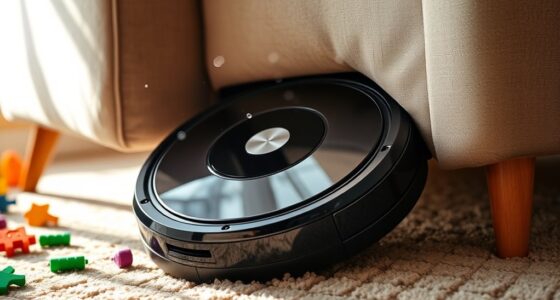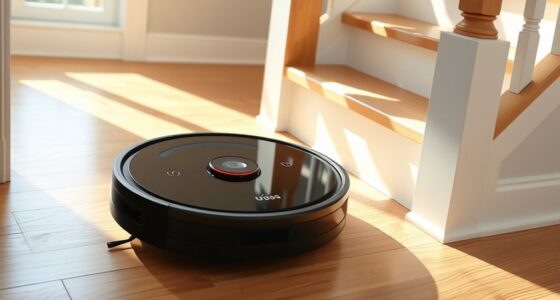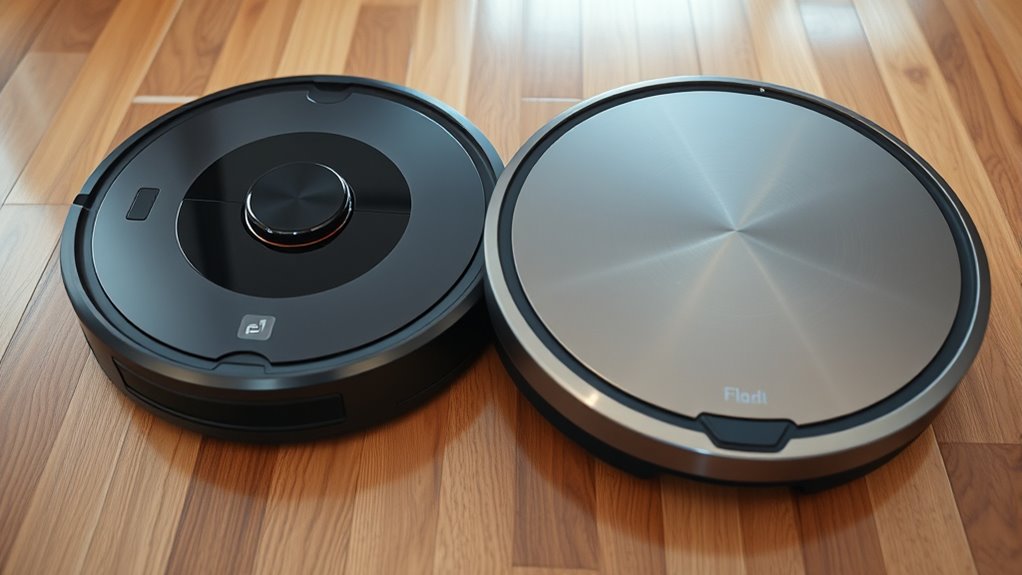

D-shaped robot vacuums are designed to clean corners more effectively than round models because their flat edges and squared-off shape allow better access to tight spaces. They also maneuver around furniture more easily and navigate corners more precisely. While round vacuums may struggle in corners, D-shapes excel in those tricky spots. If you’re curious about how shape impacts overall cleaning, keep exploring to discover more about these design differences.
Key Takeaways
- D-shaped vacuums are designed with flat edges and squared-off fronts, enhancing their ability to reach into corners and along edges.
- Round vacuums often struggle with corner cleaning due to their curved shape, which limits direct access.
- D-shaped models typically feature optimized sensor placement for better wall detection and precise navigation near corners.
- Round vacuums may require additional tools like side brushes to improve corner and edge cleaning.
- Overall, D-shaped vacuums tend to clean corners more effectively than round models due to their shape and design advantages.
Design and Physical Differences
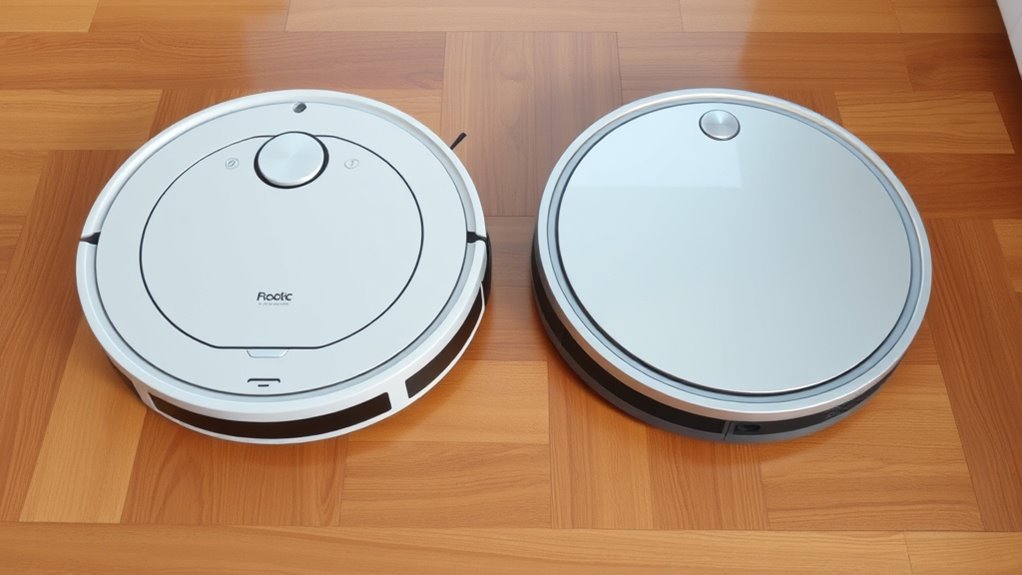
Have you ever noticed how robot vacuums vary in shape and size? These differences directly impact their aesthetic appeal and manufacturing complexity. Aesthetically, the shape influences how seamlessly the vacuum blends into your home’s décor, with sleek, circular models offering a modern look, while D-shaped designs add a unique, functional touch. Larger or uniquely shaped vacuums might stand out more but can also be more visually appealing. Manufacturing complexity plays a big role here; creating a compact, functional shape involves intricate engineering and precise assembly, especially for specialized shapes like D-shapes. This complexity can impact cost and durability. Ultimately, the design choices reflect a balance between visual appeal and manufacturing challenges, shaping how these devices fit into your space and lifestyle.
Cleaning Performance in Corners and Edges
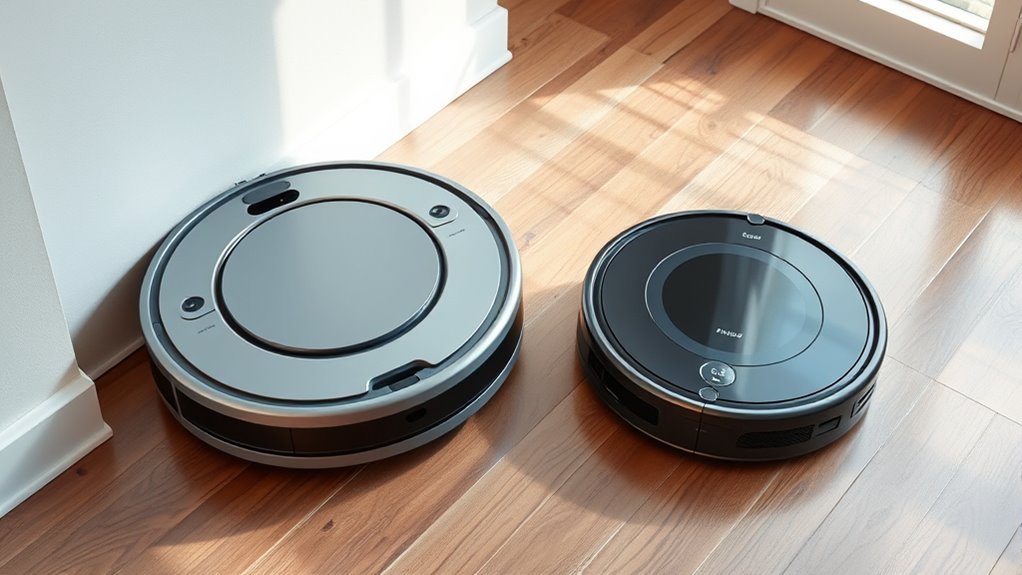
Since corners and edges are often the toughest spots for robot vacuums to clean, manufacturers focus on their design features to improve performance in these areas. Effective edge cleaning requires specialized brushes and suction power that can reach tight spaces. D-shaped vacuums excel at corner access because their flat sides and squared-off design allow them to get closer to walls and edges. Round models may struggle to reach into corners, leaving dirt behind. Some vacuums incorporate side brushes that sweep debris into the main suction path, boosting cleaning performance along edges. Overall, a shape optimized for corner access and dedicated edge cleaning tools make a noticeable difference in ensuring your floors are thoroughly cleaned, especially in those tricky corners and along baseboards.
Maneuverability and Navigation
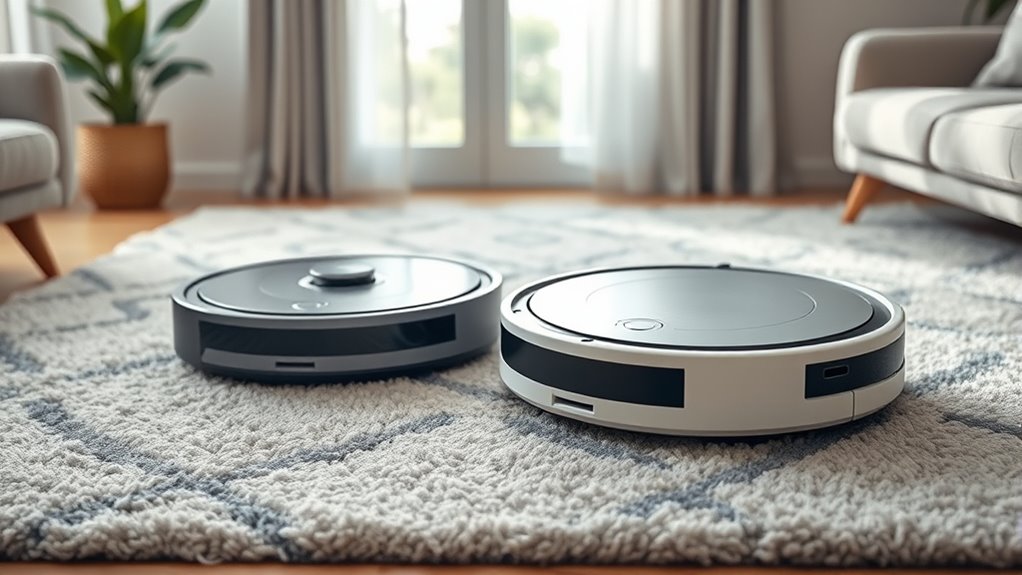
The shape of a robot vacuum plays a essential role in how well it navigates your space. D-shaped models often have sensor placement optimized for corner detection, helping them avoid walls and furniture more effectively. Round vacuums rely on their smooth edges and widespread sensors to detect obstacles from multiple angles, but may struggle with tight corners. Obstacle detection is critical for smooth navigation, preventing collisions and enabling efficient cleaning paths. The shape influences how easily the vacuum can maneuver around furniture, navigate narrow passages, and adapt to complex layouts. A well-designed shape combined with strategic sensor placement ensures your robot can map your home accurately, avoid obstacles seamlessly, and cover more ground without getting stuck.
Suitability for Different Home Layouts
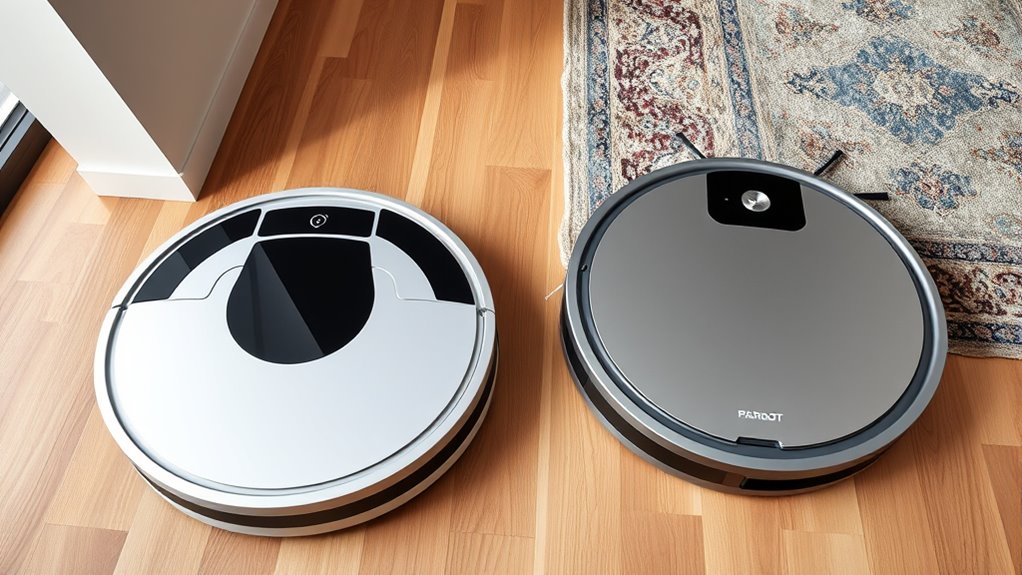
Choosing the right robot vacuum shape depends heavily on your home’s layout. If you have a complex floor plan with tight corners, a D-shape may excel in floor plan adaptability, reaching corners more effectively. Conversely, a round vacuum often suits open spaces and blends seamlessly into your aesthetic. Consider how each shape fits your home’s aesthetic integration, matching with furniture and decor. The table below highlights how each shape adapts to different layouts:
| Shape | Best for | Floor Plan Adaptability |
|---|---|---|
| Round | Open layouts, minimal corners | Limited in tight spaces |
| D-Shape | Corners, complex rooms | Excellent for intricate layouts |
| Other | Specific needs (e.g., narrow corridors) | Varies depending on design |
Matching your home’s unique design guarantees effective cleaning and visual harmony.
Cost and Value Comparison
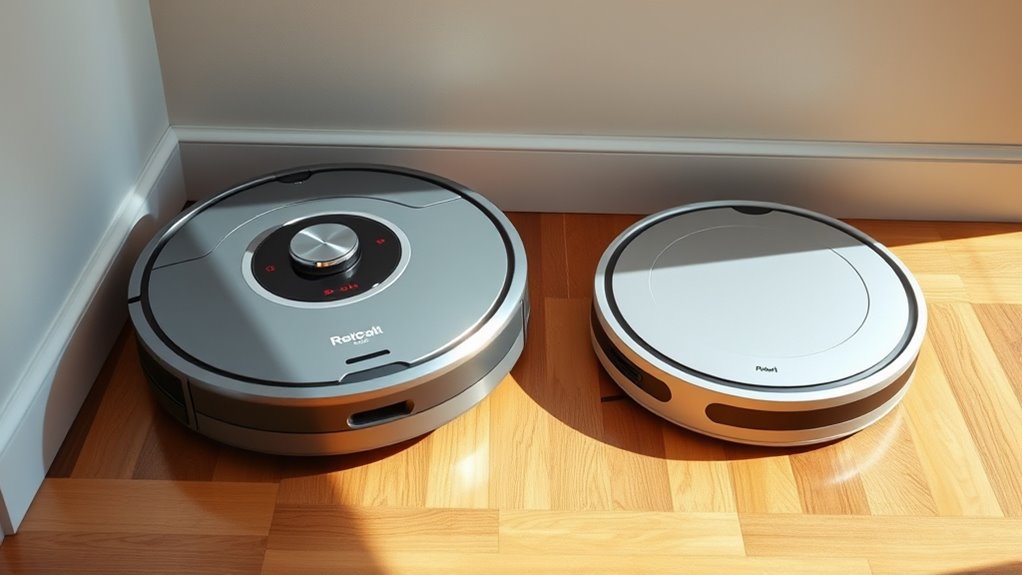
When evaluating robot vacuums, understanding their cost and the value they provide guarantees you make a smart investment. D-shaped models often cost more upfront but may save you money over time with better corner cleaning, reducing the need for manual touch-ups. Consider these factors:
- Longer battery life lets you clean larger areas without recharging, saving time and effort.
- Quieter noise levels mean less disturbance during your daily activities or while sleeping.
- Build quality and smart features contribute to durability and convenience, impacting overall value.
While upfront costs vary, investing in a model with ideal battery life and low noise levels ensures you get more efficient, quieter cleaning sessions. Comparing these aspects helps you find a vacuum that balances price with performance and longevity.
Frequently Asked Questions
Are D-Shaped Vacuums More Durable Than Round Models?
D-shaped vacuums aren’t necessarily more durable than round models, but their design advantages can influence longevity. You might notice fewer durability concerns with D-shapes because their sturdy construction often handles corner collisions better. However, the overall durability depends on build quality and maintenance. If you choose a well-made D-shaped vacuum, it can last as long as a round one, especially if you follow the manufacturer’s care guidelines.
How Long Do D-Shaped Vacuum Batteries Typically Last?
D-shaped vacuum batteries typically last between 60 to 120 minutes, depending on the model and usage. You’ll find that battery longevity varies with factors like cleaning intensity and frequency. To maintain power, it’s vital to follow proper charging routines and avoid overcharging. Regularly replacing or upgrading your battery ensures consistent performance, helping your D-shaped vacuum keep cleaning effectively without losing suction or runtime over time.
Can D-Shaped Vacuums Handle Thick Carpets Effectively?
You can confidently use a D-shaped vacuum on thick carpets, as they’re designed for impressive carpet penetration. Their suction power is strong enough to lift deeply embedded dirt and debris, making them highly effective. While some models may struggle with very dense fibers, many D-shaped vacuums are built to handle thick carpets with ease, providing thorough cleaning and ensuring your carpets stay fresh and spotless.
Do D-Shaped Vacuums Have Better Allergen Filtration?
Yes, D-shaped vacuums often have better allergen filtration because their design improves airflow efficiency, allowing the vacuum to capture more allergens and prevent them from escaping back into the air. Their shape helps seal edges more effectively, enhancing allergen containment. This means you get cleaner air and fewer allergens circulating, making D-shaped vacuums a good choice if allergy control is a priority for you.
Are D-Shaped Vacuums Easier to Store Than Round Models?
A D-shaped vacuum is like a neatly packed suitcase—more compact and easier to store. Its design maximizes space, making it ideal for tight spots and convenient, space-saving storage. You’ll find it fits snugly in corners or small closets, unlike round models that often take up more room. So, if you’re after a neat, clutter-free space, a D-shaped vacuum’s compact design makes storing it a breeze.
Conclusion
Choosing between D-shape and round robot vacuums is like picking the right tool for a job. The D-shape’s sharp corners can reach tight spots, much like a skilled painter hitting every edge, while round models glide smoothly around obstacles. Think of your home as a puzzle—pick the shape that fits best. Whichever you choose, you’ll be sweeping away dirt like a gentle breeze through an open window.