Robot vacuums generate suction by spinning fans that create airflow and pressure differences, pulling debris into the bin. The powerful motor and specially designed blades, brushes, and impeller shape work together to lift dirt from various surfaces. Factors like surface texture and debris size influence how well it cleans. Advanced technologies, like seals and sensors, optimize performance and noise reduction. To discover the full science behind how these appliances pick up dirt, keep exploring.
Get ready for Prime Big Deal Days — try Prime free
Exclusive member deals on October 6–7, plus fast free delivery. Cancel anytime.
As an affiliate, we earn on qualifying purchases.
Key Takeaways
- Powered by a motor, robot vacuums generate airflow that creates suction to draw in dirt and debris.
- Fan and impeller designs optimize airflow efficiency, increase dirt pickup, and reduce turbulence and noise.
- Brushes and beater bars loosen dirt from surfaces, directing debris into the airflow for removal.
- Sensors detect dirt, obstacles, and surface types, adjusting suction power and cleaning routes for optimal performance.
- Sealed systems and durable blades ensure safety, prevent leaks, and maintain consistent suction for effective cleaning.
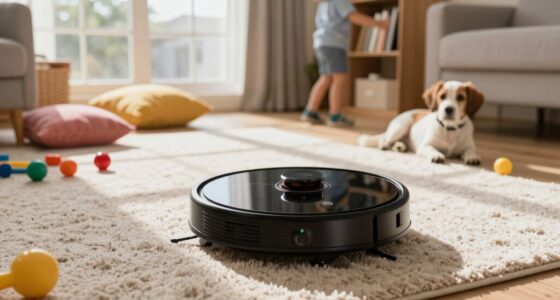
robot vacuum with strong suction
As an affiliate, we earn on qualifying purchases.
As an affiliate, we earn on qualifying purchases.
How Suction Power Is Generated in Robot Vacuums

Robot vacuums generate suction power primarily through a powerful motor that creates airflow. This airflow is directed into the suction nozzle, which is designed to maximize dirt intake. When the motor runs, it rapidly spins a fan that pulls air and debris into the dustbin. The dustbin capacity determines how much dirt you can collect before needing to empty it, impacting cleaning efficiency. A larger dustbin allows for longer cleaning sessions without interruption. The suction nozzle plays a crucial role in maintaining consistent airflow and effectively lifting dirt from surfaces. As the motor creates a strong vacuum, it pulls debris into the dustbin, making the cleaning process faster and more efficient. Proper design of the suction nozzle and dustbin capacity ensures peak suction power during operation.
As an affiliate, we earn on qualifying purchases.
The Role of Blades and Brushes in Dirt Collection

Your robot vacuum relies on different brushes and blades to pick up dirt effectively. Understanding the variety of brush types and their functions helps you choose the right one for your needs. Additionally, blade efficiency and safety are vital to guarantee thorough cleaning without damage or injury.
Brush Types and Functions
Have you ever wondered how different brushes and blades work together to collect dirt effectively? The variety of brush types enhances cleaning by targeting different surfaces and debris. For example, side brushes sweep dust and dirt into the main suction path, while rolling brushes agitate carpet fibers to loosen dust mites and allergens.
| Brush Type | Function | Best For |
|---|---|---|
| Side Brushes | Sweep debris into vacuum | Edges and corners |
| Main Brushes | Loosen and lift dirt from surfaces | Carpets and rugs |
| Rubber Brushes | Remove pet hair and fine dust | Hard floors |
| Beater Brushes | Agitate deep-seated dirt and allergens | Thick carpets |
These brushes work together to improve allergen removal, ensuring your home stays cleaner and healthier.
Blade Efficiency and Safety
Blades and brushes work together to maximize dirt collection while ensuring safety during operation. Blade safety is a top priority, so modern robot vacuums feature blades designed to minimize risk of injury or damage. These blades are often shielded or retractable, reducing accidental contact. Blade durability is equally important, as high-quality materials resist wear and maintain sharpness over time, ensuring efficient dirt cutting and pickup. Well-designed blades optimize cleaning performance without compromising safety, preventing jams or breakage. You’ll notice that durable blades last longer, saving you money and maintenance effort. When combined with effective brushes, blades enhance the vacuum’s overall efficiency, making sure your floors stay spotless without posing safety concerns.
As an affiliate, we earn on qualifying purchases.
Understanding Airflow and Pressure Differences
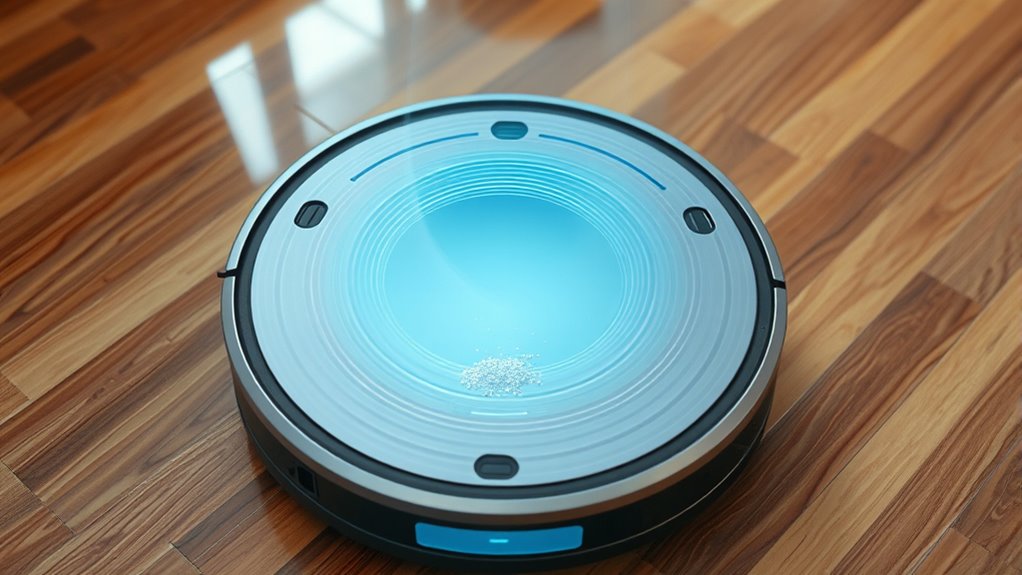
Understanding airflow and pressure differences is essential to grasp how suction works effectively. When your vacuum operates, air moves swiftly through its components, creating airflow turbulence that helps lift dirt. Pressure gradients, the differences between high and low pressure zones, generate the force needed to pull debris upward.
Here’s a quick look:
| Aspect | Effect |
|---|---|
| Airflow turbulence | Dislodges dirt embedded in carpets or cracks |
| Pressure gradients | Create the suction force pulling debris into the vacuum |
| Airflow speed | Determines how quickly dirt is moved |
| Pressure difference | Drives the airflow from high to low-pressure zones |
| Consistent airflow | Ensures effective cleaning and dirt pickup |
These principles keep your vacuum’s suction strong and consistent.
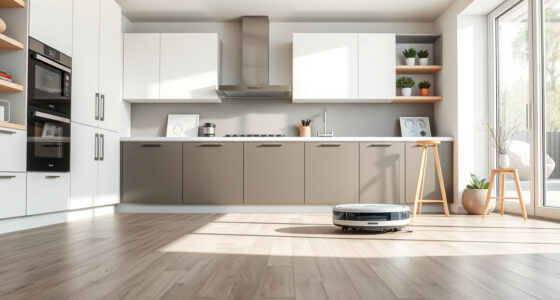
robot vacuum with sensors and noise reduction
As an affiliate, we earn on qualifying purchases.
As an affiliate, we earn on qualifying purchases.
The Design of Vacuum Motors and Their Efficiency
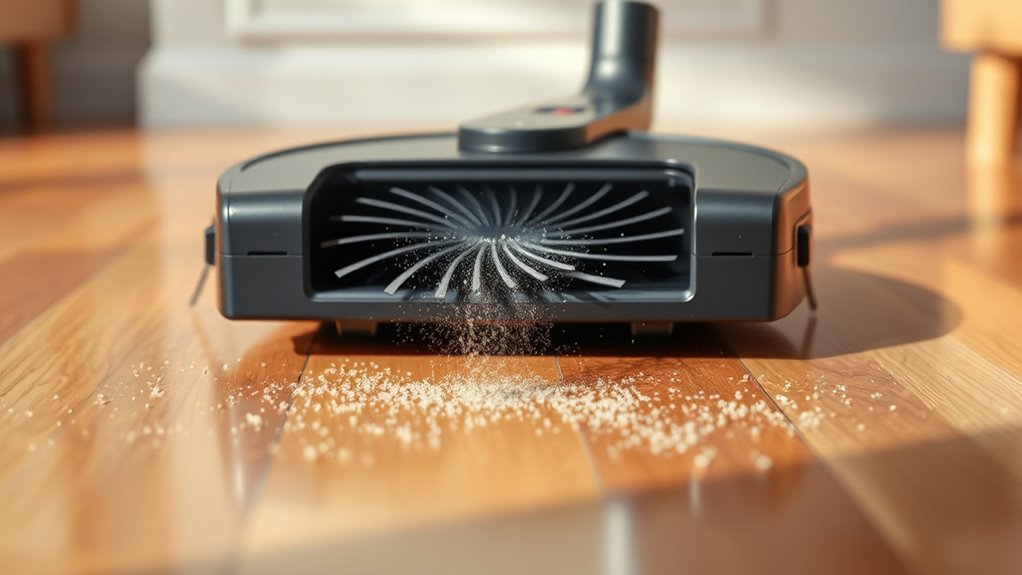
The design of vacuum motors directly affects how much power and airflow they generate, which determines their overall performance. You’ll want to contemplate how energy-efficient features can reduce power consumption without sacrificing suction strength. By understanding these factors, you can choose or improve vacuum motors for maximum efficiency.
Motor Power and Airflow
Motor power and airflow are central to a vacuum’s performance, as they directly influence how effectively it can pick up debris. A powerful motor generates strong airflow, pulling dirt into the dust compartment efficiently. However, higher motor power can drain your robot vacuum’s battery faster, affecting battery life during cleaning sessions. Optimizing airflow guarantees dirt and dust are transported smoothly without clogging or loss of suction. Good motor design balances power and airflow to maximize cleaning while preserving battery life. This means your vacuum can run longer on a single charge, covering more ground before needing to recharge. Ultimately, effective motor performance ensures your robot maintains strong suction, delivering thorough cleaning without compromising efficiency or battery longevity.
Energy Efficiency Measures
Designing vacuum motors for peak energy efficiency involves carefully balancing power output with innovative engineering. You want a motor that delivers strong suction without draining your battery quickly, so battery longevity stays high. To achieve this, manufacturers optimize the motor’s design to reduce unnecessary energy consumption while maintaining effective dirt pickup. Using advanced materials and smarter circuitry, they minimize energy waste during operation. This means less power is used for the same cleaning performance, extending the vacuum’s runtime. Efficient motors also generate less heat, which prolongs motor life and conserves energy. By focusing on these energy efficiency measures, you get a device that cleans thoroughly while consuming less power, making your robot vacuum more eco-friendly and cost-effective over time.
The Impact of Seal and Gasket Technology
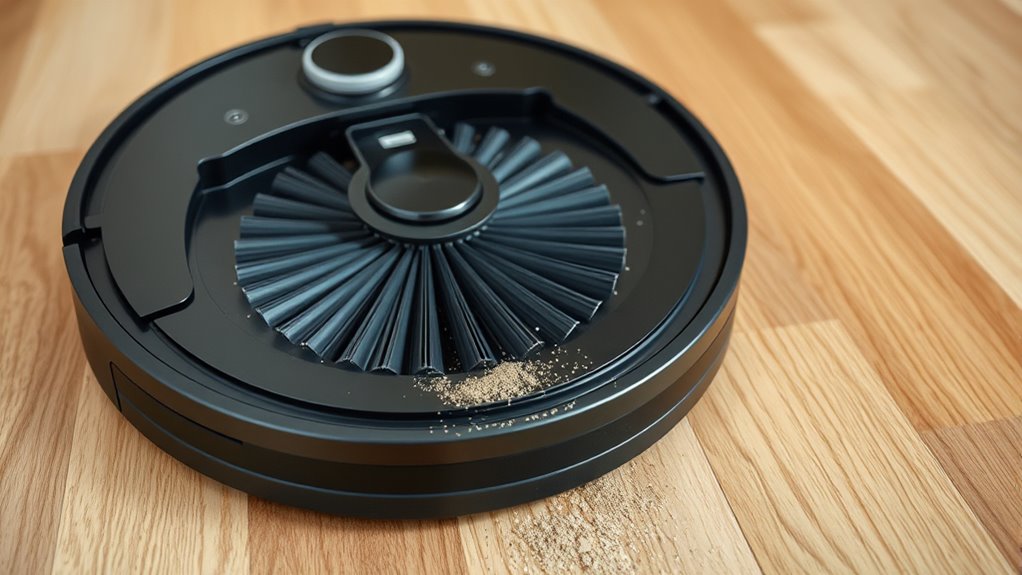
Seal and gasket technology plays a crucial role in guaranteeing the effectiveness of suction systems by preventing leaks and maintaining consistent pressure. Your robot vacuum relies on high-quality seal technology to keep dirt and air from escaping, which maximizes suction power. The choice of gasket materials is critical, as they must withstand wear and maintain flexibility over time. Key factors include:
- Material durability to endure frequent contact with dust and debris
- Flexibility to ensure tight seals around moving parts
- Compatibility with various cleaning environments to prevent deterioration
How Sensors Optimize Suction and Cleaning Paths
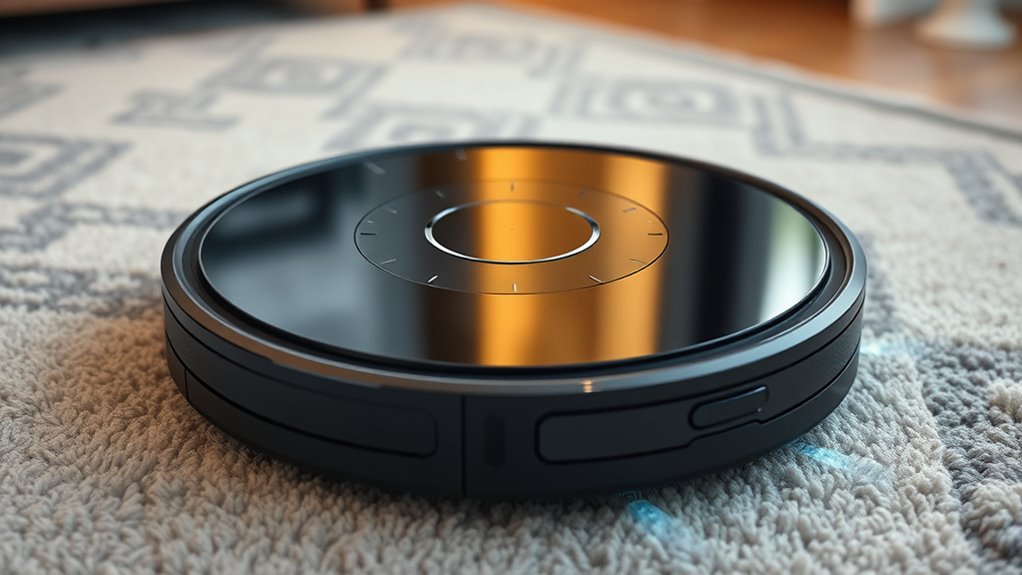
Have you ever wondered how robotic vacuums efficiently navigate your home while optimizing their suction power? It all comes down to sensor calibration and a smart cleaning algorithm. Sensors detect obstacles, dirt levels, and surface types, providing real-time data. Proper sensor calibration guarantees accurate readings, preventing missed spots or unnecessary collisions. The cleaning algorithm processes this information to map your space and plan the most effective route. It adjusts suction strength based on dirt detection, ensuring deep cleaning in high-traffic areas and conserving power on clean surfaces. By continuously refining sensor calibration and employing an adaptive cleaning algorithm, your robot vacuum maximizes suction efficiency and navigates seamlessly, leaving your floors spotless with minimal effort on your part.
The Relationship Between Suction and Surface Types
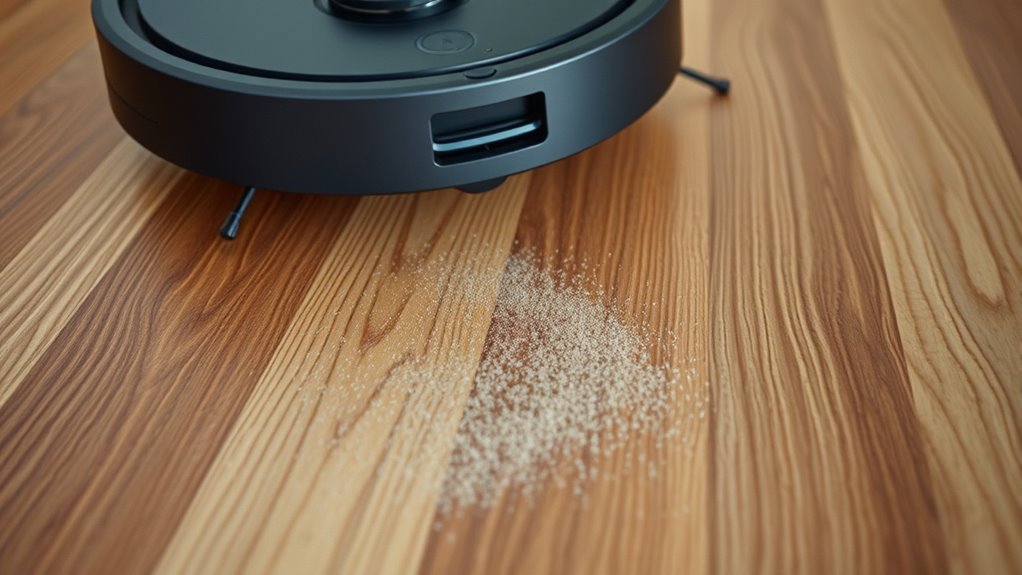
Different surface types require varying levels of suction to achieve effective cleaning. Surface textures influence how much suction calibration you need for ideal results. For example:
Adjust suction settings according to surface textures for optimal cleaning and device longevity.
- Smooth surfaces like hardwood or tile need moderate suction to avoid scattering debris.
- Carpets with thick fibers demand higher suction to lift dirt embedded deep within.
- Rough or textured surfaces may require adjustable suction to prevent damage while ensuring debris removal.
Adjusting suction based on surface textures helps your robot vacuum clean efficiently without wasting energy or risking surface damage. Proper calibration ensures that the vacuum applies just the right amount of suction, adapting to different surface types for maximum dirt pickup and minimal wear. This tailored approach enhances overall cleaning performance and prolongs your device’s lifespan.
Innovations in Fan and Impeller Design
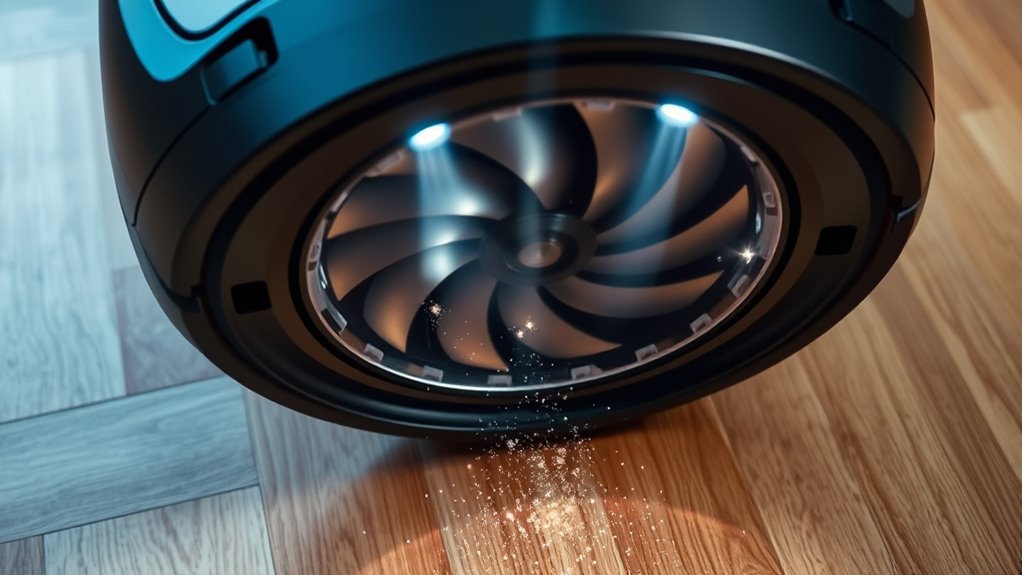
Advancements in fan and impeller design focus on improving airflow efficiency and reducing energy consumption. New shapes and structures optimize airflow dynamics, making devices more effective. Additionally, noise reduction techniques help create quieter operation without sacrificing performance.
Enhanced Airflow Dynamics
How do modern innovations in fan and impeller design improve airflow dynamics? They optimize airflow by reducing airflow turbulence and enhancing fan blade aerodynamics. This results in more efficient suction and better dirt pickup. Specifically:
- Streamlined fan blades cut down on airflow turbulence, allowing smoother air movement.
- Improved fan blade aerodynamics minimize energy loss, increasing suction power.
- Precise impeller tuning enhances airflow consistency, boosting overall vacuum efficiency.
These advancements mean your robot vacuum can generate stronger, steadier suction while consuming less energy. By refining how air flows through the system, manufacturers ensure dirt and debris are pulled in more effectively. The result is a quieter, more powerful cleaning experience that keeps your floors spotless with less noise and fuss.
Advanced Impeller Shapes
Innovations in impeller shapes have revolutionized fan and vacuum performance by optimizing airflow paths and reducing resistance. These impeller innovations enhance suction efficiency by ensuring air moves smoothly through the system. Different shapes, such as curved blades and aerodynamic profiles, improve airflow and energy transfer. The following table highlights how impeller design influences performance:
| Impeller Shape | Suction Efficiency | Noise Level |
|---|---|---|
| Curved Blades | High | Low |
| Straight Blades | Moderate | Moderate |
| Aerofoil | Very High | Very Low |
| Multi-Stage | Maximize airflow | Moderate |
| Variable Pitch | Adaptable suction | Low |
Noise Reduction Techniques
To effectively reduce noise in fans and impellers, designers focus on refining blade shapes and airflow pathways to minimize turbulence and vibration. They incorporate soundproofing materials around motor housings and airflow channels to dampen sound transmission. Vibration dampening techniques, such as mounting fans on elastic mounts or using rubber grommets, absorb mechanical vibrations before they create noise. Here are key innovations:
- Blade curvature adjustments that smooth airflow and reduce aerodynamic noise.
- Use of sound-absorbing materials within the fan casing to block sound escape.
- Implementation of vibration dampers that prevent vibrations from amplifying through the vacuum body.
These strategies collectively make robot vacuums quieter, ensuring less disturbance while maintaining effective suction performance.
The Influence of Dirt and Debris Size on Suction Effectiveness
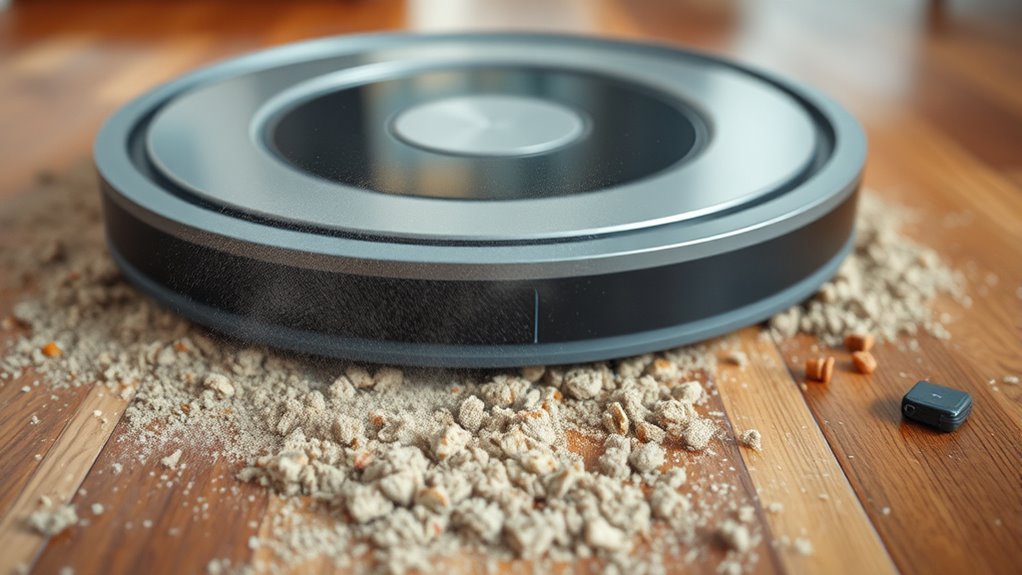
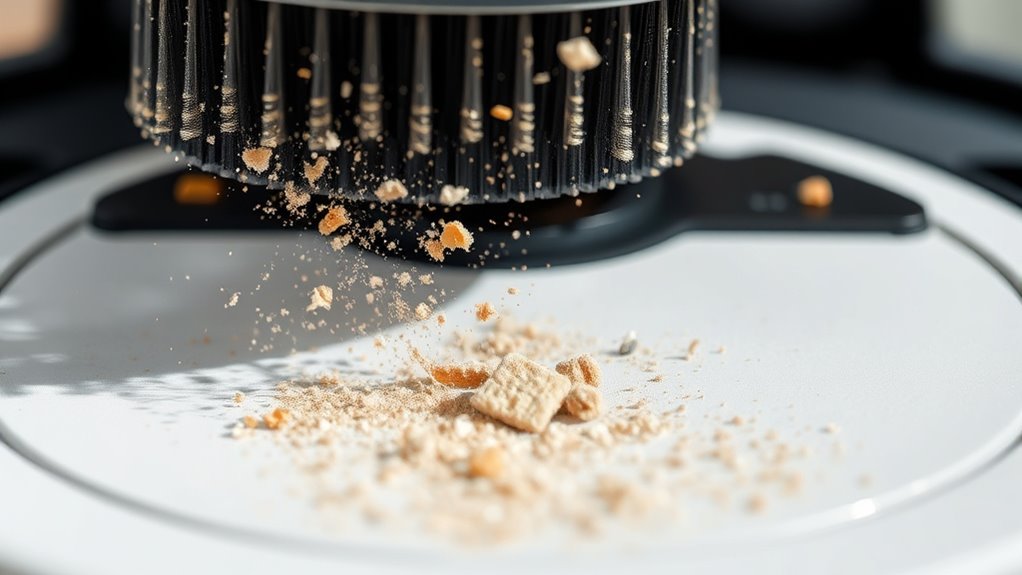
The size of dirt and debris plays a crucial role in determining suction effectiveness. Smaller dirt particles, like dust, are easier to lift with a vacuum’s suction power, while larger debris, such as crumbs or hair, may require more force to dislodge. Dirt particle size affects how well the vacuum can pick up debris; tiny particles can slip through gaps or cling to surfaces, reducing cleaning efficiency. Debris aggregation, where particles clump together, can either help or hinder suction, depending on the size. Clumped debris may be easier to remove if it’s large enough to be caught by the vacuum’s intake, but small, tightly packed particles can resist suction. Overall, understanding how dirt and debris size influence suction helps in designing more effective robotic vacuums.
Future Advances in Suction Technology for Robotic Cleaning
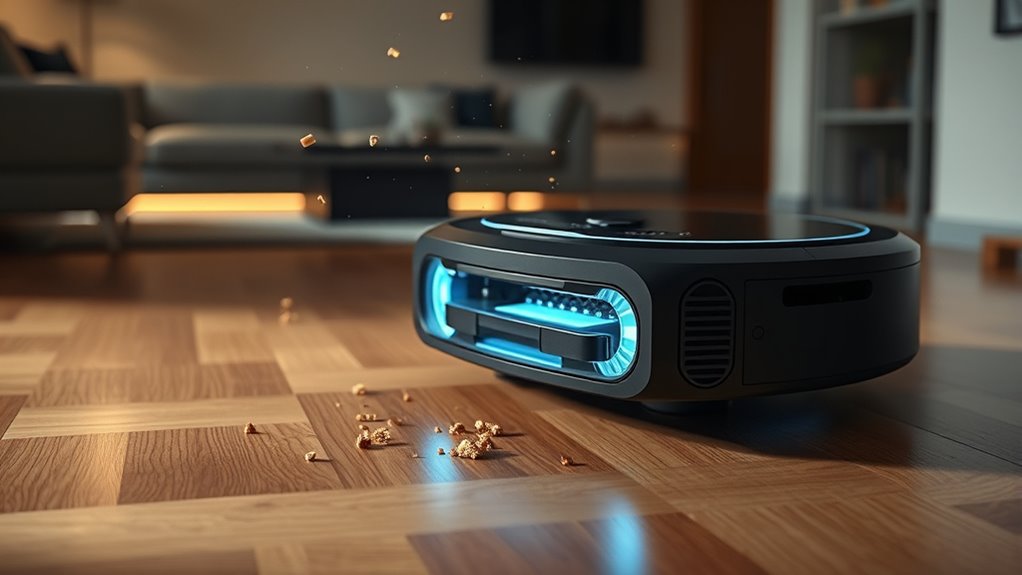
Advancements in suction technology are set to revolutionize robotic cleaning by enabling devices to handle a wider range of debris with greater efficiency. Future innovations focus on integrating smart navigation systems that adapt to your home’s layout, optimizing cleaning paths and avoiding obstacles. Additionally, enhanced suction mechanisms will better manage different debris types, from fine dust to larger particles. To support these improvements, manufacturers are investing in battery longevity, ensuring longer cleaning sessions without frequent recharging. Key developments include:
- Smarter sensors for precise debris detection and targeted suction
- More efficient motor designs that increase suction power without draining the battery
- Improved power management systems to extend operational time while maintaining strong suction levels
These advances will make robotic vacuums more effective, reliable, and capable of tackling complex cleaning tasks seamlessly.
Frequently Asked Questions
How Do Robot Vacuums Adjust Suction for Different Flooring Types?
You’ll notice your robot vacuum adjusts suction automatically based on floors compatibility. It uses sensors to detect whether you’re on carpets, hardwood, or tile and calibrates suction accordingly. This suction calibration ensures ideal cleaning without wasting power or damaging delicate surfaces. As you move between different flooring types, the vacuum seamlessly adapts, providing efficient dirt pickup while protecting your floors.
Can Suction Power Be Affected by Battery Life or Power Settings?
Think of your robot vacuum as a diligent dancer, whose moves depend on the music’s rhythm. When battery efficiency dips or you tweak power calibration settings, its suction power can weaken, like a dancer losing tempo. Low battery life limits energy, reducing suction, while adjusting power settings can either boost or soften its grip. Keep the battery healthy and calibrate wisely to guarantee your device performs its best every time.
How Do Robot Vacuums Detect and Avoid Obstacles During Cleaning?
You’ll find that robot vacuums detect and avoid obstacles using obstacle sensors and advanced navigation algorithms. These sensors, like infrared or ultrasonic, actively scan your space for objects, while navigation algorithms process this data to create efficient cleaning paths. As they move, your robot adjusts course automatically, preventing collisions and ensuring thorough coverage. This smart system keeps your furniture safe and your floors spotless with minimal input from you.
Are There Safety Features to Prevent Damage From Excessive Suction?
Did you know that most robot vacuums have a 30% safety margin built into their suction regulation? They use safety sensors to prevent damage from excessive suction, automatically reducing power when they detect potential obstacles or fragile surfaces. This guarantees your furniture and floors stay safe while maintaining cleaning efficiency. So, you don’t need to worry about your robot causing harm—it’s designed to protect both itself and your home.
How Does Dustbin Capacity Influence Suction Performance Over Time?
Your robot vacuum’s dustbin capacity directly impacts its suction efficiency over time. A larger dustbin allows you to hold more dirt without frequent emptying, maintaining peak suction power as the bin fills. When the dustbin is small, it fills quickly, reducing suction efficiency and requiring more frequent emptying. To keep your vacuum performing well, choose a model with a sufficient dustbin capacity for your cleaning needs.
Conclusion
Now that you understand how robot vacuums generate suction, you can appreciate the engineering behind their cleaning power. Did you know that modern vacuum motors can reach up to 30,000 RPM, creating powerful airflow and pressure differences? This means your robot can pick up even fine dust particles and larger debris efficiently. With ongoing innovations, future models will only get smarter and more effective—making your cleaning routine easier and more thorough than ever.
NFL season / tailgating Picks
team gear
As an affiliate, we earn on qualifying purchases.