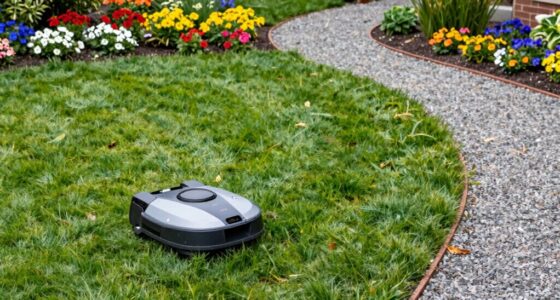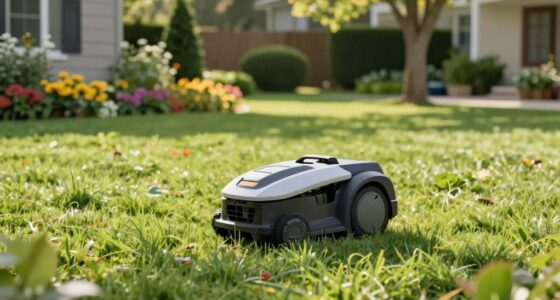
Robotic lawn mowers mulch grass into tiny particles during each cut, breaking down the clippings into fine, decomposable pieces. This process keeps your lawn tidy, promotes healthy growth, and reduces the need for bagging or manual cleanup. Unlike traditional mowers, they leave minimal visible residue and help improve soil health naturally. To discover how to optimize this mulching process and benefit your yard, keep exploring the details below.
Prime for Young Adults — start your free trial
Fast free delivery, streaming and member deals for eligible 18–24 year olds.
As an affiliate, we earn on qualifying purchases.
Key Takeaways
- Robotic mowers mulch grass into tiny, fine particles during cutting, effectively breaking down clippings.
- The mulched grass decomposes quickly, returning nutrients to the soil and promoting healthy lawn growth.
- Unlike traditional mowers, robotic models produce minimal visible residue, maintaining a neat, clump-free lawn.
- Regular mowing and proper blade maintenance ensure effective mulching and optimal clipping management.
- Mulching with robotic mowers reduces yard waste, supports eco-friendly practices, and minimizes chemical fertilizer use.
robotic lawn mower mulching blades
As an affiliate, we earn on qualifying purchases.
As an affiliate, we earn on qualifying purchases.
How Do Robotic Mowers Handle Grass Clippings?
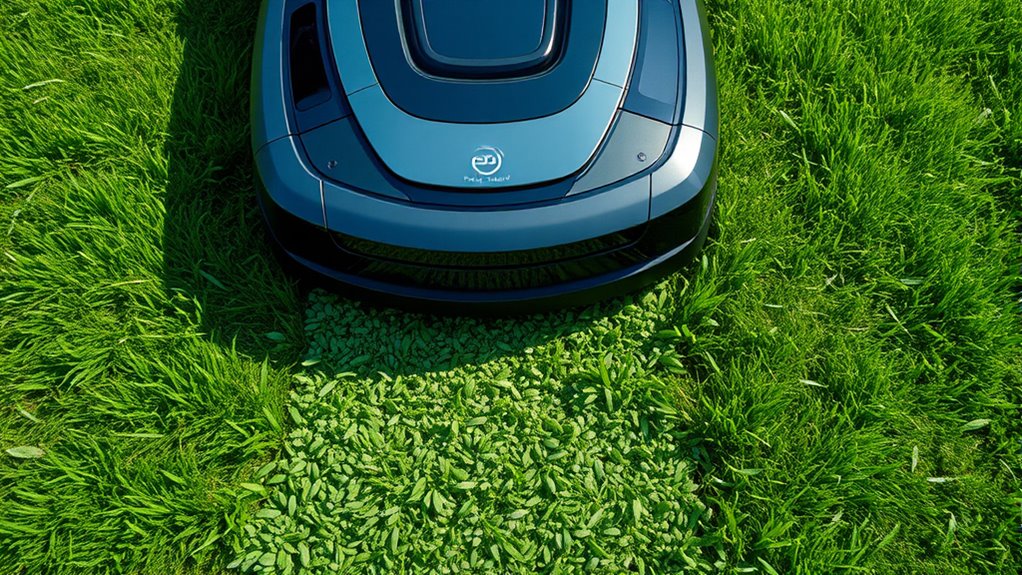
Robotic mowers handle grass clippings efficiently by mulching them into tiny pieces as they cut. This process helps keep your lawn tidy and promotes healthy growth. Because of their design, these mowers mulch continuously, reducing the need for bagging or disposal. To maintain peak performance, you should stick to a consistent mowing schedule, ensuring the grass isn’t too tall or overgrown. Regular mowing prevents strain on the motor and extends the battery lifespan, meaning your mower will last longer and work more effectively. If you set your schedule properly, your robotic mower can operate smoothly without interruption. Properly managing mowing frequency also ensures the grass is cut at the right height, supporting healthy growth and a lush lawn.
grass clipping mulching kit for robotic mowers
As an affiliate, we earn on qualifying purchases.
As an affiliate, we earn on qualifying purchases.
The Mulching Capabilities of Robotic Lawn Mowers
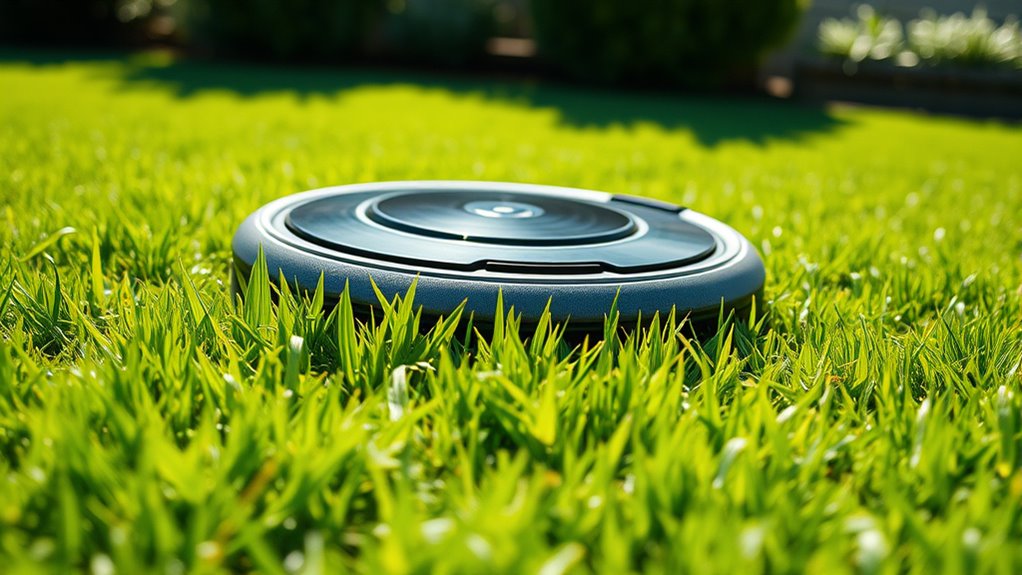
Because they are designed to mulch as they cut, robotic lawn mowers efficiently break down grass into fine particles that fall back onto the lawn. This grass mulching process helps maintain a healthy, green appearance by returning nutrients to the soil naturally. During robotic mowing, the blades cut grass into tiny clippings, which are then distributed evenly across your yard. The small size of these clippings promotes quick decomposition, reducing the need for bagging or additional mulching accessories. Robotic mowing machines are specifically engineered to optimize grass mulching, ensuring the clippings provide natural fertilization without smothering the grass. This eco-friendly approach not only saves you time but also encourages a lush, vibrant lawn through effective mulching capabilities.
robotic mower grass bag alternative
As an affiliate, we earn on qualifying purchases.
As an affiliate, we earn on qualifying purchases.
Comparing Robotic Mowers to Traditional Mulching Mowers

While robotic lawn mowers excel at mulching as they cut, traditional mulching mowers have long been the standard for maintaining healthy lawns. When comparing robotic vs manual, you’ll see differences in mulching effectiveness. Robotic mowers are convenient and quiet, providing consistent cuts and fine clippings. Manual mulching mowers often require more effort but can handle thicker grass and larger debris more effectively. The table below highlights key features:
| Feature | Robotic Mowers | Traditional Mulching Mowers |
|---|---|---|
| Mulching Effectiveness | Produces fine clippings | Handles thicker grass |
| Ease of Use | Automated, minimal effort | Manual effort required |
| Maintenance | Low, automated | Higher, routine upkeep |
| Cutting Precision | Consistent, steady | Variable, depends on skill |
| Suitability | Small to medium lawns | All lawn sizes |
lawn mower blade maintenance tools
As an affiliate, we earn on qualifying purchases.
As an affiliate, we earn on qualifying purchases.
Do Robotic Mowers Leave Clippings on the Lawn?

Many users wonder whether robotic mowers leave visible clippings on the lawn. Typically, robotic mowers are designed to cut grass finely enough that clippings are hardly noticeable, creating a tidy appearance. Unlike traditional mowers, they operate quietly, producing minimal robotic mower noise, which helps avoid disturbing you or neighbors. You might worry about whether these small clippings will pile up or become visible over time. Rest assured, robotic mowers mulch the grass so efficiently that clippings usually disappear quickly, leaving little to no visible residue. Additionally, their battery lifespan supports regular, frequent mowing, ensuring consistent mulching without interruption. Overall, robotic mowers do not leave noticeable clippings, maintaining a neat lawn while operating quietly and efficiently.
Benefits of Grass Mulching With Robotic Mowers

Using a robotic mower to mulch your grass offers several advantages. It helps improve your soil’s health, reduces the amount of lawn waste you need to dispose of, and promotes faster, healthier grass growth. These benefits make mulching with robotic mowers a smart choice for maintaining a lush, eco-friendly lawn.
Healthier Soil Composition
Grass mulching with robotic mowers directly enhances soil health by returning nutrients to the earth as clippings decompose. This natural process boosts soil aeration and encourages microbial activity, creating a richer environment for grass roots. As the clippings break down, they improve soil structure, retain moisture, and promote beneficial microorganisms. You’ll notice your lawn becoming more resilient and lush over time. Visualize a healthy soil ecosystem with:
- Increased microbial diversity
- Better nutrient recycling
- Improved soil aeration
- Enhanced moisture retention
- Stronger root growth
This cycle supports a vibrant lawn and reduces the need for chemical fertilizers. Your yard transforms into a balanced, thriving habitat that sustains itself naturally, thanks to the continuous contribution of mulched grass clippings.
Reduced Lawn Waste
Robotic lawn mowers that mulch your grass considerably reduce the amount of yard waste you generate. Instead of bagging clippings, the mower finely chops the grass, leaving it on the lawn. This natural recycling improves garden aesthetics by creating a lush, uniform appearance without clumps or debris. Plus, the mulched grass acts as a natural fertilizer, enriching the soil and supporting healthier grass growth. The continuous mulching process also promotes better lawn aeration, allowing air, water, and nutrients to penetrate deeper into the soil. As a result, your yard stays cleaner, greener, and more vibrant with less effort. Reduced lawn waste means fewer trips to the compost or trash, making yard maintenance simpler and more eco-friendly overall.
Enhanced Grass Growth
Because the mower finely chops grass into small particles, it allows essential nutrients to quickly return to the soil, promoting healthier growth. This natural mulching process enhances your lawn’s vitality without relying on artificial fertilizers. As the clippings decompose, they enrich the soil, encouraging lush, dense grass. The benefits extend to pest control, since a healthy, thick lawn is less prone to pests and disease. Picture a vibrant green yard with:
- Faster turf recovery after mowing
- Reduced need for chemical fertilizers
- Stronger resistance to pests and weeds
- Improved soil aeration
- Consistent, lush grass coverage
Are Grass Clippings From Robotic Mowers Recycled Into Fertilizer?

Many robotic lawn mowers are designed to mulch grass clippings back into the lawn, but whether these clippings are recycled into fertilizer depends on the mower’s features. If your mower produces finely chopped grass, it can naturally act as a form of grass recycling, returning nutrients to the soil. However, it doesn’t turn clippings into compost automatically. To maximize fertilizer benefits, you might consider composting tips like collecting clippings separately or adding them to a compost bin. This process allows you to create nutrient-rich compost, enhancing your lawn’s health. While robotic mowers efficiently mulch, they don’t directly recycle clippings into fertilizer without additional composting steps. Understanding how grass recycling works helps you make the most of your mower’s mulching capabilities for a lush, healthy lawn.
Maintenance and Disposal of Grass Clippings From Robotic Mowers
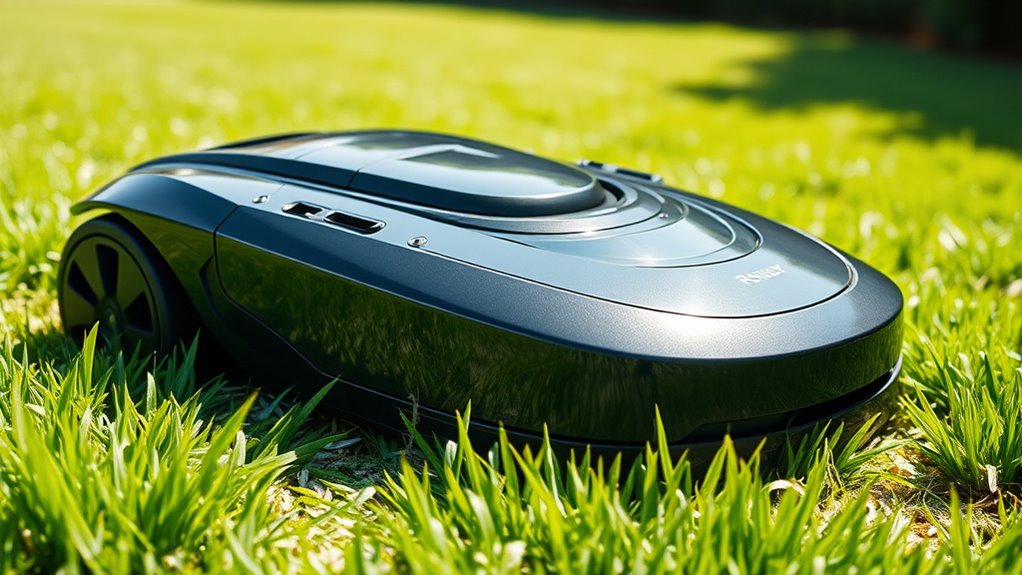
Have you considered how to properly maintain and dispose of grass clippings from your robotic mower? Regular maintenance ensures peak battery life and keeps noise levels low. To manage clippings effectively, you might:
Properly maintaining and disposing of grass clippings extends your mower’s battery life and minimizes noise.
- Empty the mower’s collection bin frequently to prevent clogging
- Check and clean blades to maintain cutting efficiency
- Dispose of excess clippings responsibly, such as composting or green waste collection
- Monitor the mower’s charging schedule to avoid overworking the battery
- Keep the mower’s environment clear to reduce noise disturbances and ensure smooth operation
Proper maintenance helps extend the mower’s battery life and keeps noise levels minimal. Disposal methods like mulching or composting transform clippings into beneficial soil amendments, reducing waste and supporting eco-friendly practices.
Factors That Affect Clipping Management in Robotic Mowing
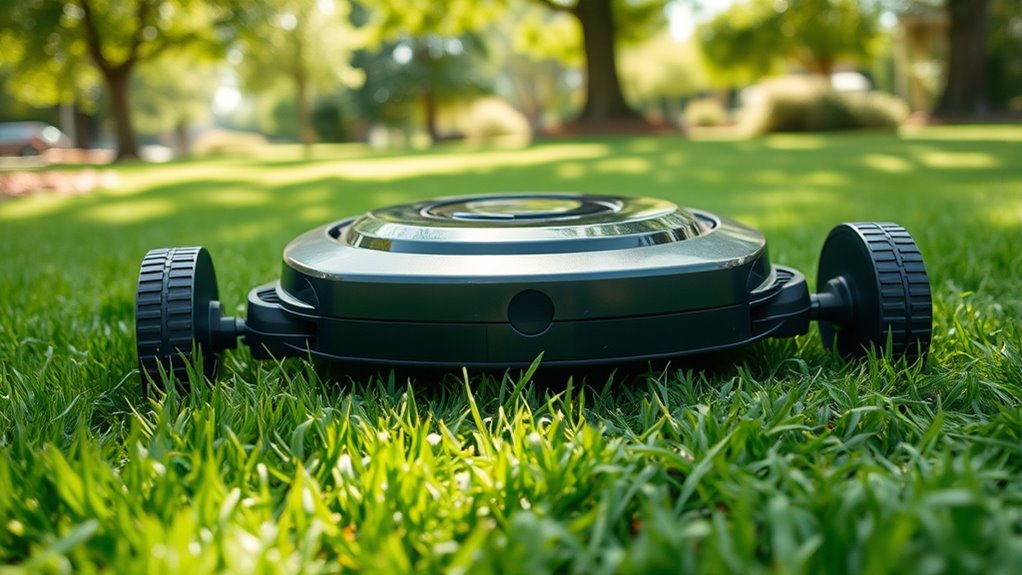
Your grass length and density directly influence how well your robotic mower can manage clippings. If the grass is too thick or tall, the mower may struggle to mulch effectively. Additionally, blade sharpness and design play vital roles in ensuring clean cuts and proper clipping distribution.
Grass Length and Density
Grass length and density directly influence how effectively robotic mowers can manage clippings. If your grass is too tall or dense, the mower struggles to mulch efficiently, leading to potential clumping or uneven cuttings. Maintaining ideal grass height through regular mowing is key. When you mow frequently, the grass stays shorter and easier for the mower to handle, promoting better mulching. Dense patches may slow down the mower or cause it to miss spots. Factors such as thick, lush growth or infrequent mowing can hinder proper clipping management. Consider these points:
- Overgrown grass hampers mulch dispersion
- Dense patches increase mower strain
- Longer grass results in larger clippings
- Frequent mowing keeps grass manageable
- Proper grass height enhances mulching efficiency
Blade Sharpness and Design
Blade sharpness and design are crucial factors that directly impact how well a robotic mower can manage clippings. Sharp blades ensure cleaner cuts, which helps the mower mulch effectively and prevents ragged edges that can clog the system. Regular blade maintenance, such as sharpening or replacing blades, keeps the mower performing at its best. The design of the blades also plays a role; well-designed blades create fine, uniform clippings that decompose quickly. Mowing speed influences how the blades perform; moving too fast can reduce cut quality and lead to uneven clippings, while a steady, appropriate speed allows the blades to cut cleanly and mulch efficiently. Prioritizing blade sharpness and proper design ensures your robotic mower handles clippings efficiently.
Tips for Optimal Clipping Management With Robotic Mowers

To achieve the best results with your robotic mower, managing the clippings effectively is essential. Focus on optimizing smart navigation to ensure even coverage and prevent missed patches, which helps keep clippings uniform and manageable. To enhance battery efficiency, schedule mowing sessions during optimal conditions and avoid overloading the mower with excessive grass. Regularly check and adjust blade height for consistent mulching and flow. Keep the mower’s sensors clean for better obstacle detection. Lastly, consider dividing large lawns into zones to improve navigation and reduce runtime.
- Use smart navigation for precise clipping distribution
- Schedule mowing during optimal weather
- Adjust blade height regularly
- Keep sensors clean for better performance
- Divide large lawns into manageable zones
Environmental Impact of Clipping Mulching by Robotic Mowers
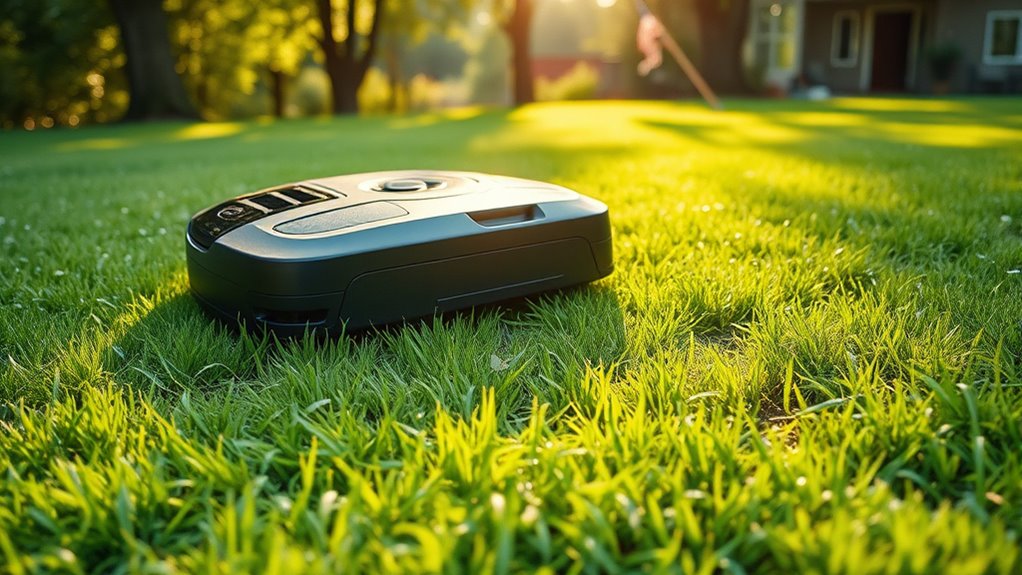
When your robotic mower mulch clippings, it helps enrich your soil with essential nutrients and reduces organic waste. This eco-friendly approach supports healthier lawns while lowering your environmental footprint. Understanding these benefits can guide you toward more sustainable lawn care practices.
Soil Nutrients Enriched
Because robotic lawn mowers mulch grass clippings directly into the soil, they help naturally replenish essential nutrients. This process promotes soil enrichment and supports nutrient cycling, reducing the need for chemical fertilizers. As the tiny clippings decompose, they release crucial elements like nitrogen, phosphorus, and potassium, enhancing soil fertility. You might notice:
- Improved plant growth and lawn health
- Reduced need for external fertilization
- Faster decomposition of organic matter
- Balanced nutrient levels in the soil
- Enhanced microbial activity supporting soil vitality
This natural process ensures your lawn remains lush and vibrant while maintaining eco-friendly practices. By facilitating nutrient cycling, robotic mowers contribute to a healthier soil ecosystem, making your yard more sustainable and resilient over time.
Organic Waste Reduction
Robotic lawn mowers considerably reduce yard waste by mulching grass clippings directly into the lawn, minimizing the need to bag and dispose of organic debris. This process not only cuts down on waste sent to landfills but also lessens the attraction of garden pests that thrive in decaying clippings. By leaving finely mulched grass on the surface, your lawn maintains a tidy appearance and promotes healthier, greener growth. Without thick, piled-up clippings, your yard’s aesthetics improve, appearing more uniform and well-kept. Additionally, reducing organic waste helps lessen the environmental impact of yard maintenance. Overall, mulching with robotic mowers supports sustainable practices while enhancing your lawn’s visual appeal and minimizing pest issues linked to excess debris.
Eco-Friendly Lawn Care
Using robotic lawn mowers to mulch grass clippings offers a significant environmental advantage by reducing the need for synthetic fertilizers and chemical treatments. This eco-friendly approach leverages advanced robotic mower technology to create healthier, more sustainable lawns. With consistent mowing aligned with your lawn maintenance schedule, the mower disperses tiny clippings that decompose quickly, enriching the soil naturally.
Imagine:
- Less chemical runoff into local waterways
- Reduced carbon footprint from fewer equipment emissions
- Less waste sent to landfills
- Improved soil health through natural fertilization
- Lower water consumption due to healthier grass
Frequently Asked Questions
How Does Robotic Mowing Affect Lawn Health Over Time?
Robotic mowing improves your lawn’s health over time by promoting natural fertilizer benefits through grass clipping mulching. As your mower cuts, it leaves tiny clippings that decompose quickly, enriching the soil. This process enhances soil aeration and provides essential nutrients, reducing the need for chemical fertilizers. Over time, your lawn becomes healthier, thicker, and more resilient, thanks to consistent, even mowing that supports *best* soil and grass growth.
Can Robotic Mowers Handle Thick or Tall Grass Effectively?
Imagine a robotic mower tackling a jungle of thick, tall grass—you wonder if it can keep up. While robotic mower limitations exist, many models handle grass height management effectively, but very dense or overgrown areas might slow them down or require manual trimming first. For ideal performance, keep grass within recommended heights, ensuring your robot mows efficiently without getting bogged down in the thickest patches.
Do Robotic Mowers Require Special Settings for Mulching?
Most robotic mowers don’t require special mulching settings; they automatically mulch by finely cutting grass and leaving clippings on the lawn. However, some models offer mulching or bagging options, so you might need to adjust the mulching settings or make specific robotic mower adjustments to optimize performance. Check your mower’s manual to see if mulching settings are customizable, ensuring it cuts grass efficiently and leaves behind nutrient-rich clippings.
Are There Environmental Concerns With Grass Clippings From Robotic Mowers?
While some worry about environmental concerns with grass clippings, robotic mowers turn these concerns into eco-friendly advantages. Their biodegradable mulch promotes grass recycling, nourishing your lawn naturally and reducing waste. By finely mulching clippings, robotic mowers prevent excess that could smother plants or contribute to thatch. This sustainable approach minimizes landfill contributions and supports healthier soil, making grass recycling an environmentally conscious choice rather than a concern.
How Often Should Grass Clippings Be Collected or Disposed Of?
You should collect or dispose of grass clippings based on your lawn’s needs, typically every one to two weeks. Clipping frequency depends on how fast your grass grows and the mower’s cutting schedule. For efficient grass disposal, keep an eye on your lawn and adjust your clipping removal routine accordingly. Regularly managing grass disposal helps prevent thatch buildup and keeps your yard looking healthy and tidy.
Conclusion
Just like the timeless dance of nature’s cycles, robotic mowers return grass clippings to the soil, nourishing your lawn’s soul. By mulching efficiently, they honor the Earth’s quiet rhythm, reducing waste and supporting a greener future. Embrace this modern harmony—your lawn, much like a well-tuned symphony, thrives when grass recycles itself beneath your feet. Let your robotic mower be the silent steward of your yard’s eternal renewal.
Fall yard work Picks
leaf blowers
As an affiliate, we earn on qualifying purchases.