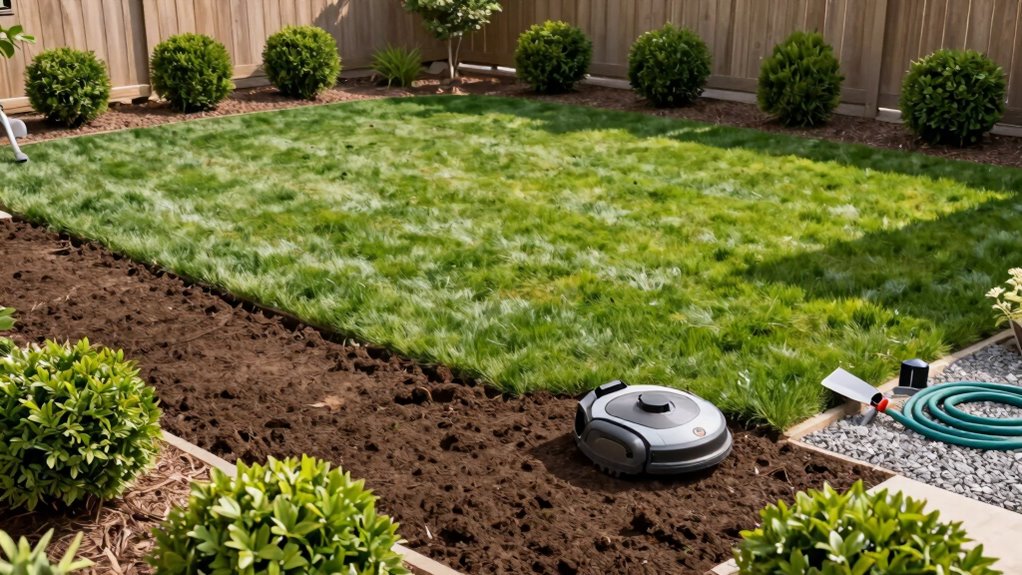
Before installing a robotic lawn mower, assess your yard for uneven terrain, steep slopes, and thick vegetation. Clear pathways of debris, trim overgrown bushes, and remove hidden objects like rocks or tools to prevent jams. Guarantee the sprinkler system doesn’t spray onto the mower by adjusting or repositioning heads. Create clear boundaries around flower beds or play areas by installing boundary wires and removing obstacles. For more tips on optimizing your yard for effortless mowing, keep exploring helpful strategies.
Listen free for 30 days with Audible
Thousands of audiobooks and originals — cancel anytime.
As an affiliate, we earn on qualifying purchases.
Key Takeaways
- Assess and level the terrain, removing obstacles and overgrown vegetation for smooth mower operation.
- Clear pathways and trim low-hanging branches to prevent sensor or movement blockages.
- Install and secure boundary wires, marking clear mowing zones and preventing mower wandering.
- Adjust or relocate sprinkler heads to avoid interference and muddy patches affecting traction.
- Remove large rocks, debris, and obstacles along boundary lines for safe navigation and boundary definition.

Preparing your yard for a robotic lawn mower begins with evaluating and addressing potential obstacles that could hinder its operation. You want your mower to work efficiently, so start by examining your garden design. Look for uneven terrain, steep slopes, or areas with thick vegetation that might challenge the mower’s navigation. Trim back overgrown bushes, clear pathways of debris, and guarantee there are no hidden objects like rocks or garden tools that could damage the blades or get caught in the mower’s wheels. Simplifying your garden design not only helps the mower move smoothly but also reduces the chances of it getting stuck or causing damage.
Next, consider your sprinkler system. If you have an automated or traditional sprinkler setup, you need to make sure it doesn’t interfere with the mower’s path. Adjust the height or placement of sprinklers so they don’t spray water onto the mower or its charging station. If your sprinkler heads are in the way, reposition them or install barriers to prevent water from splashing onto the mower. Also, make certain the system is well-maintained and doesn’t leak or spray excessively, which could lead to muddy patches that might hinder the mower’s traction or cause it to slip. Properly managing your sprinkler system before installation guarantees your lawn stays healthy and that your mower can operate without interruptions or damage.
Another step is creating clear boundaries for the mower. Many robotic mowers use boundary wires to define the mowing area. Before installing these wires, walk through your yard and identify the edges you want to keep uncut, such as flower beds, vegetable patches, or play areas. Remove any large rocks or obstructions along the boundary lines, and make sure the wires are buried or secured properly so they don’t get pulled loose. This prevents the mower from wandering into unwanted zones and helps it stay within the designated area.
Finally, keep in mind that your yard’s overall layout should facilitate easy navigation. Remove any low-hanging branches or fences that could block the mower’s sensors or movement. If you have multiple zones, plan the placement of charging stations and boundary wires accordingly. By preparing your garden design, managing the sprinkler system, and establishing clear boundaries, you set the stage for a smooth shift to robotic lawn mowing. This proactive approach not only prolongs the life of your equipment but also ensures your lawn receives consistent, efficient care without you having to lift a finger.
Additionally, understanding the importance of garden design can help you optimize your yard’s layout for better robotic mower performance.
robotic lawn mower boundary wire kit
As an affiliate, we earn on qualifying purchases.
As an affiliate, we earn on qualifying purchases.
Frequently Asked Questions
How Do I Choose the Right Size Robotic Mower for My Yard?
To choose the right size robotic mower, consider your yard dimensions and the mower’s cutting width. Larger yards require a mower with a bigger cutting width and longer battery life, while smaller yards can suit compact models. Measure your yard precisely, including slopes and obstacles, to confirm the mower size matches your needs. This way, you’ll get efficient coverage without over- or under-buying, guaranteeing a tidy, well-maintained lawn.
Can I Install a Robotic Mower on Uneven or Hilly Terrain?
Yes, you can install a robotic mower on uneven or hilly terrain, but you need to check its slope compatibility. You might have to do terrain leveling to make the area safer and more manageable for the mower. Make certain the mower’s specifications match your yard’s slope and terrain conditions. This will help prevent accidents and ensure efficient mowing on challenging landscapes.
What Is the Best Time of Year to Prepare My Yard?
You should prepare your yard in early spring or fall when the weather is mild. During this time, you can focus on seasonal planting to guarantee your lawn is healthy. Also, perform soil testing to identify any nutrient deficiencies or pH imbalances. Addressing these issues before installation helps your robotic mower work efficiently and maintains a lush, well-maintained yard throughout the growing season.
Do I Need to Remove All Debris Before Installation?
You definitely need to remove all debris before installation—imagine obstacles blocking your mower’s path, causing damage or uneven cuts. Debris removal clears the way for a smooth operation, while soil leveling ensures your lawn’s surface is even. This combination prevents jams and promotes healthy grass growth. So, take the time to clear leaves, stones, and branches, then level the soil, creating a suitable environment for your robotic mower’s efficiency and longevity.
How Do I Prevent the Mower From Damaging Flower Beds?
To prevent your robotic mower from damaging flower beds, define clear flower bed borders using edging or stones, creating a physical barrier. Keep decorative mulch well-maintained and avoid spreading it beyond borders, as it can interfere with the mower’s sensors. Regularly check for and remove any debris or overgrown plants that might cause misalignment. This way, your mower stays on the grass and protects your flower beds effectively.
As an affiliate, we earn on qualifying purchases.
Conclusion
Getting your yard ready for a robotic mower isn’t just about trimming grass—it’s about creating a safe, obstacle-free environment. Proper preparation can boost efficiency and prolong your mower’s lifespan. Did you know that well-prepared lawns can reduce mowing time by up to 30%? By taking these steps, you guarantee your robotic mower runs smoothly and maintains a healthy, lush yard with minimal effort. It’s a small investment that pays off in a beautiful, hassle-free lawn.
As an affiliate, we earn on qualifying purchases.
As an affiliate, we earn on qualifying purchases.
Fall Picks
fall essentials
As an affiliate, we earn on qualifying purchases.