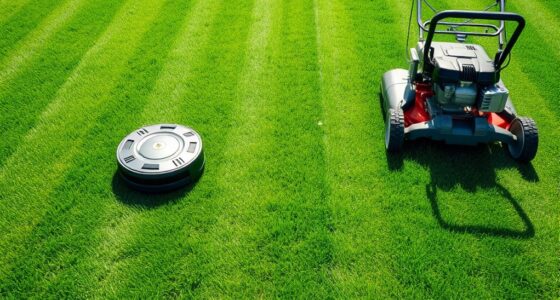
To set the perfect cutting height on your robot mower, first locate the adjustment mechanism, usually a lever or dial near the deck. Choose a height that promotes healthy grass growth, usually 2-3 inches, depending on your lawn type. Adjust slowly, ensuring even height across all zones, and regularly monitor for grass stress or overgrowth. For detailed steps and tips on maintaining ideal performance, keep exploring for more expert advice.
Key Takeaways
- Consult the robot mower’s manual to locate and understand the height adjustment mechanism.
- Turn off the mower on a flat surface and adjust the height dial, lever, or screws to the desired level.
- Set the cutting height according to your grass type and seasonal growth, typically between 2-4 inches.
- Ensure all wheels or cutting deck zones are at an even height for uniform cuts.
- Regularly check, clean, and calibrate sensors and blades to maintain precise height settings.
Understanding the Importance of Proper Cutting Height
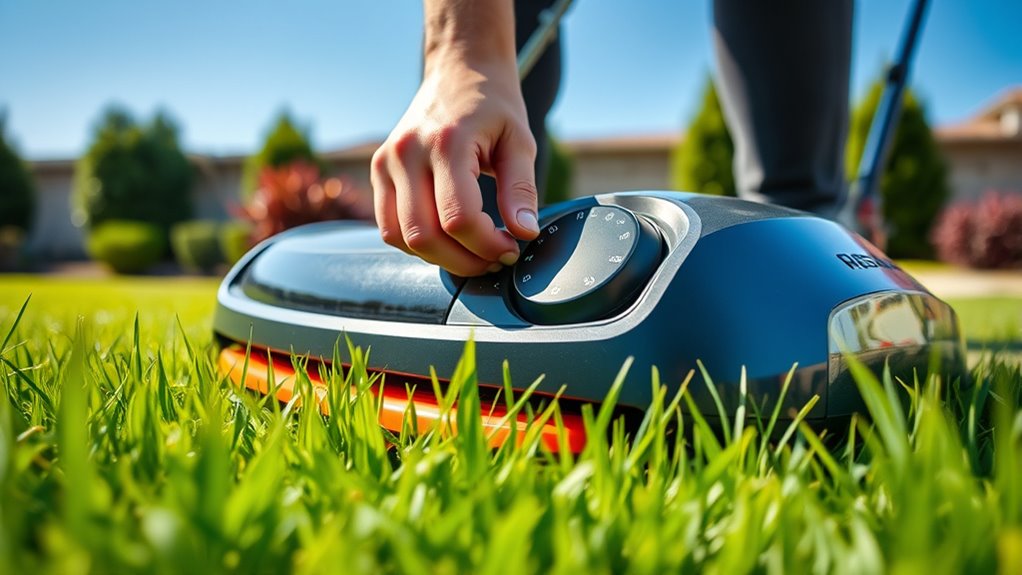
Understanding the importance of proper cutting height is essential for maintaining a healthy and attractive lawn. When you set the correct height, you help promote grass health by encouraging stronger roots and better resilience against pests and drought. If your mower blades are too low, you risk scalping the turf, which can damage the grass and create weak spots. Conversely, cutting too high may lead to an overgrown lawn that’s prone to disease and pests. Adjusting your robot mower to the suitable height ensures the blades cut at the right level, preventing stress on the grass and maintaining even growth. Proper cutting height not only enhances your lawn’s appearance but also supports its overall health and vitality.
Factors to Consider When Choosing the Right Height

When selecting the right cutting height for your robot mower, several key factors come into play to make certain your lawn stays healthy and attractive. First, consider your grass type—some grasses thrive when cut short, while others prefer a taller height to maintain vigor. Grass health depends on proper mowing height; cutting too low can stress the grass and weaken roots, while cutting too high may promote disease. Additionally, think about your mower blades—sharp blades ensure cleaner cuts that promote grass health and prevent tearing. The mower’s capabilities and your lawn’s specific needs should guide your choice, balancing a height that encourages lush growth without overtaxing the grass or mower blades. Adjusting your mower to fit these factors helps maintain a vibrant, healthy lawn.
How to Find Your Lawn’s Ideal Length
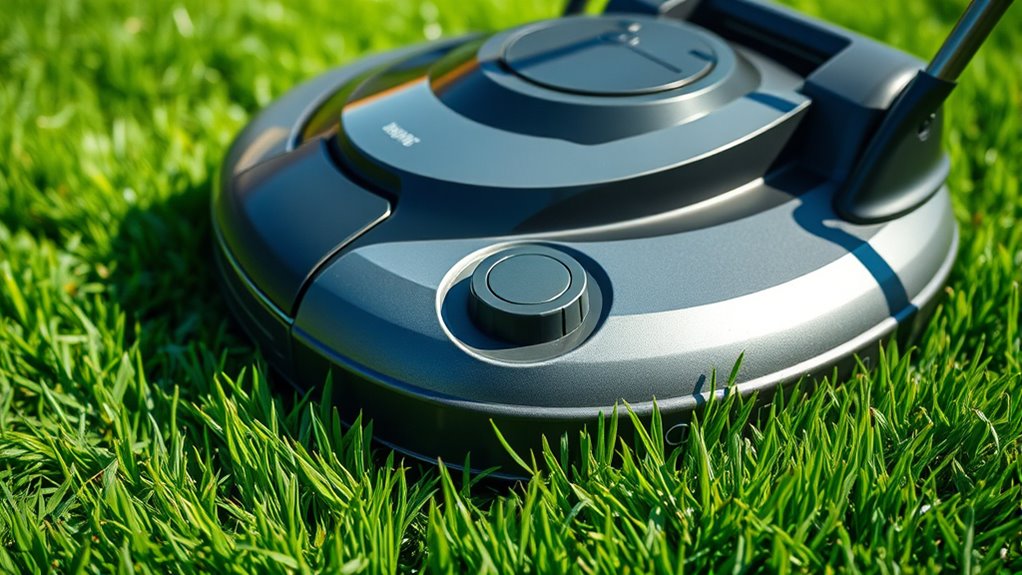
To find your lawn’s ideal length, start by evaluating its current condition and growth patterns. Consistently maintaining this height helps your mower perform better and keeps your yard healthy. Keep an eye on changes so you can adjust as needed for the best results.
Assessing Lawn Conditions
Evaluating your lawn’s conditions is the first step to determining the ideal cutting height for your robot mower. Consider factors like grass type, current height, and overall health. A well-maintained lawn with even growth allows for a consistent cut. Also, examine surrounding elements such as fence installation and garden design, which influence mowing patterns and accessibility. Use this table to visualize lawn conditions:
| Condition | Impact on Cutting Height | Recommendations |
|---|---|---|
| Tall, uneven grass | May need higher initial cut | Gradually lower to desired height |
| Thick, dense turf | Requires sturdier blades | Maintain slightly higher setting |
| Sloped areas | Risk of uneven mowing | Adjust height for slope safety |
Assessing these conditions helps set the right height, ensuring a healthy, neat lawn.
Maintaining Consistent Height
Finding the right lawn height is essential for a healthy, attractive yard, and maintaining consistency is key to achieving it. To guarantee ideal lawn aesthetics and mower efficiency, follow these steps:
- Measure your current grass height regularly to track growth.
- Adjust your robot mower gradually, raising or lowering the cutting height in small increments.
- Stick to a consistent mowing schedule to prevent uneven growth.
- Check for signs of stress or uneven patches, then modify your mowing height accordingly.
Locating the Adjustment Mechanism on Your Robot Mower

Locating the adjustment mechanism on your robot mower is usually straightforward, as manufacturers often design it for easy access. You’ll typically find it near the cutting deck or underneath the mower, sometimes protected by a cover or panel. Look for a dial, lever, or screw labeled with height indicators or markings related to blade alignment. Properly adjusting this mechanism is essential for mower calibration and ensuring even, consistent cuts. Before making any adjustments, check the manufacturer’s instructions to identify the correct control for height changes. Once located, you can fine-tune the cutting height, which helps maintain ideal blade alignment and promotes healthy grass growth. Being familiar with this adjustment point simplifies future calibration and keeps your mower performing at its best.
Step-by-Step Guide to Changing the Cutting Height

Once you’ve identified the adjustment mechanism, changing the cutting height is a straightforward process. Focus on improving lawn aesthetics and mower ergonomics with these steps:
Changing the cutting height is simple once you locate the adjustment mechanism, enhancing lawn look and mower comfort.
- Turn off the mower and ensure it’s on a flat surface.
- Locate the height adjustment lever or dial.
- Move the lever or turn the dial to your desired height setting.
- Confirm the adjustment is secure before restarting the mower.
Adjusting the cutting height allows you to tailor your mower’s performance for a healthier, more attractive lawn. Properly setting the height also reduces strain on the mower, enhancing mower ergonomics. Take a moment to check that the new height is even across all cutting zones. With these simple steps, you ensure your robot mower operates at its best, providing a well-maintained, visually appealing yard.
Tips for Maintaining Consistent Cutting Levels
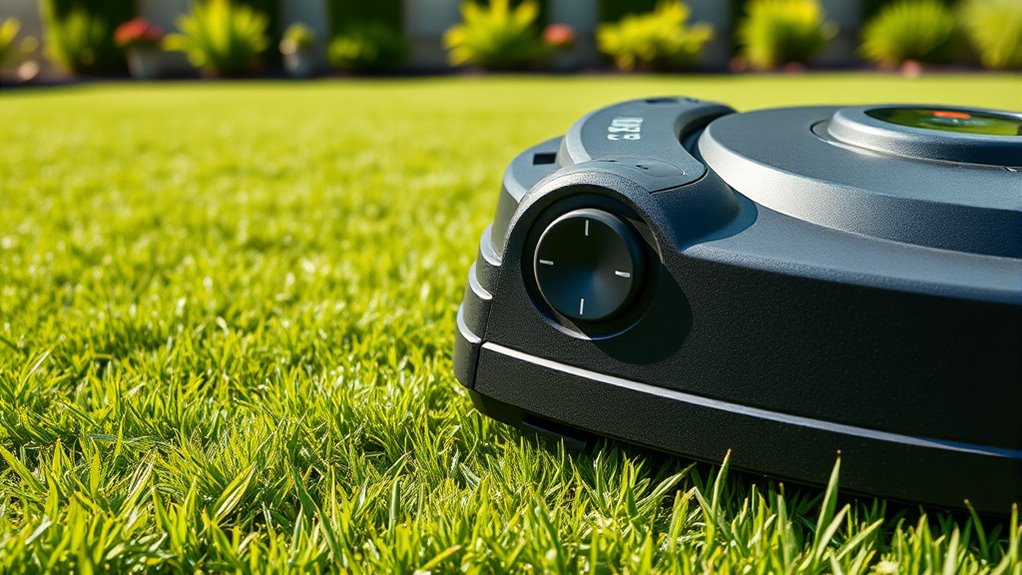
Maintaining consistent cutting levels is essential for a uniform, healthy lawn. To achieve this, regularly check and adjust your mower’s height settings. Incorporate lawn aeration to prevent soil compaction, which helps the mower cut evenly and promotes healthy grass growth. Additionally, practicing pest control keeps your lawn free of pests that can damage grass and disrupt uniformity.
| Tip | Action | Benefit |
|---|---|---|
| Regular Checks | Frequently verify height settings | Consistent grass length |
| Lawn Aeration | Aerate at least once a season | Better soil health, even cut |
| Pest Control | Use appropriate treatments | Prevents uneven damage |
Following these tips ensures your mower maintains a consistent cutting level, resulting in a lush, attractive lawn.
Common Mistakes to Avoid When Setting Height
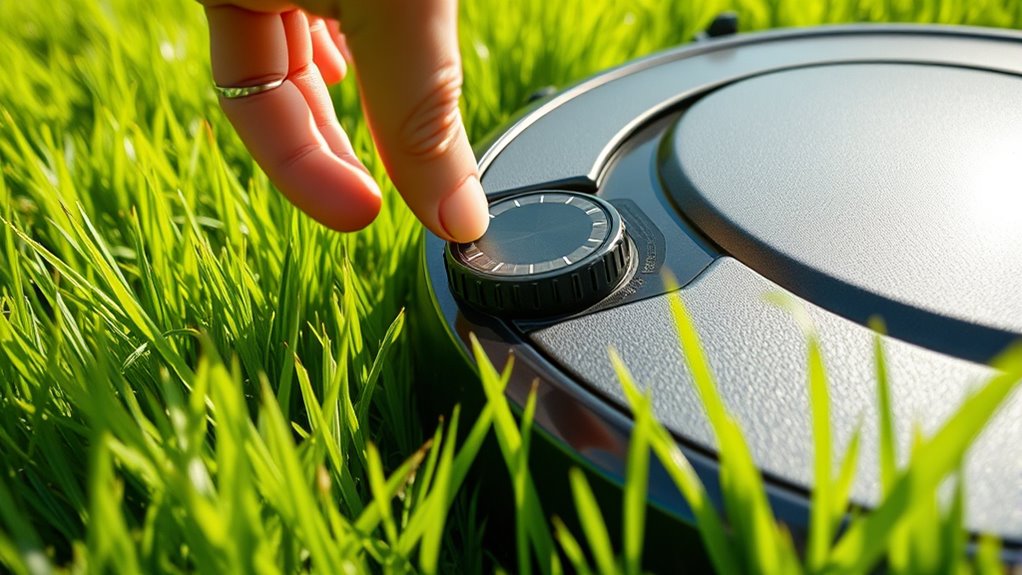
Setting the correct cutting height is essential for a healthy, attractive lawn, but many people make simple mistakes that compromise their mower’s effectiveness. One common mistake is choosing overly complex settings that confuse the system and lead to inconsistent cuts. Second, ignoring manufacturer guidelines often results in setting the blade height too low or too high, damaging the grass. Third, not adjusting the height properly for different grass types or seasons can hinder growth. Lastly, some forget to double-check their settings after repositioning the mower, causing uneven cuts. Avoid these pitfalls by sticking to straightforward, manufacturer-recommended settings, and resist the urge to overcomplicate adjustments. Keeping it straightforward ensures your mower performs at its best and your lawn stays healthy.
Seasonal Adjustments and Lawn Growth Cycles
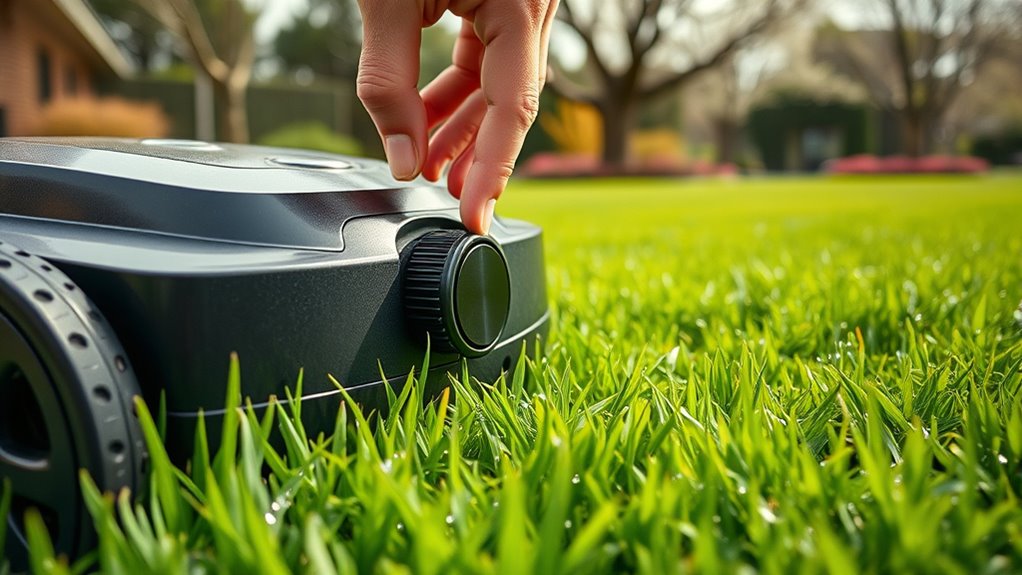
As seasons change, your lawn’s growth rate varies, so you need to adjust your mower height accordingly. During growth spurts or dense periods, raising the cutting height helps prevent stress on the grass. Keep an eye on lawn density and match your settings to promote healthy, lush growth year-round.
Adjust for Growth Spurts
During peak growing seasons, your lawn can experience rapid and uneven growth, making it essential to adjust your mower’s cutting height accordingly. Growth spurts vary by grass types, so monitor your lawn closely. To manage these changes effectively:
- Raise the cutting height temporarily to prevent scalping and stress on the grass.
- Regularly inspect and sharpen mower blades to ensure clean cuts, promoting healthy growth.
- Adjust the mower settings weekly during rapid growth periods to avoid cutting too short.
- Keep an eye on lawn health, and don’t hesitate to elevate the height if blades aren’t enough, especially for dense grass types.
Match Seasonal Changes
To guarantee your robot mower maintains a peak cut, you need to adjust the cutting height in response to seasonal changes and the natural growth cycles of your lawn. During spring and summer, grass grows faster, so lowering the cutting height slightly can enhance lawn aesthetics and reduce mowing frequency. In fall and winter, growth slows, and raising the blade height helps protect the grass and conserve energy. Matching your mower’s height with the season ensures a healthy, uniform appearance while minimizing stress on the turf. Regular adjustments also prevent over-mowing or scalping, keeping your lawn lush and well-maintained year-round. Staying attentive to seasonal shifts ensures your mower’s performance remains ideal and your lawn stays vibrant.
Monitor Lawn Density
How can you guarantee your robot mower keeps your lawn looking its best throughout the year? Monitoring lawn density is key, especially as growth cycles change with seasons. To maintain *ideal* lawn aesthetics and *assure* pet safety, follow these steps:
- Observe patches of thick or sparse grass to adjust cutting height accordingly.
- Increase mowing frequency during rapid growth periods to prevent overgrowth.
- Reduce cutting height in dry seasons to protect roots and discourage pests.
- Keep an eye on uneven growth caused by pet activity or shade, fine-tuning your mower’s height as needed.
Troubleshooting Issues With Cutting Height Settings
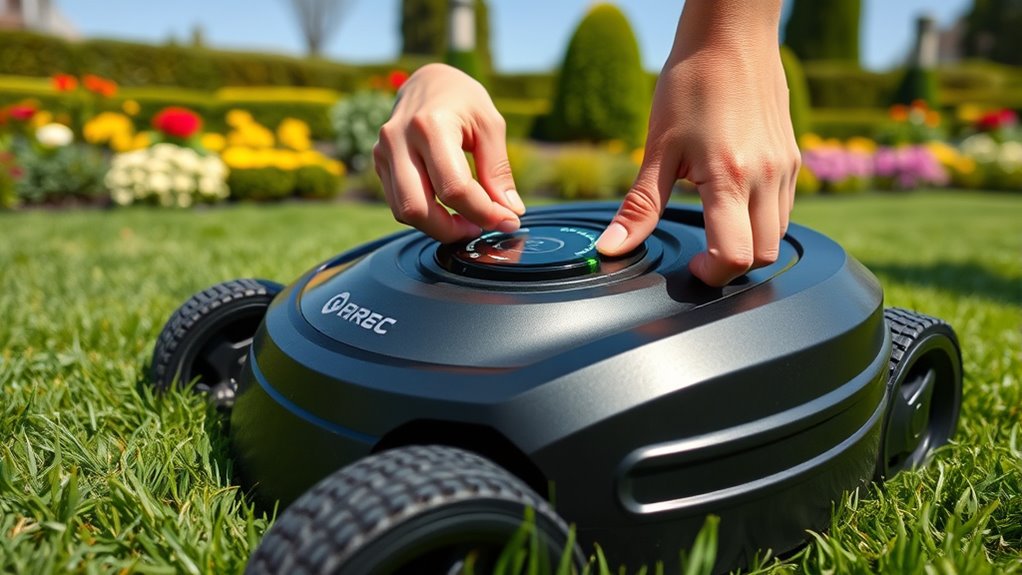
If your robot mower isn’t cutting evenly or seems to be struggling with the set height, there may be issues with the height adjustment mechanism or calibration. First, check the sensor calibration; misaligned sensors can cause inaccurate height readings. Ensure the sensors are clean and properly aligned to improve calibration accuracy. Next, examine the blade sharpness—dull blades can hinder cutting performance and give the impression of uneven height. Sharp blades cut more cleanly, maintaining consistent grass height. If issues persist, manually adjust the cutting height settings and re-calibrate the sensors as necessary. Regular maintenance, including sensor checks and blade sharpening, helps keep your mower functioning correctly and ensures it maintains the desired cutting height without problems.
Frequently Asked Questions
Can Changing the Cutting Height Affect the Robot Mower’s Battery Life?
Changing the cutting height can affect your robot mower’s battery life. When you set it higher, the mower might use more power to cut taller grass, reducing battery efficiency and mowing stamina. Conversely, a lower height can make mowing easier and conserve energy. Adjusting the cutting height wisely helps optimize battery life, allowing your mower to operate longer between charges and maintain consistent performance.
How Often Should I Adjust the Cutting Height During the Mowing Season?
You should adjust the cutting height as needed throughout the mowing season to maintain grass health and guarantee proper mower maintenance. Check your lawn regularly for uneven growth or signs of stress, and tweak the height accordingly. Typically, every few weeks is sufficient, but more frequent adjustments may be necessary during rapid growth periods. Consistent adjustments help your mower run efficiently and keep your lawn healthy and lush.
Is It Safe to Change the Cutting Height While the Mower Is Operating?
You shouldn’t change the cutting height while your mower’s operating, as it can be unsafe and disrupt blade maintenance or mower calibration. Always turn off the mower before adjusting the height to prevent accidents and ensure proper blade sharpness. After making adjustments, recheck the calibration to maintain an even cut. Doing this carefully helps preserve your mower’s performance and prolongs its lifespan.
How Does Grass Type Influence the Ideal Cutting Height?
Did you know that different grass types, like Kentucky bluegrass or Bermuda, require specific cutting heights? Grass density and root depth influence this; denser grass with deeper roots benefits from a slightly higher cut to promote healthy growth. For example, thick, dense lawns need a taller setting to avoid stressing the grass, ensuring your mower’s height matches the grass type for ideal health and appearance.
Can Weather Conditions Impact the Best Height Setting for My Lawn?
Weather conditions, especially soil moisture and grass density, do impact the best height setting for your lawn. When soil is wet, lower the mower to prevent damage and keep grass healthy. If the grass is dense, raise the cutting height to avoid stressing the blades and ensure even trimming. Adjusting your mower based on these factors helps maintain a lush, healthy lawn regardless of weather changes.
Conclusion
By setting the right cutting height, you guarantee your lawn stays healthy and lush. Don’t worry about making it perfect—think of it like giving your grass a gentle haircut that promotes growth. With a little attention and practice, you’ll keep your mower at just the right level, even during seasonal changes. Imagine your garden thriving with vibrant, evenly cut grass—beautiful, manageable, and effortlessly maintained. Just a few adjustments, and your lawn will look its best all year round.