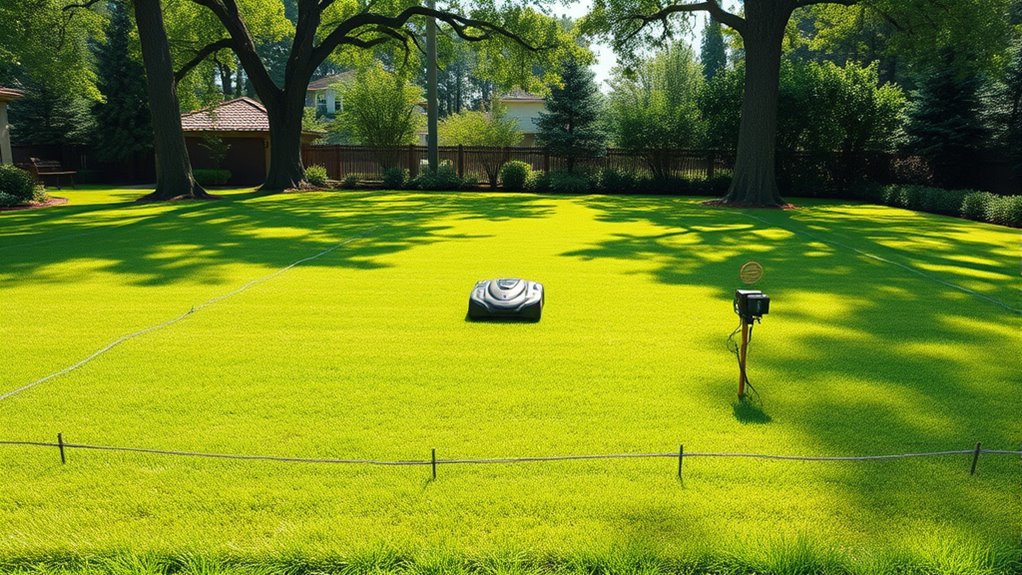

Boundary wires mark your yard’s edges with physical lines, guiding robot mowers to stay within limits and navigate stops and turns. GPS technology uses satellite signals for precise, flexible navigation, adapting easily to yard changes and obstacles. Installing boundary wires is more time-consuming, while GPS setup is quicker and more adaptable. Regular maintenance keeps both systems running smoothly. Keep exploring to discover how each system can best suit your lawn’s needs.
Key Takeaways
- Boundary wires physically mark yard limits, guiding mower stops; GPS uses satellite signals for dynamic navigation.
- Installing boundary wires is time-consuming but straightforward; GPS setup is quicker with minimal physical infrastructure.
- Boundary systems are fixed and less adaptable to yard changes; GPS easily adjusts to modifications and obstacles.
- Boundary wires require regular checks for damage or disconnection; GPS demands software updates and signal verification.
- GPS offers greater flexibility and obstacle avoidance, while boundary wires provide reliable perimeter detection.
How Boundary Wires Define Your Lawn’s Limits
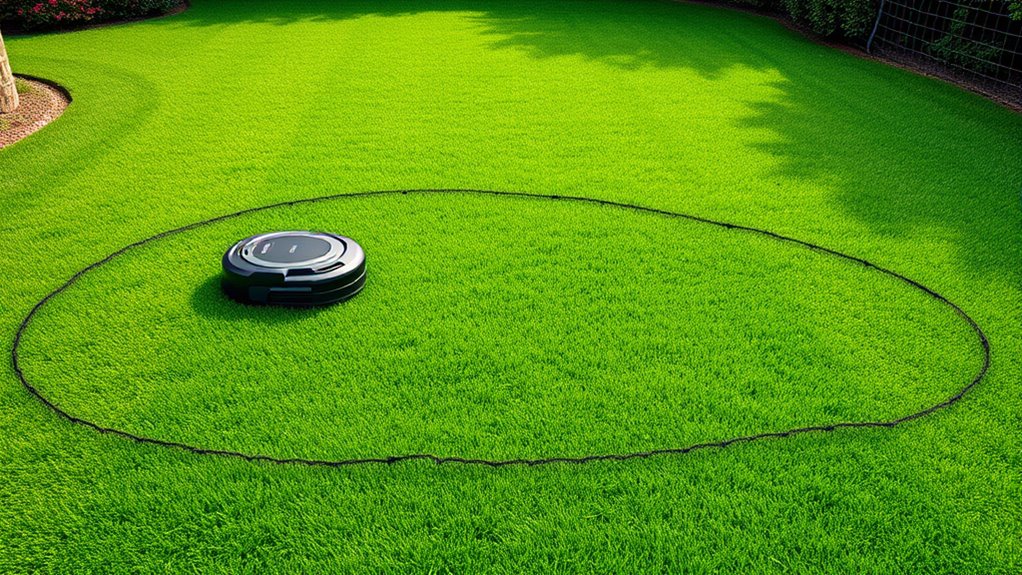
Boundary wires serve as the foundational markers that clearly define your lawn’s edges. They create a boundary definition that your robot mower recognizes, ensuring it stays within the designated area. Proper wire placement is essential; you’ll want to lay the wires around the perimeter of your yard, following the shape of your lawn. Keep the wire taut and secure to prevent movement or damage over time. As the mower runs, it detects the boundary wire’s signal, which tells it where to stop and turn. This simple yet effective system prevents the mower from wandering off into flower beds or onto sidewalks. By carefully planning wire placement, you establish clear limits, giving you peace of mind and a well-maintained yard.
The Role of GPS in Modern Mowing Technology
GPS technology has revolutionized modern mowing by enabling robot mowers to navigate with incredible precision. The key is GPS accuracy, which depends on satellite signals to determine your mower’s exact location. Unlike boundary wires, GPS allows your mower to understand the layout of your yard without physical barriers. It continuously receives signals from multiple satellites, ensuring it can adjust its path dynamically and avoid obstacles. This technology provides flexibility for complex yard shapes and makes setup easier, especially in large or irregularly shaped lawns. With reliable satellite signals, your mower maintains an accurate map of the area, leading to efficient coverage and minimal overlap. Overall, GPS integration enhances mowing precision and convenience, transforming how your lawn is maintained.
Comparing Installation and Setup Processes
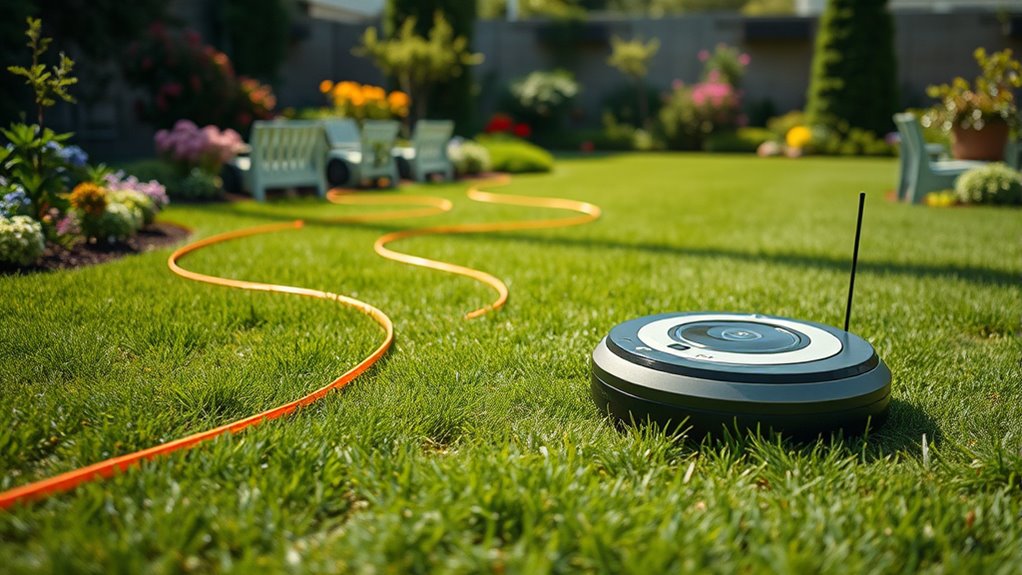
Setting up a robot mower can vary markedly depending on whether you choose boundary wires or GPS technology. Installing boundary wires involves laying out a physical perimeter around your yard, which can be time-consuming but offers a straightforward setup. Once installed, the mower uses these wires to define boundaries, and wireless connectivity lets you control or monitor it remotely. In contrast, GPS-based systems require installing minimal physical infrastructure; instead, the mower relies on satellite signals, making setup faster and less intrusive. Software updates are essential for both systems to improve navigation and fix bugs, but GPS models often receive updates over the air through Wi-Fi, simplifying maintenance. Overall, boundary wire setups tend to be more involved initially, while GPS systems offer quicker, more flexible installation.
Flexibility and Adaptability in Yard Navigation
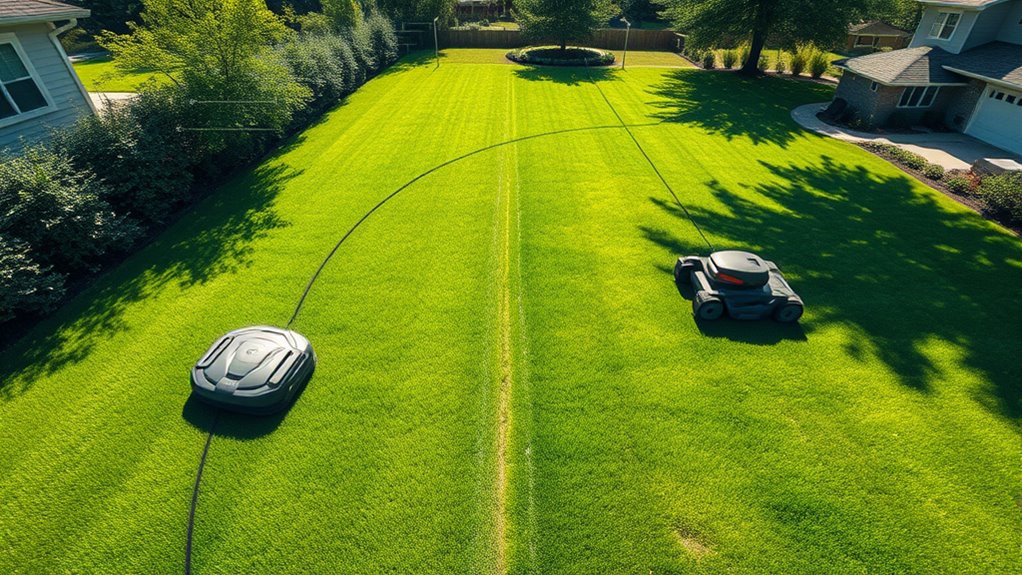
While the initial setup process differs markedly between boundary wire and GPS systems, their ability to adapt to various yard layouts is equally important. Boundary wire systems are limited by their fixed perimeter, making changes or expansions time-consuming. In contrast, GPS-enabled mowers excel in flexibility, easily adjusting to yard modifications without physical rewiring. Sensor accuracy plays a vital role in obstacle detection, allowing GPS systems to navigate complex terrains and avoid objects more effectively. This adaptability ensures thorough coverage, even in irregularly shaped yards or those with obstacles like garden beds or trees. Ultimately, GPS technology offers greater flexibility and responsiveness, making it easier to manage evolving yard landscapes, whereas boundary wire systems require manual updates to maintain their effectiveness.
Maintenance and Troubleshooting of Navigation Systems

Regular maintenance is essential to keep your boundary wire and GPS navigation systems functioning properly. For boundary wires, check for breaks or loose connections that can disrupt wireless signals, leading to navigation errors. Ensure the wire is buried correctly and free of damage. For GPS systems, keep your software updated; manufacturers frequently release updates that improve accuracy and fix bugs. If your mower isn’t steering correctly, verify that the GPS signal isn’t obstructed by trees or structures. Restart the system or recalibrate the sensors if needed. Regularly inspect antenna connections and clean any dirt or debris that could interfere with signal transmission. Troubleshooting often involves these simple steps, helping you maintain smooth operation and extend your mower’s lifespan.
Frequently Asked Questions
What Are the Costs Differences Between Boundary Wire and GPS Systems?
The cost comparison between boundary wire and GPS systems shows that boundary wire setups are generally cheaper initially, with lower installation expenses. You’ll pay less upfront for wiring and setup. However, GPS systems have higher initial costs but can save you money in the long run by avoiding installation work and providing more flexible yard coverage. Consider your yard size and budget to determine which system offers better value for you.
How Do Weather Conditions Affect GPS Accuracy in Robot Mowers?
Weather interference can turn your GPS signals into a rollercoaster ride, affecting your robot mower’s accuracy. Rain, fog, or snow weaken signal stability, making navigation less reliable. When the weather’s stormy, your mower may struggle to pinpoint its location, potentially missing spots or wandering. To keep your yard perfectly trimmed, prepare for weather swings and consider how these conditions impact GPS reliability in your mower’s performance.
Can Boundary Wires Be Hidden or Made Less Visible?
Yes, you can hide or make boundary wires less visible through wire concealment techniques. You might bury the wires deeper, use landscaping to cover them, or opt for specialized covers that blend with your yard. These methods help reduce visibility, keeping the wires discreet and maintaining your yard’s aesthetic. Just guarantee the wires remain securely buried or concealed so your robot mower can still detect and follow the boundary effectively.
What Are the Security Concerns for Gps-Based Mower Navigation?
Think of GPS-based mower navigation like leaving your front door unsecured—you’re exposed to privacy risks and hacking vulnerabilities. These systems can potentially be intercepted or manipulated, allowing outsiders to track or even control your mower. While it offers convenience, you should be aware of security concerns like data breaches and unauthorized access. Protect your privacy by updating firmware regularly and using secure Wi-Fi networks to minimize these risks.
How Do Navigation Systems Impact the Overall Lifespan of a Robot Mower?
Navigation systems can extend your robot mower’s lifespan by optimizing its mowing pattern, reducing unnecessary battery drain, and preventing collisions. However, GPS or boundary wire setups might require more maintenance, like checking signal accuracy or replacing damaged wires. Efficient navigation helps conserve battery life, but you should stay vigilant with maintenance requirements to make certain your mower operates smoothly and lasts longer. Proper care maximizes both system effectiveness and the mower’s overall lifespan.
Conclusion
As you weigh boundary wires against GPS, think about how each system could change your yard’s future. Will you embrace the traditional, reliable method, or trust cutting-edge technology to navigate your lawn? The choice isn’t just about setup—it’s about what’s next for your outdoor space. Stay tuned, because the decision you make today could redefine your mowing experience—and the surprises aren’t over yet. Are you ready to discover what’s truly possible?