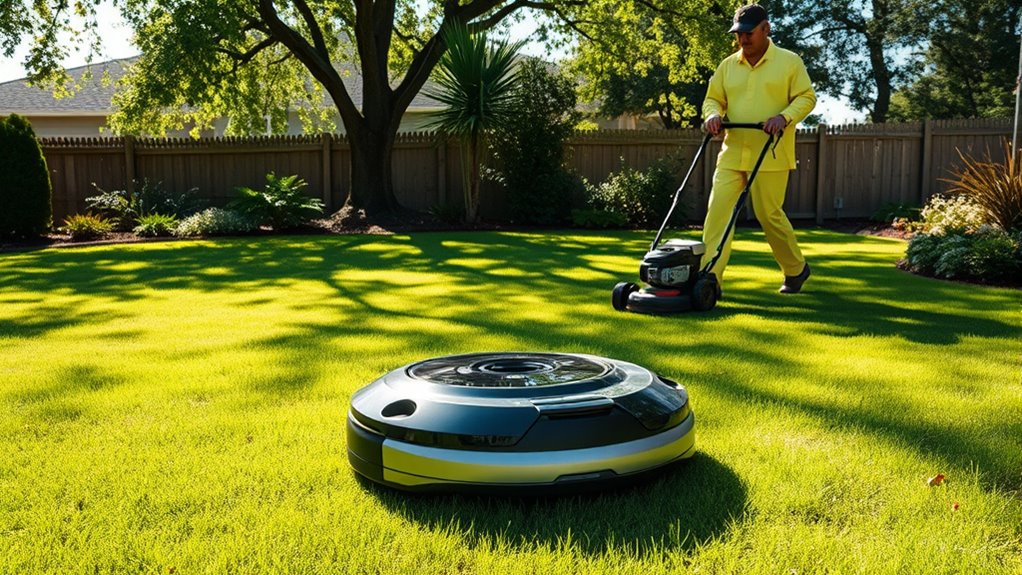

If you compare costs, a robot mower may cost more upfront but saves you money over time due to lower maintenance and no fuel. Lawn services can add up with regular fees, especially if your yard is large, but they offer quick, hands-off care. Generally, a robot mower becomes more cost-effective in the long run, especially with regular use. Keep exploring to discover which option aligns best with your budget and yard needs.
Key Takeaways
- Robot mowers have higher upfront costs but lower ongoing maintenance and operation expenses, leading to long-term savings.
- Lawn services incur recurring costs such as fuel and labor, which can exceed the total cost of a robot mower over time.
- Robot mowers automate yard care, reducing labor and physical effort, saving time and associated costs.
- Consistent, regular mowing with robot mowers improves lawn health and aesthetics at a lower overall cost.
- The cost-effectiveness depends on lawn size and terrain; larger yards often favor robot mowers for savings over multiple lawn service visits.
Initial Costs and Purchase Price Comparison
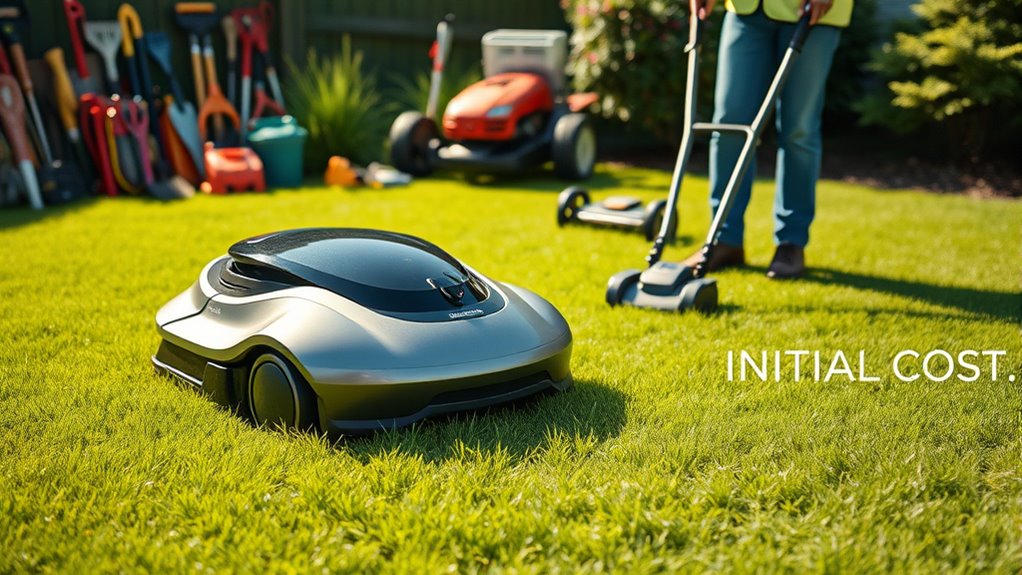
When comparing the initial costs of a robot mower and a traditional lawn service, the upfront investment is a key factor to contemplate. Robot mowers typically range from $500 to $2,000, depending on features and brand reputation. In contrast, hiring a lawn service can cost between $30 and $80 per visit, adding up quickly over time. Customer reviews often highlight that reputable brands with strong reputations tend to have higher-quality products, but they also come with a higher initial price. Conversely, lesser-known brands may be cheaper initially but might lack durability or advanced features. Ultimately, your choice depends on balancing the initial purchase price with brand reliability and customer feedback, helping you decide which option offers better value upfront.
Ongoing Maintenance and Operating Expenses
When considering ongoing costs, you’ll want to compare energy and fuel expenses for both options. Robot mowers typically use electricity, which can be cheaper over time, while traditional lawn services may rely on fuel. Don’t forget to factor in routine upkeep costs like blade replacements or service visits, as these can add up and affect your overall budget.
Energy and Fuel Costs
Robot mowers typically cost less to operate over time because they run on rechargeable batteries, eliminating the need for fuel and reducing ongoing expenses. Their battery life has improved, allowing longer mowing periods without frequent charging. Plus, they have a lower environmental impact by producing no emissions during operation. You’ll save money on fuel and maintenance associated with gas-powered lawn equipment. Additionally, electric mowers are often more energy-efficient, further cutting costs. Keep in mind, battery replacements can be an occasional expense, but overall, they’re more economical and eco-friendly.
- No need for gasoline or oil purchases
- Quieter operation reduces noise pollution
- Less energy waste compared to gas engines
- Reduced carbon footprint benefits the environment
Routine Upkeep Expenses
Routine upkeep expenses for robot mowers are generally lower because they require minimal ongoing maintenance compared to traditional lawn services. You won’t need to schedule frequent visits for mowing, trimming, or fertilizing, saving money over time. Robot mowers are designed to keep your garden looking tidy with consistent, small adjustments, helping maintain garden aesthetics without costly labor. Additionally, they tend to have fewer parts that wear out or need replacement, reducing repair expenses. Because they operate quietly and precisely, they also have less wildlife impact, avoiding disturbances that can lead to ecological costs. Overall, the low maintenance demands of robot mowers translate into ongoing savings, making them a cost-effective choice for maintaining your yard’s appearance and health.
Time and Labor Savings Potential
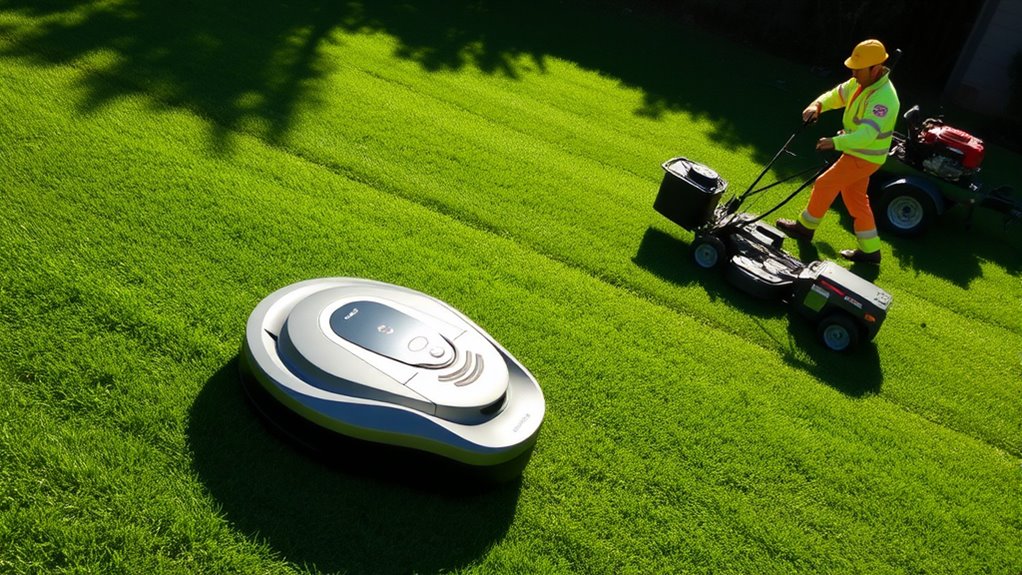
Automating lawn care with a robot mower can considerably reduce the time and effort you spend on maintaining your yard. With a robot mower, you won’t need to set aside hours for mowing or worry about inconsistent cutting. Instead, the mower works automatically, following a regular maintenance schedule that keeps your lawn tidy. Plus, many models come with warranty coverage, giving you peace of mind if issues arise. This setup frees up your weekends for other activities or relaxation. You’ll spend less on labor costs and avoid the physical strain of manual mowing. Overall, a robot mower offers a significant boost in time and labor savings, making yard maintenance quicker and less demanding.
- No more manual mowing interruptions
- Less physical effort required
- Consistent, scheduled care
- Reduced need for ongoing yard help
Effectiveness and Coverage of Lawn Care

You’ll want to contemplate how well each option maintains a consistent mowing schedule to keep your lawn neat. Terrain features like slopes or uneven ground can affect coverage, especially for robot mowers. Understanding coverage efficiency rates helps you determine which method truly meets your lawn’s needs.
Consistent Mowing Schedule
Maintaining a consistent mowing schedule is essential for ensuring your lawn stays healthy and looks uniform. With a robot mower, mowing frequency is easily adjustable, allowing you to set regular intervals that promote even growth. Its ergonomic design ensures smooth operation without fatigue, so you won’t miss a scheduled cut. Consistency prevents overgrowth and reduces the risk of pests and disease. Lawn service visits, on the other hand, are less predictable and depend on scheduling, which can lead to gaps or uneven trimming. A robot’s ability to mow frequently, often daily if needed, guarantees your grass stays neat. Plus, consistent mowing encourages deeper root growth, making your lawn more resilient overall. Regular trimming is key to achieving a flawless, healthy yard year-round.
Terrain Compatibility Factors
Terrain plays a crucial role in determining how effectively a robot mower or lawn service can cover and maintain your yard. If your yard has many terrain obstacles like rocks, trees, or uneven patches, it can hinder mowing patterns and cause gaps in coverage. Robot mowers are designed to navigate smooth, flat surfaces more easily, but steep slopes or complex terrain may challenge their ability to operate efficiently. Lawn services can adapt their mowing patterns to handle obstacles and uneven ground, but this might come at a higher cost. Consider your terrain’s complexity when choosing between the two options, as some may require additional equipment or adjustments. Ensuring compatibility helps maximize coverage and maintain a healthy, well-manicured lawn.
Coverage Efficiency Rates
When comparing coverage efficiency, robot mowers often excel in providing consistent and thorough lawn care thanks to their ability to operate automatically and systematically. Their high robot accuracy guarantees that every inch of your lawn gets mowed evenly, reducing missed spots. Mower coverage is optimized through smart navigation, allowing the mower to adapt to obstacles and complex layouts. This results in a more efficient mowing process compared to manual lawn service. You’ll notice fewer overlaps or missed patches, saving you time and energy. Additionally, robot mowers can work daily without fatigue, maintaining uniform grass height.
- Precise cutting patterns for complete coverage
- Less accidental missed spots
- Consistent mowing schedules
- Better adaptation to yard obstacles
Long-Term Cost Benefits and Value
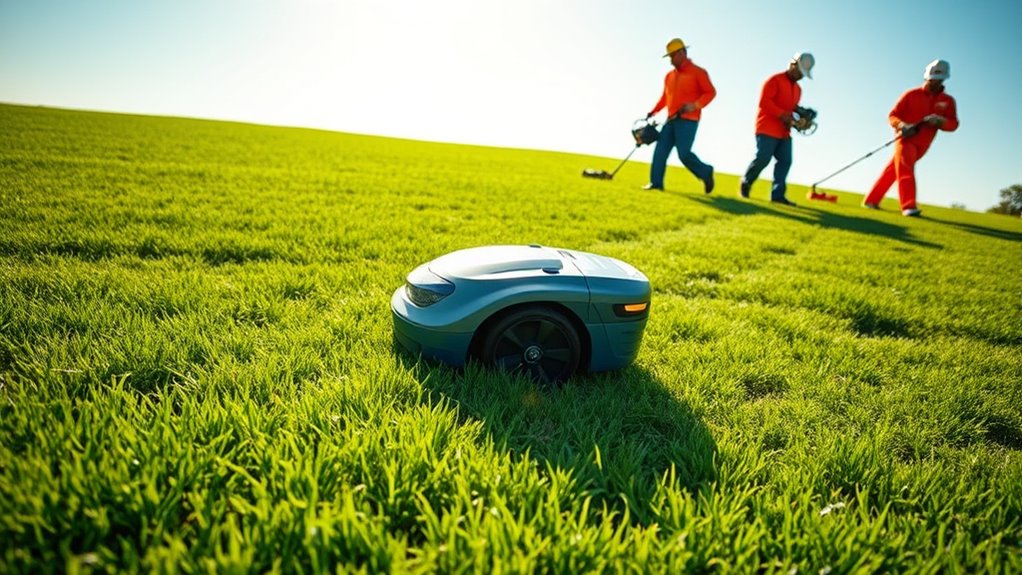
Over the long term, a robot mower can save you a significant amount of money compared to hiring a lawn service. Not only does it reduce ongoing labor costs, but it also maintains a consistent seasonal aesthetic, keeping your lawn looking fresh year-round. Plus, robot mowers seamlessly integrate with landscaping features, preserving your yard’s design without extra expenses. Here’s a quick comparison:
| Cost Aspect | Lawn Service | Robot Mower | Long-Term Benefit |
|---|---|---|---|
| Initial Investment | Low to moderate | Higher upfront | Investment pays off over time |
| Maintenance | Included in service | Replacement parts needed | Lower maintenance costs |
| Seasonal Aesthetic | Varies, limited control | Consistent, customizable | Preserves landscape integrity |
| Landscaping Integration | Limited | High | Enhances yard’s overall value |
| Long-Term Savings | Moderate | Significant | Greater financial return |
Making the Best Financial Decision
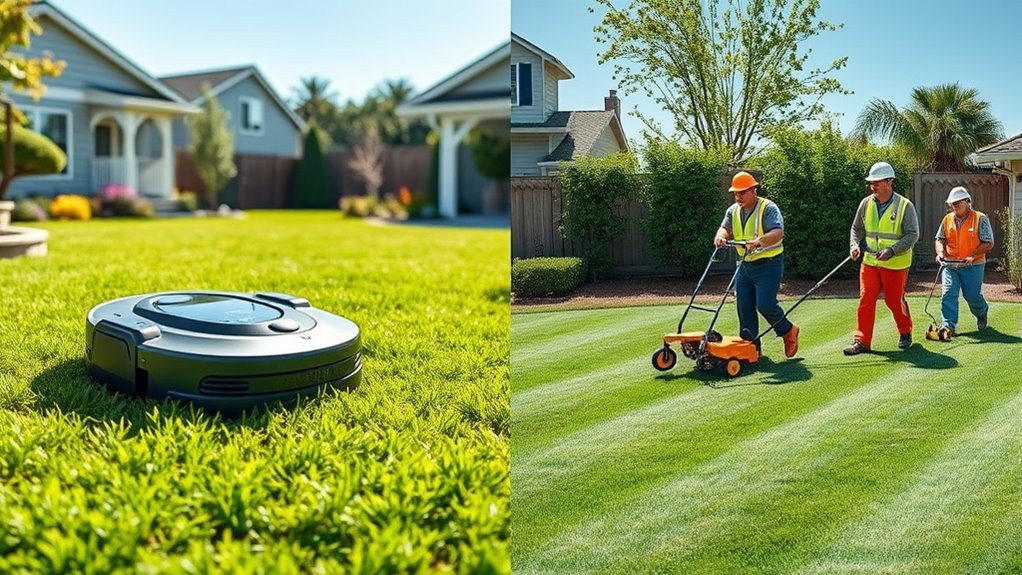
Deciding between a robot mower and a lawn service hinges on your financial priorities and long-term goals. Market adoption of robotic mowers has grown steadily, thanks to technological advancements making them more affordable and efficient. To make the best financial decision, consider factors like upfront costs, maintenance, and ongoing expenses.
Choosing between a robot mower and lawn service depends on your financial goals and long-term savings.
- Think about how quickly new tech becomes mainstream and if early adoption offers savings
- Assess whether the convenience of a robot mower outweighs recurring service costs
- Evaluate your lawn size and terrain to determine which option is more cost-effective
- Keep an eye on evolving features that could boost savings over time
Frequently Asked Questions
How Do Weather Conditions Affect Robot Mower Performance?
Weather impact can considerably affect your robot mower’s performance, especially during seasonal variation. Heavy rain or snow can hinder its operation, causing delays or potential damage. Extreme heat may lead to overheating, reducing efficiency. Windy days can blow debris into the blades, requiring more frequent cleaning. To keep your robot mower running smoothly, monitor weather forecasts closely and adjust your mowing schedule accordingly, ensuring ideal performance year-round.
Are There Any Legal Restrictions on Using Robot Mowers?
Yes, there are legal restrictions on using robot mowers. You need to guarantee legal compliance by checking local regulations before installation. Some areas may have rules about boundary fencing, noise limits, or property lines that you must follow. It’s your responsibility to stay informed about any restrictions and obtain necessary permits if required. By doing so, you avoid fines and ensure safe, legal operation of your robot mower.
What Are the Environmental Impacts of Each Option?
You’ll find that robot mowers have a lower ecological footprint due to their electric efficiency, reducing emissions compared to gas-powered lawn services. They operate quietly and produce fewer pollutants, making them more eco-friendly. Lawn services often rely on fuel-powered equipment, which increases air pollution and energy consumption. Choosing a robot mower helps minimize environmental impact, promoting a greener yard with less noise and fewer greenhouse gases.
Can Robot Mowers Handle Uneven or Sloped Lawns?
Yes, robot mowers can handle uneven or sloped lawns, but their terrain adaptability and slope navigation depend on the model. Look for mowers with adjustable blades and strong wheels designed for varied terrain. Some models can manage slopes up to 20-30 degrees, making them suitable for hilly yards. However, extremely steep or irregular terrain might still challenge their slope navigation, so choose a mower rated for your specific lawn conditions.
How Easily Can Each Option Be Customized for Different Yard Sizes?
You’ll find robot mowers easily customizable for different yard sizes, with many models offering personalization options that adapt to small or large lawns. According to a 2023 survey, over 80% of users report seamless size adaptability, making setup simple. Lawn services, on the other hand, often require manual adjustments and are less flexible with yard size changes. So, robot mowers provide a more convenient, tailored solution for your specific yard.
Conclusion
Choosing between a robot mower and a lawn service isn’t just about costs—it’s about what your yard truly needs. Will you save more and gain time, or face surprises that change everything? The decision could transform your weekends forever. Think carefully—because the best choice might be closer than you think, hiding a surprising edge that could redefine how you care for your lawn. Are you ready to discover what really saves you money?