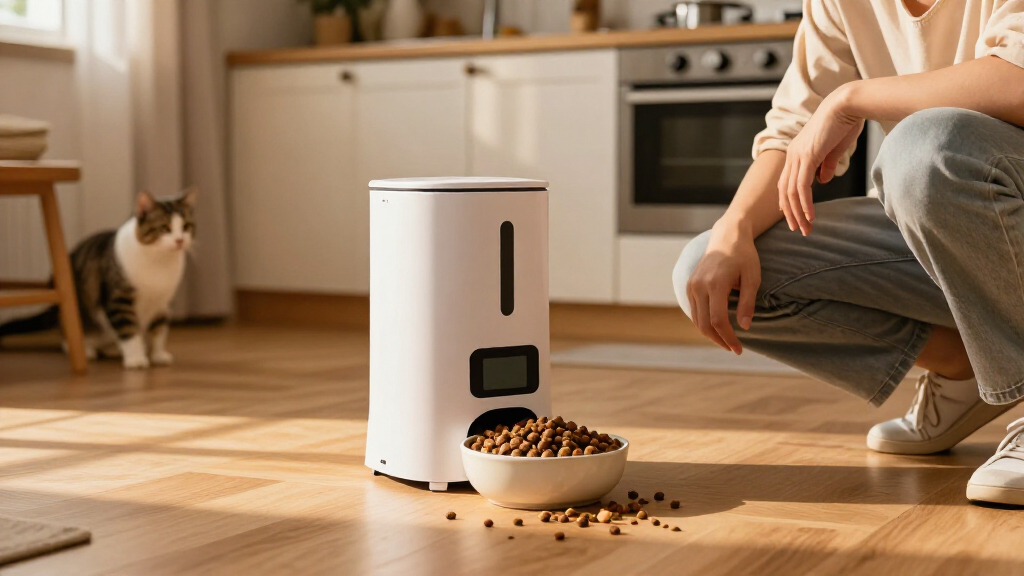

Automatic pet feeders can keep dry-food schedules consistent, but the right choice depends on whether you need simple timed portions, app controls, or a way to manage more than one pet. My best overall pick is the PETLIBRO 5L WiFi Automatic Pet Feeder, which pairs connected scheduling with freshness-focused design. The oneisall feeder for two cats stands out for shared feeding, while the Frienhund 7L feeder with a 2K camera suits owners who want to check in remotely. The main tradeoffs are convenience versus setup and upkeep, plus greater capacity versus counter space and food freshness. Read on for the full breakdown of all 15 feeders and guidance on which features matter most for your household.

Get home appliances delivered free with Prime
- Fast, free delivery on millions of items
- Prime Video, Amazon Music and more included
- Member-only deals all year
Complete the kit



Key Takeaways
- Connected scheduling and food freshness make the amazon.com/dp/B09S8WMJY9?tag=autohomebots-20&ascsubtag=dc-1175762″ target=”_blank” rel=”nofollow sponsored noopener”>PETLIBRO 5L WiFi model the most balanced pick, while simpler timed feeders avoid app setup and network dependence.
- For two cats, a shared feeder needs more than a larger hopper: the oneisall two-cat model and PETLIBRO RFID feeder address different needs, with shared access versus pet-specific feeding and tracking.
- The Frienhund and Minikey camera models add remote visual check-ins, but buyers should decide whether seeing a meal happen is worth extra setup and another connected device.
- Large-capacity options such as the 8L Nityers and 8.5 L oneisall feeder-and-water set can reduce refill frequency, while compact 3L models better suit limited space or smaller feeding routines.
- Gravity sets from Amazon Basics and Wefeedy simplify food and water access, but they do not provide the scheduled portion control offered by timed dispensers.
| Voluas Automatic Pet Feeder, 4L Timed Dry Food Dispenser |  | Best for Simple Scheduled Feeding | Capacity: 4 liters (16.9 cups) | Scheduled meals: 1–4 per day | Portion settings: 0–40 portions | VIEW LATEST PRICE | See Our Full Breakdown |
| oneisall Automatic Cat Feeder and Water Dispenser, 8.5 L |  | Best for Combined Food and Water | Food capacity: 5 L | Water capacity: 3.5 L | Feeding schedule: 1–6 meals per day | VIEW LATEST PRICE | See Our Full Breakdown |
| Yuposl Automatic Cat Feeder, 3L with Stainless Steel Bowl |  | Best for Easy-Clean Basics | Capacity: 3 L (12 cups) | Meal schedule: 1–6 meals per day | Compatible food size: 2–15 mm dry food | VIEW LATEST PRICE | See Our Full Breakdown |
| PETLIBRO 5L WiFi Automatic Pet Feeder with Freshness Preservation |  | Best for App Control and Alerts | Capacity: 5 liters | Meal schedule: Up to 10 meals per day | Portions: 1–48 portions per meal | VIEW LATEST PRICE | See Our Full Breakdown |
| Amazon Basics Automatic Pet Water Dispenser and Gravity Food Feeder Set, Small, 2-Pack |  | Best for No-Power Gravity Feeding | Food feeder capacity: 152 fl oz | Water dispenser capacity: 135.3 fl oz | Dimensions: 13.94 × 7.76 × 15.98 in | VIEW LATEST PRICE | See Our Full Breakdown |
| oneisall Automatic Cat Feeder for Two Cats |  | Best for Two-Cat Households | Capacity: 5 L (20 cups; up to 11 lb) | Meals per day: Up to 6 | Portion size: Approximately 10 g (1/12 cup) per portion | VIEW LATEST PRICE | See Our Full Breakdown |
| ANDOLL HOME Automatic Pet Feeder, 3L |  | Best for Frequent Small Meals | Capacity: 3 liters | Meals per day: Up to 8 | Food type: Dry food | VIEW LATEST PRICE | See Our Full Breakdown |
| ANDOLL HOME Automatic Cat Feeder, 4L |  | Best Mid-Capacity, Eight-Meal Feeder | Capacity: 4 liters | Food type: Dry food | Meals per day: Up to 8 | VIEW LATEST PRICE | See Our Full Breakdown |
| PETLIBRO Automatic Cat Feeder with Portion Control, Voice Meal Call, and Dual Power Supply | 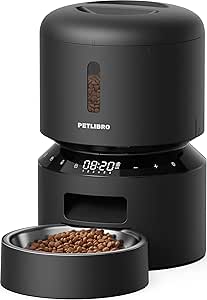 | Best for Precise Portion Scheduling | Capacity: 3 liters | Meal schedule: Up to 6 meals per day | Portion size: 1–50 portions per meal; 2.5 teaspoons per portion | VIEW LATEST PRICE | See Our Full Breakdown |
| Frienhund Automatic Pet Feeder with 2K Camera, 7L Capacity, and Dual-Band Wi-Fi |  | Best for Remote Monitoring | Food capacity: 7 L (29 cups) | Camera: 3MP with infrared night vision | Wi-Fi: 2.4GHz and 5GHz | VIEW LATEST PRICE | See Our Full Breakdown |
| PETLIBRO RFID Automatic Cat Feeder with Wi-Fi and Diet Tracking |  | Best for Multi-Cat Food Separation | Capacity: 3 liters | Connectivity: Dual-band 2.4 GHz and 5 GHz Wi-Fi; Bluetooth | Power: Corded electric with battery backup | VIEW LATEST PRICE | See Our Full Breakdown |
| Nityers Automatic Pet Feeder, 8L, 6 Meals per Day |  | Best for High-Capacity Scheduled Feeding | Capacity: 8 L (34 cups) | Feeding schedule: Up to 6 meals per day | Portion control: 1–50 portions per meal; approximately 1/16 cup per portion | VIEW LATEST PRICE | See Our Full Breakdown |
| Wefeedy Gravity Cat and Dog Feeder and Water Dispenser Set, 3.3 L, Black |  | Best for Electricity-Free Food and Water | Capacity: 3.3 liters per dispenser | Operation: Gravity-fed, manual | Included components: Food feeder and water dispenser | VIEW LATEST PRICE | See Our Full Breakdown |
| Minikey Automatic Pet Feeder with 2K Camera, 6.5L Capacity, and Dual-Band Wi-Fi |  | Best for Remote Monitoring | Capacity: 6.5 L (27 cups) | Camera: 2K resolution, 145° wide-angle lens, infrared night vision | Connectivity: Dual-band 2.4 GHz and 5 GHz Wi-Fi | VIEW LATEST PRICE | See Our Full Breakdown |
| Heartgon Automatic Cat Feeder with Stainless Steel Bowl |  | Best Compact Programmable Feeder | Capacity: 5 liters | Feeding schedule: Up to 6 meals per day | Portion control: 20 portions | VIEW LATEST PRICE | See Our Full Breakdown |
| automatic pet feeder | Capacity | Power | Dimensions |
|---|---|---|---|
| Voluas Automatic Pet Feeder | 4 liters (16.9 cups) | 5V USB adapter or 3 D-cell batteries (not included) | 7.4 × 7.4 × 11.25 in |
| oneisall Automatic Cat Feeder | — | USB-C and 4 AA batteries (not included) | — |
| Yuposl Automatic Cat Feeder | 3 L (12 cups) | Three D-size alkaline batteries (not included) or wall power | — |
| PETLIBRO 5L WiFi Automatic Pet | 5 liters | — | — |
| Amazon Basics Automatic Pet Wa | — | — | 13.94 × 7.76 × 15.98 in |
| oneisall Automatic Cat Feeder | 5 L (20 cups; up to 11 lb) | DC power; backup requires 4 AA batteries, not included | 16.73 × 7.09 × 13.4 inches |
| ANDOLL HOME Automatic Pet Feed | 3 liters | 5V DC adapter or 3 AA batteries, not included | 12 × 7 × 13 inches |
| ANDOLL HOME Automatic Cat Feed | 4 liters | 5V DC adapter or 3 AA batteries, not included | 12 × 7 × 13 inches |
| PETLIBRO Automatic Cat Feeder | 3 liters | USB-C and 3 D-cell backup batteries | 7.9 × 7.7 × 7.6 inches |
| Frienhund Automatic Pet Feeder | — | DC 5V adapter and 3 D-cell batteries | — |
| PETLIBRO RFID Automatic Cat Fe | 3 liters | Corded electric with battery backup | 10.43 × 9.45 × 17.13 inches |
| Nityers Automatic Pet Feeder | 8 L (34 cups) | Type-C adapter or 4 AA batteries (not included) | — |
| Wefeedy Gravity Cat and Dog Fe | 3.3 liters per dispenser | — | 5.2 × 10.6 × 10.2 inches |
| Minikey Automatic Pet Feeder w | 6.5 L (27 cups) | DC adapter with battery backup | — |
| Heartgon Automatic Cat Feeder | 5 liters | Dual power supply | 7 × 7 × 10 inches |
More Details on Our Top Picks
Voluas Automatic Pet Feeder, 4L Timed Dry Food Dispenser
The Voluas is a straightforward choice for households that want scheduled portions without app setup. Its LCD controls set one to four meals a day, while a recorded meal call can help cue pets who respond to familiar sounds. The 4-liter hopper holds more than the Yuposl’s 3-liter bin, which can mean fewer refills, though how long it lasts depends on your pet’s intake. USB power and three D-cell battery backup give it flexibility if an outlet is inconvenient. Compared with the PETLIBRO 5L WiFi feeder, Voluas offers less schedule detail and no remote monitoring or alerts; in return, it avoids app dependence. Its tradeoffs are a dry-food-only design and batteries that are not included.
Pros:- Schedules one to four meals daily with adjustable portions
- 4-liter capacity reduces how often the hopper needs refilling compared with smaller feeders such as the Yuposl
- USB power and optional D-cell battery operation offer placement flexibility
- Recordable meal call adds a familiar audio cue at feeding time
Cons:- Designed for dry food only
- Three D-cell batteries are not included
- No app-based control or feeding alerts
Best for: Cat or small-dog owners who want a larger-capacity feeder with simple onboard scheduling and no smartphone requirement
Not ideal for: Owners who need remote feeding controls, alerts, wet-food compatibility, or more than four scheduled meals per day
- Capacity:4 liters (16.9 cups)
- Scheduled meals:1–4 per day
- Portion settings:0–40 portions
- Portion size:Approximately 6–7 g per portion
- Power:5V USB adapter or 3 D-cell batteries (not included)
- Voice recorder:Up to 10 seconds
- Dimensions:7.4 × 7.4 × 11.25 in
- Suitable food and animals:Dry food; cats, rabbits, and small dogs
Our verdict“Choose the Voluas if you want a roomier, easy-to-program dry-food feeder without app-based features.”
oneisall Automatic Cat Feeder and Water Dispenser, 8.5 L
This oneisall combines a timed feeder with a gravity-fed water dispenser, so it can handle two daily needs in one footprint. Food schedules cover one to six meals, with up to 16 portions per meal, while separate 5-liter and 3.5-liter compartments keep food and water apart. That makes it more of a space-saving feeding station than the Voluas, which dispenses food only, but the water side is not timed: it replenishes by gravity whenever your pet drinks. USB-C operation with AA battery backup helps preserve scheduled food dispensing during a power outage, and the dishwasher-safe stainless steel bowls simplify cleanup. I would skip this model if portioned water or app monitoring is a requirement; neither is part of its design.
Pros:- Combines scheduled food dispensing and gravity-fed water in one unit
- Separate food and water compartments help keep the supplies apart
- Schedules one to six meals with adjustable portions
- Dishwasher-safe stainless steel bowls support easier cleanup
Cons:- Water is gravity-fed rather than dispensed on a schedule
- Four AA backup batteries are not included
- At 3 kg, it is heavier than the Voluas and may be less convenient to move
Best for: Cat households that want scheduled dry-food meals and a separate gravity water supply in one feeding station
Not ideal for: Owners who need timed water dispensing, app controls, or a compact feeder with a small footprint
- Food capacity:5 L
- Water capacity:3.5 L
- Feeding schedule:1–6 meals per day
- Portions:1–16 portions per meal
- Portion size:5–10 g
- Power:USB-C and 4 AA batteries (not included)
- Materials:Plastic and stainless steel
- Dimensions and weight:22.6 × 6.46 × 13 in; 3 kg
Our verdict“Pick this oneisall if you want scheduled food plus always-available gravity water without adding a separate dispenser.”
Yuposl Automatic Cat Feeder, 3L with Stainless Steel Bowl
The Yuposl focuses on practical scheduled feeding and a bowl that is easier to keep clean. It programs one to six meals per day without Wi-Fi or a smartphone, and its stainless steel bowl is dishwasher safe. A sealed lid and desiccant help limit exposure to air, while the stated kibble range of 2–15 mm accommodates many dry-food sizes. Compared with the Voluas, the Yuposl offers more daily meal slots and a dishwasher-safe bowl, but its 3-liter capacity is smaller than Voluas’s 4 liters. Wall power or three D-size batteries provides a backup option, although the batteries are not included. This is a useful middle ground for owners who value simple controls and cleanup over app alerts, but the food supply will need refilling based on the pet’s appetite.
Pros:- Schedules up to six meals daily without Wi-Fi or a smartphone
- Dishwasher-safe stainless steel bowl and removable washable components
- Kibble compatibility covers dry pieces from 2–15 mm
- Wall power and D-size battery options provide alternative power sources
Cons:- 3-liter capacity is smaller than the Voluas’s 4-liter hopper
- Batteries are not included
- How long the food supply lasts varies with the pet’s size and intake
Best for: Owners of cats or small pets who want six daily meal slots, a washable stainless steel bowl, and no app setup
Not ideal for: Households seeking a high-capacity hopper, remote monitoring, or a feeder for wet food
- Capacity:3 L (12 cups)
- Meal schedule:1–6 meals per day
- Compatible food size:2–15 mm dry food
- Power:Three D-size alkaline batteries (not included) or wall power
- Battery life:More than 180 days
- Bowl:Dishwasher-safe stainless steel
- Target animals:Cats, small dogs, and small animals
- Included components:Food dispenser, lid, placemat, power adapter, and stainless steel food bowl
Our verdict“Choose the Yuposl for simple multi-meal scheduling and easier bowl cleanup, provided its 3-liter hopper suits your refill routine.”
PETLIBRO 5L WiFi Automatic Pet Feeder with Freshness Preservation
The PETLIBRO is the most connected option in this group: its app supports schedules of up to 10 meals per day, feeding records, and alerts for low food or jams. That extra visibility can help owners who want to check a routine remotely, rather than relying on the Voluas’s onboard LCD or the Yuposl’s offline controls. Dual-band Wi-Fi supports both 2.4 GHz and 5 GHz networks, and the 5-liter hopper gives it more capacity than either of those two feeders. A sealed design, desiccant, and stainless steel bowl round out the setup. The tradeoff is added upkeep: the desiccant bag needs replacement about every two weeks, and the feeder base should not be washed. Choose it for control and notifications, not for the simplest cleaning routine.
Pros:- App scheduling supports up to 10 meals per day and provides feeding records
- Alerts cover low food, jams, and other issues
- 5-liter hopper exceeds the capacities of the Voluas and Yuposl
- Sealed food storage and a stainless steel bowl support freshness and easier bowl cleaning
Cons:- Feeder base should not be washed
- Desiccant bag needs replacement about every two weeks
- App features depend on Wi-Fi and a connected phone
Best for: Pet owners who want to manage frequent dry-food meals remotely and receive alerts about food levels or dispensing problems
Not ideal for: Buyers who prefer a feeder with no app dependency, minimal upkeep, or a base that can be washed under running water
- Capacity:5 liters
- Meal schedule:Up to 10 meals per day
- Portions:1–48 portions per meal
- Portion size:1/12 cup per portion
- Connectivity:2.4 GHz and 5 GHz Wi-Fi
- Voice messages:Up to 10 customized messages, 10 seconds each
- Kibble size:2–15 mm
- Dimensions and weight:7.95 × 7.72 × 11.54 in; 4.4 lb
Our verdict“Choose the PETLIBRO if remote scheduling and dispensing alerts matter more to you than the simplest maintenance.”
Amazon Basics Automatic Pet Water Dispenser and Gravity Food Feeder Set, Small, 2-Pack
This two-piece set takes a different approach from the scheduled feeders above: food and water flow by gravity, with no programming or power source. Transparent hoppers make supply levels easy to check, and handles help when lifting the containers to refill or clean them. Compared with the oneisall feeder and water dispenser, it provides both supplies through a similarly passive setup but does not schedule food portions or offer battery-backed timed feeding. Its 152-fluid-ounce food hopper and 135.3-fluid-ounce water dispenser can reduce refill frequency, though the pair may take up noticeable floor space. The polypropylene bases have nonskid feet, but the set is hand-wash only. This is a convenience option for households comfortable with food being available between meals, not a tool for portion control.
Pros:- Provides both food and water without power or programming
- Transparent hoppers make remaining supplies easy to check
- Nonskid feet and lifting handles support placement and refilling
- Large food and water capacities can reduce refill frequency
Cons:- Gravity feeding does not control meal timing or portions
- Hand wash only
- The two dispensers need more space than a single scheduled feeder
Best for: Owners of cats or dogs who want simple, power-free access to food and water and do not need scheduled portions
Not ideal for: Pets on portion-controlled diets or owners who need set meal times, dispensing alerts, or dishwasher-safe components
- Food feeder capacity:152 fl oz
- Water dispenser capacity:135.3 fl oz
- Dimensions:13.94 × 7.76 × 15.98 in
- Weight:1.8 lb
- Material:Polypropylene
- Target species:Cats and dogs
- Care:Hand wash only
- Pack quantity:2
Our verdict“Choose this set for convenient, power-free food and water access only if your pet does not need controlled meal portions.”
oneisall Automatic Cat Feeder for Two Cats
The oneisall feeder’s defining advantage is its pair of stainless steel bowls, set 16 inches apart so two cats can eat at the same scheduled time without sharing a dish. Its 5 L capacity also holds more food than the 3 L ANDOLL HOME models, which can mean fewer refills in a multi-cat home. You can schedule up to six meals daily, adjust portions, and record a short call to cue pets at mealtime. The tradeoff is that this is a kibble-only choice, and food must be smaller than 0.5 inch to pass through the dispenser. It lacks the app and camera features of the Frienhund, and its main unit cannot be washed with water. I’d choose it for simple, shared feeding rather than remote monitoring.
Pros:- Two stainless steel bowls spaced 16 inches apart serve two cats separately.
- 5 L capacity holds more food than the 3 L ANDOLL HOME feeders.
- Supports up to six scheduled meals daily with adjustable portions.
- Dishwasher-safe bowls and a 10-second meal-call recording.
Cons:- Only dispenses kibble smaller than 0.5 inch.
- The main unit cannot be washed with water.
- Backup AA batteries are not included.
Best for: Households with two cats that eat dry kibble and need separate bowls at the same scheduled meals.
Not ideal for: Owners whose pets eat larger kibble, wet food, or need app-based monitoring and remote scheduling.
- Capacity:5 L (20 cups; up to 11 lb)
- Meals per day:Up to 6
- Portion size:Approximately 10 g (1/12 cup) per portion
- Bowl spacing:16 inches
- Kibble size:Less than 0.5 inch
- Power:DC power; backup requires 4 AA batteries, not included
- Dimensions:16.73 × 7.09 × 13.4 inches
- Warranty:2 years
Our verdict“Choose this feeder if two cats need separate bowls and you prefer a larger-capacity scheduled feeder over camera or app features.”
ANDOLL HOME Automatic Pet Feeder, 3L
With support for up to eight meals a day, this 3 L ANDOLL HOME model suits pets whose routine calls for more frequent servings than the six-meal schedules on the oneisall two-cat feeder or PETLIBRO PLAF005. The 10-second recording can announce mealtime, while the tilted bowl and swinging dispenser are intended to support eating and food flow. A desiccant compartment and battery backup add practical safeguards for a basic programmable feeder. Those features come with limits: the 3 L hopper is smaller than the 4 L ANDOLL HOME model, and the feeder is for dry food only. Its plastic body needs hand washing or wiping, rather than the dishwasher-safe bowl setup offered by oneisall. I’d pick it for schedule flexibility, not extra capacity or connected monitoring.
Pros:- Schedules up to eight meals per day, more than the six-meal oneisall and PETLIBRO options.
- Battery backup can keep scheduled feeding running during a power outage.
- 10-second voice recording provides a familiar mealtime cue.
- Desiccant compartment helps limit moisture in stored dry food.
Cons:- 3 L capacity is smaller than the 4 L ANDOLL HOME version.
- Designed for dry food only.
- Plastic parts require hand washing or wiping, and backup batteries are not included.
Best for: Cat or small-to-medium dog owners who want as many as eight dry-food meals daily in a straightforward, non-camera feeder.
Not ideal for: Multi-pet homes needing a large hopper, owners who want dishwasher-safe parts, or anyone feeding wet food.
- Capacity:3 liters
- Meals per day:Up to 8
- Food type:Dry food
- Voice recording:10 seconds
- Power:5V DC adapter or 3 AA batteries, not included
- Bowl tilt:8 degrees
- Material:Plastic
- Dimensions:12 × 7 × 13 inches
Our verdict“Choose this model if frequent meal scheduling matters more than a larger hopper, stainless steel construction, or app monitoring.”
ANDOLL HOME Automatic Cat Feeder, 4L
This ANDOLL HOME model takes the eight-meal schedule of its 3 L sibling and adds a larger 4 L hopper, making it a better fit when you want frequent servings without refilling as often. That extra capacity also puts it ahead of the 3 L PETLIBRO PLAF005 for storage, though PETLIBRO offers specified portion increments and an infrared obstruction stop that this model’s data does not list. The swinging dispensing mechanism is designed to help reduce blockages, and the stainless steel construction distinguishes it from the plastic 3 L ANDOLL HOME version. It still handles dry food only, and the 5V adapter needs three AA batteries for backup operation; those batteries are not included. This is a practical middle ground, not a connected feeder like the Frienhund.
Pros:- 4 L hopper provides more capacity than the 3 L ANDOLL HOME model.
- Schedules up to eight meals daily.
- Stainless steel construction and an 8-degree tilted bowl.
- Swinging dispenser is designed to help prevent food blockages.
Cons:- Dispenses dry food only.
- Three AA backup batteries are not included.
- Lacks the Frienhund’s app, camera, and remote monitoring features.
Best for: Cat owners who want up to eight daily dry-food meals and more hopper capacity than a compact 3 L feeder provides.
Not ideal for: People who need wet-food compatibility, app controls, a camera, or a clearly specified portion size.
- Capacity:4 liters
- Food type:Dry food
- Meals per day:Up to 8
- Voice recording:10 seconds
- Power:5V DC adapter or 3 AA batteries, not included
- Material:Stainless steel
- Bowl tilt:8 degrees
- Dimensions:12 × 7 × 13 inches
Our verdict“Pick this feeder if you want eight scheduled meals and a larger, stainless-steel dry-food setup without paying for camera-based monitoring.”
PETLIBRO Automatic Cat Feeder with Portion Control, Voice Meal Call, and Dual Power Supply
The PETLIBRO PLAF005 stands out for its defined portion increments: each portion is 2.5 teaspoons, with settings from 1 to 50 portions per meal. That gives buyers more explicit control than the oneisall feeder’s approximate 10 g portion, though the oneisall holds more food and serves two cats from separate bowls. PETLIBRO’s infrared obstruction sensor stops dispensing when it detects a blockage, while USB-C power and three D-cell backups offer an alternative to the AA-powered ANDOLL HOME feeders. Its 3 L capacity is modest, and the feeder is limited to dry kibble measuring 2–15 mm. The base should not be washed, so cleanup requires care. I’d favor this model when portion control and jam sensing matter more than capacity, multiple bowls, or camera monitoring.
Pros:- Adjusts meals from 1 to 50 portions, with 2.5 teaspoons per portion.
- Infrared sensor stops dispensing if it detects an obstruction.
- Airtight container and desiccant bag help protect stored kibble.
- USB-C power with three D-cell backup batteries.
Cons:- 3 L capacity is smaller than the 5 L oneisall two-cat feeder and 7 L Frienhund.
- Supports dry kibble measuring 2–15 mm only.
- Feeder base should not be washed.
Best for: Owners of cats or small animals who want clearly specified meal portions, dry-kibble freshness features, and battery backup.
Not ideal for: Households needing a large-capacity feeder, two separate feeding stations, wet-food dispensing, or washable base components.
- Capacity:3 liters
- Meal schedule:Up to 6 meals per day
- Portion size:1–50 portions per meal; 2.5 teaspoons per portion
- Kibble size:2–15 mm
- Power:USB-C and 3 D-cell backup batteries
- Battery life:About 30–50 days
- Dimensions:7.9 × 7.7 × 7.6 inches
- Warranty:24 months
Our verdict“Choose the PETLIBRO if portion increments and obstruction sensing matter more to you than a larger hopper or two-cat bowl arrangement.”
Frienhund Automatic Pet Feeder with 2K Camera, 7L Capacity, and Dual-Band Wi-Fi
The Frienhund is the most feature-rich pick here for owners who want to check on feeding remotely: its app supports scheduling and feeding history, while the 3MP camera adds night vision, motion alerts, and two-way audio. Its 7 L hopper also holds more than the other feeders in this batch, including the 5 L oneisall, and its schedule supports up to 15 meals per day. That makes it a stronger match for frequent feeding and remote oversight, but it is more involved than the standalone PETLIBRO PLAF005, which focuses on portion control rather than a camera and Wi-Fi. The tradeoffs are a one-year warranty and unclear cloud-storage availability or cost; a TF card is supported but not stated to be included. Choose it for connected monitoring, not simplicity.
Pros:- 7 L capacity exceeds the other feeders in this batch.
- Schedules up to 15 meals daily and up to 20 portions per meal.
- Camera offers night vision, motion alerts, and two-way audio.
- Dual-band Wi-Fi supports 2.4GHz and 5GHz networks.
Cons:- TF card is not stated to be included, and cloud storage terms are unspecified.
- One-year warranty is shorter than the 24-month PETLIBRO and two-year oneisall warranties.
- App and camera features add setup and connectivity needs absent from simpler feeders.
Best for: Cat owners who travel or spend long stretches away and want a large hopper, app scheduling, and live visual and audio check-ins.
Not ideal for: Buyers seeking a simple offline feeder, anyone unwilling to manage app or storage options, or households needing confirmed included local storage.
- Food capacity:7 L (29 cups)
- Camera:3MP with infrared night vision
- Wi-Fi:2.4GHz and 5GHz
- Feeding schedule:Up to 15 meals per day, up to 20 portions per meal
- Storage:TF card up to 128GB and cloud storage
- Power:DC 5V adapter and 3 D-cell batteries
- Bowl material:Stainless steel
- Warranty:1 year
Our verdict“Choose the Frienhund if remote camera checks and high capacity outweigh a simpler setup and clearly specified storage arrangements.”
PETLIBRO RFID Automatic Cat Feeder with Wi-Fi and Diet Tracking
In a home where one cat steals another’s meals, RFID-controlled access is the key distinction: the feeder opens for the cat wearing its included tag, rather than serving any pet that approaches. That makes it more targeted than the schedule-focused Heartgon APF02, which portions meals but does not separate pets. The app adds scheduled feeding, portion control, and eating-habit tracking, while the 3-liter hopper and battery backup support routine feeding during outages. There are tradeoffs: access depends on the supplied collar tag, not a pet’s microchip, and the capacity is smaller than the Nityers 8L. Cleaning also takes care, since the base and RFID reader cannot be washed with water. I’d choose it for households that need meal access control, not just automated portions.
Pros:- RFID tag restricts meal access to the designated cat
- App supports scheduling, portion control, and diet tracking
- 3-liter capacity suits regular scheduled feeding
- Battery backup helps keep meals on schedule during power outages
Cons:- Requires the included collar tag and does not read implanted microchips
- Feeder base and RFID reader must not be washed with water
- Smaller capacity than the Nityers 8L feeder
Best for: Multi-cat households where one cat needs protected portions or a separate feeding schedule.
Not ideal for: Owners who want microchip-based access, a very large food reservoir, or feeder parts that can be rinsed under the tap.
- Capacity:3 liters
- Connectivity:Dual-band 2.4 GHz and 5 GHz Wi-Fi; Bluetooth
- Power:Corded electric with battery backup
- Access control:Included RFID collar tag; not microchip activated
- Dimensions:10.43 × 9.45 × 17.13 inches
- Weight:7.7 lb
- Bowl:Removable stainless steel bowl with lid and two removable bowl shields
- Care:Indoor use; do not wash feeder base or RFID reader with water
Our verdict“Choose this PETLIBRO when preventing food stealing matters more than maximizing hopper capacity.”
Nityers Automatic Pet Feeder, 8L, 6 Meals per Day
The 8-liter hopper is the main reason to pick this feeder: it holds more than the 6.5-liter Minikey and the 5-liter Heartgon, so it can reduce how often owners refill dry food. Its schedule allows up to six meals daily, with adjustable portions and a manual-feed option; an LCD screen keeps setup local rather than app-dependent. The locking lid, desiccant bag, and removable parts address food storage and routine cleanup, while Type-C power or four AA batteries provide a backup option. That simpler setup also means missing remote features: unlike the Minikey, it has no camera or Wi-Fi-based feeding logs. It is limited to dry food and kibble up to 18 mm, and batteries are not included. I’d favor it for capacity and straightforward scheduling over connected monitoring.
Pros:- 8-liter capacity reduces refill frequency compared with the Minikey and Heartgon
- Schedules up to six meals per day with adjustable portions
- Locking lid and desiccant bag support dry-food storage
- Stainless steel bowl and removable parts simplify cleaning
Cons:- Not suitable for wet food or kibble larger than 18 mm
- Four AA backup batteries are not included
- Lacks the Minikey’s camera and connected feeding logs
Best for: Owners of cats or dogs eating compatible dry kibble who want a large hopper and several scheduled meals without app-based monitoring.
Not ideal for: Pet owners who feed wet food, use kibble larger than 18 mm, or want a camera and remote app controls.
- Capacity:8 L (34 cups)
- Feeding schedule:Up to 6 meals per day
- Portion control:1–50 portions per meal; approximately 1/16 cup per portion
- Food compatibility:Dry food; kibble up to 18 mm
- Power:Type-C adapter or 4 AA batteries (not included)
- Display:LCD screen
- Bowl:6.7-inch-diameter stainless steel
- Features:Voice recording, manual feeding, locking lid, desiccant bag, removable parts
Our verdict“Pick the Nityers for high dry-food capacity and scheduled meals if remote monitoring is not a priority.”
Wefeedy Gravity Cat and Dog Feeder and Water Dispenser Set, 3.3 L, Black
This set takes a different approach from timed feeders: gravity dispensing keeps food and water available without power, schedules, or setup. Both dispensers hold 3.3 liters, giving it a practical advantage over a food-only option such as the Heartgon APF02 when a household also needs a matching water station. The water dispenser’s siphon design helps limit spills, and both units can be disassembled for cleaning. The tradeoff is control: unlike the PETLIBRO RFID feeder, this set cannot restrict access, schedule meals, or portion food. Pets can eat as food replenishes, so it is a poor fit for measured diets or animals that overeat. Its PP and PET plastic construction is lightweight and BPA-free, but less substantial than a feeder with a stainless steel bowl. I’d choose it for uncomplicated access, not meal management.
Pros:- Includes both food and water dispensers
- Works without electricity or batteries
- 3.3-liter capacity in each dispenser
- Disassembles for cleaning and uses BPA-free plastic
Cons:- Does not schedule meals or measure portions
- Food and water still need regular refilling
- Plastic construction is less substantial than stainless-bowl options such as the Heartgon
Best for: Owners of small pets who want a no-power food and water station and do not need portioned meals.
Not ideal for: Households managing weight or medication schedules, pets that overeat, or owners needing controlled access between animals.
- Capacity:3.3 liters per dispenser
- Operation:Gravity-fed, manual
- Included components:Food feeder and water dispenser
- Materials:BPA-free PP and PET plastic
- Dimensions:5.2 × 10.6 × 10.2 inches
- Color:Black
- Water dispenser:Siphon design intended to help prevent spills
Our verdict“Choose this Wefeedy set for simple, power-free food and water access when portion control is unnecessary.”
Minikey Automatic Pet Feeder with 2K Camera, 6.5L Capacity, and Dual-Band Wi-Fi
The Minikey pairs scheduled meals with a 2K camera, night vision, and two-way audio, making it the connected choice for owners who want to check in as well as dispense food. Its schedule supports up to 10 meals per day, more than the six offered by the Heartgon APF02, and the 6.5-liter capacity exceeds the PETLIBRO RFID model’s 3 liters. A detachable, dishwasher-safe stainless steel bowl helps with cleanup, while battery backup and an anti-tip lock add practical safeguards. The compromise is that smart monitoring features such as AI monitoring, cloud storage, and highlights have only a seven-day free trial; buyers should check ongoing access terms before relying on them. It also cannot separate cats by identity as the PETLIBRO RFID can. This is the pick for visibility, not multi-pet food access control.
Pros:- 2K camera with wide-angle view and infrared night vision
- Schedules up to 10 meals per day with portion control
- Detachable stainless steel bowl is dishwasher-safe up to 180°F
- Battery backup, anti-tip lock, and family sharing for up to 10 members
Cons:- AI monitoring, cloud storage, and highlight features include only a 7-day free trial
- Does not offer the PETLIBRO RFID feeder’s cat-specific access control
Best for: Owners who want to check on cats or dogs remotely while scheduling multiple daily meals.
Not ideal for: Multi-cat homes needing tag-based meal access, or buyers who want AI monitoring and cloud features without a trial limit.
- Capacity:6.5 L (27 cups)
- Camera:2K resolution, 145° wide-angle lens, infrared night vision
- Connectivity:Dual-band 2.4 GHz and 5 GHz Wi-Fi
- Feeding schedule:Up to 10 meals per day; up to 15 portions per meal
- Audio:Two-way audio and customizable meal call
- Bowl:Detachable 304 stainless steel; dishwasher-safe up to 180°F
- Power:DC adapter with battery backup
- Family sharing:Up to 10 members
Our verdict“Choose the Minikey if remote camera and audio check-ins matter more than RFID-based feeding separation.”
Heartgon Automatic Cat Feeder with Stainless Steel Bowl
The Heartgon is a compact, straightforward pick for cat owners who need scheduled portions without camera or app complexity. It measures 7 × 7 × 10 inches and holds 5 liters, a useful middle ground between the 3-liter PETLIBRO RFID and the larger Nityers 8L. Up to six meals per day and 20 portions give owners a way to divide a daily ration; the voice recorder can add a familiar meal call, and dual power supply offers another layer of feeding continuity. In exchange for its smaller footprint and simpler feature set, it does not provide RFID access control, remote monitoring, or a stated capacity advantage over larger feeders. The supplied details also do not specify bowl cleaning instructions or the exact backup-power arrangement. I’d choose it for compact scheduled feeding, not for managing multiple pets or checking meals remotely.
Pros:- Compact 7 × 7 × 10-inch footprint
- Schedules up to six meals per day with 20 portion settings
- Includes a stainless steel bowl
- Voice recorder and dual power supply support routine feeding
Cons:- No camera, app connectivity, or remote feeding logs are specified
- 5-liter capacity is smaller than the Nityers 8L
- Does not provide RFID meal access control like the PETLIBRO RFID feeder
Best for: Cat owners with limited counter or floor space who want programmable portions and a stainless steel bowl.
Not ideal for: Multi-cat households needing individual access control, owners seeking camera or app monitoring, or anyone prioritizing the largest hopper.
- Capacity:5 liters
- Feeding schedule:Up to 6 meals per day
- Portion control:20 portions
- Power:Dual power supply
- Bowl:Stainless steel
- Dimensions:7 × 7 × 10 inches
- Model:APF02
- Target species:Cats
Our verdict“Pick the Heartgon for compact, scheduled cat feeding with portion control, while skipping it if you need remote features or the largest capacity.”

How We Picked
I compared the 15 options by how well each addresses the jobs buyers actually have: delivering repeatable meals, accommodating one or several pets, and fitting the available space and routine. I gave weight to the type of control offered—basic timers, app scheduling, portion settings, camera access, or RFID identification—as well as capacity, backup power where specified, and practical cleaning details such as removable bowls.
The ranking favors useful capability without adding needless complexity. That puts the PETLIBRO 5L WiFi feeder first for its balance of scheduling and freshness features, while more specialized models rank higher for particular needs such as two-pet access, diet tracking, or video monitoring. Gravity dispensers and basic timed units remain relevant for buyers who value simplicity, but they rank below options that can portion meals on a schedule. I also treat large capacity as a tradeoff rather than an automatic advantage: it can mean fewer refills, but the feeder still needs to fit the home and the pet’s feeding plan.
Factors to Consider When Choosing Automatic Pet Feeders
Before choosing an automatic feeder, match the feeding problem to the mechanism. A feeder that holds plenty of food may not control portions, and a connected model cannot solve food guarding between pets by itself. These broader checks can help prevent a feature-heavy purchase that does not fit your daily routine.
Decide Whether You Need Scheduling or Portion Control
A timed release and a measured serving solve related but different problems. Scheduling sets when food appears; portion control determines how much is dispensed, and a pet that eats too quickly may need both. Do not assume that the number of meals offered tells you how accurately the feeder measures each one. Check how portions are defined and whether the dispenser is intended for your pet’s kibble size, since irregular pieces can affect delivery. If your pet follows a vet-directed diet, confirm the feeder can support the required routine before relying on it. A gravity feeder is a poor fit when limiting daily intake is the main goal.
Match Capacity to Your Refill Routine and Food Use
A larger hopper can reduce how often you refill, but it does not automatically make a feeder better for every home. Estimate your pet’s daily dry-food use and how many days you want between refills, then check the unit’s footprint and placement options. Large hoppers may be awkward in a small kitchen or beside a narrow feeding area. Food also sits in the container between meals, so choose a capacity that suits how quickly your household uses kibble rather than simply buying the biggest option. For travel or a busy routine, capacity matters more; for a small pet or limited counter space, a compact model may be easier to live with.
Plan for Multi-Pet Access and Food Competition
Two pets eating from one dispenser can create conflict even when it can release enough food for both. Consider whether each animal needs a separate meal, a separate location, or controlled access to a shared supply. RFID identification and dual-feeding designs address different problems: one can help tie feeding access to an individual pet, while a shared unit may be more convenient when both pets eat the same food. Watch for differences in diet, speed, and size before choosing a single feeding station. If one pet steals food or needs a restricted diet, separate access is usually more useful than simply increasing hopper capacity. Place bowls where both animals can eat without blocking one another.
Choose Connected Features Only If You Will Use Them
Wi-Fi, diet tracking, voice calls, and cameras can add useful oversight, but they also bring app setup and dependence on a connected home. A camera can show whether a pet approached the feeder, yet it does not prove the full portion was eaten. App scheduling is most helpful when your routine changes or you want to adjust meals away from home; if you set the same schedule every day, physical controls may be enough. Check what functions remain available if the network or power is unavailable. A model with backup power can offer another layer of continuity, but backup behavior differs by product. Avoid paying for monitoring features if you will not check the app regularly.
Check Cleaning, Bowl Material, and Kibble Compatibility
Food residue and crumbs can collect around outlets and bowls, so easy access to removable parts matters for routine cleaning. Stainless steel bowls can appeal to owners who prefer that surface, but the bowl alone does not make the hopper or dispensing path easier to maintain. Confirm which components can be removed and how the manufacturer advises cleaning them; avoid assuming the full unit is washable. Kibble shape and size also affect whether food flows reliably through a dispenser, particularly with larger or unusual pieces. If you are switching from a familiar bowl, test the new feeder while you are home and watch for jams or hesitation. A design that is simple to inspect can be more useful than one with extra features but hard-to-reach parts.
Treat Automatic Feeders as Routine Support, Not a Substitute for Care
An automatic feeder can support a regular meal schedule, but it cannot respond to a pet’s changing appetite or health on its own. For a new feeder, watch several scheduled meals before relying on it during a long absence. Keep the device on a stable surface where a pet cannot easily tip it or reach into the food store. Think through what happens during a power interruption, network outage, or empty hopper, and choose a model whose controls and backup options fit your tolerance for those gaps. For wet food or specialized feeding plans, verify that the product is designed for that use rather than assuming a dry-food dispenser will work. Arrange a person to check on pets when you are away for an extended period.
Frequently Asked Questions
Can an automatic feeder keep two cats from eating each other’s food?
Not by itself: a shared feeder can dispense food on schedule without preventing one cat from taking another’s portion. If both cats eat the same food and have similar needs, a two-cat design may be convenient, but watch how they behave at the bowl. For different diets or a food-stealing problem, look for individual access controls such as RFID or use separate feeding stations. Give each cat room to eat without being crowded. The key decision is whether you need shared dispensing or reliable separation.
Will a feeder work if my home Wi-Fi goes down?
That depends on the model and which functions rely on its app or network. Before buying a connected feeder, check whether existing schedules continue during an outage and whether you can operate it using on-device controls. Backup power and Wi-Fi independence solve different problems: one concerns electricity, the other connectivity. If you need a dependable fixed schedule, prioritize clear information about offline operation rather than assuming every smart feature continues automatically. A simpler timed feeder may suit you better if you do not need remote adjustments.
How do I know whether a feeder’s portions suit my pet?
Compare the feeder’s portion settings with your pet’s prescribed daily amount, then confirm how the manufacturer defines a portion. Kibble size, shape, and density can affect the amount dispensed, so a stated portion is not always a direct measure of calories. Test servings into a measuring cup or kitchen scale while you are present, and adjust the schedule only after checking the output. If your pet needs a medically controlled diet, ask your veterinarian whether the feeder’s dispensing method is appropriate. Avoid relying on meal count alone as a measure of intake.
Should I choose a camera feeder or an RFID feeder?
Choose a camera if your main concern is checking remotely whether your pet visits the feeding area. A camera can provide visual context, but it may not confirm how much food was eaten or stop another animal from taking it. RFID is more relevant when you need to associate access or feeding records with a particular pet. Neither feature replaces checking portion accuracy and cleaning needs. If food theft is the problem, prioritize controlled access; if you mainly want a remote visual check, a camera may be a better match.
Are gravity feeders a good choice for pets that need measured meals?
Usually not, because gravity dispensers replenish the bowl as food is removed rather than releasing a set portion at a chosen time. They can be convenient when a pet self-regulates and the owner wants a simple food and water station. For a pet that overeats, needs a feeding schedule, or follows a portion-controlled diet, a timed dispenser is a more appropriate starting point. Also consider how often the bowls and reservoirs need checking and cleaning. A gravity set’s simplicity is useful only when unrestricted access suits the pet’s feeding plan.
Conclusion
For most households seeking scheduled dry-food meals and connected controls, I recommend the PETLIBRO 5L WiFi feeder as the best overall balance. The Amazon Basics gravity set is the best value-style choice for buyers who want simple, non-scheduled food and water access, while the Frienhund 7L camera feeder is the premium-style pick for remote visual check-ins. For beginners, the Voluas 4L timed feeder is a straightforward place to start if fixed meal scheduling matters more than app features. Choose the oneisall two-cat feeder for shared feeding needs, or the PETLIBRO RFID model when individual access and diet tracking matter more. Match the feeder to your pet’s portion needs and behavior first; capacity and connectivity come after that.
Halloween Picks
halloween
As an affiliate, we earn on qualifying purchases.