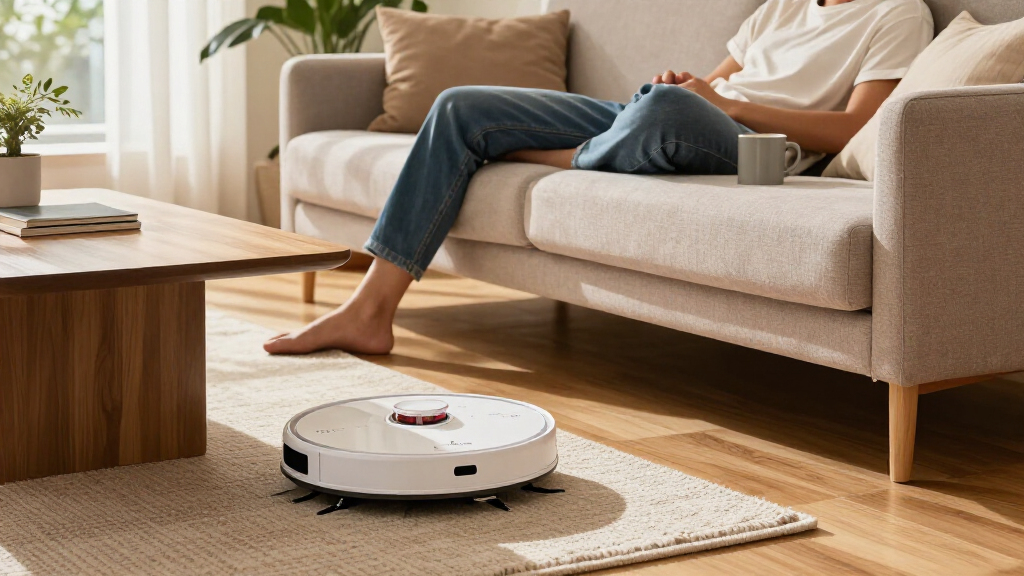
Choosing among these Roborock Saros models is less about whether a robot can vacuum and mop than about which parts of floor care you want it to handle best. The Saros 20 Flow is my pick for hard-floor homes that want roller-mop cleaning and hot-water dock washing. The standard Saros 20 is the stronger all-around choice for mixed flooring, edge reach, and dual-band Wi-Fi. For households that want a slimmer, more established feature set rather than the newer 36,000 Pa models, the Saros 10R offers a 3.14-inch profile and a dock that manages several routine chores.

Get home appliances delivered free with Prime
- Fast, free delivery on millions of items
- Prime Video, Amazon Music and more included
- Member-only deals all year
The key tradeoffs are practical: the two Saros 20 models share 36,000 Pa suction and recognition of more than 300 obstacle types, but differ in mop design, dock details, connectivity, and carpet handling. The 10R has lower listed suction yet still provides substantial automation and can fit beneath furniture with limited clearance. I’ve ranked these picks by the cleaning approach and home layout each one serves best, not by suction figures alone. All three support only 2.4 GHz Wi-Fi except the Saros 20, which also supports 5 GHz.
Complete the kit


Key Takeaways
- The Saros 20 Flow is the hard-floor specialist, with a self-cleaning roller mop and dock washing at 212°F; its 2.4 GHz-only Wi-Fi is a shared limitation with the 10R.
- The standard Saros 20 combines 36,000 Pa suction, dual anti-tangle features, edge-reaching extensions, and 2.4/5 GHz Wi-Fi, making it the most balanced choice for mixed flooring.
- The Saros 10R gives up the newer models’ 36,000 Pa figure but pairs 22,000 Pa suction with a 3.14-inch height and broad dock automation.
- Threshold figures differ: the Flow and standard Saros 20 are specified for up to 3.46 inches, while the 10R lists clearance up to 4 cm.
- Check both furniture clearance and dock placement before choosing: the 10R is the lowest-profile option, while the standard Saros 20’s advanced dock and features can take more setup and room.
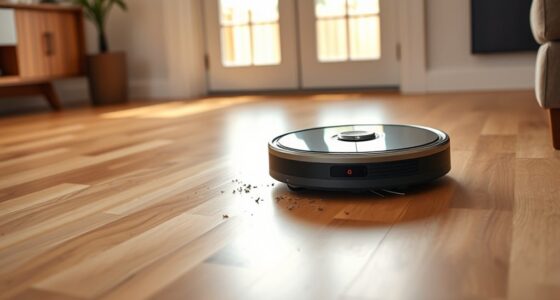
| Roborock Saros 20 Flow Robot Vacuum and Mop |  | Best for Hard-Floor Mopping | Suction power: 36,000 Pa | Threshold clearance: Up to 3.46 inches | Obstacle recognition: 300+ types | VIEW LATEST PRICE | See Our Full Breakdown |
| Roborock Saros 20 Robot Vacuum and Mop, 36,000 Pa, 300+ Obstacle Avoidance |  | Best All-Around Saros 20 | Suction power: 36,000 Pa | Obstacle recognition: Over 300 obstacles | Threshold crossing: Up to 3.46 inches | VIEW LATEST PRICE | See Our Full Breakdown |
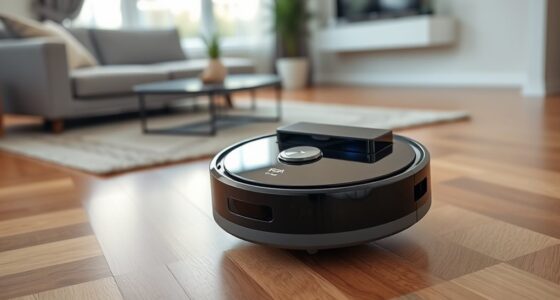
| Roborock Saros 10R Robot Vacuum and Mop |  | Best Slim-Profile Alternative | Suction power: 22,000 Pa | Height: 3.14 inches | Obstacle detection: 108 types | VIEW LATEST PRICE | See Our Full Breakdown |
| Roborock Saros 20 robot vacuum | Suction power | Wi-Fi | Obstacle recognition | Dock mop washing |
|---|---|---|---|---|
| Roborock Saros 20 Flow Robot V | 36,000 Pa | 2.4 GHz only | 300+ types | 212°F |
| Roborock Saros 20 Robot Vacuum | 36,000 Pa | 2.4 GHz and 5 GHz | Over 300 obstacles | 212°F |
| Roborock Saros 10R Robot Vacuu | 22,000 Pa | 2.4 GHz only | — | — |
More Details on Our Top Picks
Roborock Saros 20 Flow Robot Vacuum and Mop
The Saros 20 Flow earns my first-place spot for homes where mopping is a frequent part of the routine, not an occasional add-on. Its self-cleaning roller mop gives it a distinct cleaning approach compared with the standard Saros 20’s extendable mop-and-brush setup and the Saros 10R’s more conventional combination. The dock washes the roller with water listed at 212°F, dries it with warm air, and dispenses detergent. That level of mop care can reduce the manual work between runs, though it does not remove the need to maintain the dock and check supplies.
With 36,000 Pa suction and floor recognition, the Flow is not limited to mopping duties. It can also clean carpets, and its stated mop lift of up to 15 mm helps keep the wet cleaning element away from some raised surfaces. A robot still needs a sensible route and clear floor transitions; buyers should not treat the lift figure as a guarantee that every rug or carpet is safe from contact. The standard Saros 20 is the better fit if anti-tangle features and dual-band Wi-Fi matter more than the Flow’s roller-mop system.
Obstacle recognition covers 300+ types, and the stated threshold clearance reaches 3.46 inches. Those specifications make the Flow appealing in homes with clutter and raised transitions, but real-world passage depends on the shape and approach of the obstacle. Its edge-cleaning system is another practical distinction: the side reach is listed within 10 mm, with extension up to 44 mm. This may help address edges that a central cleaning path can miss, while the Saros 10R makes its stronger case through its lower 3.14-inch body.
The tradeoff is that the Flow supports 2.4 GHz Wi-Fi only, as does the 10R. That can be a compatibility snag in homes configured for a different network band, so I would check the router setup before deciding. The Flow’s feature set is most compelling when regular hard-floor care justifies choosing a roller mop and its dedicated dock routine. If carpet is the main surface or you want a simpler, more flexible all-rounder, the standard Saros 20 may be a more natural match.
Pros:- Self-cleaning roller mop with dock washing at a listed 212°F and detergent dispensing.
- 36,000 Pa suction and floor recognition for a mix of hard floors and carpet.
- Recognizes more than 300 obstacle types and lists threshold clearance up to 3.46 inches.
- Extending edge-cleaning reach and a mop lift of up to 15 mm add flexibility around boundaries and floor changes.
Cons:- Wi-Fi support is limited to 2.4 GHz.
- Its roller-mop system and hot-water dock may be more specialized than needed in carpet-heavy homes.
- Listed clearance and obstacle recognition do not guarantee passage over every threshold or around every object.
Best for: Households with extensive hardwood, tile, marble, or laminate that want a roller mop and automated mop washing as central parts of routine cleaning.
Not ideal for: Buyers whose home network cannot accommodate 2.4 GHz Wi-Fi, or homes dominated by carpet where the roller-mop advantage is less relevant.
- Suction power:36,000 Pa
- Threshold clearance:Up to 3.46 inches
- Obstacle recognition:300+ types
- Mop system:Self-cleaning roller mop
- Mop lift:Up to 15 mm
- Dock mop washing:212°F
- Dock mop drying:145°F
- Battery life:301 minutes
- Wi-Fi:2.4 GHz only
Our verdict“I’d choose the Saros 20 Flow when hard-floor mopping and automated roller care matter more than dual-band connectivity or a carpet-first setup.”
Roborock Saros 20 Robot Vacuum and Mop, 36,000 Pa, 300+ Obstacle Avoidance
The standard Saros 20 is my best all-around pick for buyers who want high suction and a broad feature set without making the roller mop the deciding factor. It matches the Flow at 36,000 Pa and recognizes more than 300 obstacles, but distinguishes itself with dual anti-tangle features, real-time mapping, and extending brushes and mop elements intended to reach edges and corners. Compared with the Flow, this model has a clearer case for mixed-floor households that want one robot to handle routine vacuuming and mopping across different rooms.
Its listed minimum furniture clearance is 3.13 inches, slightly lower than the 10R’s 3.14-inch height. That close specification means shoppers should measure furniture openings carefully instead of assuming either model will fit every low sofa or cabinet. The standard Saros 20 also lists carpet depth handling up to 1.18 inches and threshold crossing up to 3.46 inches. Those figures give buyers useful points of comparison, but carpet pile, threshold shape, and approach angle can affect performance.
The dock supports hot-water mop washing at 212°F, hot-air drying at 131°F, and automatic dust emptying for up to 65 days. That is substantial hands-off support, though the dock itself needs a suitable location and periodic attention. The Flow lists a higher mop-drying temperature and centers its pitch on the self-cleaning roller mop; the standard Saros 20 instead makes its case through dual anti-tangle design and broader home versatility. If long hair or mixed floor types are regular concerns, those differences may matter more than the similar suction and obstacle figures.
Connectivity is a notable advantage here: the standard model lists 2.4 GHz and 5 GHz Wi-Fi, while both the Flow and 10R are specified for 2.4 GHz only. On the other hand, the supplied description flags setup and dock space as potential burdens, particularly given the automated dock and advanced features. I’d favor this model over the Flow when Wi-Fi flexibility, anti-tangle features, and mixed flooring take priority. For a hard-floor home centered on roller-mop care, the Flow remains the more targeted choice.
Pros:- 36,000 Pa suction with dual anti-tangle features.
- Recognizes more than 300 obstacles and provides real-time mapping.
- Extendable brush and mop features help clean corners and edges.
- Supports both 2.4 GHz and 5 GHz Wi-Fi, unlike the other two picks.
Cons:- The advanced dock and feature set may call for more setup and floor space.
- Dock mop drying is listed at 131°F, below the Flow’s 145°F specification.
- Threshold and carpet figures are guides, not guarantees for every home layout or floor covering.
Best for: Buyers with a mix of hard flooring and carpet who want strong suction, anti-tangle features, edge-reaching tools, and 5 GHz Wi-Fi support.
Not ideal for: Shoppers with very limited dock space, those seeking the Flow’s dedicated self-cleaning roller-mop approach, or buyers who prefer a simpler setup.
- Suction power:36,000 Pa
- Obstacle recognition:Over 300 obstacles
- Threshold crossing:Up to 3.46 inches
- Carpet depth:Up to 1.18 inches
- Minimum furniture clearance:3.13 inches
- Dock mop washing:212°F
- Dock mop drying:131°F
- Automatic dust emptying:Up to 65 days
- Wi-Fi:2.4 GHz and 5 GHz
Our verdict“I’d pick the standard Saros 20 for mixed flooring and broader connectivity, especially when anti-tangle features matter more than a roller-mop specialization.”
Roborock Saros 10R Robot Vacuum and Mop
The Saros 10R takes third place overall, but it may be the better buy for a home where furniture clearance is the deciding factor. Its 3.14-inch profile is the clearest reason to choose it over the two Saros 20 models: it is designed to reach beneath low furniture where taller robots may leave dust behind. The standard Saros 20 lists a minimum clearance of 3.13 inches, so those numbers are close; I would measure the actual gap and account for any uneven floor rather than selecting by the nominal figures alone.
At 22,000 Pa, its stated suction is below the 36,000 Pa figures for the Flow and standard Saros 20. That makes the newer models more compelling on paper for shoppers placing maximum suction at the top of the list. Still, the 10R combines vacuuming and mopping, detects 108 obstacle types, and lists obstacle clearance up to 4 cm. It is a practical, automated option for mixed hard floors and carpet, but buyers should not assume its lower suction number means it will suit every carpet or debris load equally well.
The multifunction dock is a strong point: it washes and dries mops, collects dust, refills the water tank, dispenses detergent, and supports self-cleaning. Mop washing is listed at 176°F, with drying at 131°F, and dust collection is listed for up to 60 days. Compared with the Saros 20 Flow’s roller-mop-focused care, the 10R’s appeal is the breadth of dock chores it handles alongside its compact body. It offers plenty of automation without matching the Saros 20 models’ headline suction or obstacle-recognition counts.
The main compatibility drawback is 2.4 GHz-only Wi-Fi, shared with the Flow but not the standard Saros 20. I’d put the 10R on the shortlist when low furniture is a daily cleaning challenge and the dock’s automatic water and dust tasks are attractive. If the home has open floors and you mainly want the strongest stated suction, the Saros 20 models make a stronger case. The 10R’s role is specific: a slim, feature-rich alternative, not the most powerful option in this lineup.
Pros:- 3.14-inch profile is designed to reach beneath low furniture.
- Combines 22,000 Pa suction with vacuuming and mopping.
- Dock washes and dries mops, collects dust, refills water, and dispenses detergent.
- Obstacle detection and listed clearance up to 4 cm add support for clutter and raised transitions.
Cons:- Listed suction is lower than the 36,000 Pa Saros 20 models.
- Wi-Fi support is limited to 2.4 GHz.
- Obstacle detection covers 108 types, fewer than the 300+ recognition listed for both Saros 20 models.
Best for: Buyers with low-clearance furniture who want an automated vacuum-and-mop dock and a compact robot body.
Not ideal for: Shoppers focused on the highest listed suction, recognition of 300+ obstacle types, or 5 GHz Wi-Fi support.
- Suction power:22,000 Pa
- Height:3.14 inches
- Obstacle detection:108 types
- Obstacle clearance:Up to 4 cm
- Dock functions:Mop washing and drying, dust collection, water refilling, detergent dispensing, and self-cleaning
- Mop washing temperature:176°F
- Dust collection:Up to 60 days
- Quick charging:2.5 hours
- Wi-Fi:2.4 GHz only
Our verdict“I’d choose the Saros 10R over the newer models when its slim profile and broad dock automation matter more than the highest suction specification.”

How We Picked
I compared these three models around the decisions that affect daily use: floor mix, furniture clearance, mop maintenance, obstacle handling, connectivity, and dock duties. The title points to Saros 20 vacuums, but the supplied lineup includes two Saros 20 models and the Saros 10R. I’ve kept all three in the comparison because the 10R is a relevant alternative for shoppers deciding whether the newer series’ added suction and features suit their home.
I ranked the Saros 20 Flow first for buyers prioritizing frequent hard-floor mopping and the roller-mop system. The standard Saros 20 follows as the more versatile match for mixed flooring and buyers who value dual-band Wi-Fi, anti-tangle features, and extending cleaning tools. The Saros 10R is third overall, not because it lacks automation, but because its listed suction is lower and its 2.4 GHz-only connectivity is less flexible. It moves up the shortlist for homes with low furniture and shoppers who value a 3.14-inch body.
I treated manufacturer-provided specifications as claims rather than proof that every home will see the same result. Pa thresholds, obstacles, rugs, and furniture vary, so a stated clearance does not guarantee every doorway or floor transition will be passable. I also weighed drawbacks rather than treating a larger suction number or more automation as an automatic win. Dock footprint, setup, Wi-Fi compatibility, mop style, and carpet behavior can matter more than headline specifications for a particular household.
Factors to Consider When Choosing Best Roborock Saros 20 Robot Vacuums
I would choose between these models by starting with the floors and layout, then checking the dock and network requirements. The shared Saros name can make the lineup appear closer than it is: the Flow is built around a roller mop, the standard Saros 20 emphasizes a versatile feature package, and the 10R focuses on slim access and broad dock automation.
Start with your floor mix
If most of your home is hard flooring and mopping is part of regular upkeep, the Flow’s self-cleaning roller mop and hot-water dock wash make it the clearest fit. The standard Saros 20 is a more balanced option when rooms alternate between carpet and hard floors, especially for buyers drawn to its anti-tangle features and carpet-depth specification. The 10R can handle both surface categories too, but its listed suction is lower than the 36,000 Pa figures on the Saros 20 models. I would treat suction as one comparison point, not a direct prediction of cleaning results: floor material, debris, brush design, and settings also affect what a robot can do.
Choose the mop approach that fits your routine
The Flow’s roller mop is its main distinction. The dock washes it with water listed at 212°F and dries it at 145°F, while the robot can lift the mop by up to 15 mm. That arrangement is aimed at buyers who want mop care built into the routine. The standard Saros 20 also washes its mop at a listed 212°F, but its drying figure is 131°F and its appeal rests more on anti-tangle design, mapping, and extendable cleaning tools. The 10R has mop washing, drying, detergent dispensing, and tank refilling in its dock, offering broad automation. Ask whether you want a roller-mop specialist or a more general vacuum-and-mop setup before comparing smaller specification differences.
Measure furniture gaps and transitions
For low sofas, beds, or cabinets, measure the smallest clearance along the robot’s route. The 10R is listed at 3.14 inches high; the standard Saros 20 specifies a minimum furniture clearance of 3.13 inches. These near-matching figures mean neither is a guaranteed winner without checking the actual robot dimensions and the furniture opening. Threshold claims need the same caution. The Flow and standard Saros 20 list up to 3.46 inches, while the 10R lists up to 4 cm. Differences in threshold shape, width, floor grip, and approach can change whether a robot crosses it. A stated maximum is not a promise that every transition will be passable.
Match obstacle handling to your home
Both Saros 20 models list recognition of more than 300 obstacle types, while the 10R lists 108. That difference may appeal in busy rooms where small objects are often left on the floor, but recognition figures do not tell the whole story. A robot can still need clear routes around loose cables, toys, or items outside its detection capabilities. I would look at whether you can regularly pick up clutter before a run and whether the rooms have predictable layouts. For homes with frequent objects on the floor, the Saros 20 models have the stronger stated obstacle-recognition figures; for mostly clear rooms, the 10R’s lower figure may be less consequential.
Check Wi-Fi compatibility before setup
The Saros 10R and Saros 20 Flow list 2.4 GHz-only Wi-Fi. The standard Saros 20 supports 2.4 GHz and 5 GHz, giving it more network flexibility in homes that use both bands. If your router combines bands or your device setup is managed by a building network, check whether the robot can connect under those conditions before choosing. The Flow and 10R offer app control, and the Flow also lists remote and voice control compatibility, but those conveniences depend on getting the robot onto a supported network. A connection limitation is easy to overlook when comparing suction and dock features, yet it can affect initial setup.
Plan for the dock, not just the robot
Each option relies on a multifunction dock, so plan a permanent location with usable floor space and access for routine maintenance. The 10R’s dock collects dust, handles mop care, refills water, dispenses detergent, and self-cleans. The Flow’s dock washes and dries the roller mop and dispenses detergent. The standard Saros 20 adds automatic dust emptying listed for up to 65 days. Those functions can cut down on frequent manual tasks, but they do not make the dock maintenance-free: buyers still need to follow care instructions, manage consumables, and keep the area accessible. If space is tight or the dock must sit in a narrow alcove, check its dimensions before choosing by robot features alone.
Decide which specification matters most
There is no single figure that settles this comparison. 36,000 Pa suction separates both Saros 20 models from the 22,000 Pa 10R on paper, but that does not by itself determine which one suits a home. The Flow’s roller mop, the standard Saros 20’s anti-tangle features and dual-band Wi-Fi, and the 10R’s slim body are more useful differentiators for many buyers. I would rank your priorities in this order: floor type and mop needs, clearance and thresholds, network compatibility, then dock footprint and maintenance. That sequence keeps a headline specification from outweighing a real constraint in your home.
Frequently Asked Questions
Which Roborock Saros model is best for hard floors?
I’d choose the Saros 20 Flow for a home dominated by hard floors when regular mopping is a priority. Its self-cleaning roller mop, 212°F listed dock wash, and detergent dispensing make it the most mop-focused pick here. The standard Saros 20 can also vacuum and mop, but it stands out more for mixed flooring and anti-tangle features. If your home has substantial carpet, weigh the Flow’s mop-centered design against the standard Saros 20’s broader all-around feature set.
Is the Saros 20 better than the Saros 10R?
The Saros 20 models have higher listed suction at 36,000 Pa and recognize more than 300 obstacle types, while the 10R lists 22,000 Pa and 108 obstacle types. The standard Saros 20 also supports 5 GHz Wi-Fi, which the 10R does not. The 10R remains a sensible alternative for shoppers prioritizing a 3.14-inch body and a dock that refills water as well as handling mop care and dust collection. Which one is better depends on whether those benefits matter more than the Saros 20’s higher stated suction and obstacle-recognition figures.
Do all three models support 5 GHz Wi-Fi?
No. The standard Saros 20 is the only model in this lineup listed with both 2.4 GHz and 5 GHz Wi-Fi. The Saros 20 Flow and Saros 10R specify 2.4 GHz-only support. I’d check your router configuration and household network requirements before choosing either of those two, since a mismatch can make app setup more difficult regardless of how well a model’s cleaning features fit your home.
Which model is most suitable for low furniture?
The Saros 10R is the most clearly positioned for low-clearance furniture, with a listed height of 3.14 inches. The standard Saros 20 lists a minimum furniture clearance of 3.13 inches, so the figures are very close rather than a clear gap between them. Measure the furniture opening and allow room for uneven flooring; a listed robot height or clearance does not guarantee access beneath every sofa or cabinet. If under-furniture cleaning is your deciding factor, compare the actual measurements against the tightest openings in your home.
Can these robots cross every threshold listed in their specifications?
No specification can guarantee that a robot will cross every transition in a home. The Flow and standard Saros 20 list clearance up to 3.46 inches, while the 10R lists obstacle clearance up to 4 cm. Threshold shape, width, surface texture, approach angle, and available space can all affect whether a robot passes. I would treat these figures as comparison points, then identify the highest and most difficult thresholds along the intended cleaning route before making a choice.
Conclusion
For hard-floor households that mop often, I recommend the Saros 20 Flow for its roller-mop system and automated hot-water wash. For buyers with mixed flooring who want 36,000 Pa suction, dual anti-tangle features, extending edge-cleaning tools, and 5 GHz support, the standard Saros 20 is my all-around pick. Choose the Saros 10R if a slim profile and broad dock automation matter more than the highest suction figure or 5 GHz connectivity. Before ordering any of them, measure furniture gaps and thresholds, confirm the Wi-Fi band, and set aside a workable dock location; those practical checks may decide the better fit more decisively than the model name.
Fall yard work Picks
leaf blowers
As an affiliate, we earn on qualifying purchases.