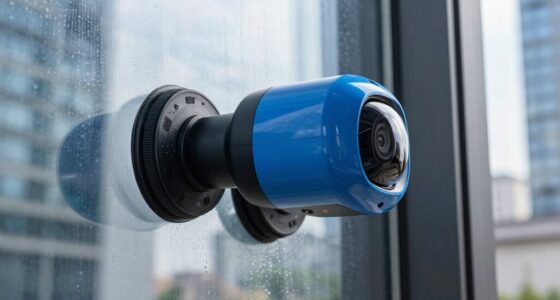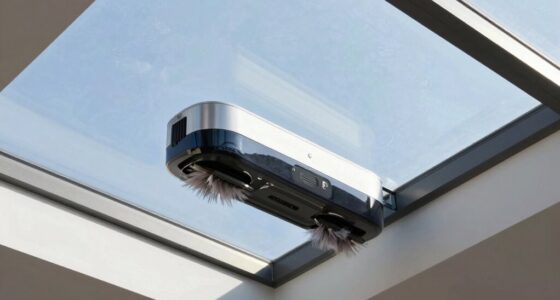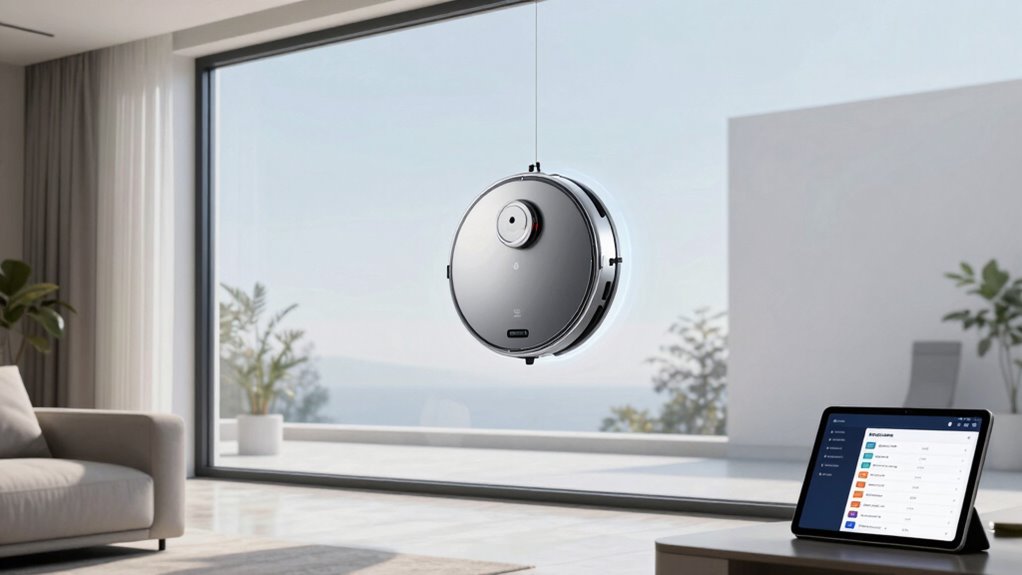

To build a glass cleaning routine with a window robot, start by setting a consistent schedule every 2 to 4 weeks, ensuring you remove obstructions like curtains before startup. Use eco-friendly solutions compatible with your robot to boost efficiency and prevent streaks. Regularly inspect and maintain your equipment, including brushes and sensors, to keep it in top condition. After each clean, manually check for streaks or spots—these tips will help you achieve spotless, streak-free windows every time.

Get home appliances delivered free with Prime
- Fast, free delivery on millions of items
- Prime Video, Amazon Music and more included
- Member-only deals all year
Key Takeaways
- Schedule regular cleanings every 2 to 4 weeks and automate with programmable or app-controlled window robots.
- Clear obstructions like curtains or blinds before each cleaning cycle for optimal access.
- Use eco-friendly, streak-resistant cleaning solutions compatible with your robot and window type.
- Perform a final manual inspection and use a squeegee for stubborn spots or edges post-robot cleaning.
- Maintain and inspect robot brushes and sensors regularly to ensure consistent, streak-free results.
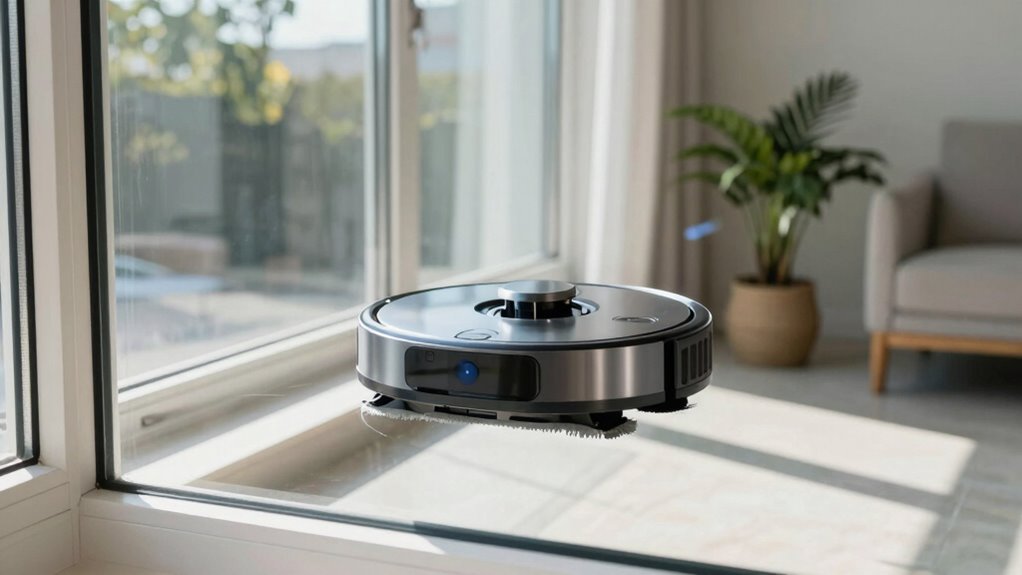
Cleaning your windows regularly can be a tedious task, but with a window robot, it becomes much easier to maintain spotless glass. To build an effective glass cleaning routine, you need to start with the right tools and a clear plan. While your window robot handles most of the work, incorporating a few simple steps ensures your windows stay streak-free and crystal clear. One essential tool to keep on hand is a handheld squeegee. After your robot finishes its cleaning cycle, using a handheld squeegee to go over the edges or stubborn spots can help prevent streaks. This extra step is especially useful if your windows are heavily soiled or if you notice residue left behind. The key to streak prevention is applying even pressure and using a clean, dry squeegee blade, which helps remove any lingering water or cleaner without smudging. Additionally, choosing eco-friendly cleaning solutions can support sustainable practices and reduce environmental impact. Understanding contrast ratio and how it affects the clarity of your window surfaces can also aid in selecting the most effective cleaning methods.
Establishing a routine means setting a consistent schedule that aligns with your environment and weather conditions. For example, cleaning windows every two to four weeks generally keeps dirt and grime in check. When you’re ready to clean, start by clearing the area around your windows, removing any obstructions like curtains or blinds. Turn on your window robot and let it do its job; most models are programmable or app-controlled, so you can set it to operate when you’re away or during low-traffic times. After the robot completes its cycle, inspect the glass for streaks or spots. If you see any, grab your handheld squeegee and gently wipe those areas to ensure a spotless finish. Incorporating regional flavors and unique cleaning insights can also help you tailor your routine for specific environments or window types. Additionally, understanding the importance of proper maintenance can extend the lifespan and performance of your device. Regularly inspecting the brushes and sensors helps prevent dirt buildup that could impair the robot’s efficiency.
To further enhance your routine, consider using a streak-resistant cleaning solution designed for glass. These solutions can help your robot perform more effectively and reduce the need for manual touch-ups. Additionally, always keep your robot’s brushes and sensors clean to prevent dirt buildup that could impair its performance. Regular maintenance of your device ensures it works efficiently, saving you time and effort in the long run. If you notice persistent streaks despite these steps, check your cleaning solution’s compatibility with your robot’s material and your window type. Sometimes, switching to a different cleaning agent or adjusting the robot’s settings can make a significant difference.
As an affiliate, we earn on qualifying purchases.
Frequently Asked Questions
How Often Should I Schedule Window Robot Cleanings?
You should schedule window robot cleanings every 2 to 4 weeks, depending on your home’s environment. Regular window robot maintenance keeps your device working efficiently and guarantees spotless windows. Follow cleaning schedule tips like checking the robot’s brushes and sensors regularly, and adjusting frequency based on dirt buildup or weather conditions. This routine helps maintain clear views and prolongs your window robot’s lifespan.
Can Window Robots Clean Tinted or Reflective Glass?
Like mirrors reflecting your intentions, tinted surfaces and reflective coatings can challenge window robots, but they can still clean effectively if your device is compatible. Many models are designed to handle tinted glass without damage, yet reflective coatings may occasionally cause sensor issues or streaks. Always check your robot’s specifications and test a small area first, ensuring your windows shine without compromising their unique surfaces.
What Should I Do if the Robot Gets Stuck?
If your window robot gets stuck, first check its battery life to guarantee it has enough power for proper movement. Then, carefully remove it and inspect the calibration techniques; sometimes, recalibrating the sensors or cleaning the wheels helps. Make sure the surface is smooth and free of obstacles. After recalibration, place the robot back on the window and monitor its movement to prevent future sticking issues.
Are Window Robots Safe for All Window Types?
Think of window robots as a versatile tool, but they aren’t a one-size-fits-all solution. Their safety depends on the device’s features and your window’s material. Most are safe for glass, but check the glass compatibility and window robot safety guidelines before use. For delicate or specialized windows, consult the manufacturer to make certain your robot won’t cause damage. Proper research guarantees a sparkling clean without surprises!
How Do I Maintain and Troubleshoot My Window Robot?
To maintain your window robot, follow regular maintenance tips like cleaning the brushes and sensors, checking for debris, and making sure the power cords are intact. When troubleshooting, use techniques like resetting the device, inspecting for stuck parts, and verifying the connection to your app or remote. Keep the robot’s wheels and cleaning pads clean, and consult the manual for specific issues. Proper upkeep guarantees maximum performance and longevity of your window robot.
streak-free glass cleaning solution
As an affiliate, we earn on qualifying purchases.
As an affiliate, we earn on qualifying purchases.
Conclusion
Now that you’ve got your window robot and a solid routine, you’re all set to enjoy streak-free views. Remember, practice makes perfect, and consistency is key to maintaining sparkling glass. By following these simple steps, you’ll save time and effort, leaving your windows crystal clear. Keep in mind, a clean window is a window to a brighter day—so stay committed, and let your robot do the heavy lifting. Clear views are just a routine away!
As an affiliate, we earn on qualifying purchases.
programmable window cleaning robot
As an affiliate, we earn on qualifying purchases.
As an affiliate, we earn on qualifying purchases.
NFL season / tailgating Picks
team gear
As an affiliate, we earn on qualifying purchases.