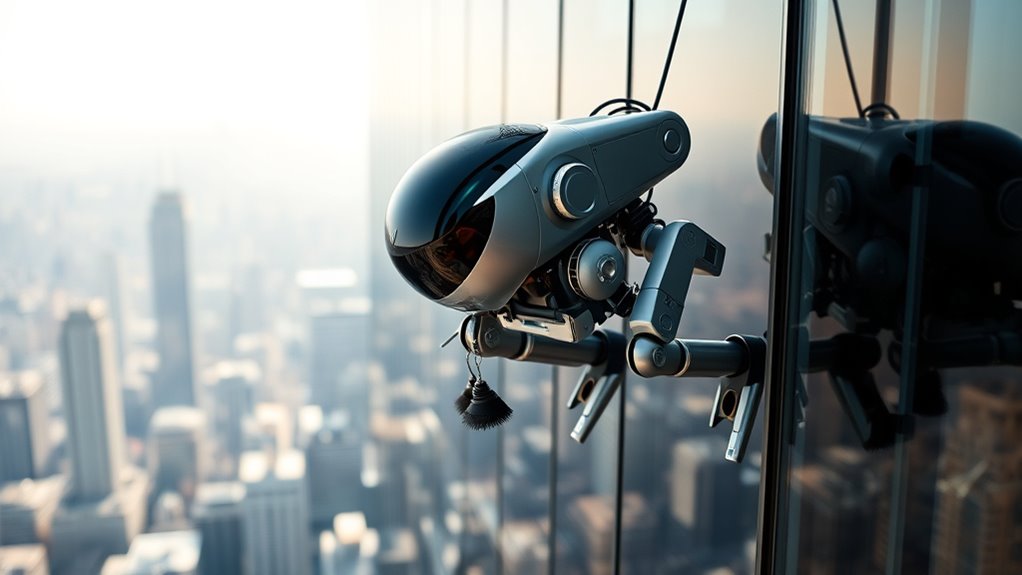

Window cleaning robots are smart devices that automatically clean glass surfaces using sensors, suction systems, and programmed movement patterns. They attach securely with vacuum technology and navigate by detecting obstacles and edges, ensuring thorough coverage. Equipped with brushes or microfiber pads, they loosen dirt and wipe windows streak-free. Safety features prevent falls, and their automated operation saves you time and effort. Curious about the technology behind these innovative cleaners? Keep exploring to uncover more details.

Get home appliances delivered free — and shop member deals
- Fast, free delivery on millions of items
- Access to Prime Big Deal Days deals on October 6–7
- Prime Video, Amazon Music and more included
Key Takeaways
- They use sensors and navigation algorithms to detect obstacles and plan systematic cleaning paths on glass surfaces.
- Suction-based mechanisms, like vacuum pumps or sealed chambers, ensure the robot adheres securely to windows during operation.
- Equipped with brushes, microfiber pads, or spray systems, they scrub and wipe surfaces for streak-free cleanliness.
- Advanced safety features, including obstacle detection and automatic shutdowns, prevent accidents and ensure reliable operation.
- They operate via onboard batteries or solar power, with remote control options for monitoring and adjustments.
As an affiliate, we earn on qualifying purchases.
Overview of Window Cleaning Robots

Window cleaning robots are automated devices designed to clean glass surfaces efficiently without human intervention. Their historical development began with basic prototypes aiming to reduce manual labor, gradually evolving as technology advanced. Over the years, these robots gained popularity in commercial and residential markets, driven by increasing demand for safer, more convenient cleaning solutions. Market adoption has accelerated as manufacturers introduced smarter navigation, better suction systems, and enhanced safety features. Today, these robots are widely available, appealing to building managers and homeowners alike. The ongoing innovation in sensors and automation continues to improve their performance, making window cleaning robots a practical alternative to traditional methods. As technology progresses, market adoption is expected to grow further, transforming how we maintain glass surfaces.
As an affiliate, we earn on qualifying purchases.
Core Components and Design Features

To effectively clean glass surfaces, window cleaning robots incorporate several core components that work seamlessly together. At the heart are motors and brushes that scrub and wipe the surface efficiently. Many models feature solar panels that harness sunlight to supplement power, reducing reliance on batteries and enhancing sustainability. The robots are designed with durable frames to withstand outdoor conditions and ensure stability during operation. Remote operation capabilities allow you to control and monitor the robot from a distance, providing convenience and precision. Power sources, often rechargeable batteries, support extended cleaning sessions. Some models include onboard cameras or sensors for better navigation. Overall, these core components and design features enable your robot to perform thorough, safe cleaning with minimal effort on your part.
As an affiliate, we earn on qualifying purchases.
How Sensors Guide the Robot’s Movement

Sensors play a crucial role in guiding the movement of window cleaning robots by providing real-time data about their environment. Proper sensor calibration guarantees accurate readings, helping the robot understand its position and surroundings. As the robot moves, sensors detect obstacles like window frames, sills, or dirt buildup, preventing collisions or falls. Obstacle detection algorithms process sensor inputs to adjust the robot’s path instantly, maintaining thorough coverage. You can trust that calibration keeps sensors aligned, avoiding misinterpretations that could lead to missed spots or accidents. These sensors continuously feed data to the robot’s control system, allowing precise navigation along glass surfaces. This combination of calibrated sensors and obstacle detection technology ensures safe, efficient, and comprehensive cleaning.
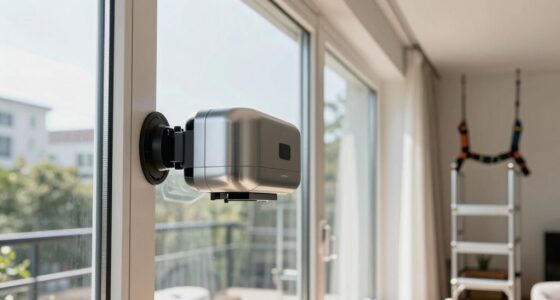
window cleaning robot with sensors
As an affiliate, we earn on qualifying purchases.
As an affiliate, we earn on qualifying purchases.
Adhesion and Surface Contact Mechanisms
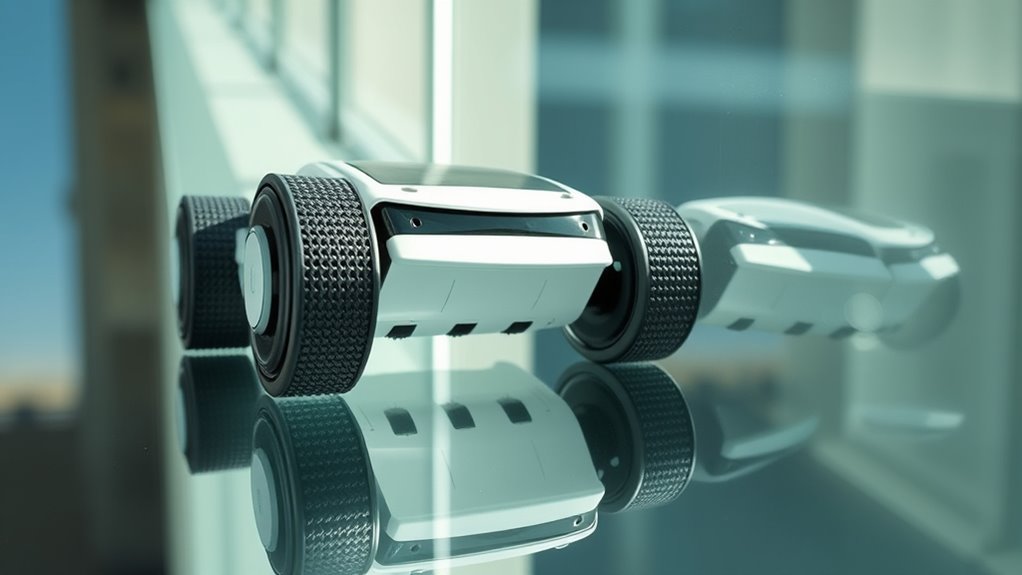
You’ll want to understand how window cleaning robots stick to surfaces, which mainly depends on suction-based adhesion methods. These systems create a vacuum to hold the robot securely, even on smooth or vertical glass. Additionally, surface contact technologies like specialized rollers or magnets help ensure consistent contact for effective cleaning.
Suction-based Adhesion Methods
Suction-based adhesion methods are a popular choice for window cleaning robots because they provide a reliable and strong grip on smooth surfaces. They work by creating a suction force that pulls the robot firmly against the glass, ensuring stability during operation. The key to their effectiveness lies in achieving high adhesion strength, which prevents slipping or falling. These systems typically use vacuum pumps or sealed chambers to generate the necessary suction. The design allows for quick attachment and detachment, making the robot versatile and easy to operate. Because the suction force is directly related to surface smoothness, these methods perform best on clean, flat windows. Overall, suction-based adhesion offers a dependable, non-invasive way to keep your robot securely in place.
Surface Contact Technologies
Surface contact technologies form the core of how window cleaning robots achieve adhesion beyond suction methods. These mechanisms rely on surface contact contact pads or micro-spines that grip the glass through physical or electrostatic forces, providing reliable adhesion even in challenging conditions. To keep these systems functioning effectively, regular robot maintenance is essential; dirt or debris can compromise surface contact, reducing performance. Modern robots often feature user interfaces that allow you to monitor adhesion status and perform maintenance alerts. This ensures you can quickly identify when cleaning pads need cleaning or replacement. By understanding how surface contact technologies work and maintaining your robot properly, you guarantee consistent adhesion, safer operation, and ideal cleaning results.
Cleaning Techniques and Tools Used
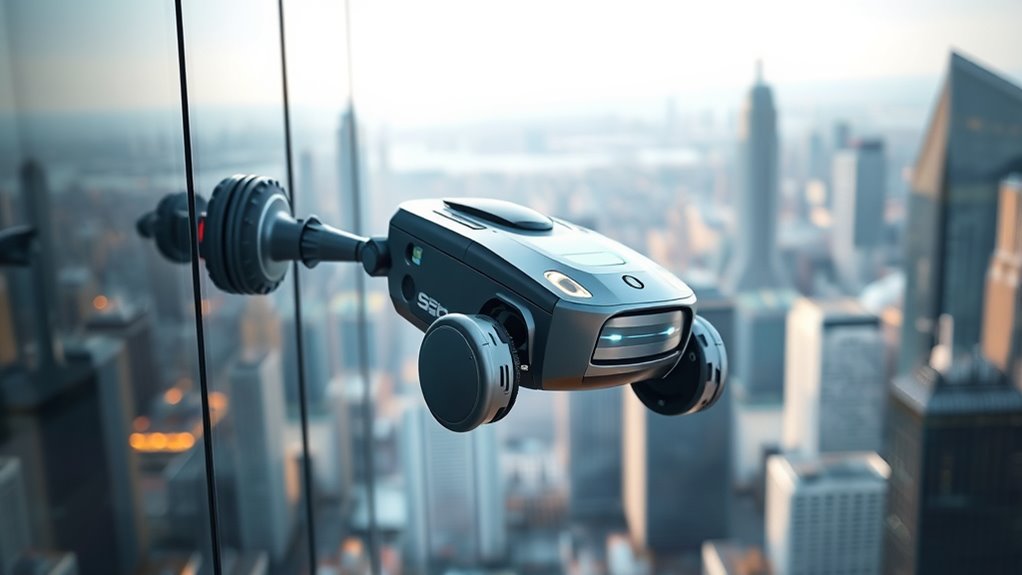
To effectively clean windows, robotic systems employ a combination of advanced techniques and specialized tools. They utilize precise cleaning patterns to ensure thorough coverage, moving systematically across the glass surface. Water spray techniques are essential, using controlled sprays to loosen dirt and grime without excessive water use. Some robots feature dual brushes or microfiber pads that rotate or oscillate to scrub surfaces better. These tools work in tandem with spray nozzles to optimize cleaning efficiency and minimize streaks. The robots often adapt their patterns based on window shape and size, ensuring consistent results. This combination of systematic movement, targeted water application, and specialized cleaning tools allows robotic systems to deliver spotless, streak-free windows with minimal user intervention.
Power Sources and Battery Life
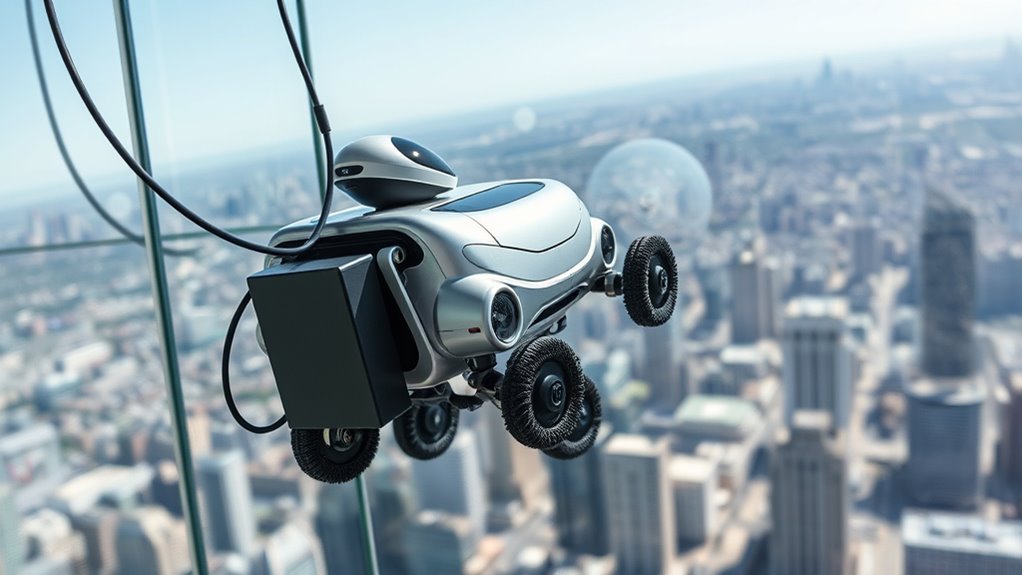
You’ll want to contemplate the different power options available for window cleaning robots, from rechargeable batteries to direct power sources. Understanding how long the batteries last helps you plan cleaning sessions without interruptions. Battery longevity insights can make or break your experience, so it’s worth exploring these details carefully.
Power Options Explored
Have you ever wondered what powers these innovative window cleaning robots? Many models now use flexible power options, including wireless charging stations that eliminate the need for tangled cords. Simply place the robot on a charging pad, and it recharges wirelessly, making setup easier. Some advanced robots even harness solar power, equipped with tiny solar panels that convert sunlight into energy. This eco-friendly option extends operational time without relying solely on batteries. Depending on the design, these power sources can substantially boost efficiency and convenience. Wireless charging provides seamless recharging, while solar power offers a sustainable energy solution. Together, these options help keep your window cleaning robot ready to work whenever you need it, reducing downtime and enhancing overall performance.
Battery Longevity Insights
Understanding how power sources impact battery longevity is essential for getting the most out of your window cleaning robot. Proper battery maintenance can markedly extend its lifespan, ensuring your device stays reliable over time. Regularly fully charging and discharging the battery helps prevent capacity loss, while avoiding overcharging preserves its health. Additionally, optimizing your robot’s energy efficiency by setting appropriate cleaning schedules and avoiding unnecessary runs reduces strain on the battery. Keep an eye on battery indicators and replace batteries when they show signs of diminished performance. Remember, a well-maintained battery not only lasts longer but also ensures your robot operates at peak efficiency, delivering consistent cleaning results and saving you money in the long run.
Safety Features and Error Handling

Safety features and error handling are critical components that guarantee window cleaning robots operate reliably and safely around people and delicate surfaces. They include emergency protocols that activate if the robot detects a malfunction or unstable surface, preventing accidents. For user safety, sensors continuously monitor for obstacles, edges, and glass integrity, triggering immediate shutdowns or adjustments when necessary. Many robots incorporate fail-safe mechanisms, such as automatic power cuts or locking systems, to prevent falls or damage. Error alerts notify you promptly if something goes wrong, allowing quick intervention. These safety features ensure the robot performs its cleaning tasks efficiently without risking injury or damage. Overall, robust error handling and emergency protocols are essential for safe, dependable operation in any environment.
Programming and Control Systems
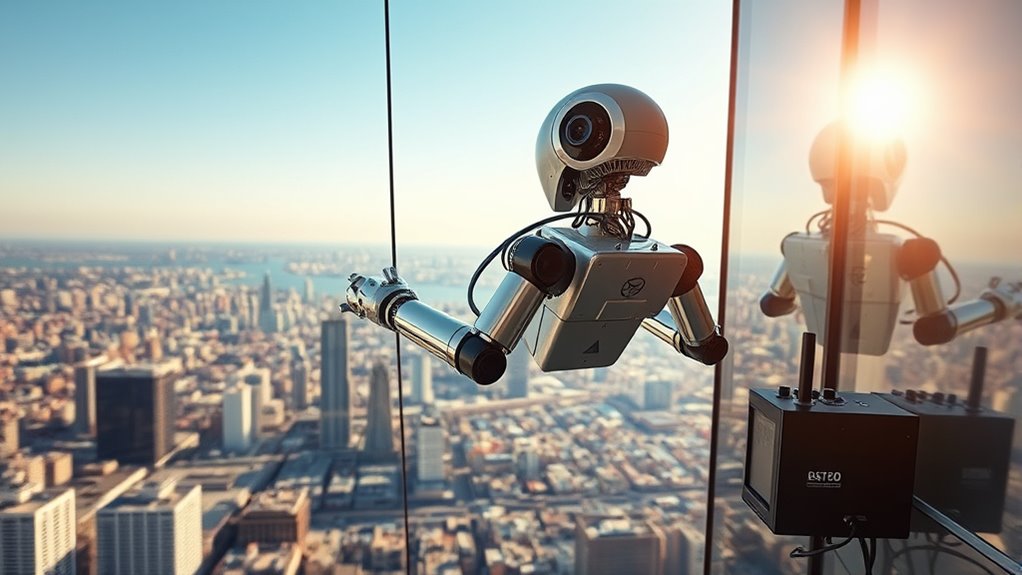
Programming and control systems form the backbone of window cleaning robots, enabling precise navigation and task execution. These systems rely on advanced algorithms, often incorporating machine learning, to adapt to different window shapes and obstacles. You’ll find that a user interface allows you to easily set cleaning parameters, monitor progress, and troubleshoot issues. The control system processes data from sensors and cameras, guiding the robot’s movements and ensuring thorough coverage. Machine learning helps the robot improve its efficiency over time by analyzing past cleaning patterns. Overall, these programming and control features ensure your window cleaning robot operates reliably, adjusts to various conditions, and delivers consistent results, making window maintenance effortless and efficient.
Benefits and Limitations of Using These Robots
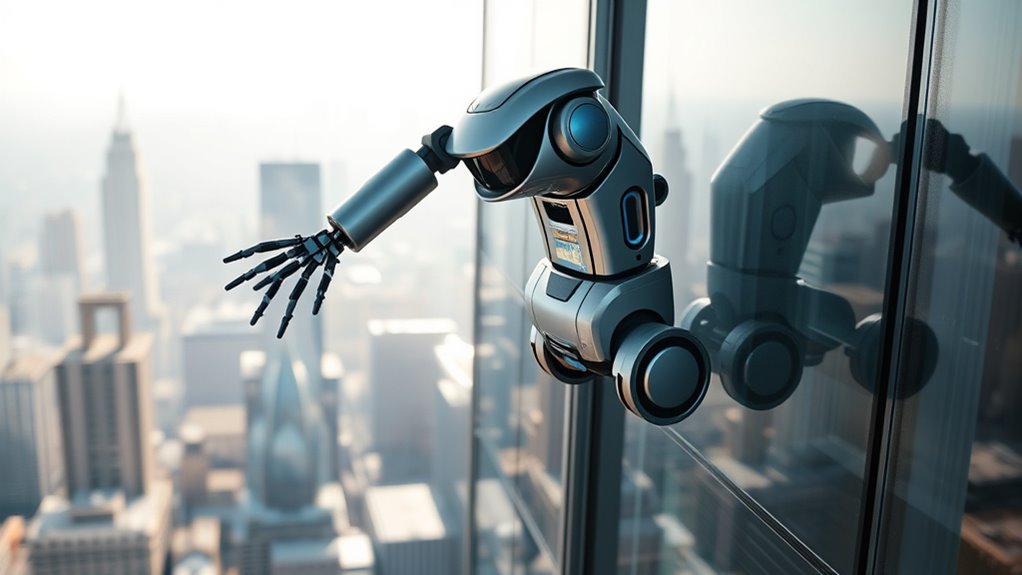
Using window cleaning robots offers several notable benefits, such as saving you time and reducing the risk of injuries from climbing or leaning on high surfaces. They provide cost efficiency by minimizing the need for professional cleaning services and reducing labor costs over time. However, these robots do have limitations. Their initial purchase price can be high, and some models may require frequent maintenance to ensure peak performance. Additionally, they might struggle with very dirty or textured glass and may not work effectively on irregularly shaped windows. While they streamline cleaning, you still need to monitor their operation and perform occasional checks. Overall, they can be a valuable investment, but understanding their maintenance requirements and potential limitations helps you get the most out of your window cleaning robot.
Frequently Asked Questions
How Do Window Cleaning Robots Handle Uneven or Textured Surfaces?
Window cleaning robots handle uneven or textured surfaces through advanced sensors and flexible surface adaptation technology. You’ll notice they adjust their cleaning pads and suction power to match surface irregularities, ensuring thorough cleaning. Their smart design detects texture variations, allowing the robot to adapt seamlessly. This means you get consistent results even on rough or uneven surfaces, making your window cleaning process more efficient and effective.
Can These Robots Operate Effectively on Very High or Large Windows?
You’ll find that window cleaning robots can tackle very high or large windows effectively. Their robot speed allows them to cover extensive surfaces quickly, while long battery life guarantees uninterrupted operation on tall buildings. While some models are designed for smaller panes, high-capacity robots are built for larger windows, balancing power and endurance. So, with the right robot, you’ll enjoy efficient cleaning even on the tallest or widest windows.
Are Window Cleaning Robots Suitable for Outdoor Versus Indoor Use?
Yes, window cleaning robots are suitable for both indoor and outdoor use, but you should consider indoor safety and surface compatibility. For outdoor windows, verify the robot is weather-resistant and designed to handle varying surface types. Indoors, these robots are safe and effective on smooth, flat surfaces. Always check the specifications to match your window type, ensuring reliable cleaning without damaging fragile or textured surfaces.
How Do Robots Detect and Avoid Obstacles Like Bird Droppings or Debris?
You can trust that window cleaning robots detect and avoid obstacles like bird droppings or debris through sensor calibration and obstacle mapping. They use advanced sensors to scan their surroundings accurately, creating real-time maps of potential hazards. When obstacles are detected, the robot adjusts its path automatically, ensuring safe cleaning. This technology helps prevent collisions and keeps your windows spotless without manual intervention.
What Maintenance Is Required to Keep the Robot Functioning Properly?
To keep your window cleaning robot working well, you should regularly check its battery life and recharge as needed to prevent interruptions. Clean the brushes and sensors to avoid dust buildup, and update the software when new updates are available to improve performance and fix bugs. Also, inspect the power connections and make sure the robot’s components are in good condition, so it operates smoothly and safely every time.
Conclusion
Think of window cleaning robots as your trusty crew of climbers, scaling glass walls with precision and care. They navigate tricky surfaces, cling securely, and keep your windows spotless—all without you lifting a finger. Like skilled adventurers in a high-stakes mission, they work silently and efficiently, freeing you from the risky climb. Embrace this tech marvel, and let it turn your window cleaning into a safe, effortless journey—your own mountaineers for sparkling views.
Fall yard work Picks
leaf blowers
As an affiliate, we earn on qualifying purchases.