TL;DR

Get home appliances delivered free with Prime
- Fast, free delivery on millions of items
- Prime Video, Amazon Music and more included
- Member-only deals all year
Ryobi plans to launch the PCL750B 18V One+ Window Vacuum at Home Depot in November 2026 for $69.97. The bare tool uses an 11-inch squeegee and a separate spray-bottle cleaning pad; a reviewer has not yet tested Ryobi’s model, so its performance claims remain unverified.
Ryobi’s PCL750B 18V One+ Window Vacuum is scheduled to go on sale at Home Depot in November 2026 for $69.97, according to Pro Tool Reviews’ report on the announcement. Sold as a bare tool, the vacuum is designed to collect liquid after a separate spray-and-wipe step, and it joins Ryobi’s battery-powered One+ lineup.
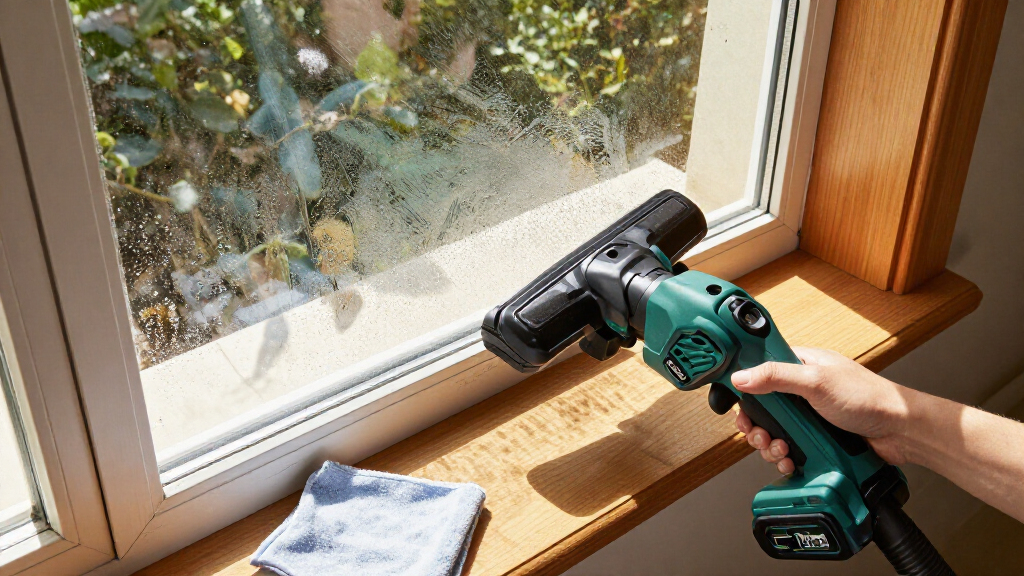
The system has two parts. The vacuum has an 11-inch squeegee that guides liquid toward vents, where suction pulls it into a holding container. A separate combination spray bottle and microfiber pad is used first: apply cleaning solution, loosen dirt with the pad, then move the vacuum across the wet surface. The collected liquid can be emptied and the container rinsed.
Ryobi’s model uses 18V One+ battery packs rather than an integrated battery. The report says the design accepts packs up to 6.0Ah, allowing users with compatible batteries to use their existing equipment or swap packs. A door rated IPX4 covers the battery area to help protect it from water and cleaning solution. The listing described in the report is for the bare tool; a battery is not included.
The product is backed by a two-year warranty and is expected to be sold online and at select local Home Depot stores. Pro Tool Reviews says its writer had not yet tested Ryobi’s version when the report was published. The outlet’s discussion of streak-free results draws on experience with a different window vacuum, not a hands-on test of the PCL750B.
Where a Cordless Vacuum May Help
The tool’s appeal is its combination of reusable One+ batteries and a contained way to remove cleaning liquid from smooth glass and other surfaces. For households that already own compatible packs, the design could avoid buying a separate charging system. The ability to exchange batteries may also be useful for people cleaning many windows or other large areas, though actual runtime and coverage per charge have not been specified in the source report.
The product is aimed at tasks beyond windows. Pro Tool Reviews lists mirrors, shower doors, glass stovetops, countertops, and tile as possible uses, provided surfaces are smooth, flat, and accessible. These are suggested applications, not independently verified performance results for Ryobi’s model. The tool’s usefulness will depend on how well its squeegee, suction, and pad work on each surface.
The limits matter as much as the advertised convenience. The report’s writer cautions against using window vacuums on vehicle glass, where curves and tight areas around mirrors can make cleaning difficult and leave streaks. He also says heavily soiled exterior home windows may need more scrubbing and rinsing than a vacuum system provides. The product is presented as a potential time-saver for regular cleaning, not as a replacement for every glass-cleaning method.
Products Worth Considering

Dyson Car+Boat Cordless Handheld Vacuum

Dyson W1 PencilWash Cordless Wet and Dry Floor Cleaner with Dock

Bose SoundLink Flex Bluetooth Speaker (2nd Gen), Waterproof, Dustproof, USB‑C, Up to 12 hr Battery, Black
As an affiliate, we earn on qualifying purchases.
How the Two-Step Method Works
A window vacuum is used after cleaning solution has been applied and worked across the surface. The microfiber pad loosens debris; the vacuum then draws the remaining liquid through the squeegee and into a container. That differs from simply wiping a window dry, and the report’s writer says the cleaning solutions he has used with another brand evaporate more slowly than some common glass cleaners.
Pro Tool Reviews compares Ryobi’s setup with a Kärcher window vacuum its writer already uses. The comparison concerns the general design and the practical appeal of using batteries already owned; it is not a published head-to-head test of the two products. The writer says Ryobi’s version looks competitive based on company images, videos, and press information, while making clear he had not tried it.
““The Ryobi PCL750B Window Vacuum is launching in November 2026 at Home Depot as a bare tool for $69.97.””
— Pro Tool Reviews writer
Ryobi Model Still Awaits Testing
The main unanswered question is how the PCL750B performs in use. Pro Tool Reviews had not tested it at publication, so the writer’s expectation of a streak-free finish is based on experience with a different model and an assessment of Ryobi’s disclosed design. No independent results for cleaning quality, suction, runtime, or durability are provided.
The source report gives a November 2026 launch window, rather than a specific release date. It does not detail the battery’s runtime under typical use, the container’s capacity, the included accessories beyond the described cleaning system, or whether availability will differ by store. Those details may be clarified in product listings or after the tool reaches retailers.
Retail Launch and First Tests
Ryobi’s PCL750B is expected at Home Depot in November 2026, online and in select local stores, for $69.97 as a bare tool. The report also lists a two-year warranty. Buyers will need to check the final retailer listing for current availability and the precise package contents.
Hands-on reviews after launch should help establish whether Ryobi’s suction and squeegee deliver the finish suggested by the product design, and how much work the separate pad requires on different surfaces. Until then, the available information describes the tool’s features and intended uses but does not establish tested performance or battery life.
Key Questions
When will Ryobi’s 18V One+ Window Vacuum be available?
The PCL750B is scheduled for November 2026 at Home Depot, with online and select-store availability reported. No exact release day is specified.
How much does the Ryobi window vacuum cost?
Pro Tool Reviews reports a price of $69.97 for the bare tool. The source does not say that a battery is included.
How does the window vacuum clean glass?
First, spray cleaning solution and work it over the surface with the microfiber pad. Then use the vacuum’s 11-inch squeegee to collect the liquid in its holding container.
Has Ryobi’s model been tested for streak-free results?
Not in the cited report. Its writer had experience with another brand but said they had not yet used Ryobi’s version, so claims about the PCL750B’s cleaning results remain unverified.
Can it be used on car windows or heavily soiled exterior glass?
The report’s writer advises against vehicle glass because curves and hard-to-reach areas may leave streaks, and says heavily soiled exterior windows may need more intensive scrubbing and rinsing. These are cautions based on the writer’s experience with window vacuums, not a test of the Ryobi model.
Source: protoolreviews.com