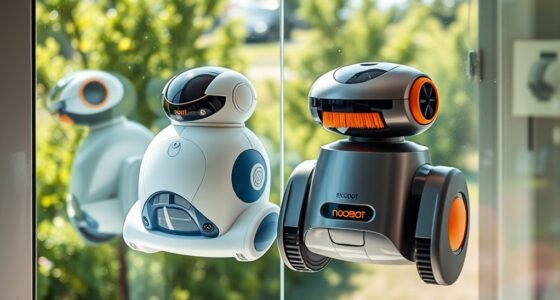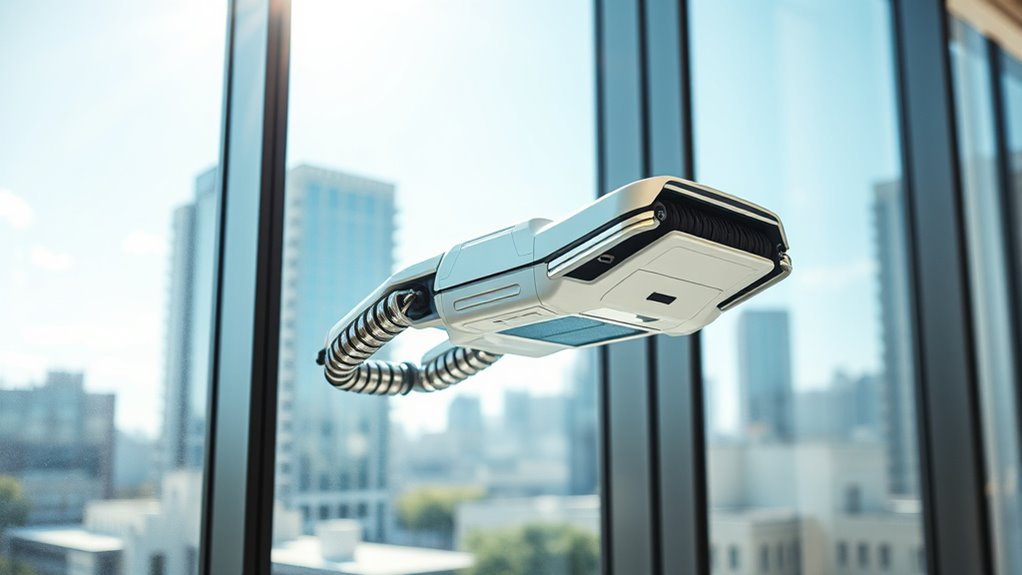

Window cleaning robots typically finish cleaning standard-sized windows in about 15 to 30 minutes, making them faster and more efficient than manual cleaning. Factors like maintenance, battery life, and navigation systems can influence the actual time it takes. Proper upkeep and choosing models with smart navigation help guarantee quick, thorough results. Want to find out how these features improve cleaning speed and how to choose the best robot? Keep exploring for more useful details.
Key Takeaways
- Most window cleaning robots complete standard jobs in 15–30 minutes, depending on size and complexity.
- Maintenance of brushes, sensors, and components ensures consistent and faster cleaning cycles.
- Battery life varies from 30 minutes to 2 hours, affecting total cleaning time for larger surfaces.
- Advanced navigation systems optimize movement, reducing overall cleaning duration.
- Proper upkeep and choosing efficient models help maximize cleaning speed and minimize time.

If you’re contemplating a window cleaning robot, one of your main concerns is probably how quickly it can get the job done. You want to know whether it’ll save you time or leave you waiting for hours. The cleaning speed of these robots varies depending on a few factors, but generally, they’re designed to be efficient and quick. Most models can clean standard-sized windows—say, a single pane or a small balcony window—in about 15 to 30 minutes. Larger or more complex surfaces might take a bit longer, but overall, the goal is to complete the task faster than manual cleaning.
Most window cleaning robots finish standard jobs in 15-30 minutes, making cleaning faster than manual effort.
It’s important to think about robot maintenance when evaluating cleaning speed. Robots with easy-to-maintain components can operate more efficiently because they’re less likely to experience downtime due to malfunctions or cleaning issues. Regularly cleaning the robot’s brushes or pads, checking for debris, and ensuring the safety sensors are functioning properly help keep the robot running at peak performance. Neglecting maintenance can cause the robot to slow down or stop altogether, which defeats the purpose of a quick cleaning process.
Battery life plays a vital role in how long your window cleaning robot can work continuously. Most models come with rechargeable batteries that last between 30 minutes and 2 hours on a full charge. If you have large or multiple windows to clean, a robot with longer battery life ensures it can complete the task without needing a recharge midway. Some advanced models feature quick-charging capabilities, letting you top up the battery quickly if needed. Keep in mind, though, that a depleted battery also affects cleaning speed—if the robot runs out of juice halfway through, you’ll have to pause and recharge, extending the overall cleaning time.
Additionally, the cleaning speed can be influenced by the robot’s navigation system. Robots equipped with smart mapping or obstacle detection tend to work more efficiently by avoiding unnecessary repetitions or pauses. They adjust their movement patterns to optimize cleaning paths, which can shave minutes off the total time needed. So, when choosing a robot, look for one with a good balance of robot maintenance features, a robust battery, and smart navigation. These factors combined will guarantee your device operates swiftly and reliably, saving you both time and effort in the long run. Cleaning speed can also be enhanced by ensuring the robot’s components are regularly maintained and functioning properly.
Frequently Asked Questions
Do Cleaning Robots Work on All Window Types?
Cleaning robots work on most window types, but they might struggle with certain materials like textured or frosted glass. Unlike manual cleaning, robots are designed to adapt to smooth, flat surfaces, making your job easier. However, for delicate or irregular window materials, you may need to rely on manual cleaning to guarantee no damage occurs. Always check your robot’s compatibility with your specific window material for the best results.
How Do Weather Conditions Affect Cleaning Robot Performance?
Weather impact can substantially affect your window cleaning robot’s efficiency. Rain, wind, or extreme temperatures may cause it to pause or malfunction, reducing cleaning quality. For instance, strong winds can push the robot off course, while rain may damage sensors or electronics. On a windy day, your robot might only finish half the windows before needing a break. Always check weather forecasts to guarantee ideal performance and protect your investment.
Can Cleaning Robots Clean High-Rise Building Windows?
Yes, cleaning robots can handle high-rise building windows, but you need to take into account their design and safety features. You should regularly perform robot maintenance to guarantee optimal performance and monitor battery life, especially on tall buildings. Proper setup and supervision are essential to prevent accidents. Keep in mind that some models might require human assistance for complex tasks or larger surfaces, ensuring safe and effective cleaning.
How Often Should I Run My Window Cleaning Robot?
Think of your window cleaning robot as a trusted gardener; it needs regular care to thrive. You should run it weekly or biweekly, depending on your environment. Regular use helps maintain ideal robot performance, but don’t forget to check its battery life and perform routine robot maintenance. This ensures your robot stays efficient, cleans thoroughly, and prolongs its lifespan, so your windows stay sparkling and streak-free.
Are There Safety Concerns Using Window Cleaning Robots?
Yes, there are safety concerns when using window cleaning robots. You should regularly perform robot maintenance, like checking for loose parts and cleaning sensors, to guarantee safe operation. Also, consider battery longevity; a worn-out battery can cause unexpected shutdowns or safety hazards. Always follow the manufacturer’s instructions, keep the area clear of obstacles, and supervise the robot during use to minimize risks.
Conclusion
Did you know that some window cleaning robots can cover up to 200 square feet in just 15 minutes? That’s impressive speed for such a compact device! If you’re considering one, keep in mind that cleaning times vary based on window size and robot model. With advances in technology, you’ll spend less time cleaning and more time enjoying a crystal-clear view. So, upgrade your cleaning routine and see the difference a robot can make!