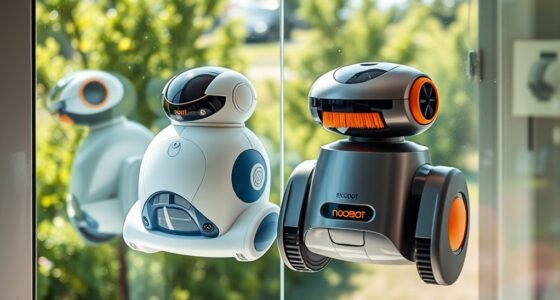
When using window robots on high-rise buildings, you rely on tethers attached to secure anchor points to keep the device stable and prevent falls. These tethers connect the robot to safety harnesses or fixed anchors, ensuring it stays in place even if it encounters resistance. Properly installed and inspected tethers are vital for safety and effective cleaning. If you’re interested, here’s how these systems work to keep you safe during high-altitude window cleaning.
Key Takeaways
- Window robots are secured with tethers attached to approved anchor points for safe operation at heights.
- Tethers prevent robots from falling if a malfunction occurs, ensuring safety during cleaning.
- Proper tether attachment and inspection are essential to maintain device stability and worker safety.
- Rope access techniques and safety harnesses complement robot tethering for comprehensive protection.
- Adhering to safety standards ensures correct tether use, minimizing risks during high-rise window cleaning.
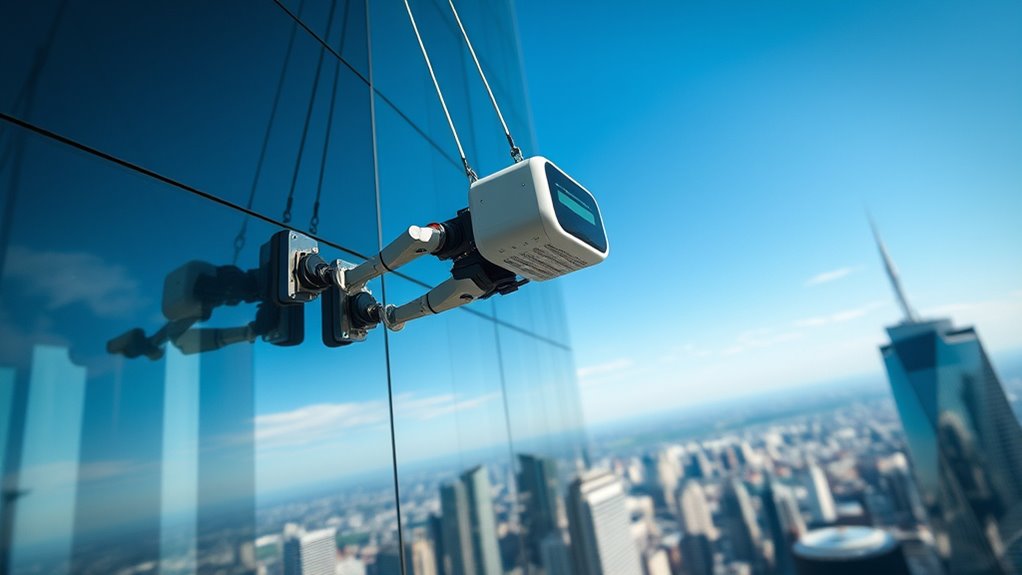
Cleaning high-rise windows can be dangerous if you don’t follow proper safety procedures. When you’re working at great heights, every move matters, and overlooking safety measures can lead to serious accidents. That’s why safety harnesses and rope access are critical components of any professional window-cleaning operation. Safety harnesses act as your personal lifeline, attaching you securely to anchor points on the building or a suspended platform. They are designed to prevent falls and provide stability, giving you confidence to focus on the task at hand. Rope access, on the other hand, involves specialized techniques where you ascend or descend using ropes to reach difficult or risky areas. It’s a highly effective method that minimizes the need for bulky scaffolding and allows for precise, controlled movements.
When using rope access, you rely on a system of tethers and harnesses that keep you securely attached to the structure. This setup ensures that if you slip or lose your footing, the safety harness and ropes will catch you immediately. You should always double-check your equipment before starting each job. Inspect your safety harness for signs of wear or damage, and ensure your tether points are secure and rated for the load. Properly maintained gear is essential because faulty equipment can compromise your safety in an instant. When working on high-rise windows, your harness should be snug, yet comfortable, allowing freedom of movement without risking slippage. It’s important to always attach your tether to an approved anchor point—never to an unsecured part of the building or a weak fixture.
Rope access techniques often involve a team of trained professionals who manage your ropes, guiding your movements and ensuring your safety at all times. This coordinated approach helps you perform your cleaning tasks efficiently while reducing risk. You should always follow your training and industry standards, such as those set by OSHA or industry-specific bodies, to ensure your safety harnesses and rope systems are used correctly. Remember, your safety depends on your compliance and vigilance. Using proper safety harnesses combined with rope access techniques ensures that you can clean high-rise windows effectively without jeopardizing your well-being. The right gear, combined with thorough training and cautious practices, makes all the difference in tackling the challenges of high-altitude window cleaning safely. Additionally, understanding safety standards can help you stay compliant and ensure your safety equipment meets regulatory requirements.
Frequently Asked Questions
How Long Do Window Robots Typically Operate Before Needing Maintenance?
You’ll find that window robots typically operate for about 1 to 2 hours on a single charge, depending on the model and battery life. To keep them performing safely and efficiently, you should perform maintenance at regular intervals, usually after every few uses or weekly. This involves checking the tethers, cleaning the brushes, and inspecting the battery and motor components to prevent malfunctions and guarantee safety.
Are There Specific Safety Standards for Tethered Window Cleaning Robots?
You’ll be glad to know that tethered window cleaning robots adhere to strict safety standards. They often meet safety certifications like OSHA compliance and industry regulations, ensuring reliable performance. Manufacturers design these robots to follow regulatory compliance, emphasizing secure tethers and fail-safes. This focus on safety certifications helps prevent accidents, giving you peace of mind while cleaning high-rise windows. Always check that your robot meets the latest safety standards before use.
Can Window Robots Handle Different Types of Glass Surfaces?
Yes, window robots handle different types of glass surfaces effectively. They are designed with advanced sensors to guarantee glass compatibility and surface adaptability, allowing them to clean various surfaces like tinted, frosted, or coated glass securely. You can trust these robots to adapt to different textures and thicknesses, providing thorough cleaning without damaging the surface. Their versatility makes them a reliable choice for high-rise window cleaning needs across diverse glass types.
What Backup Systems Are in Place if a Tether Fails?
Imagine a safety net catching a trapeze artist—your backup systems act similarly in case of tether failure. If the tether fails, advanced window robots are equipped with redundant backup systems, such as secondary tethers and auto-landing mechanisms. These features guarantee the robot’s safe descent, preventing falls and damage. Rest assured, these safety measures keep your high-rise windows spotless without risking safety or security.
How Do Weather Conditions Affect the Use of Tethered Window Robots?
You should be cautious with tethered window robots during high wind speeds, as strong gusts can cause instability or detachment. Precipitation effects, like rain or snow, can make surfaces slippery and impair the robot’s sensors, reducing cleaning effectiveness and safety. Always monitor weather conditions closely, and avoid operating the robots in heavy winds or precipitation to guarantee safety and peak cleaning performance.
Conclusion
Think of window robots as your trusted acrobats, gracefully climbing and gliding along glass facades, tethered securely like safety nets beneath them. They dance safely above the city’s heartbeat, turning a formidable task into a flawless performance. With tethers anchoring them, these robotic performers guarantee your windows sparkle without risking a fall. So, trust these high-tech acrobats to keep your view crystal clear, while you enjoy the safety of their secure, elegant ballet up above.