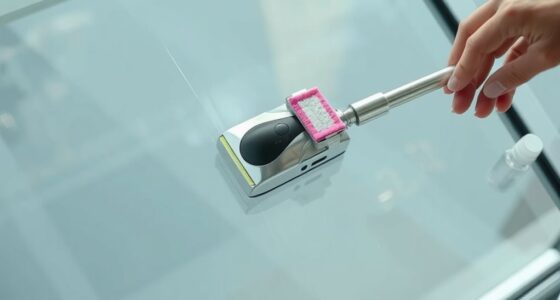
A window robot often outperforms a squeegee in speed, efficiency, and coverage, especially on large or hard-to-reach surfaces. It uses sensors and programmed algorithms to navigate glass surfaces smoothly and consistently, saving you time and effort. However, manual cleaning with a squeegee offers more control for stubborn spots and streak-free finishes. To discover which option suits your needs best and how they compare, explore the full details below.
Key Takeaways
- Robots offer faster, consistent cleaning for large or high windows with minimal effort.
- Squeegees provide better control for stubborn spots and streak-free finishes.
- Robots use sensors and algorithms to adapt to surfaces, but may struggle with complex shapes.
- Manual cleaning allows immediate adjustments and precise targeting of difficult areas.
- Cost, maintenance, and safety considerations influence whether a robot or squeegee is more effective.
How Do Robotic Window Cleaners Work?

Robotic window cleaners work by using sensors and programmed algorithms to navigate and clean surfaces automatically. You’ll notice how advanced robot navigation allows the device to move efficiently across glass surfaces, avoiding obstacles and edges. Sensor technology plays a crucial role, helping the cleaner detect the window’s boundaries, dirt, and other objects. As the robot moves, sensors provide real-time feedback, ensuring thorough coverage without missing spots or falling off. These sensors also help the device adjust its path if it encounters unexpected obstacles or changes in surface texture. The combination of smart navigation and sensor technology lets the window robot operate independently, delivering consistent cleaning performance. With this setup, you don’t need to monitor every move; it takes care of the work seamlessly.
Advantages of Using a Window Robot
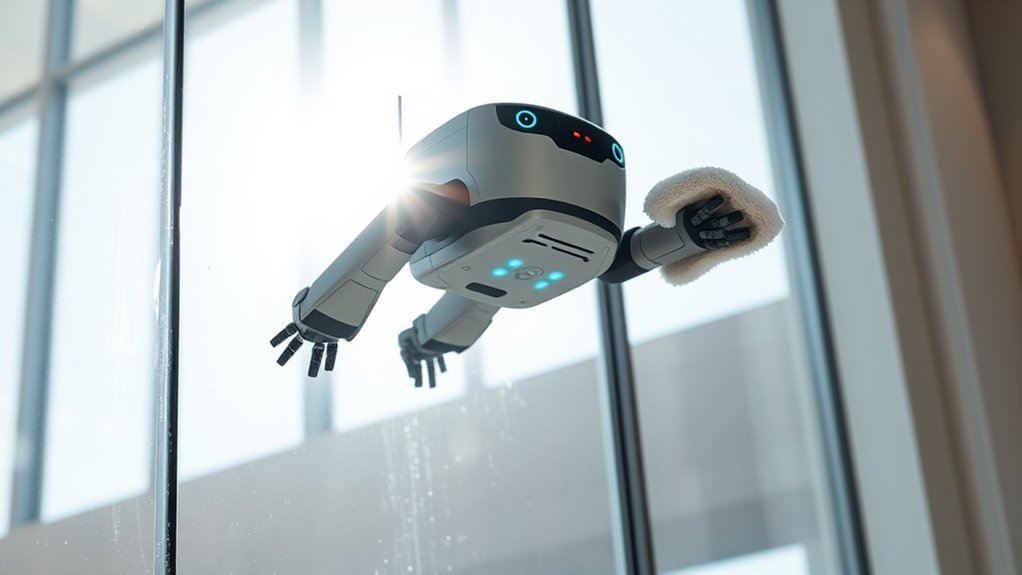
Using a window robot offers several clear advantages over traditional cleaning methods. First, it saves you time and effort by automating the entire process, letting you focus on other tasks. The window robot delivers consistent cleaning results, reducing streaks and smudges often caused by manual squeegee use. Its precise movement ensures hard-to-reach areas are thoroughly cleaned without risking injury or falls. Additionally, a window robot can operate on various window types and sizes, providing versatile cleaning solutions. Squeegee benefits, such as cost savings and minimal setup, are outweighed by the convenience and efficiency a window robot offers. Overall, investing in a window robot streamlines your window maintenance, delivering cleaner windows with less hassle and more consistent results.
Benefits of Cleaning Windows Manually With a Squeegee
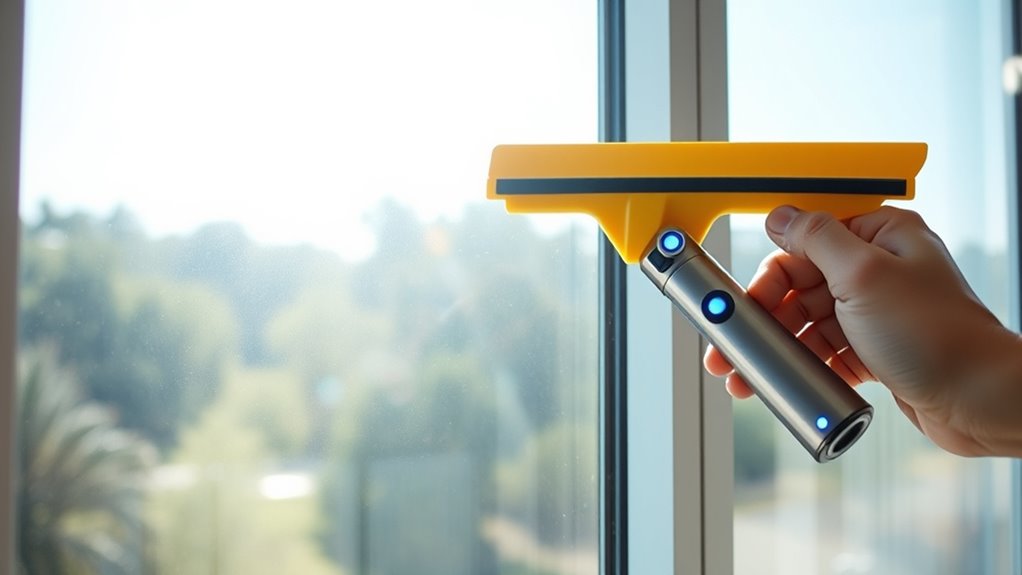
While window robots offer impressive convenience, many people still prefer cleaning windows manually with a squeegee. The manual technique allows for greater control, ensuring you can target stubborn spots and customize your cleaning approach. Using a squeegee properly helps you achieve a streak free finish, which can be difficult for automated devices. With careful technique, you can remove dirt and water efficiently, avoiding smudges or drips that might be missed by robots. Plus, manual cleaning gives you immediate feedback—if you see streaks or missed spots, you can address them right away. This hands-on method often results in a cleaner, clearer window. For those who value precision and a polished look, the manual squeegee remains an effective and satisfying choice.
Comparing Effectiveness: Robot vs. Human Effort
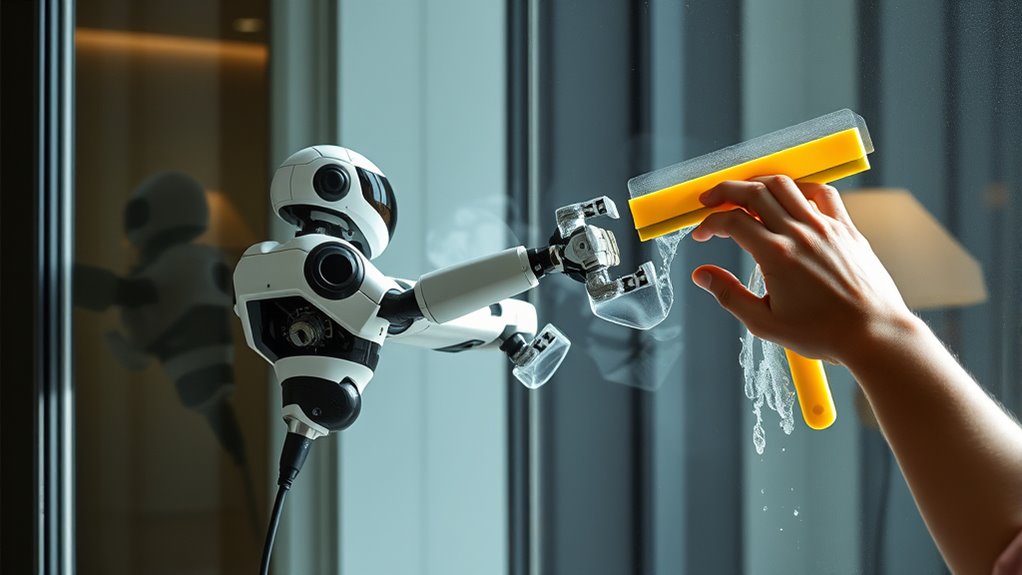
When comparing robots and human effort, you’ll notice differences in cleaning speed and efficiency. Robots can cover large surfaces quickly but may lack the precision a person offers in tricky spots. Consider how reach and maneuverability impact the effectiveness of each method for your specific needs.
Cleaning Speed and Efficiency
Robot window cleaners typically outpace humans in speed and consistency, covering large glass surfaces much faster with minimal effort. They work efficiently, often completing tasks in a fraction of the time it takes a squeegee and human effort. While their cleaning noise can be noticeable, it’s usually manageable and doesn’t hinder overall speed. Battery life is a key factor; most robots can operate continuously for about 45-90 minutes, enough to clean sizable windows before needing a recharge. This allows for quick, uninterrupted cleaning sessions, unlike manual efforts that require frequent breaks. Overall, robots deliver impressive efficiency, saving you time and physical energy, especially on extensive or hard-to-reach surfaces. Their combination of speed, consistency, and endurance makes them a superior choice for fast, effective window cleaning.
Precision and Reach
Although robots excel in cleaning speed and efficiency, their ability to reach every corner and guarantee thoroughness can vary. Robotic navigation plays a vital role in precision, but reach limitations can hinder their effectiveness on complex window shapes or tight corners. Unlike a squeegee operated by a human, which can maneuver into tricky spots and adjust angles easily, robots may struggle with certain areas due to sensors or movement constraints. While they can systematically cover large surfaces, their precision in targeting stubborn spots or edges isn’t always perfect. Your manual effort allows for intuitive adjustments, ensuring no spot is missed. Ultimately, robots offer consistent coverage, but their reach limitations mean some areas still benefit from human intervention for optimal cleanliness.
Cost and Maintenance Considerations
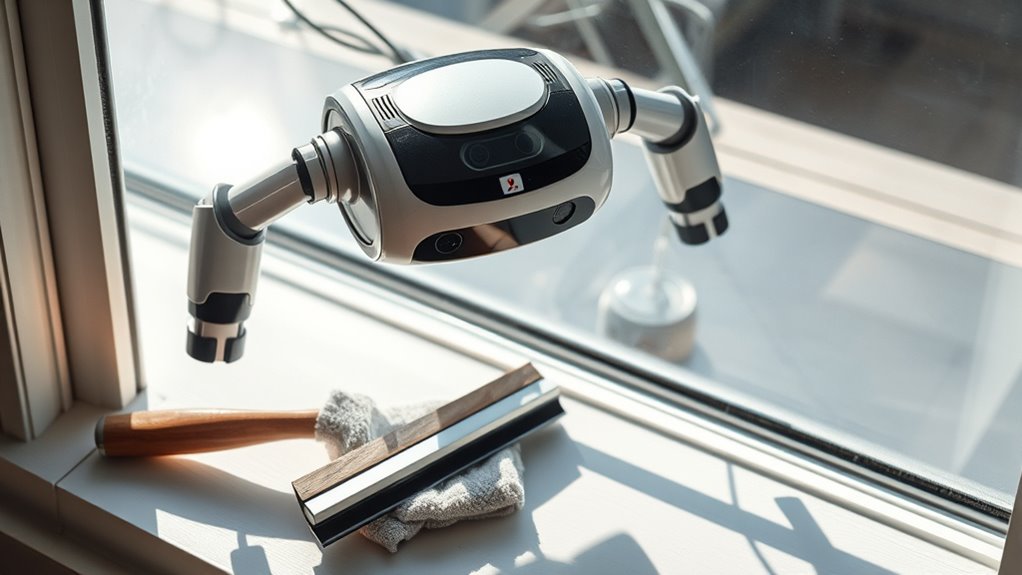
Considering the costs and maintenance involved, choosing between a window robot and a squeegee depends on your budget and willingness to perform upkeep. Window robots typically have higher initial prices but may offer lower ongoing maintenance costs depending on the model and features. Squeegees, on the other hand, are inexpensive upfront but require regular manual effort. Your decision may hinge on the pricing models offered by different robot brands and how much you’re willing to spend on maintenance. Here’s a quick comparison:
| Aspect | Window Robot | Squeegee |
|---|---|---|
| Pricing Models | One-time purchase, subscriptions | One-time purchase |
| Maintenance Costs | Regular cleaning, occasional repairs | Minimal, mostly cleaning tools |
Safety and Accessibility in Window Cleaning
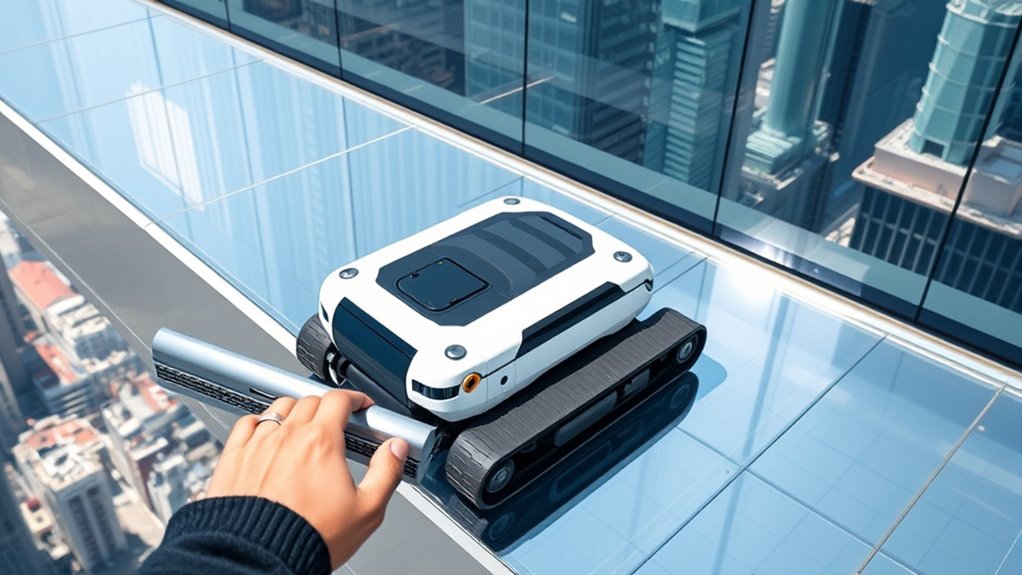
Safety and accessibility are crucial factors when choosing between a window robot and a squeegee for cleaning your windows. Safety concerns, especially on high or hard-to-reach windows, can influence your decision. A window robot minimizes risks by handling dangerous heights, reducing the chance of falls or accidents. Accessibility barriers, like narrow spaces or awkward angles, may make manual cleaning difficult, favoring automated solutions. However, some robots might struggle with certain window types or frames, so consider your specific needs.
Safety and accessibility are key factors when choosing between window robots and squeegees.
- Ensure the robot has safety features like emergency stop functions.
- Check if the robot can access difficult or awkward areas safely.
- Consider manual options if accessibility barriers prevent effective robot use.
Which Option Is Better for Your Needs?

Choosing the right window cleaning method depends on your specific needs and environment. If you prefer minimal manual effort and want consistent results, a robotic automation device might be your best choice. These robots handle large or hard-to-reach windows efficiently, saving you time and effort. On the other hand, if you enjoy a hands-on approach or need quick, flexible cleaning for small or irregularly shaped windows, a squeegee paired with manual effort could suit you better. Consider factors like window size, accessibility, and your comfort level with technology. Robotic options excel for routine cleaning and high or difficult spots, while manual methods offer greater control and immediacy. Ultimately, your choice depends on balancing convenience, effort, and the specific demands of your windows.
Frequently Asked Questions
How Long Do Robotic Window Cleaners Typically Last Before Needing Replacement?
Robotic window cleaners typically last about 2 to 3 years before needing replacement, depending on their build quality and usage. You should also consider their maintenance requirements; regular cleaning of the brushes and sensors can extend their lifespan. Proper care and timely replacements ensure your robot performs efficiently, saving you time and effort. Keep an eye on warranty periods and manufacturer recommendations to maximize your device’s longevity.
Can Robotic Window Cleaners Handle Extremely Dirty or Stained Windows Effectively?
Robotic window cleaners struggle with extremely dirty or stained windows, especially when there’s heavy dirt buildup or stubborn stains. They may not effectively handle stain removal or deep grime, leaving spots or streaks behind. For best results, you should pre-clean heavily soiled areas or stains manually. While robots excel at routine cleaning, they won’t replace your effort when tackling tough grime or persistent stains.
Are There Specific Window Sizes or Types Unsuitable for Robot Cleaning?
You’ll find that large, unusually shaped, or very high windows can be challenging for robotic cleaners due to window size considerations and difficulty reaching certain angles. Additionally, window material compatibility matters—robots work best on smooth glass but may struggle with textured, frosted, or delicate surfaces. For ideal results, check your window’s size and material before relying on a robot, ensuring it’s suitable and won’t cause damage.
What Are the Environmental Impacts of Using a Robot Versus Manual Cleaning?
Using a robot generally reduces your energy consumption compared to manual cleaning, especially if it’s battery-efficient. Robots often use sustainable materials, minimizing environmental impact, but some models may rely on non-recyclable components. Manual cleaning might involve more water and cleaning agents, which can harm the environment. Overall, choosing eco-friendly robots and mindful cleaning practices help you lower your footprint and promote material sustainability.
How Does Battery Life Affect the Efficiency of Robotic Window Cleaners?
Battery life directly impacts your robot’s efficiency, as longer battery longevity means more cleaning without interruptions. If the power consumption is high, you’ll likely need to recharge more often, reducing your robot’s overall effectiveness. A well-designed robot balances power consumption and battery capacity, ensuring consistent cleaning sessions. So, choose a model with optimized power use and strong battery longevity to maximize cleaning performance and minimize downtime.
Conclusion
Ultimately, whether you choose a window robot or a squeegee depends on your needs. Think of the robot as a diligent partner, tirelessly working while you relax. But sometimes, a squeegee is like a skilled artist, wielding your personal touch. Neither is inherently better—they just serve different masters. Whichever path you take, remember, your windows are a mirror to your world; choose the method that best keeps your view clear and bright.