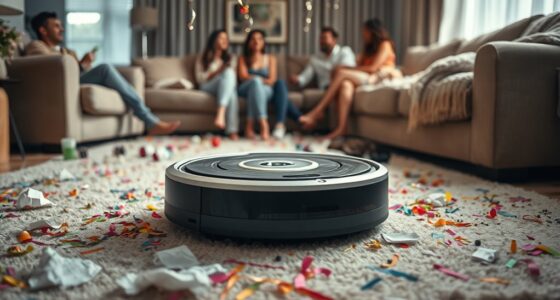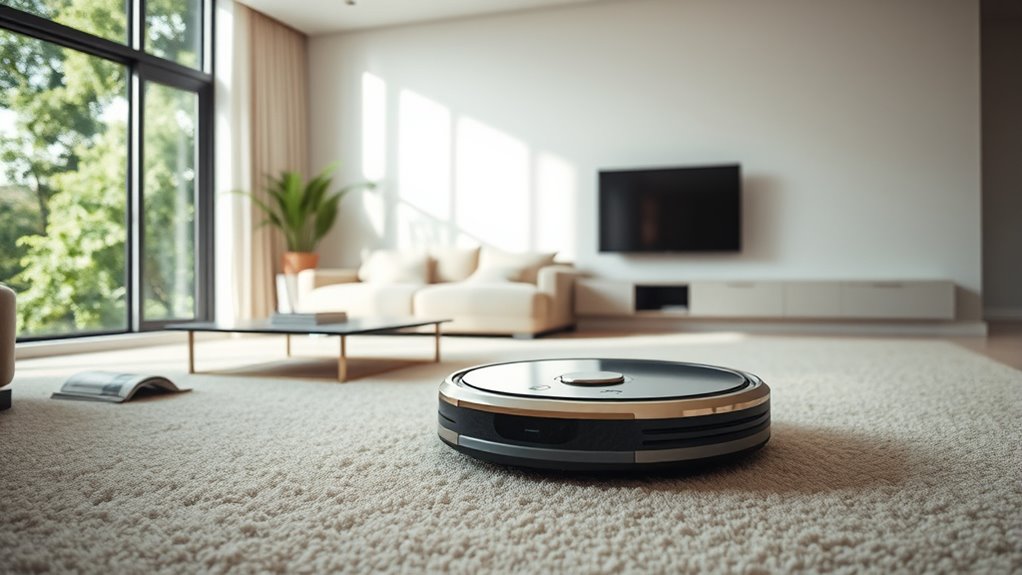
Robot vacuums help keep your floors tidy daily by picking up surface dust, dirt, and pet hair. They can reduce how often you need to manually vacuum, especially in high-traffic areas or homes with pets. However, they don’t completely replace manual cleaning, which is necessary for deep cleaning those tricky spots and carpets. If you want to learn how to balance both for the best results, keep exploring your options.
Key Takeaways
- Robot vacuums reduce surface debris buildup, allowing less frequent manual vacuuming between deep cleanings.
- Regular robot use can decrease overall vacuuming frequency, especially in high-traffic or pet households.
- They are effective for daily maintenance but do not eliminate the need for manual deep cleaning.
- Combining robot and manual vacuuming ensures thorough cleaning while minimizing effort.
- Limitations mean manual vacuuming remains essential for deep cleaning carpets, corners, and hard-to-reach areas.
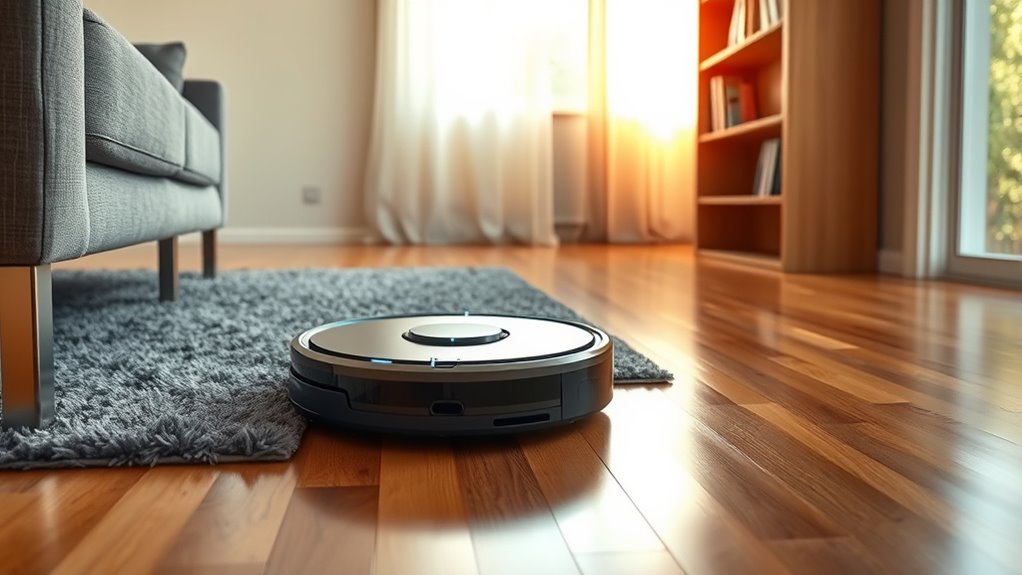
How often should you vacuum to keep your home clean and healthy? It’s a common question, especially now that robot cleaning devices are becoming more popular. Many people wonder if investing in a robot vacuum means you can cut back on manual vacuuming or if you still need to vacuum regularly with a traditional machine. The truth is, robot cleaning can substantially reduce the frequency of manual vacuuming, but it doesn’t eliminate the need altogether.
Robot vacuums are designed to handle daily or weekly maintenance by automatically guiding your home, picking up dust, dirt, and pet hair. They’re excellent for maintaining a clean environment between more thorough cleanings. If you run a robot vacuum daily or every other day, you’ll notice a difference in the amount of debris that accumulates on your floors, which means you might need to do less manual vacuuming. This is especially true in high-traffic areas or homes with pets that shed heavily. However, robot cleaning is most effective for surface-level dirt and may miss spots or deeper grime that requires a more powerful manual vacuuming session.
Robot vacuums handle daily maintenance, reducing manual vacuuming, but deep cleaning still requires regular manual sessions.
Manual vacuuming still plays a crucial role in thorough cleaning routines. While robot vacuums keep surfaces tidy and help reduce allergens, they often lack the suction power needed to deep clean carpets or remove stubborn dirt from corners and edges. You’ll want to schedule regular manual vacuuming at least once a week, especially on carpets, rugs, and areas with heavy foot traffic. This ensures you’re removing dust mites, allergens, and ground-in dirt that a robotic device might overlook or not be equipped to handle.
In addition, manual vacuuming allows you to target specific problem spots like under furniture, around baseboards, or in tight corners. You can also use attachments to clean upholstery or stairs, which robot vacuums typically can’t reach. Combining both methods offers a complete cleaning strategy: robots keep your floors free of daily debris, while manual vacuuming ensures a deeper, more thorough clean periodically.
Frequently Asked Questions
Can Robot Vacuums Replace Traditional Vacuum Cleaners Entirely?
Robot vacuums can’t fully replace traditional ones yet, but they do a great job for daily cleaning. You might need to use virtual wall barriers to keep them in specific areas, and consider battery longevity to guarantee consistent performance. While they handle routine debris, deep cleaning or heavy-duty tasks still benefit from a traditional vacuum. You’ll find robot vacuums a helpful supplement, but not a complete replacement at this point.
How Do Robot Vacuums Handle Different Floor Types?
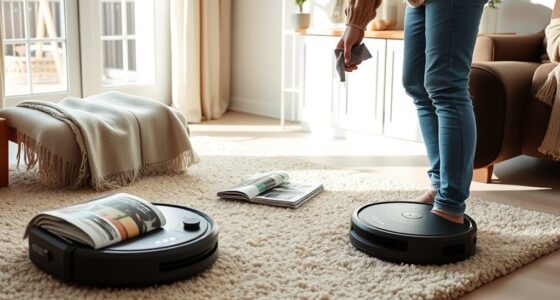
Imagine your robot vacuum as a skilled dancer smoothly gliding over different floor types. It handles shift from carpet to hardwood effortlessly by adjusting cleaning modes automatically. Many models detect floor shifts and switch settings for best cleaning. This adaptability means you don’t have to worry about manually changing modes or missing spots, ensuring thorough cleaning regardless of whether you have tiles, rugs, or wood floors.
Are Robot Vacuums Effective for Deep Cleaning Carpets?
Robot vacuums can be effective for deep cleaning carpets, but they do have limitations. You might notice they struggle with thick or heavily soiled carpets, reducing their cleaning effectiveness. While newer models improve with features like stronger suction and rotating brushes, their overall carpet cleaning effectiveness still falls short of traditional vacuums. You’ll get good maintenance cleaning, but for deep, intensive carpet care, a manual vacuum might still be your best choice.
What Maintenance Is Required for Robot Vacuums?
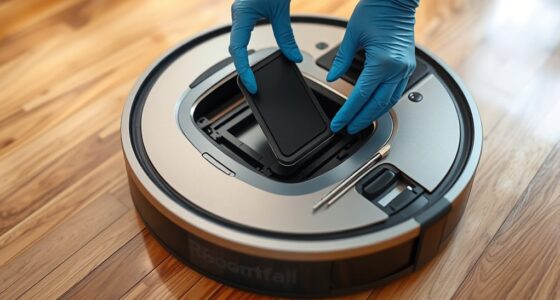
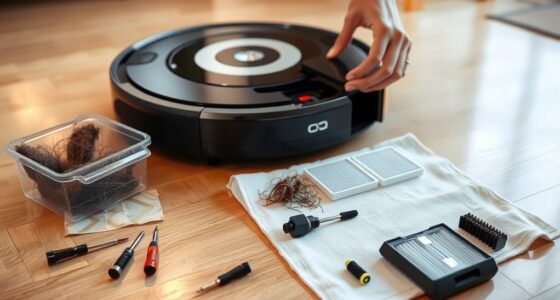
You need to regularly clean the brushes and check the battery lifespan to keep your robot vacuum running smoothly. Brush maintenance involves removing hair and debris to prevent clogs, while monitoring the battery ensures it retains power for peak cleaning. Replace the brushes or batteries when needed, and keep the charging contacts clean. Doing these simple maintenance tasks helps prolong your vacuum’s lifespan and maintains its cleaning performance.
Do Robot Vacuums Improve Air Quality in the Home?
Think of your robot vacuum as a gentle breeze that clears the air. It improves air quality by enhancing air filtration and allergen removal, capturing dust, pet dander, and pollen. While it doesn’t replace an air purifier, it reduces particles that trigger allergies and asthma. So, yes—your robot vacuum helps create a cleaner, healthier home environment, making the air you breathe fresher and less irritated.
Conclusion
So, with robots, you vacuum less often, but you still maintain a clean home. You save time, save effort, and save energy. You let technology handle the dirt, the dust, the debris. You enjoy a tidier space without the hassle. You embrace convenience, efficiency, and simplicity. Robots may not replace traditional vacuuming entirely, but they certainly make your cleaning routine easier, quicker, and less burdensome. And in doing so, they let you focus on what truly matters.