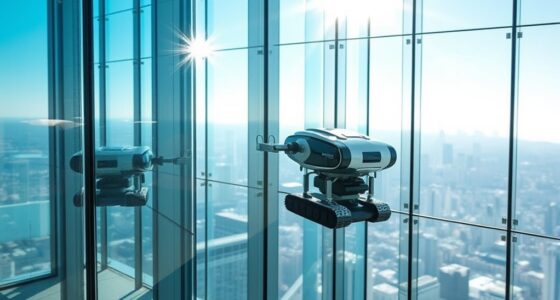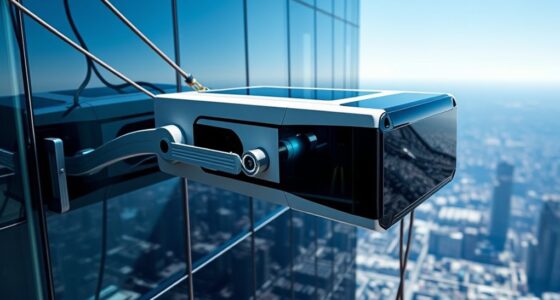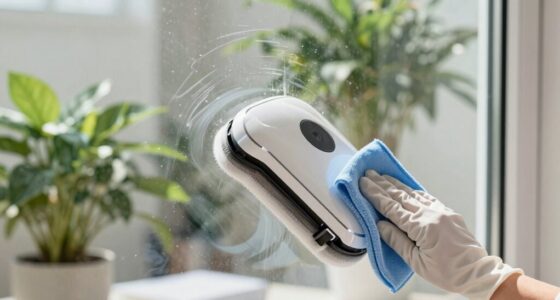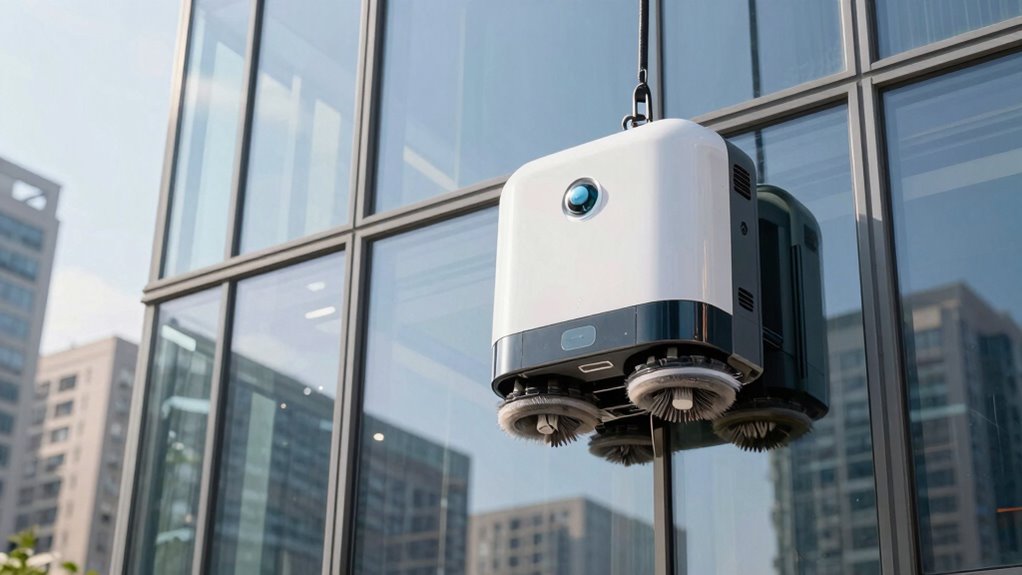

window cleaning robots are designed to effectively reach and clean hard-to-access glass surfaces, including high or awkward windows. They use advanced sensors, cameras, and algorithms to navigate complex shapes, avoiding obstacles and ensuring complete coverage. These robots adapt to different window sizes and geometries, making manual effort unnecessary and dangerous. If you’re curious about how they can tackle tricky spots and improve safety, you’ll find more helpful details as you explore further.
Key Takeaways
- Yes, they are equipped with advanced navigation to reach high or awkward windows safely.
- Their obstacle avoidance and surface mapping capabilities enable effective cleaning of tricky spots.
- Adaptability allows them to handle various window shapes and sizes, including hard-to-access areas.
- Their sensors and cameras help navigate complex geometries, ensuring thorough cleaning of difficult surfaces.
- Extended battery life and efficient operation support cleaning of multiple hard-to-reach windows in one session.
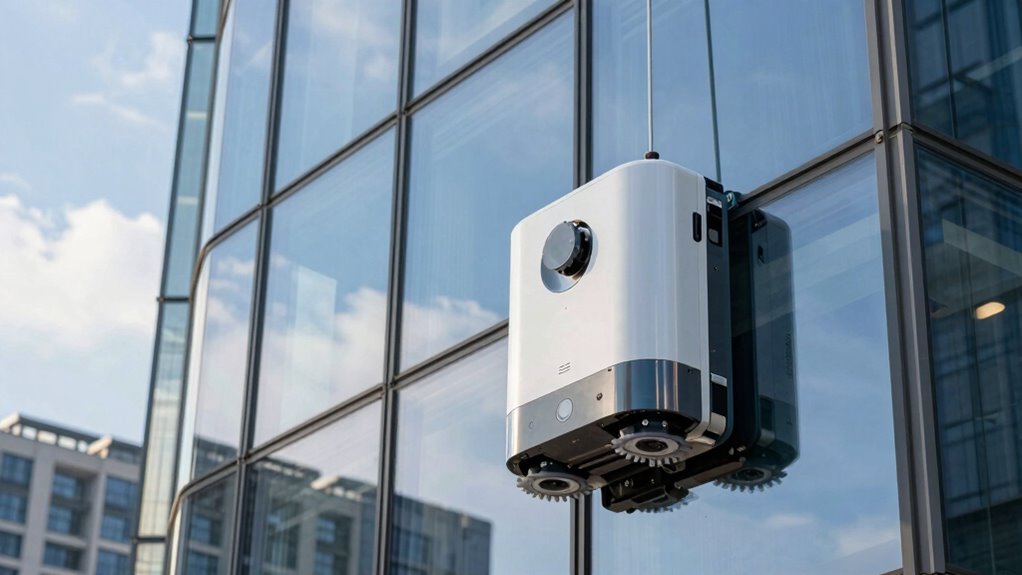
Have you ever wondered how to make window cleaning safer and more efficient? If you’ve struggled with cleaning hard-to-reach glass surfaces, a window cleaning robot might be just what you need. These devices are designed to tackle high or awkward windows without risking your safety or wasting your time. But how do they manage to navigate tricky spots, and can they keep going long enough to finish the job? Let’s explore that.
At the core of a good window cleaning robot is its robot navigation system. This technology allows the robot to move smoothly and intelligently across surfaces, avoiding obstacles and ensuring complete coverage. Instead of random movements, many modern robots use sensors, cameras, and algorithms to map the window’s surface, creating a route that minimizes missed spots. This means you don’t have to worry about the robot getting stuck or missing patches of grime. Plus, with advanced robot navigation, the robot can adapt to different window shapes and sizes, making it versatile for various building types. Robot navigation systems are crucial for ensuring thorough and safe cleaning. Additionally, these systems are often based on advanced algorithms that optimize movement patterns and improve efficiency. The development of navigation technology continues to enhance their ability to handle complex window geometries.
Battery life is another critical factor when considering a window cleaning robot. You want a device that can last long enough to finish cleaning without constantly needing to recharge. Most models come with rechargeable batteries that provide anywhere from 30 to 90 minutes of operation, depending on the size of the window and the cleaning intensity. Some high-end robots feature larger batteries or quick-charging capabilities, so you can get back to work faster if the battery runs low. Knowing the battery life helps you plan your cleaning sessions better — for instance, tackling multiple windows in one go or breaking the job into manageable segments. A longer-lasting battery means fewer interruptions and more thorough cleaning. Additionally, battery technology continues to improve, allowing these robots to operate more efficiently for extended periods.

HIXZAP Window Cleaning Robot – Double Helix 4800-6400Pa Suction, Dual Ultrasonic Spray, 85ml Tank, Edge Detection, Anti-Drop, 3 Cleaning Modes for Streak-Free Glas (White)
Revolutionize Your Cleaning Routine Experience effortless window cleaning with our automatic robot cleaner. Featuring bidirectional ultrasonic atomization, it…
As an affiliate, we earn on qualifying purchases.
As an affiliate, we earn on qualifying purchases.
Frequently Asked Questions
Are Window Cleaning Robots Safe for Delicate or Historic Glass?
Window cleaning robots can be safe for delicate or historic glass if designed with glass durability in mind. They often feature gentle cleaning mechanisms and advanced sensors, reducing the risk of damage. When preserving historic glass, you should select robots specifically made for delicate surfaces and consult preservation experts. Properly used, these robots can assist in maintaining historic windows without compromising their integrity or historic preservation standards.
How Do Robots Handle Extremely High or Angled Windows?
Robots handle extremely high or angled windows through advanced robot navigation systems that adapt to complex surfaces. They use precise sensors to map the area, ensuring accurate movement. Safety mechanisms like emergency stop features and secure suction cups prevent falls or damage. You can trust these robots to clean challenging windows efficiently, as their navigation and safety features are designed for even the most difficult-to-reach surfaces, providing thorough cleaning with peace of mind.
Can Robots Be Used on Tinted or Reflective Glass Surfaces?
Imagine you’re in a sci-fi movie—window cleaning robots can indeed work on tinted coatings and reflective surfaces. They’re designed to adjust for varying glass properties, ensuring streak-free cleaning without damaging sensitive coatings. You’ll find these robots equipped with sensors that detect surface reflectivity and tint, allowing them to adapt and clean efficiently. So, yes, your high-tech robot can handle those tricky, reflective, or tinted glass surfaces with ease.
What Maintenance Is Required for Long-Term Robot Operation?
To guarantee your window cleaning robot operates long-term, you need to monitor its battery life regularly and recharge it as needed. Keep the brushes and sensors clean for peak performance. Additionally, install software updates promptly to fix bugs and improve functionality. Avoid exposing the robot to extreme temperatures or moisture, and store it in a safe place when not in use. Proper maintenance extends its lifespan and keeps it working efficiently.
Do Cleaning Robots Work in Extreme Weather Conditions?
Cleaning robots generally don’t work well in extreme weather conditions. Harsh winds, heavy rain, or snow can impair their robot navigation and reduce sensor accuracy, making their operation unsafe or ineffective. When weather is extreme, you should manually clean your windows to guarantee safety and thoroughness. These robots are best suited for stable conditions, where they can reliably use sensors and navigation systems to do their job efficiently.

HUTT Window Cleaning Robot, 6500Pa Strong Suction Robot Window Cleaner with World-First Round-Square Dual-Stage Cleaning, Ultrasonic Dual Spray, Edge Cleaning & Corner Coverag, 30Min Backup Protection
World’s First Certified Round-Square Dual-Stage Cleaning Technology: Traditional square window robots often struggle with tight edges and frame…
As an affiliate, we earn on qualifying purchases.
As an affiliate, we earn on qualifying purchases.
Conclusion
Imagine standing on your balcony, staring at that towering, hard-to-reach glass, feeling overwhelmed. With a window cleaning robot, you can trust it to handle those tricky spots, saving you time and risk. For example, a homeowner in Chicago used a robot to clean their skyscraper apartment’s windows, feeling relieved and safer. These robots don’t just clean; they give you peace of mind, making even the tallest, most inaccessible windows shine effortlessly.

Tosima W5 Window Cleaning Robot, 6400Pa Max Adaptive Suction, Auto-Spray Smart Window Cleaner with Triple Safety System, Intelligent Navigation, Remote Control, for All Smooth Surfaces, White
Revolutionize your cleaning routine with our automatic robot window cleaner machine! Featuring bidirectional ultrasonic atomization water spray, it…
As an affiliate, we earn on qualifying purchases.
As an affiliate, we earn on qualifying purchases.
HIXZAP Window Cleaning Robot – Double Helix 4800-6400Pa Suction, Dual Ultrasonic Spray, 85ml Tank, Edge Detection, Anti-Drop, 3 Cleaning Modes for Streak-Free Glas (White)
Revolutionize Your Cleaning Routine Experience effortless window cleaning with our automatic robot cleaner. Featuring bidirectional ultrasonic atomization, it…
As an affiliate, we earn on qualifying purchases.
As an affiliate, we earn on qualifying purchases.