
To use a window cleaning robot on large glass doors, start by clearing the area of obstacles and securing curtains or blinds. Inspect and clean the robot’s pads, sensors, and suction cups, then position it at a corner, making sure it’s aligned properly. Power it on and supervise its initial movement. After cleaning, detach and clean the robot thoroughly, checking cables and parts to keep it in top shape. If you stay attentive, you’ll discover more tips to guarantee a smooth and safe operation.
Key Takeaways
- Clear the glass surface and surrounding area of obstacles, curtains, and fragile items before starting.
- Ensure the robot is properly positioned at the top or bottom corner, aligned with the glass door.
- Power on the robot and monitor its initial movement to confirm correct operation and safety.
- Verify sensors are clean and functioning to detect edges and prevent falls or collisions.
- After cleaning, carefully detach the robot, clean components, and inspect for any wear or damage.
Using a window cleaning robot can make the task of keeping your large glass doors spotless much easier. These devices are designed to handle big surfaces efficiently, saving you time and effort. Before you start, it’s essential to familiarize yourself with the robot’s user manual, especially the sections on robot maintenance and safety precautions. Proper maintenance guarantees your robot functions at its best and prolongs its lifespan, while safety precautions prevent accidents or damage to your windows and surroundings.
Using a window cleaning robot simplifies maintaining spotless large glass doors efficiently and safely.
Begin by inspecting the robot thoroughly. Check the cleaning pads or brushes for wear and replace them if necessary. Make sure the suction cups or cling pads are clean and free of debris, as dirty parts can compromise the robot’s grip on the glass. Connect the power supply, verifying the cord is in good condition and that there are no exposed wires. If your robot has a remote control or smartphone app, familiarize yourself with its controls to guide the robot effectively. Regular sensor maintenance is crucial for preventing malfunctions and ensuring accurate navigation. Additionally, understanding how the sensors work can help you troubleshoot issues more efficiently. Proper sensor calibration can also enhance the robot’s overall performance and safety. Being aware of the sensor technology used in your device can help you better manage its operation.
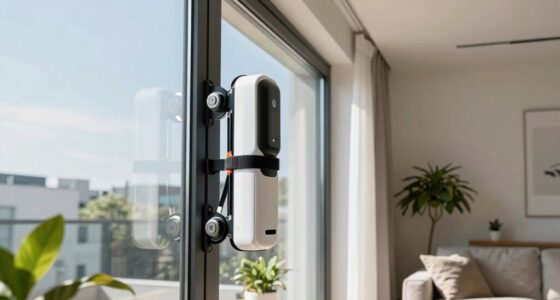
Before placing the robot on your large glass doors, clear the area of any obstructions or fragile items nearby. It’s a good idea to remove or secure window curtains or blinds that might interfere with the robot’s path. Place the robot at the top or bottom corner of the door, depending on its design, and ensure it’s aligned properly. Some robots have sensors to detect edges and obstacles; verify these sensors are clean and functioning correctly to avoid falls or missed spots. Regularly clean the sensors to ensure optimal performance.
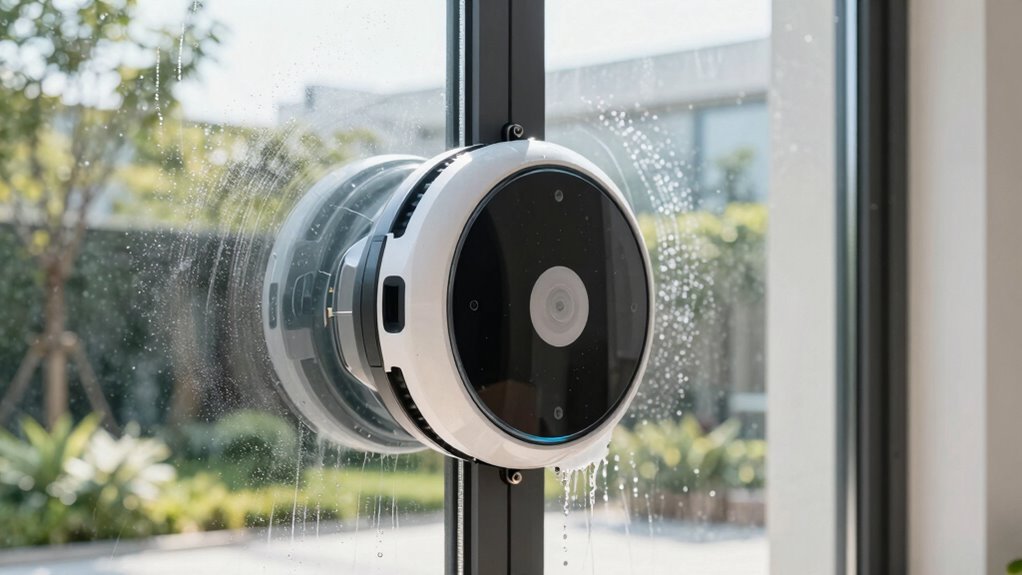
Once the robot is in position, power it on and observe it for a few seconds. Keep an eye on its movement to verify it adheres to safety precautions, such as avoiding areas with thick dirt or heavy buildup that might cause it to stall. Stay nearby during the initial run to supervise the process and intervene if necessary. Do not leave the robot unattended until you’re confident it’s working correctly. Proper supervision can prevent potential issues and damage during the cleaning process.
After the cleaning cycle completes, carefully detach the robot from the glass, following the manufacturer’s instructions. Clean the device, especially the brushes and sensors, to prepare it for future use. Regular robot maintenance helps prevent malfunctions and keeps cleaning performance at its best. Remember to check the power cord and connections periodically for signs of wear. Regular inspection of components is vital for maintaining the robot’s longevity and efficiency. Keeping an eye on wear and tear can save you from unexpected malfunctions and costly repairs. Conducting routine inspections of all parts can extend the lifespan of your robot and optimize its cleaning capabilities.
Using a window cleaning robot on large glass doors becomes straightforward once you understand the importance of proper maintenance and safety precautions. By following these steps, you’ll keep your glass shining without risking damage or injury. Regularly inspecting and maintaining your robot ensures it continues to perform well, making your cleaning routine safer and more efficient.

Tosima X1 Window Cleaning Robot – Dual-Nozzle Ultrasonic Water Atomization, 85 ml Visible Water Tank, Automatic Window Cleaner for Large & Small Windows
- Effective Cleaning with Dual Nozzles: Ultrasonic water atomization for streak-free results
- Visible Water Tank: 85ml capacity with viewing window
- Long-Lasting Battery Backup: 25-minute power outage safety feature
As an affiliate, we earn on qualifying purchases.
As an affiliate, we earn on qualifying purchases.
Frequently Asked Questions
Can the Robot Handle Tinted or Reflective Glass Doors?
Yes, your window cleaning robot can handle tinted glass and reflective surfaces, but you should check its specifications first. Some robots are designed to clean reflective surfaces effectively, but tinted glass may affect sensors or cleaning patterns. make certain your robot’s sensors are compatible with reflective surfaces, and avoid using it on highly tinted or delicate coatings without confirming it won’t cause damage. Proper setup ensures safe, streak-free cleaning on all glass types.
How Long Does the Cleaning Process Typically Take?
Cleaning can take anywhere from 15 to 30 minutes, depending on the door’s size and dirtiness. You’ll find that the robot boosts cleaning efficiency, saving you time and effort. With smart scheduling, you manage your time well and get sparkling results quickly. Keep in mind, larger, dirtier doors might need a little longer, but overall, the process is swift and straightforward, making window washing worry-free.
Is There a Risk of the Robot Falling From the Door?
There is a minimal risk of the robot falling from your large glass door if you follow safety concerns and fall prevention measures. Most robots have safety features like emergency stop buttons, sensors, and secure anchoring systems that keep them stable. To guarantee safety, double-check that the robot is properly attached and that the edges are clean and smooth. Regularly monitor the operation to prevent accidents and maintain fall prevention.
Can the Robot Clean Around Door Handles and Locks?
Yes, your window cleaning robot can handle door handle cleaning and lock navigation. Modern robots are equipped with sensors and adaptive cleaning paths, allowing them to navigate around door handles and locks smoothly. You should make sure the robot’s sensors are clean and calibrated for precise movement. By doing this, the robot will effectively clean around these obstacles without getting stuck, leaving your large glass doors spotless.
What Maintenance Is Required to Keep the Robot Functioning?
To keep your window cleaning robot functioning well, regularly check its battery lifespan and recharge it before it runs out completely. Clean the sensors and calibration points with a soft cloth to guarantee accurate navigation. Inspect the cleaning pads and replace them when worn. Also, keep the brushes and wheels free of debris. Proper maintenance extends the robot’s lifespan and maintains ideal cleaning performance on large glass doors.

KKI Window Cleaning Robot,Upgraded Window Cleaner Robot, Auto-Dual Spray, Max 3200pa,3 Cleaning Modes & Edge Detection, Remote Control for High-Rise Windows, Glass Door,5Sets Cloths
- AI Path Planning: Smart cleaning with multiple modes
- Surface Compatibility: Suitable for glass, tiles, wood, mirrors
- Power Control Chip: Long-lasting battery with emergency backup
As an affiliate, we earn on qualifying purchases.
As an affiliate, we earn on qualifying purchases.
Conclusion
Now that you’ve got the hang of using your window cleaning robot on those expansive glass doors, you’re fundamentally wielding a tiny superhero in your home. With each pass, it’s like watching a sparkling, crystal-clear mirror emerge from a foggy haze. Just sit back, relax, and let your robotic helper do the dirty work—before you know it, your glass doors will shine brighter than the sun itself, inviting the world to see your home’s true sparkle.

Tosima W5 Window Cleaning Robot, 6400Pa Max Adaptive Suction, Auto-Spray Smart Window Cleaner with Triple Safety System, Intelligent Navigation, Remote Control, for All Smooth Surfaces, White
- Automatic Ultrasonic Water Spray: Bidirectional, streak-free cleaning
- Large 65ml Water Tank: Automatic double spray for extensive coverage
- Adaptive Suction Power: Up to 6400Pa for deep cleaning
As an affiliate, we earn on qualifying purchases.
As an affiliate, we earn on qualifying purchases.
Tosima X1 Window Cleaning Robot – Dual-Nozzle Ultrasonic Water Atomization, 85 ml Visible Water Tank, Automatic Window Cleaner for Large & Small Windows
- Effective Cleaning with Dual Nozzles: Ultrasonic water atomization for streak-free results
- Visible Water Tank: 85ml capacity with viewing window
- Long-Lasting Battery Backup: 25-minute power outage safety feature
As an affiliate, we earn on qualifying purchases.
As an affiliate, we earn on qualifying purchases.