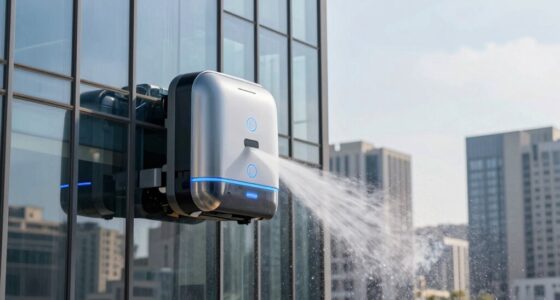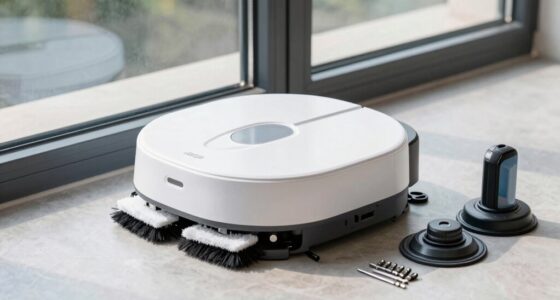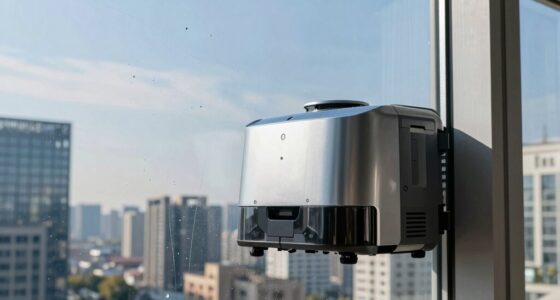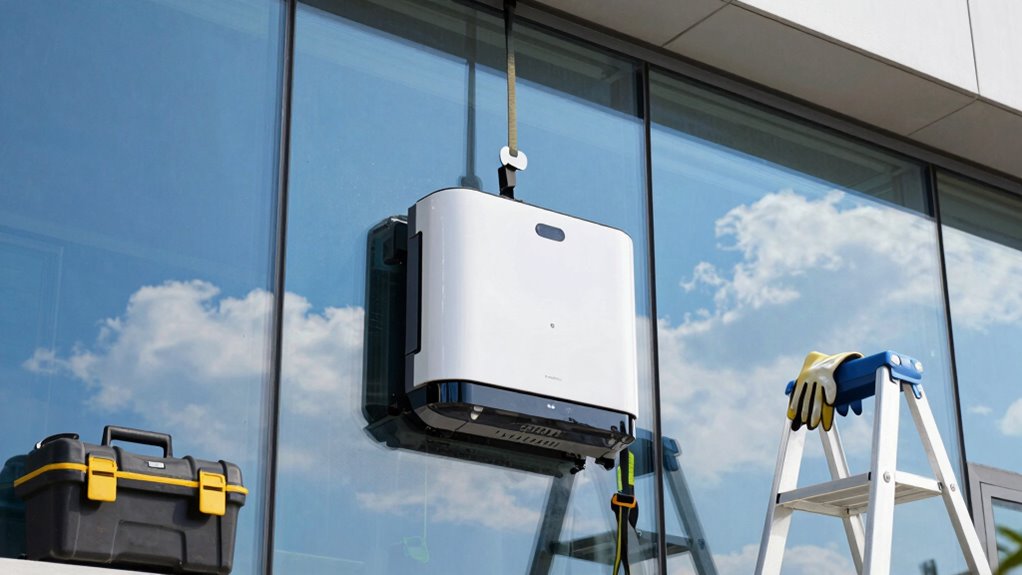

To build a safer glass cleaning routine around your window robot, make certain sensors are properly calibrated before each use, especially after moves or lighting changes. Clear the area of obstacles and hazards, and use adequate lighting to boost sensor accuracy. Familiarize yourself with emergency shutdown procedures and test them regularly. Keep safety features in top condition and adjust your environment for peak device performance. The more you know about maintaining these protocols, the safer your cleaning sessions become.
Key Takeaways
- Verify and calibrate the robot’s sensors before each cleaning session for accurate obstacle detection.
- Keep the cleaning area clear of hazards and obstacles to prevent accidents.
- Regularly test and familiarize yourself with the emergency shutdown procedures.
- Adjust lighting conditions to enhance sensor performance and improve obstacle recognition.
- Conduct routine safety checks, including sensor calibration and environment assessment, before each use.
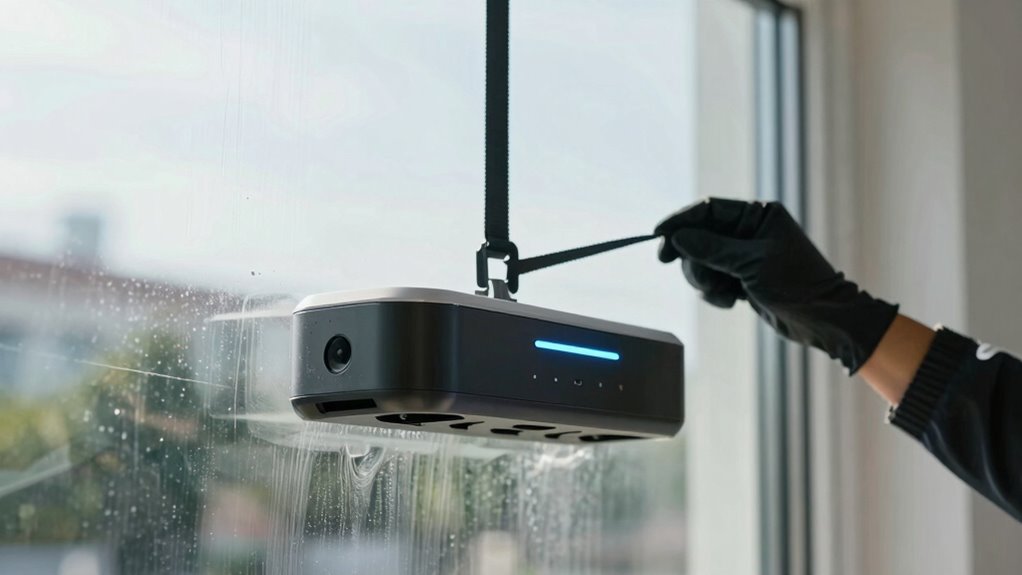
Cleaning glass surfaces can be risky if you don’t take proper precautions, but with a thoughtful routine, you can stay safe while achieving streak-free results. When working with a window robot, safety begins with understanding its essential features, like auto sensor calibration and emergency shutdown mechanisms. Auto sensor calibration ensures your robot accurately detects edges and obstacles, preventing accidental falls or collisions that could cause injuries or damage. Before each cleaning session, you should verify that the sensors are correctly calibrated, especially if the robot has been moved or if the environment has changed, like new furniture or differing lighting conditions. Proper calibration means fewer surprises and reduces the risk of accidents, giving you peace of mind as you oversee the process. Additionally, understanding the contrast ratio of your device can help you better assess how well the robot will perform in different lighting conditions, ensuring optimal cleaning results.
Equally important is knowing how to activate and test the emergency shutdown function. This feature acts as a safety net if your robot encounters unexpected issues, like tangling cords or obstacles that it can’t navigate around. Familiarize yourself with how to trigger the emergency shutdown quickly—whether it’s a dedicated button on the robot or a remote control—so you can stop the device immediately if needed. Incorporating routine checks of this function before starting the cleaning process can prevent mishaps, especially in environments with children or pets. Regularly review the manufacturer’s instructions on emergency shutdown procedures, as different models may have specific steps or visual indicators to watch for. Ensuring your robot’s auto sensor calibration is up to date can significantly reduce the chances of accidents during operation. Also, keeping the environment clear and free of hazards can further enhance safety and efficiency.
Furthermore, paying attention to the lighting conditions in your cleaning area can improve sensor performance and help avoid misjudged obstacles, contributing to a safer operation.

HiLetgo 37 Sensor Assortment Kit for Arduino & Raspberry Pi – 37 in 1 Robot Project Starter Kit
- Includes 37 sensors in one kit: Comprehensive sensor assortment for projects
- Compatible with Arduino and Raspberry Pi: Ideal for Arduino MCU education
- Touch sensor and heartbeat detection modules: Variety of sensors for diverse applications
As an affiliate, we earn on qualifying purchases.
As an affiliate, we earn on qualifying purchases.
Frequently Asked Questions
How Often Should I Replace the Batteries in My Window Robot?
You should replace the batteries in your window robot based on its battery lifespan, which typically ranges from 6 to 12 months. Follow a regular replacement schedule, such as every 6-12 months, to guarantee peak performance. Keep an eye on signs like decreased cleaning efficiency or the robot not starting, which indicate it’s time for a new battery. Regular replacement maintains safety and keeps your window robot working effectively.
Can I Use Cleaning Solutions Other Than Water With My Robot?
You can use alternative cleaning agents with your window robot, but make certain they’re eco-friendly solutions that won’t damage the device. Avoid harsh chemicals and opt for mild, natural cleaners like diluted vinegar or soap. Always check your robot’s manufacturer instructions to guarantee compatibility. Using eco-friendly solutions helps protect your window robot and the environment, making your cleaning routine safer and more sustainable.
What Should I Do if the Robot Gets Stuck on the Window?
When your robot gets stuck on the window, stay calm and activate emergency procedures, like unplugging it if necessary. Use troubleshooting tips, such as gently repositioning the robot or removing any obstacles blocking its path. Check for tangled cords or debris that might hinder movement. Remember, patience is key, and knowing these steps helps prevent damage while ensuring your robot resumes cleaning efficiently.
Is It Safe to Operate the Robot During Rain or High Humidity?
It’s not safe to operate your window robot during rain or high humidity because rain safety is a concern, and moisture can damage the device. High humidity effects, like condensation, may cause malfunctions or electrical issues. Always wait for dry weather and low humidity conditions before running your robot. This guarantees peak performance and safety, preventing potential damage caused by moisture exposure.
How Do I Calibrate the Robot for Different Window Sizes?
Think of your window robot as a skilled artist adjusting their brush for different canvases. To calibrate, use calibration techniques like marking the window edges and running the robot to detect boundaries. For window size adjustment, input the dimensions into the control app or manual settings. This guarantees precise cleaning, adapting to various window sizes effortlessly. Regular calibration keeps your robot working smoothly, no matter the shape or size of your glass.

Tosima W5 Window Cleaning Robot, 6400Pa Max Adaptive Suction, Auto-Spray Smart Window Cleaner with Triple Safety System, Intelligent Navigation, Remote Control, for All Smooth Surfaces, White
- Automatic Ultrasonic Water Spray: Bidirectional, streak-free cleaning
- Large 65ml Water Tank: Automatic double spray for extensive coverage
- Adaptive Suction Power: Up to 6400Pa for deep cleaning
As an affiliate, we earn on qualifying purchases.
As an affiliate, we earn on qualifying purchases.
Conclusion
By following these simple steps, you’ll turn your glass cleaning routine into an impenetrable fortress of safety—so secure, even a superhero would envy it! Say goodbye to dangerous slips, falls, and mishaps, and hello to crystal-clear windows without breaking a sweat. With your new routine, you’re practically invincible, making glass cleaning safer than ever before. Get ready to conquer your windows like a safety superhero—because nothing’s more powerful than a well-prepared cleaning routine!

HCDZ Replacement Remote Control for Electric Window Glass Cleaning Smart Robot (Create Wipebot)
- IR Replacement Remote Control: Compatible with Wipebot smart robot
As an affiliate, we earn on qualifying purchases.
As an affiliate, we earn on qualifying purchases.

KKI Window Cleaning Robot, Auto Window Cleaner Robot, Dual Spray, Max 3200Pa, 3 Cleaning Modes & Edge Detection, Remote Control for High-Rise Windows Outside/Inside,85ml Tank, X3 (White)
- Dual Ultrasonic Spraying: Evenly atomizes water for streak-free cleaning
- Large 85ml Water Tank: Supports up to 2 hours of continuous cleaning
- One-Click Cleaning: Easy operation for high-rise window cleaning
As an affiliate, we earn on qualifying purchases.
As an affiliate, we earn on qualifying purchases.