When robots go wrong, you’ll see funny moments like vacuums confusing shadows for obstacles, causing them to stop unexpectedly. Mop bots often get stuck in tiny corners, looping in circles or backing into walls. Sometimes, robots wander off into places they shouldn’t, like garages or laundry rooms. Pets can confuse robots as debris, leading to startling chase scenes. Curious about more hilarious fails? Keep going to uncover even more amusing robot mishaps.
Key Takeaways
- Shadow illusions can cause robots to stop or avoid areas unnecessarily, leading to funny cleaning pauses.
- Tiny corners and narrow spaces often trap mop bots, resulting in comical stuck moments and circling mishaps.
- Navigation errors make robots wander outside designated zones, sometimes ending up in laundry rooms or outside, creating amusing confusion.
- Pets can be mistaken for dirt or obstacles, causing robots to chase or circle around them, startling owners and animals alike.
- Erratic movements and bumping into furniture turn routine cleaning into unpredictable, humorous “dance parties” with robots spinning and bouncing randomly.
The Shadow Chaser: When Vacuum Robots Mistake Shadows for Obstacles
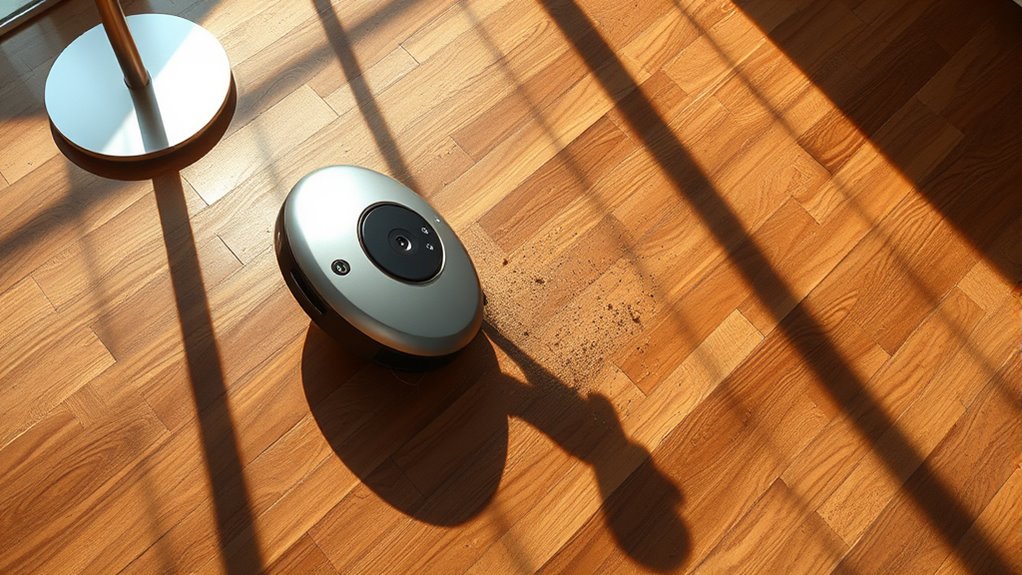
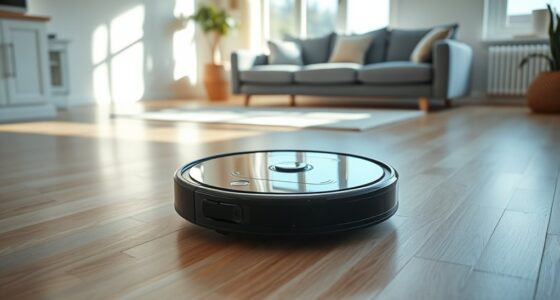
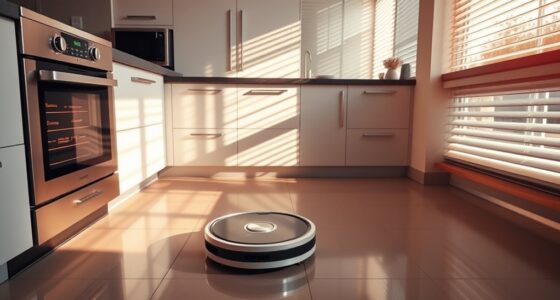
Vacuum robots rely on sensors to navigate, but sometimes shadows cast by furniture or lighting can fool them into thinking they’re obstacles. This shadow confusion leads to what’s called obstacle illusion, where the robot perceives shadows as physical objects. As a result, the vacuum may stop, change direction unexpectedly, or even avoid areas unnecessarily. You might find your robot repeatedly pausing in the same spot, trying to dodge an invisible barrier. These false obstacles can prolong cleaning time and leave some areas untouched. To minimize this, guarantee good lighting and move furniture away from light sources. Understanding obstacle illusion helps you anticipate and troubleshoot these robotic misjudgments, keeping your cleaning routine smooth and efficient.
The Tiniest Traps: When Mop Bots Get Stuck in the Narrowest Corners
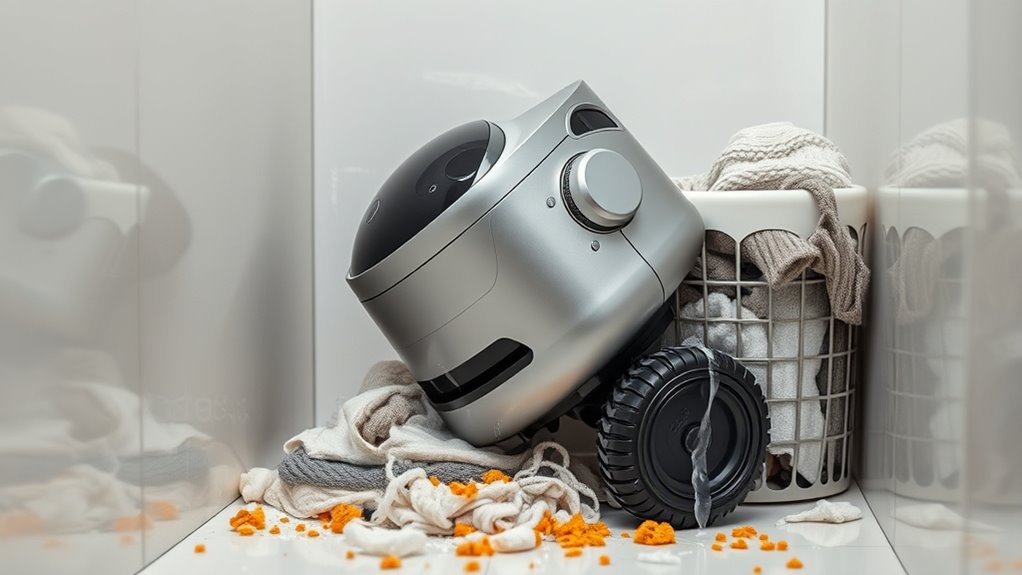
Shadows and obstacles aren’t the only challenges robotic cleaners face; narrow corners and tight spaces often trip up mop bots, too. Sensor snafus can cause these bots to misjudge tight spots, leading to frequent get-stuck moments. Navigation nightmares occur when the robot’s sensors fail to detect the limited space, causing it to back into walls or loop in circles. You might hear it struggling in the corner, repeatedly trying to maneuver but unable to move forward. These tiny traps can turn a quick clean into a frustrating ordeal, especially when the bot refuses to back out. Narrow spaces demand precise detection and agile navigation—things that often go wrong, leaving your mop bot caught in the tiniest of traps.
The Great Escape: When Cleaning Robots Wander Off and Get Lost
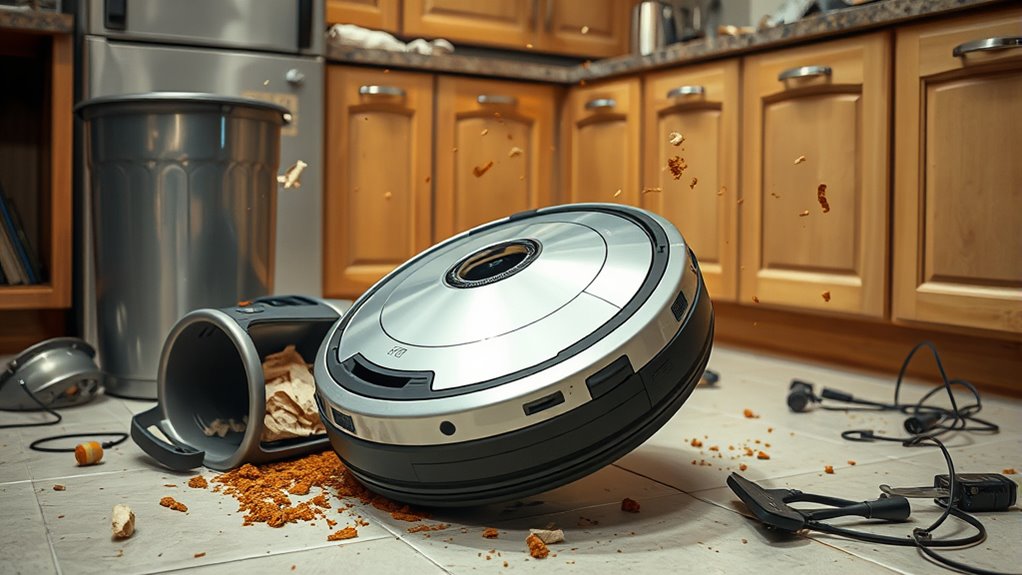
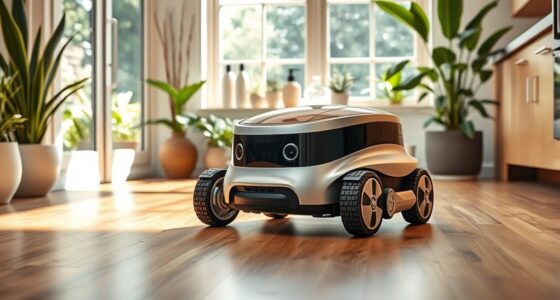
When cleaning robots lose their way, it often feels like they’ve gone on a spontaneous adventure rather than completing a task. Thanks to robotic autonomy, these devices are supposed to navigate smoothly, but navigation errors happen more often than you’d think. Sometimes, a misplaced sensor or unanticipated obstacle confuses their path, causing them to wander off or get lost in unfamiliar areas. You might find your robot in the laundry room, the garage, or even outside, far from where it should be cleaning. These wandering escapades can be amusing or frustrating, especially when you have to track down your wayward robot. Despite advances, navigation errors still challenge robotic autonomy, proving that even the smartest bots can have a mind of their own.
The Unexpected Guest: When Robots Mistake Pets for Dirt
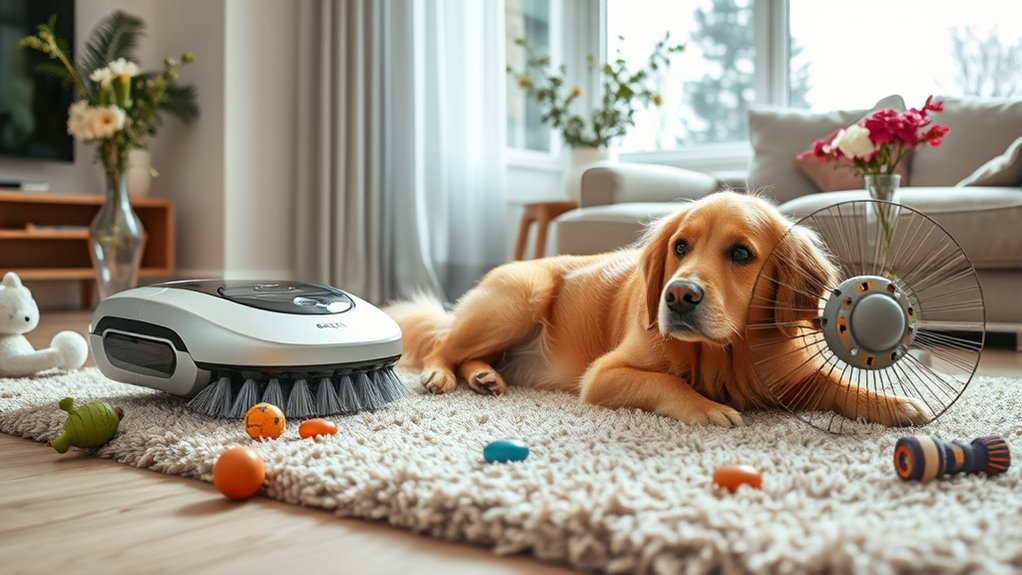
Although cleaning robots are designed to target dirt and debris, they can sometimes mistake your pets for messes to be cleaned up. Pet misidentification happens when a robot’s sensors confuse a furry friend’s shape or movement with a pile of dirt or debris. This obstacle confusion can lead to startling moments, like your pet being gently herded or even chased around the room. Sometimes, the robot treats a sleeping cat or lounging dog as an obstacle to be avoided, stopping in its tracks or circling aimlessly. These mix-ups can frustrate you and stress your pet. While most robots are equipped with sensors to prevent accidents, pet misidentification still occurs, turning everyday cleaning into a comical and sometimes chaotic encounter.
The Unintentional Dance: When Automated Cleaners Create Chaotic Choreographies
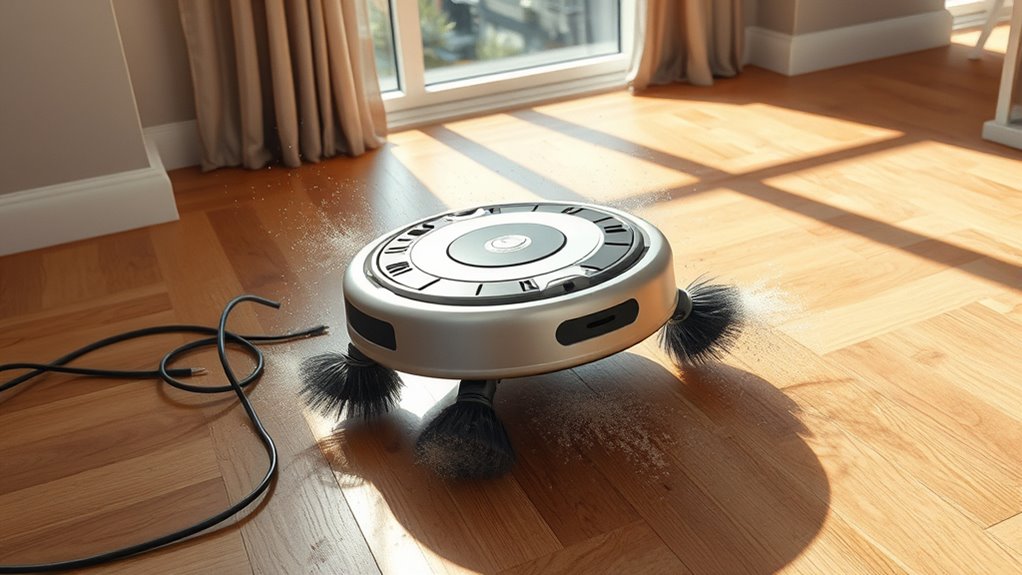
Automated cleaners often turn routine tidying into an unpredictable spectacle, creating what can only be described as chaotic choreographies. You might find your robot zooming in erratic patterns, spinning in tight circles, or bumping into furniture like it’s performing an impromptu dance. These automation mishaps often lead to moments of pure robot humor, as the device seems to choreograph its own quirky routine. Instead of a neat sweep, you get a hilarious display of malfunctioning movement, turning cleaning into an unintended dance party. While frustrating, these mishaps highlight how unpredictable automation can be. You’ll laugh at the sight of your robot’s chaotic choreography, marveling at how even machines can produce moments of comedic chaos when their programming goes awry.
Frequently Asked Questions
How Do Cleaning Robots Distinguish Shadows From Real Obstacles?
You might wonder how cleaning robots distinguish shadows from real obstacles. They use shadow detection algorithms combined with obstacle recognition technology. These systems analyze differences in light, texture, and movement to identify true obstacles versus shadows. By constantly updating their sensors and using AI, the robots improve their accuracy over time, reducing false alarms. So, you can trust that they’re designed to navigate around real objects, not just shadows.
Can Mop Bots Be Programmed to Avoid Getting Stuck?
Yes, mop bots can be programmed to avoid getting stuck using advanced navigation algorithms and obstacle sensors. You should guarantee they have reliable sensors that detect obstacles early, allowing the robot to reroute or adjust its path. Regularly updating the software and calibrating sensors help improve performance. With these features, your mop bot can navigate smoothly around furniture and avoid common pitfalls, keeping your floors spotless without getting caught or stuck.
What Features Help Prevent Robots From Wandering Off?
To prevent your cleaning robot from wandering off, you should guarantee it has advanced navigation sensors and obstacle detection features. These tools help the robot understand its surroundings, identify boundaries, and avoid stairs or drop-offs. With accurate navigation sensors, your robot can map out your space efficiently. Obstacle detection allows it to steer clear of furniture and other objects, keeping it within designated areas and ensuring thorough, safe cleaning.
Are There Ways to Prevent Pets From Being Mistaken for Dirt?
To prevent your pet from being mistaken for dirt, you can enhance pet safety features in your cleaning robot. Use advanced obstacle detection to recognize your pets and avoid them. Some robots have pet-specific sensors or virtual boundaries you can set. Regularly updating the robot’s software also improves its ability to distinguish pets from dirt, ensuring your furry friends stay safe while your home stays clean.
How Can Users Stop Robots From Creating Chaotic Dances?
You can prevent your robot from creating chaotic dances by using clear voice commands and ensuring obstacle sensors are properly calibrated. Speak specific instructions, like “clean in a straight line,” and avoid vague directions. Regularly check and clean sensors so they detect obstacles accurately. This helps your robot follow your commands smoothly and prevents it from getting confused or performing unintended, chaotic movements.
Conclusion
Just like a clumsy dancer lost in the rhythm, cleaning robots remind us that even the best plans can stumble. These hilarious fails show that technology, like us, isn’t perfect—and sometimes, it’s those unexpected missteps that bring a smile. Embrace the chaos, for it’s in the imperfect moments that we find humor and humanity. After all, life’s most memorable dances are often the ones that don’t go as planned.