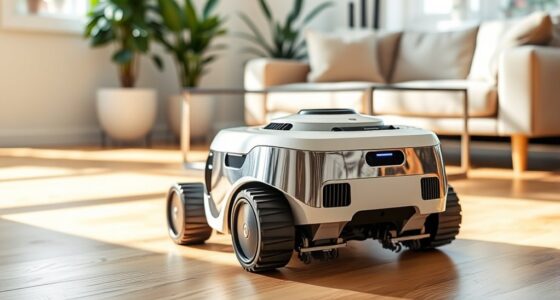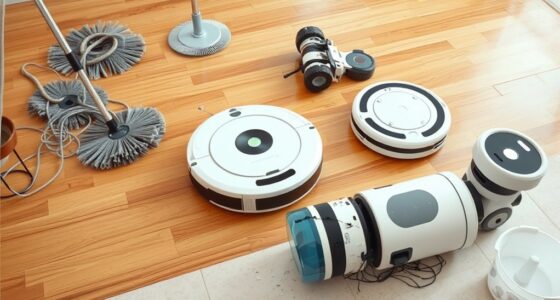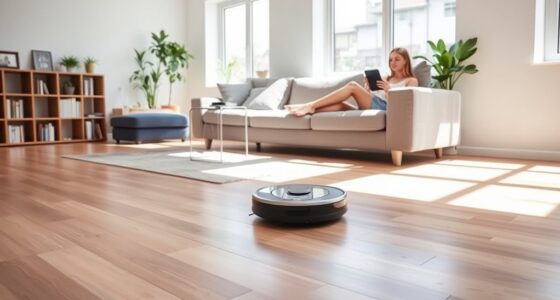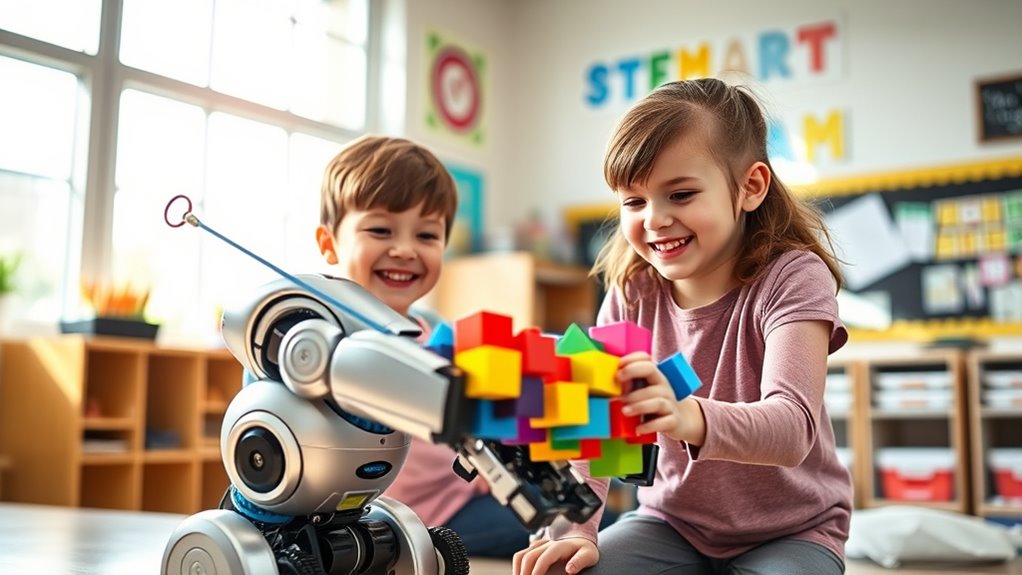

You can turn chores into fun STEM lessons by involving kids in programming robots to do simple household tasks. Use beginner-friendly coding platforms to help them create functions like fetching small objects or organizing items. This makes chores engaging and educational while teaching safety precautions and responsible handling. As they see their code in action, kids build confidence and develop problem-solving skills. Keep exploring for more ideas on making everyday chores a memorable learning experience.
Key Takeaways
- Use household chores like fetching or organizing as engaging programming projects for children.
- Incorporate safe robot programming platforms to teach coding through routine task simulations.
- Emphasize safety protocols during chores to prevent accidents and promote responsible robot handling.
- Transform chores into interactive STEM lessons by encouraging kids to code and test their robot’s actions.
- Reinforce learning with positive feedback, increasing confidence and fostering ongoing interest in robotics and technology.
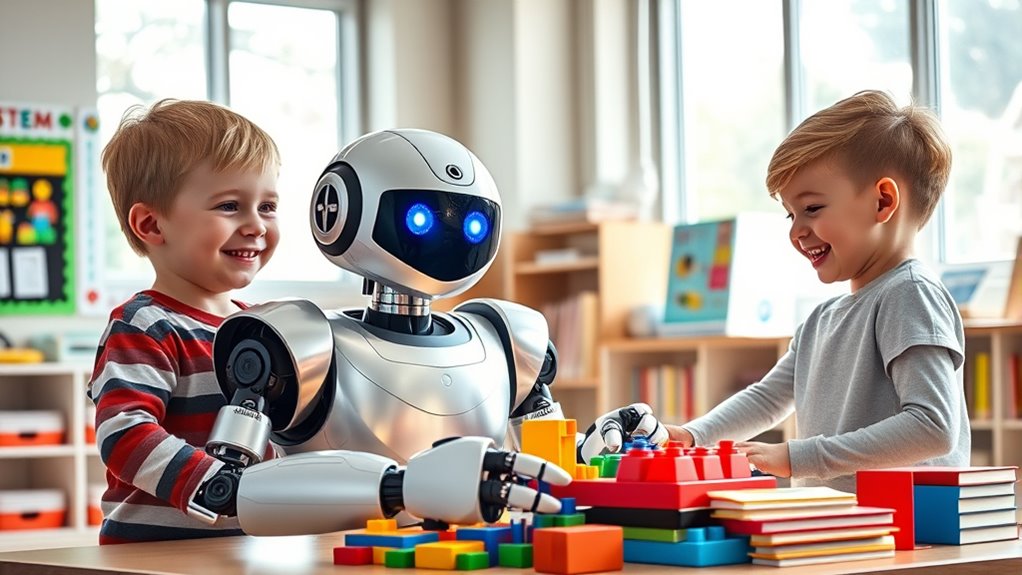
As technology advances, robots are becoming more common in children’s lives, transforming the way they learn, play, and interact. When you introduce kids to robotics, you’re opening doors to hands-on STEM education that sparks curiosity and develops critical thinking. One of the most engaging ways to do this is through robot programming, where children learn to give robots specific commands to perform tasks. This process not only makes learning fun but also builds their problem-solving skills as they write, test, and refine code. However, as tempting as it is to immerse oneself in programming, guaranteeing robot safety is equally important. Safety measures protect children from potential hazards associated with robotic parts, batteries, or electrical components, making the experience both educational and secure.
Getting kids involved in robot programming can start with simple, user-friendly coding platforms designed for beginners. These tools often feature drag-and-drop interfaces that make it easy for children to understand programming logic without feeling overwhelmed. As they progress, they can move on to more advanced coding languages, gradually increasing their technical skills. During these activities, you need to emphasize the importance of robot safety, such as avoiding contact with moving parts, handling batteries carefully, and understanding how to turn off the robot if needed. Teaching children about safety protocols helps them develop responsible habits that will serve them well in future STEM pursuits. Additionally, understanding the contrast ratio of robotic displays can enhance their ability to interpret visual feedback accurately, making interactions more intuitive.
Start with simple coding platforms, emphasize safety, and gradually introduce advanced programming to build responsible, skilled young programmers.
You can also turn chores into a fun learning experience by combining robot programming with household tasks. For example, kids can program a simple robot to fetch small items or perform specific actions around the house. This practical application of their coding skills makes the learning process relevant and motivating. At the same time, you should supervise these activities closely to prevent accidents. Check that the workspace is clear, keep a safe distance from moving parts, and guarantee that children understand the importance of following safety instructions. Making safety a fundamental part of the lesson teaches kids that responsible handling of technology is just as vital as learning how to code.
Ultimately, integrating robot programming into everyday chores transforms routine tasks into exciting STEM lessons. As children see their code come to life through their robot’s actions, they gain confidence and a sense of achievement. By prioritizing robot safety, you create a positive environment where kids can explore, experiment, and learn without unnecessary risks. This approach not only makes chores more engaging but also fosters a lifelong interest in science, technology, engineering, and mathematics, setting them up for success in an increasingly tech-driven world.
Frequently Asked Questions
What Safety Precautions Should Be Taken When Kids Operate Robots?
When kids operate robots, prioritize robot safety by always supervising them closely. Keep them in a safe, clutter-free area and make certain they understand how to use the equipment properly. Teach children to handle robots gently and avoid touching moving parts. Never leave kids unattended during robot activities, and set clear rules for safe operation. Child supervision is essential to prevent accidents and help kids learn responsible robot handling.
How Can Parents Encourage Creativity With Robot-Based Chores?
You can encourage creativity with robot-based chores by inspiring your kids to use their imagination and engage in creative problem solving. Let them customize or program the robots to complete tasks in unique ways, fostering imaginative play. Offer open-ended challenges that prompt them to think outside the box, and praise their innovative ideas. This approach helps your children develop critical thinking skills while having fun turning chores into exciting, creative adventures.
Are There Specific Age-Appropriate Robot Kits for Beginners?
Yes, there are plenty of beginner-friendly robot kits designed specifically for kids just starting out. These kits often feature simple assembly, colorful parts, and easy-to-follow instructions, making them perfect for beginners. Look for options labeled as age-appropriate, typically for ages 6 and up. Popular brands include LEGO Boost, Botley, and Osmo, which encourage hands-on learning while providing a fun, engaging way to explore robotics fundamentals.
How Do Robot Chores Compare to Traditional Chores in Skill Development?
Think of robot chores as a garden where skills blossom faster than traditional chores. They boost robot skill development and teach kids automation concepts, making tasks more engaging. Unlike traditional chores, robotic tasks involve problem-solving, coding, and creativity, sharpening tech abilities. You’ll find that chore automation with robots offers a dynamic way to develop practical skills, turning everyday responsibilities into exciting learning adventures and better preparing kids for future tech-driven careers.
What Are the Best Resources for Teaching Kids Robotics at Home?
You can start with online resources like LEGO Mindstorms and Wonder Workshop, which offer beginner-friendly kits for robot programming and STEM education. Consider platforms like Khan Academy and Tinkercad, providing free tutorials on robotics concepts. Local coding camps or robotics clubs also give hands-on experience. These resources make it easy to engage kids at home, fostering skills in robot programming while making STEM education fun and accessible.
Conclusion
Imagine turning everyday chores into exciting STEM adventures with robots. Isn’t it amazing how technology can make learning fun and engaging? As you watch kids explore, create, and problem-solve with their robotic helpers, you realize that the future of education is here. So, why not embrace these innovative tools and inspire the next generation of inventors and explorers? After all, who wouldn’t want chores to be both productive and entertaining?