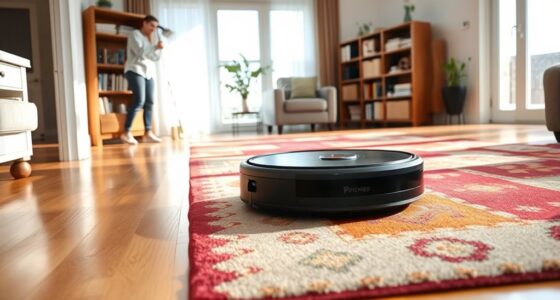
When recycling your retired Roomba, start by carefully disassembling it to separate plastic shells, batteries, circuit boards, and motors. Check local e-waste recycling centers or manufacturer programs for responsible disposal. You can also repurpose parts like motors or sensors for DIY projects or donate a functional robot to charities. Proper recycling prevents environmental harm and recovers valuable materials. Want to discover more eco-friendly tips to maximize your Roomba’s lifespan or reuse? Keep exploring.
Key Takeaways
- Disassemble the Roomba carefully to separate plastic shells, batteries, circuit boards, and motors for recycling or repurposing.
- Recycle metal parts, plastics, and electronic components at certified e-waste recycling centers to recover valuable materials.
- Donate functional or repairable Roombas to charities or repurpose parts like motors and sensors for DIY projects.
- Follow manufacturer recycling programs or guidelines for safe disposal, especially for hazardous components like batteries.
- Explore creative reuse options, such as using parts for educational kits or small robotics projects, to extend the robot’s life cycle.
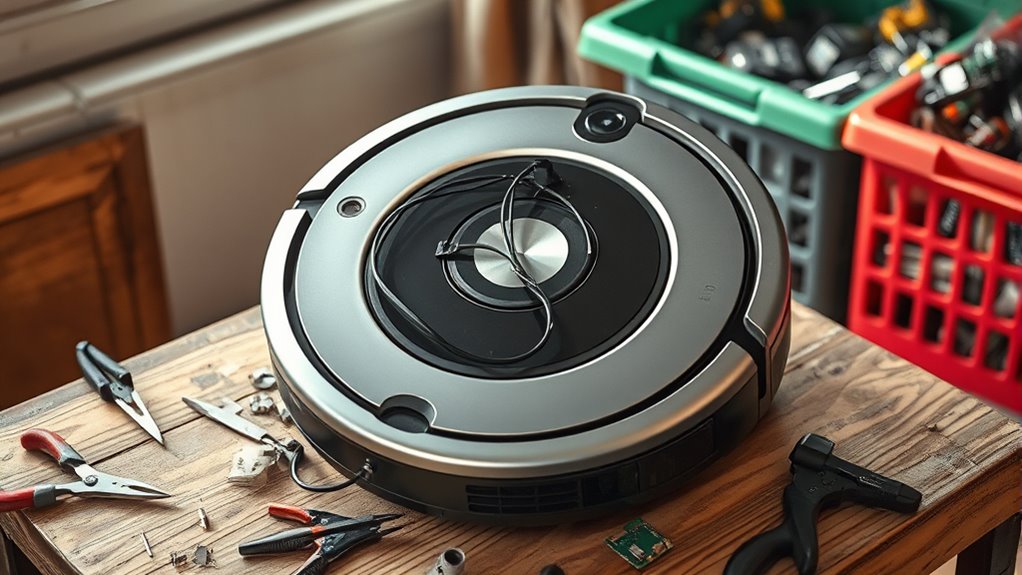
As robots become increasingly common in homes and industries, many older models are now obsolete and need proper disposal. If you’re sitting on a retired Roomba or similar device, it’s essential to understand how to approach its disposal responsibly. Proper robot disassembly is the first step. Carefully dismantling your robot allows you to separate various components—plastic shells, batteries, circuit boards, and motors. This process not only helps in recycling valuable materials but also prevents hazardous waste from contaminating the environment. When you disassemble a robot, use appropriate tools and follow safety guidelines, especially when handling batteries or electronic parts that could be harmful if mishandled.
Once disassembled, your focus should shift toward eco friendly disposal. Many components of old robots, like metal parts and plastics, can be recycled through local facilities. Take the time to research recycling centers that accept electronic waste; many are equipped to handle delicate electronic components safely. Recycling helps recover precious metals like copper and gold from circuit boards, reducing the need for mining new resources, which is beneficial for the planet. Furthermore, some parts can be repurposed for DIY projects or donated if they’re still functional or repairable. For example, motors or sensors might find a new life in hobbyist electronics or educational kits. Additionally, exploring robot navigation and mapping features can help identify functional parts suitable for reuse.
You should also consider donating your old Roomba if it still has some life left. Many charities or community centers accept working or repairable robots, giving them a second chance and reducing waste. If the device is beyond repair, look for specialized e-waste recycling programs that handle electronic devices responsibly. Avoid simply throwing your robot in the trash, as this contributes to landfill overflow and environmental pollution. Proper disposal through certified electronic waste recycling ensures hazardous components like batteries are safely managed and materials are reclaimed.
Finally, always check manufacturer guidance for disposal instructions. Some companies offer take-back programs or recycling initiatives specific to their products, making eco friendly disposal easier and more effective. By taking the time to disassemble your robot properly and choosing responsible recycling options, you’re actively reducing electronic waste and supporting sustainability efforts. Your retired robot doesn’t have to end up as harmful landfill waste; with a little effort, it can be dismantled, recycled, or even repurposed, giving it a second life or ensuring its parts are reused responsibly.
Frequently Asked Questions
Can I Upgrade My Old Roomba’s Software or Hardware?
You can attempt software modification on your old Roomba, but it’s tricky and may void your warranty. Hardware upgrades are limited and often impractical since most components aren’t designed for easy replacement. If you’re tech-savvy, explore online communities for custom firmware or modifications. However, for most users, upgrading hardware isn’t feasible, so consider repurposing or recycling your Roomba instead of trying to upgrade it.
Are There Eco-Friendly Disposal Options Specific to Robots?
Think of robot recycling as giving your Roomba a second chance, much like the myth of phoenix rising. For eco-friendly disposal, check if local e-waste programs accept small electronics, including robots. Many companies now offer specialized robot recycling services that safely dismantle and recycle components. You can also explore manufacturer take-back schemes. Choosing these options helps reduce e-waste and guarantees your retired robot is disposed of responsibly.
How Do I Remove Batteries Safely From My Retired Roomba?
To remove the batteries safely from your retired Roomba, first power it off and unplug it from any charging station. Use a screwdriver to carefully open the battery compartment, then disconnect the battery with gentle, steady pressure. For safe disposal, place the battery in a non-conductive container and take it to a designated e-waste recycling center. Always follow manufacturer instructions and local regulations to make certain safe battery removal and disposal.
Is There a Community or Forum for Sharing Robot Repurposing Ideas?
Yes, you can find communities and forums dedicated to robot hacking and DIY automation, like Reddit’s r/robotics or specialized Facebook groups. These platforms are great for sharing repurposing ideas for your retired Roomba, asking for advice, and exploring creative ways to give it new life. Joining such communities helps you connect with enthusiasts who love turning old robots into useful gadgets or fun projects.
What Legal Considerations Exist for Recycling Robotic Devices?
When recycling robotic devices, you need to consider intellectual property rights and environmental regulations. Make sure you’re not infringing on patents or proprietary technology, and follow local rules for electronic waste disposal to prevent environmental harm. You might also need to erase any personal data stored on the device. Check with local authorities or recycling centers for specific guidelines to ensure you’re compliant and environmentally responsible.
Conclusion
Just like the phoenix rising from its ashes, your retired Roomba can find new purpose instead of becoming waste. By recycling or repurposing, you breathe new life into old technology, echoing the timeless cycle of renewal. Remember, every ending is an opportunity for a fresh beginning—your choices today shape a more sustainable tomorrow. So, embrace the chance to transform your robot, turning its retirement into a meaningful chapter of reuse and environmental care.