
To effectively coordinate multiple cleaning robots, you should implement automated scheduling that analyzes your space for high-traffic areas and assigns routes accordingly. Use intelligent algorithms to prevent overlaps, optimize coverage, and adapt to real-time changes through sensors and environmental data. Regular maintenance scheduling guarantees each robot stays operational, reducing breakdowns. Fine-tuning your system improves efficiency, safety, and overall cleaning quality—keep going to discover more strategies that can revolutionize your cleaning process.
Key Takeaways
- Implement automated route planning to assign optimal paths for each cleaning robot based on layout analysis.
- Schedule maintenance during off-peak hours to ensure all robots operate reliably and reduce downtime.
- Prioritize high-traffic areas for frequent cleaning and adjust routes dynamically using real-time sensor data.
- Coordinate robots to avoid overlaps and collisions, maximizing coverage efficiency and minimizing redundant efforts.
- Use data analytics to monitor performance, refine schedules, and improve overall collaboration among multiple cleaning bots.
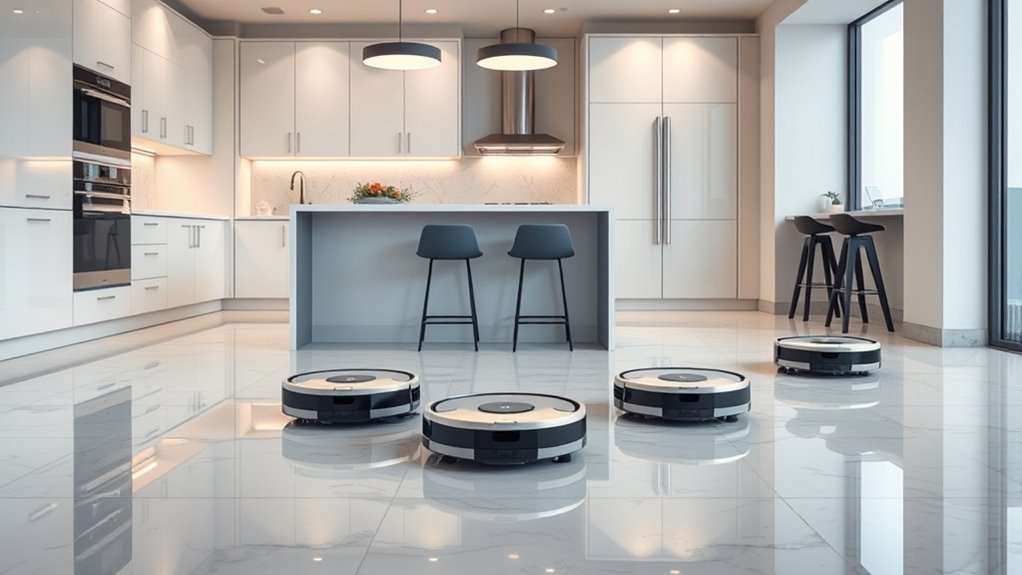
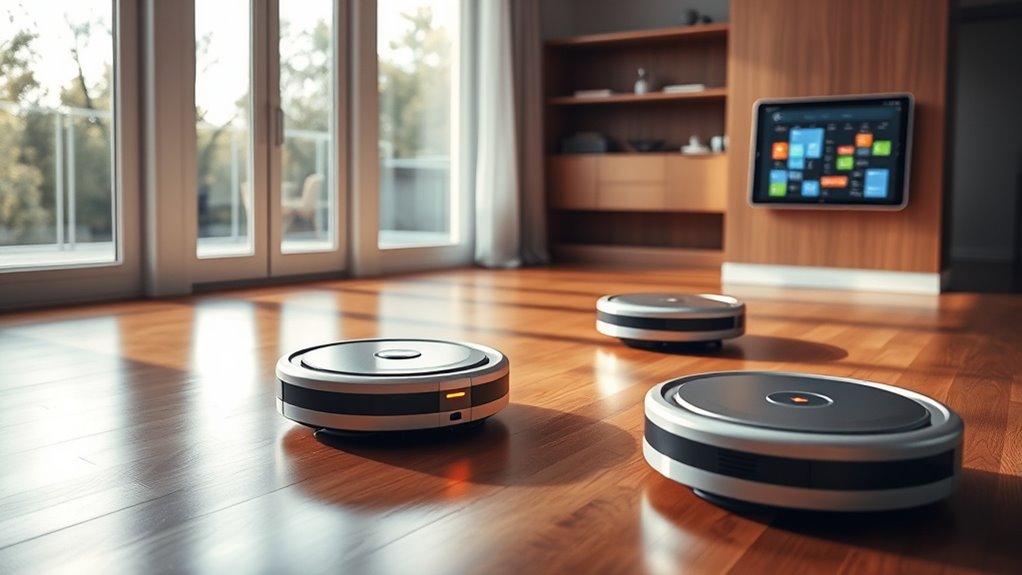
Coordinating multiple cleaning bots can substantially improve efficiency and coverage in large or cluttered spaces. When you manage several robots simultaneously, it’s essential to plan their movements carefully to avoid overlaps and missed spots. This is where robot path optimization becomes vital. By designing ideal routes for each bot, you guarantee they work together seamlessly, reducing idle time and preventing collisions. Automated algorithms can analyze the layout, identify high-traffic areas, and assign paths that maximize coverage in the shortest possible time. With effective robot path optimization, your cleaning process becomes faster, more thorough, and less prone to human error.
Efficient robot path optimization ensures seamless cleaning, reduces overlaps, and maximizes coverage in busy or cluttered spaces.
In addition to route planning, scheduling maintenance for each robot is key for smooth operation. Regular maintenance guarantees that your bots stay in peak condition, minimizing unexpected breakdowns that could disrupt your cleaning schedule. When you incorporate maintenance scheduling into your management system, you can plan routine checks, filter replacements, and software updates during off-peak hours. This proactive approach reduces downtime and extends the lifespan of your cleaning robots. Automated scheduling tools can alert you when a bot requires attention, allowing you to address issues before they escalate, keeping your entire fleet operational and reliable.
Managing multiple cleaning bots also involves coordination beyond just route planning and maintenance. You need to consider task prioritization, especially in environments with varying cleaning needs. For example, high-traffic areas might require more frequent cleaning, so you can assign those tasks to the most efficient or least occupied bots first. By integrating real-time data and sensor inputs, your system can dynamically adjust routes and schedules, ensuring that each robot responds promptly to changing conditions. This real-time coordination minimizes overlaps and maximizes productivity, giving you cleaner spaces in less time.
Furthermore, tracking each robot’s performance and maintenance history helps refine your strategies over time. Analyzing data related to robot path optimization and maintenance schedules allows you to identify patterns and optimize future plans. Over time, this data-driven approach can improve overall efficiency, reduce operational costs, and increase the lifespan of your cleaning fleet. Proper coordination also involves clear communication protocols among your robots, ensuring they share information about obstacles and cleaning progress, preventing redundancy and enhancing coverage.
Additionally, implementing robot sensors can enhance real-time responsiveness and safety during cleaning operations. Ultimately, by focusing on robot path optimization and maintenance scheduling, you can streamline your cleaning operations, saving time and resources. A well-coordinated fleet of cleaning bots not only keeps your space spotless but also operates more intelligently and sustainably. When you implement these strategies effectively, you unlock the full potential of your robotic cleaning system, making your environment cleaner and your management easier.
Frequently Asked Questions
How Do Cleaning Bots Communicate With Each Other?
Cleaning bots communicate with each other using robot communication protocols that guarantee seamless coordination. They typically follow standard protocol standards like Wi-Fi, Bluetooth, or Zigbee, which allow them to share data and updates in real-time. By exchanging messages about their location, status, and tasks, your bots work efficiently together, avoiding overlaps and missed spots. This communication keeps your cleaning process smooth and effective without manual intervention.
Can Multiple Cleaning Bots Work Simultaneously Without Interference?
Think of your cleaning bots as a well-choreographed dance troupe, moving seamlessly without stepping on each other’s toes. Yes, multiple bots can work simultaneously without interference, thanks to smart algorithms that avoid robot path conflicts. They also manage battery levels efficiently, returning to charging stations before running out of juice. With proper scheduling, your cleaning crew performs a flawless performance, leaving your space spotless without any clumsy collisions.
What Happens if a Cleaning Bot Malfunctions During Scheduling?
If a cleaning bot malfunctions during scheduling, you should promptly perform bot maintenance to identify and fix the issue. The malfunction can cause scheduling conflicts, disrupting the cleaning process. To prevent this, regularly update your scheduling system and monitor each bot’s performance. Addressing problems quickly ensures smooth coordination, minimizes downtime, and keeps all your cleaning bots working efficiently without interfering with each other.
Are There Apps to Manually Override Cleaning Schedules?
Yes, many scheduling apps include a manual override feature, allowing you to take control of your cleaning robots whenever needed. You can pause, resume, or adjust cleaning tasks directly through these apps, giving you flexibility. Just open your app, find the manual override option, and make the necessary changes. This way, you can guarantee your cleaning bots operate exactly how and when you want, even if scheduled tasks need to be adjusted.
How Secure Are the Scheduling Systems From Hacking?
You’re right to be concerned—about 70% of IoT devices, including cleaning bots, face cybersecurity vulnerabilities. Scheduling systems often use encryption protocols to protect data, but they aren’t foolproof. Hackers can exploit weaknesses, risking unauthorized access. To stay safe, make certain your system uses strong encryption, regularly updates software, and employs robust passwords. These steps help minimize risks and keep your cleaning bots secure from hacking attempts.
Conclusion
By mastering how you schedule your cleaning bots, you guarantee a spotless space with minimal effort. Did you know that properly coordinated robots can reduce cleaning time by up to 30%? When you plan their routes and timings effectively, you maximize efficiency and keep your environment consistently clean. So, take control of your cleaning routine—your robots are ready to work smarter, not harder. Start scheduling wisely, and enjoy a cleaner, more comfortable space every day.