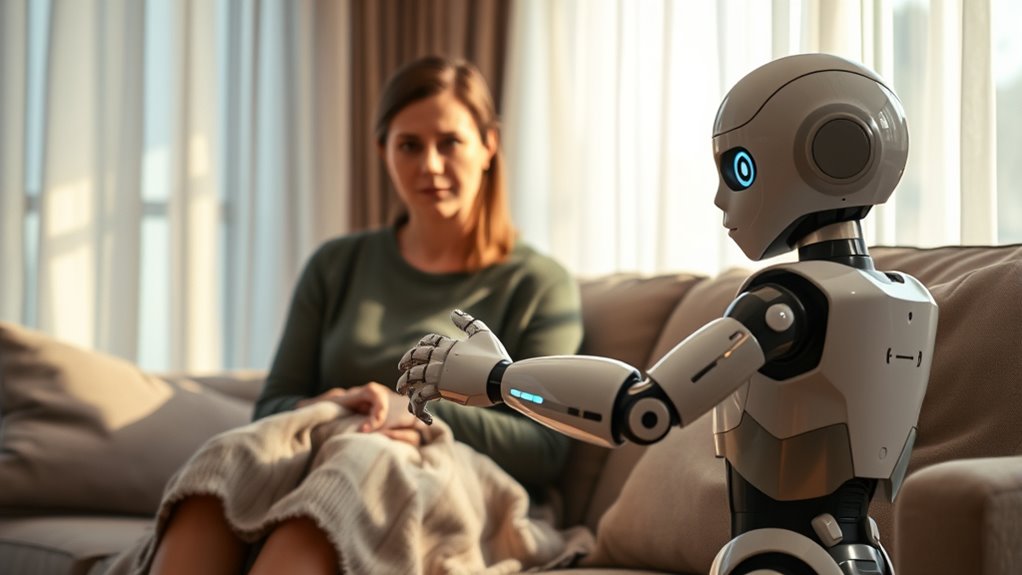

Your fear of home robots often stems from worries about privacy, trust, and emotional connections. While robots can be reliable and helpful, many feel uneasy sharing personal data or forming bonds with machines. Concerns about how your information is stored or used can overshadow their benefits. Building trust depends on transparency, consistency, and understanding. If you want to explore how these factors influence your comfort around home robots, there’s more to discover ahead.

Get home appliances delivered free — and shop member deals
- Fast, free delivery on millions of items
- Access to Prime Big Deal Days deals on October 6–7
- Prime Video, Amazon Music and more included
Key Takeaways
- Privacy concerns over data collection and potential misuse can cause distrust and fear of home robots.
- Lack of transparency about how personal information is stored and used increases user anxiety.
- Inconsistent or unreliable robot behavior undermines emotional bonds and trust.
- Fear of loss of control or privacy breaches can make some people hesitant to accept home robots.
- Limited understanding of robot capabilities and safety measures leads to apprehension and mistrust.
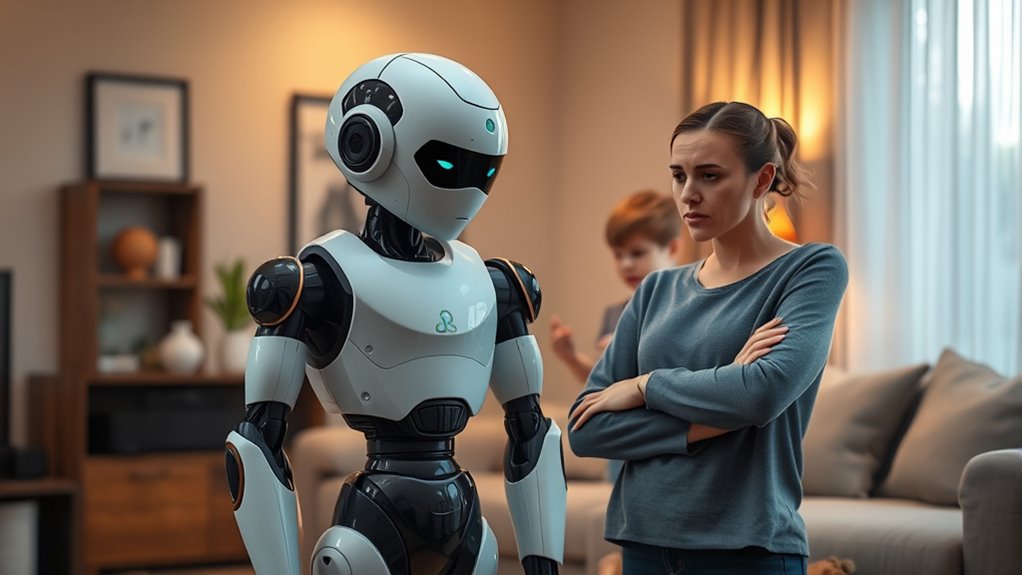
Building trust between humans and robots is essential for effective collaboration, especially as automation becomes more integrated into daily life. When you bring a home robot into your space, it’s natural to wonder whether you can truly rely on it. Establishing emotional bonds with these machines can help bridge the gap between human intuition and robotic function, making interactions feel more natural and less mechanical. But forming these bonds isn’t just about programming; it’s about creating a sense of familiarity and comfort. If a robot responds consistently and predictably, you’re more likely to feel at ease around it, which fosters trust. However, emotional bonds with robots can sometimes be complicated by underlying privacy concerns. You might worry about what data your robot collects, how it’s stored, and who has access to it. These concerns can create a barrier to trusting the device, especially if the robot’s privacy policies aren’t transparent. You might fear that sensitive information—like personal routines, conversations, or health data—could be misused or leaked. Such privacy worries can overshadow the potential benefits of robotic assistance, making you hesitant to fully embrace these devices at home.
Trust is not just about emotional attachment; it’s also about feeling secure. When you understand how a robot functions and trust that it respects your privacy, you’re more likely to develop a positive relationship with it. Transparency plays a critical role here. If the robot clearly explains what data it’s collecting, how it’s used, and who can access it, you gain confidence in its intentions. This transparency reduces anxiety and helps you establish a sense of control. Additionally, consistent, reliable behavior from your home robot reinforces trust. If it performs tasks accurately and responds appropriately to your commands, your emotional bond deepens, and your privacy concerns may diminish.
Building familiarity and understanding of robot capabilities can also help mitigate privacy concerns and promote trust. Ultimately, your willingness to trust a home robot depends on how safe and comfortable you feel around it. Building emotional bonds isn’t just about making the robot more likable; it’s about creating a trustworthy environment where you feel your privacy is respected. When these elements align—familiarity, consistent performance, transparency about data use—you’re more likely to see robots not as strangers or threats, but as helpful companions in your daily life. As technology advances, fostering this trust becomes even more vital for seamless, effective human-robot collaboration at home.
home robot with privacy features
As an affiliate, we earn on qualifying purchases.
As an affiliate, we earn on qualifying purchases.
Frequently Asked Questions
How Do Cultural Differences Influence Trust in Home Robots?
You might notice that cross-cultural perceptions markedly influence your trust in home robots. In some cultures, people see robots as helpful and reliable, while others may view them with suspicion. To build trust, trust-building strategies like transparent communication and familiar design help bridge these gaps. Understanding these cultural differences allows you to feel more comfortable, fostering a better relationship with home robots regardless of your background.
What Role Does Robot Appearance Play in User Trust Levels?
Robot appearance markedly influences your trust levels through design and visual cues. When a robot has a friendly, familiar look, you’re more likely to feel comfortable and confident using it. Conversely, a robot with an intimidating or unfamiliar design can trigger suspicion or fear. Clear, approachable visual cues help you perceive the robot as safe and reliable, fostering a positive interaction and increasing your trust in its functions.
Can Emotional Bonds Develop Between Humans and Home Robots?
Yes, emotional bonds can develop between you and home robots. When you interact regularly with a robot that responds to your needs and shows some level of personality, you may form emotional attachments. This bond formation is driven by the robot’s ability to simulate empathy and understanding, making you feel connected. Over time, emotional attachment can deepen, influencing your trust and comfort with the robot in your daily life.
How Do Privacy Concerns Affect Acceptance of Home Robots?
Privacy concerns substantially impact your acceptance of home robots. You worry about data security and how your personal privacy might be compromised if sensitive information is accessed or shared without your consent. These fears make you hesitant to fully trust robots in your home, fearing that your personal details could be misused or leaked. To feel comfortable, you need strong protections for your data security and clear assurances that your personal privacy is respected.
Are There Specific Demographics More Hesitant to Trust Home Robots?
You might find that elderly individuals are more skeptical about trusting home robots, often due to unfamiliarity or concerns over privacy. In contrast, tech-savvy youth tend to be more open and trusting, embracing automation and innovation. Your comfort level with technology influences your trust, with younger, digitally adept people generally more willing to accept home robots, while older generations may hesitate because of unfamiliarity or doubts about safety and privacy.
trustworthy home assistant robot
As an affiliate, we earn on qualifying purchases.
As an affiliate, we earn on qualifying purchases.
Conclusion
While robots promise convenience and innovation, your fears remind you that trust isn’t built overnight. Just as you wouldn’t rely on a stranger with your secrets, you hesitate to fully trust a machine with your home. The human-robot trust factor isn’t just about technology; it’s about comfort, control, and understanding. So, as robots become part of your daily life, your cautious approach keeps you grounded—balancing curiosity with the need for safety.
As an affiliate, we earn on qualifying purchases.
emotional bonding robot for home
As an affiliate, we earn on qualifying purchases.
As an affiliate, we earn on qualifying purchases.
Fall Picks
fall essentials
As an affiliate, we earn on qualifying purchases.