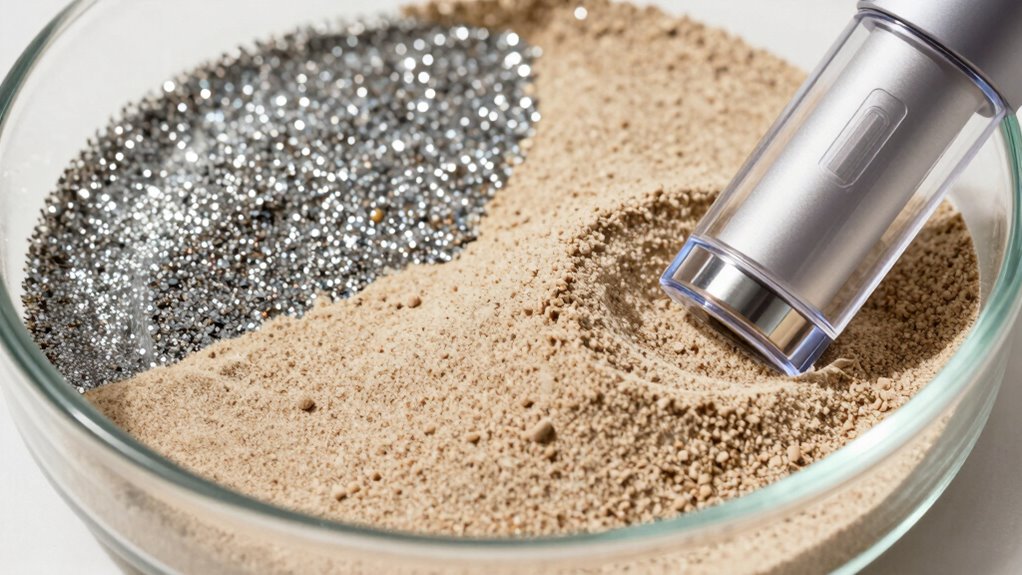

To think about fine debris, sand, and filter types together, consider how debris size affects filtration needs. Sand filters trap larger particles but struggle with debris smaller than 20 microns, while cartridge and DE filters handle finer particles better. Choosing the right filter depends on your pool environment and debris type. Regular maintenance and understanding these interactions help keep water clear. Keep exploring these details to optimize your pool’s filtration system even further.

Get home appliances delivered free with Prime
- Fast, free delivery on millions of items
- Prime Video, Amazon Music and more included
- Member-only deals all year
Key Takeaways
- Match debris size to filter media micron rating for optimal removal and water clarity.
- Use sand filters for larger debris; switch to cartridge or DE filters for finer particles.
- Consider pool environment and common debris types to select the most effective filter media.
- Regularly monitor and maintain filters to prevent clogging and ensure filtration efficiency.
- Adjust filtration approach based on debris load, flow rate, and filter capacity for optimal pool health.
When managing your pool’s filtration system, understanding how fine debris, sand, and filter types interact is essential for maintaining clear, healthy water. The efficiency of your filtration system depends heavily on how well these elements work together. Fine debris, like dirt, algae spores, and tiny organic particles, can clog filters quickly if not properly managed. Sand, used in sand filters, acts as a barrier that traps these small particles as water passes through. The key to effective pool maintenance is choosing the right filter type and understanding its limitations in handling different debris sizes. Additionally, knowing the filter’s micron rating helps determine its effectiveness at capturing fine particles. Regularly monitoring and adjusting your filtration approach based on debris accumulation can extend the lifespan of your filter media and improve water clarity.
Sand filters are popular because they’re simple to operate and require minimal maintenance. They work by pushing water through a bed of fine sand, which traps particles. However, sand filters have a limited ability to catch very fine debris—particles smaller than 20 microns often slip through, leading to cloudy water over time. This means that if your pool accumulates a lot of fine debris, you might need to backwash or replace the sand more frequently to preserve filtration efficiency. Conversely, if your pool mostly collects larger debris, sand filters can handle the job well, ensuring your water remains clear without much fuss. Understanding filter media can help you select the most suitable option for your specific needs. Being aware of the filter’s capacity can also help prevent overloading your filter and maintaining optimal performance. Recognizing the filter’s flow rate is also crucial for ensuring your system is not undersized or overwhelmed, which can affect overall filtration effectiveness.
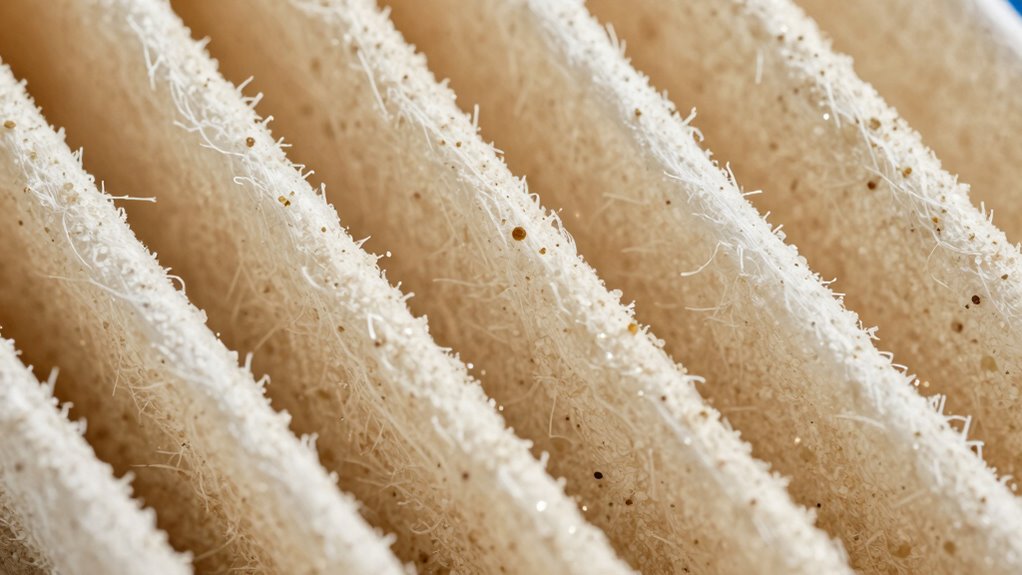
When considering filter types, you might also think about cartridge and DE (diatomaceous earth) filters. Cartridge filters are excellent at trapping fine debris because they have tightly woven fabrics. They’re also easy to clean, which makes pool maintenance more straightforward. DE filters, on the other hand, provide superior filtration efficiency by using a fine powder to coat grids, catching particles as small as 5 microns. This means DE filters can handle the tiniest particles, keeping your water crystal clear even when fine debris is abundant. However, they require more maintenance, including regular cleaning and reapplication of DE powder. Understanding how different filter media operate can help you make informed decisions tailored to your pool’s unique environment. Properly selecting and maintaining your filter type can significantly influence the overall clarity and health of your pool water.
Your choice of filter depends on the specific needs of your pool, especially the type of debris most common in your environment. If your pool tends to gather a lot of dirt and leaves, a sand or cartridge filter might suffice. If you’re dealing with algae spores or very fine organic matter, a DE filter will give you better results. It’s also vital to pay attention to your pool’s circulation and backwashing schedule, as improper maintenance can reduce filtration efficiency regardless of filter type. Understanding how fine debris and sand interact with your filter type allows you to optimize your pool maintenance routine, ensuring your water stays clean, clear, and inviting.
As an affiliate, we earn on qualifying purchases.
Frequently Asked Questions
How Often Should I Change My Pool Filter?
You should change your pool filter every 1 to 2 years to maintain ideal pool maintenance and guarantee equipment durability. Regularly check the filter’s pressure; if it’s consistently high, it’s time for a change or cleaning. Proper filter maintenance prevents debris buildup, keeps your water clean, and prolongs the lifespan of your equipment. Following these guidelines helps you enjoy a sparkling pool with minimal issues.
Can Different Debris Types Clog Filters Differently?
Yes, different debris types can clog filters differently. Fine debris like algae or pollen can slip through filter pores, causing buildup over time, while larger debris like leaves block flow more quickly. Proper debris filtration helps prevent clogs by trapping specific debris sizes efficiently. Regular maintenance and choosing the right filter type are essential for clog prevention, ensuring your pool stays clean and your filtration system works effectively.
What’s the Best Way to Remove Fine Debris?
To remove fine debris effectively, you should start by choosing a filter with a material suited for small particles, like a fine mesh or cartridge filter. Regularly clean or replace your filter to prevent clogging. Use a skimmer or vacuum designed for fine debris, and consider pre-filtration methods like a leaf net or pre-filter sock to catch tiny particles before they reach your main filter. This approach keeps your system running smoothly.
How Does Water Chemistry Affect Debris Buildup?
Did you know that water chemistry can influence debris buildup by up to 30%? Chemical interactions between your pool water and debris composition can cause particles to clump or dissolve, affecting filtration efficiency. When pH or alkalinity are off, debris may stick more to filter media, reducing clarity. Regularly testing and adjusting your water chemistry helps prevent excessive debris accumulation, ensuring your filter works better and keeps your pool crystal clear.
Are There Eco-Friendly Filter Options Available?
Yes, eco-friendly filters are available for your pool or spa. You can choose biodegradable filtration options made from natural materials like cellulose or plant-based fibers, which break down safely in the environment. These eco-friendly filters reduce plastic waste and are a sustainable choice. They often require similar maintenance as traditional filters but offer the benefit of minimizing environmental impact, helping you keep your water clean while supporting eco-conscious practices.
cartridge pool filter for fine debris
As an affiliate, we earn on qualifying purchases.
As an affiliate, we earn on qualifying purchases.
Conclusion
Thinking about fine debris, sand, and filter type is like tuning a guitar—you need the right strings and tension to get the perfect sound. By understanding how each element interacts, you can choose the best filter to keep your system clean and efficient. Don’t forget, selecting the right filter is key—it’s the bridge that connects all the pieces smoothly. With the right approach, your system will run as seamlessly as a well-played melody.
DE diatomaceous earth pool filter
As an affiliate, we earn on qualifying purchases.
As an affiliate, we earn on qualifying purchases.
As an affiliate, we earn on qualifying purchases.
Fall Picks
fall essentials
As an affiliate, we earn on qualifying purchases.