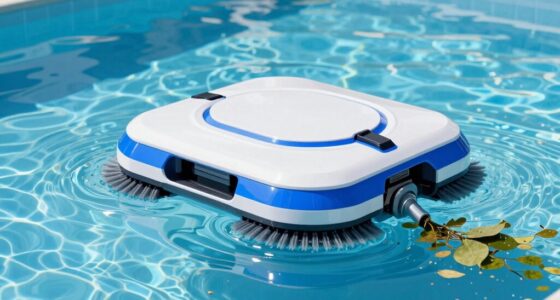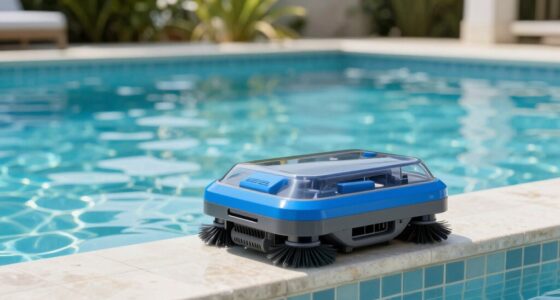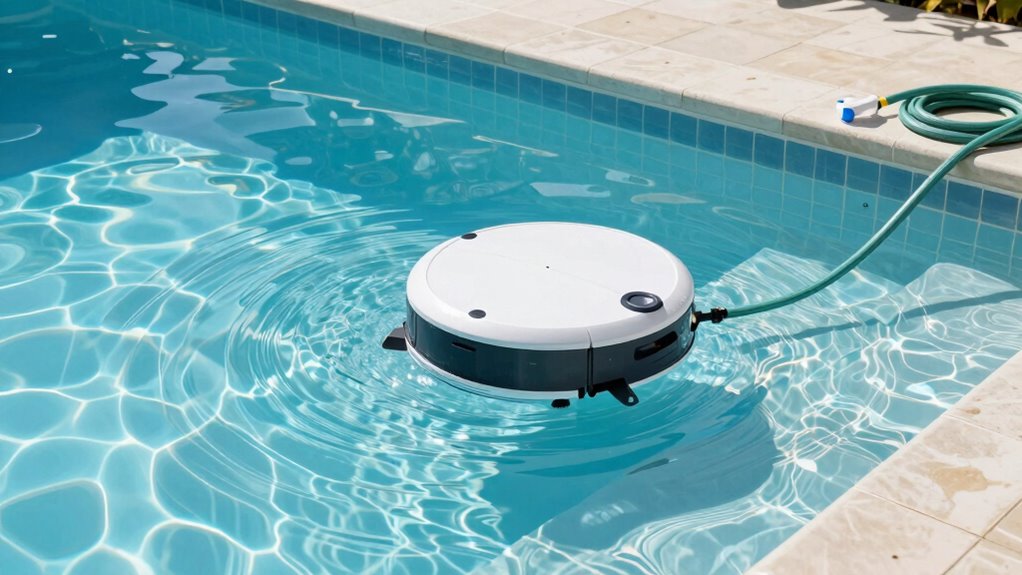

You should run your robotic pool cleaner at least once a week to keep the water clear and prevent debris buildup. Adjust the frequency based on your pool’s size, how much it’s used, and the surrounding environment, like trees or rain. During peak seasons or heavy usage, you might need to run it twice a week. Staying consistent helps maintain clean water and prolongs your equipment’s lifespan—discover more tips to optimize your pool maintenance.
Listen free for 30 days with Audible
Thousands of audiobooks and originals — cancel anytime.
As an affiliate, we earn on qualifying purchases.
Key Takeaways
- Run the cleaner weekly during peak seasons to prevent debris buildup and algae growth.
- Adjust frequency based on pool usage, surrounding environment, and visible surface debris.
- Use programmable timers to schedule automatic cleaning cycles for convenience.
- Avoid overuse to prevent wear on brushes and filters, balancing cleaning with equipment longevity.
- Monitor water clarity and chemistry, increasing cleaning frequency if water becomes cloudy or dirty.
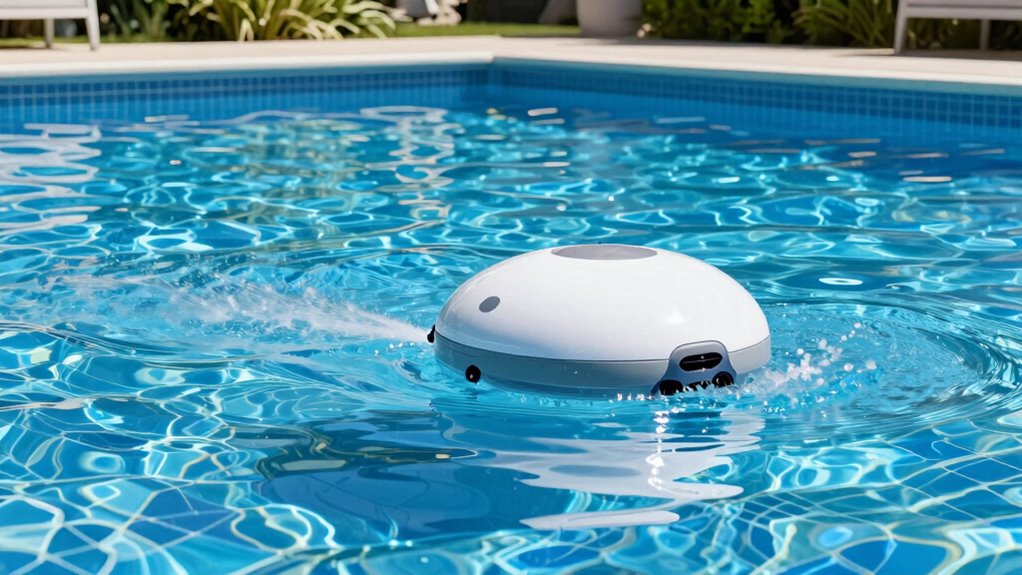
Most pool owners find that running their robotic pool cleaner at least once a week keeps the water clean and clear. Regular use plays a crucial role in pool maintenance, helping prevent algae buildup, debris accumulation, and the spread of bacteria. When you maintain a consistent cleaning schedule, you reduce the need for extensive manual cleaning and chemical treatments, making pool upkeep more manageable and less time-consuming. The frequency of cleaning depends on several factors, including your pool’s size, usage, surrounding environment, and the specific features of your robotic cleaner.
Running your robotic cleaner weekly helps keep your pool sparkling and reduces manual maintenance needs.
Robotic cleaner features are designed to maximize cleaning efficiency and adapt to different pool conditions. Modern robotic pool cleaners often come with programmable timers, allowing you to set automatic cleaning cycles that fit your schedule. Some models have advanced navigation systems, enabling them to cover the entire pool surface systematically and avoid missing spots. Others include sensors that detect dirtier areas and focus cleaning efforts there, which is especially useful if your pool tends to collect more debris in certain zones. Understanding these features helps you decide how often to run your cleaner and ensures you get the most out of your investment. Additionally, proper water chemistry is essential for maintaining the effectiveness of your cleaner and preventing issues like algae growth and scaling. Proper water chemistry also enhances the overall performance of your robotic cleaner, ensuring it operates efficiently and lasts longer. Regularly monitoring and adjusting your pool’s chemical levels can help maintain balanced water chemistry and prevent damage to your equipment. Maintaining balanced water chemistry can also help reduce the risk of infections related to improper piercing care and hygiene, especially if you have piercings that could be affected by contaminated water. If your pool is surrounded by trees or has a lot of debris falling into it, you might need to run your robotic cleaner more frequently—perhaps twice a week during peak seasons. Conversely, if your pool is in a less exposed area, once a week may suffice. Keep an eye on the water clarity and surface debris; if you notice cloudiness or lots of leaves and dirt, increase the cleaning frequency. Also, consider your pool’s usage; a heavily used pool will accumulate dirt faster, requiring more regular cleaning to maintain ideal water quality.
Running your robotic cleaner at the right intervals ensures that your pool stays in top shape without overworking the device. Overuse isn’t usually an issue, as most robotic cleaners are built for regular operation, but running them unnecessarily on very dirty pools can wear down the brushes and filters faster. Conversely, infrequent cleaning can lead to algae growth and cloudy water, making chemical balancing more difficult. Striking the right balance is key to effective pool maintenance, and understanding your cleaner’s features will help you tailor a schedule that keeps your pool sparkling clean with minimal effort.
robotic pool cleaner programmable timer
As an affiliate, we earn on qualifying purchases.
As an affiliate, we earn on qualifying purchases.
Frequently Asked Questions
Can I Run a Robotic Pool Cleaner Daily?
Yes, you can run a robotic pool cleaner daily, especially during frequent use or heavy debris periods. Doing so supports better pool maintenance and keeps your pool cleaner. Plus, many models are energy-efficient, so running it daily won’t considerably increase your energy bill. Just make sure the filter is clean and the water level is adequate to maximize efficiency. Regular use helps maintain clear, healthy water effortlessly.
Does Pool Size Affect Cleaning Frequency?
Your pool size does influence how often you run your robotic cleaner, especially when considering pool type and maintenance needs. Larger pools or those with more debris might require more frequent cleaning cycles, while smaller or indoor pools may need less. Keep an eye on water clarity and debris levels, adjusting your maintenance frequency accordingly. Regular cleaning ensures a sparkling pool, regardless of its size or type.
How Weather Conditions Impact Cleaning Schedules?
Weather conditions substantially impact your cleaning schedule. Seasonal adjustments are necessary, as fall leaves and pollen increase debris, requiring more frequent runs. Temperature effects also matter; warmer weather speeds up algae growth and evaporation, so you might need to run your robotic pool cleaner more often during summer. Conversely, cooler months may reduce debris and algae, allowing for less frequent cleaning. Keep an eye on weather patterns to optimize your schedule.
Should I Run the Cleaner During Pool Use?
You should avoid running your robotic pool cleaner during pool use, as it can interfere with swimming and disrupt cleaning efficiency. For example, a homeowner found that cleaning after swimming kept the pool sparkling without interrupting family fun. Running it during use hampers pool maintenance and reduces energy efficiency. Instead, schedule cleaning sessions during off-hours to guarantee maximum cleanliness and energy savings, keeping your pool inviting and cost-effective.
How Long Does a Typical Cleaning Cycle Last?
A typical cleaning cycle for a robotic pool cleaner lasts about 1.5 to 2 hours. To optimize maintenance tips and reduce energy consumption, you should run it during off-peak hours and avoid over-scheduling. Regularly check and clean the filter, and guarantee the cleaner’s navigation system isn’t obstructed. This way, you keep your pool sparkling while saving energy and extending your cleaner’s lifespan.
automatic pool cleaner for large pools
As an affiliate, we earn on qualifying purchases.
As an affiliate, we earn on qualifying purchases.
Conclusion
To keep your pool sparkling and the cleaner working efficiently, stick to a regular schedule—usually 2-3 times a week, depending on usage and debris. Don’t wait until things get out of hand, or you’ll be swimming in more than just water. Consistent care means less hassle and more time enjoying your pool. Remember, a stitch in time saves nine—stay proactive, and your robotic cleaner will do its job like a champ.
best robotic pool cleaner with navigation system
As an affiliate, we earn on qualifying purchases.
As an affiliate, we earn on qualifying purchases.
As an affiliate, we earn on qualifying purchases.
Flea & tick season Picks
flea and tick prevention
As an affiliate, we earn on qualifying purchases.