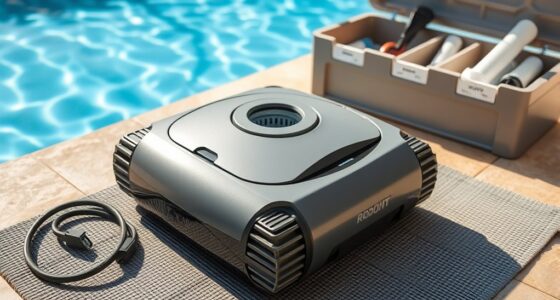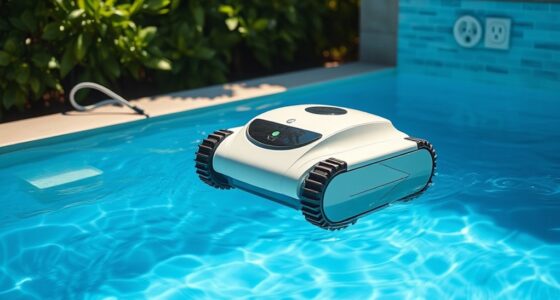
If your robotic pool cleaner won’t climb the walls, start by checking if its sensors are dirty or obstructed by debris or algae, and clean them thoroughly. Make sure the calibration settings are correct, as miscalibration can cause climbing issues. Also, inspect the brushes and wheels for tangled cords or debris blocking movement. Confirm the battery is fully charged and in good condition. For more detailed tips, you’ll find helpful solutions as you go along.
Key Takeaways
- Ensure sensors are clean, calibrated, and free of debris or algae buildup for proper wall detection.
- Inspect and clear brushes and wheels from obstructions to maintain smooth movement and grip.
- Fully charge the device and check battery health; replace batteries if capacity is degraded.
- Verify water level and remove obstacles or ledges blocking the robot’s climbing path.
- Reset sensors and adjust settings according to the user manual to improve wall-climbing performance.
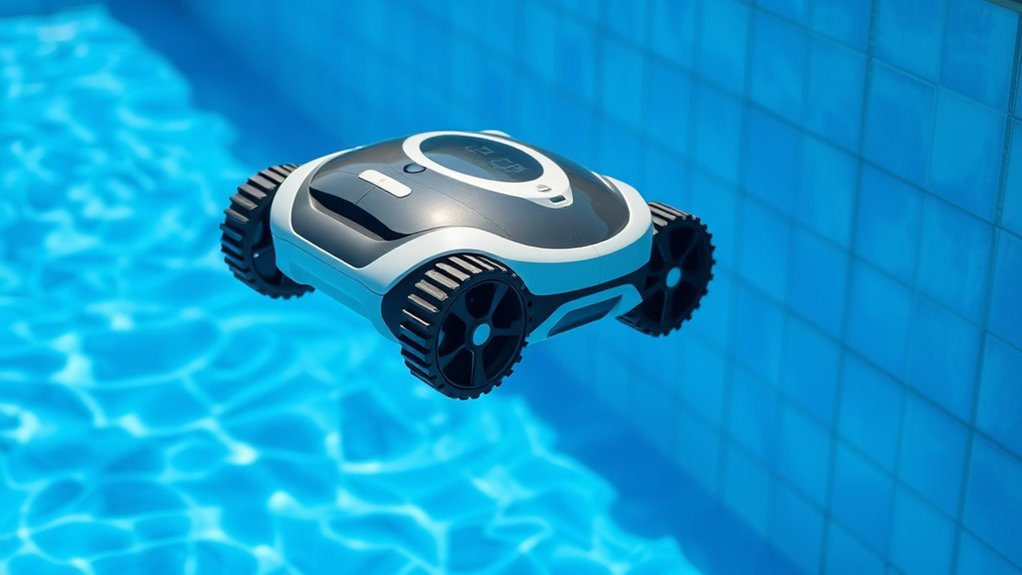
Robotic pool cleaners are convenient devices that help keep your pool spotless, but when they stop working properly, troubleshooting can seem intimidating. One common problem is when your robotic cleaner won’t climb the walls. This issue often stems from robotic navigation issues or battery performance problems. Understanding these key factors can help you quickly identify and fix the problem, restoring your cleaner’s effectiveness.
First, consider robotic navigation issues. These devices rely on sensors and programmed algorithms to navigate your pool’s surfaces. If your robot isn’t climbing the walls, it might be because the sensors are dirty or obstructed. Regularly inspect and clean the sensors to ensure they aren’t covered with debris or algae, which can interfere with the robot’s ability to detect walls and vertical surfaces. Additionally, some models have adjustable settings or calibration options that can improve wall-climbing performance. Check your user manual for specific instructions on recalibrating or resetting these sensors, as improper calibration can cause the robot to ignore walls or avoid climbing altogether. Also, verify that the robot’s brushes and wheels aren’t obstructed by debris or tangled cords, which could hinder movement or grip.
Battery performance is another critical factor. If your robotic cleaner isn’t climbing walls, it might be because the battery isn’t providing enough power. Over time, batteries can lose capacity, especially if they haven’t been charged properly or if they’re nearing the end of their lifespan. Make sure you fully charge the device before use and avoid leaving it partially charged for extended periods, as this can degrade the battery. If your robot’s battery is old or damaged, it may not deliver the necessary power for wall climbing, causing it to stay on the pool floor. In such cases, replacing the battery or consulting the manufacturer for a repair or upgrade can resolve the issue. Also, ensure the charging contacts are clean and making good contact, as dirt or corrosion can prevent proper charging and lead to reduced battery performance.
Finally, don’t forget to check for other simple issues. Ensure your pool’s water level is appropriate, as low water levels can affect the robot’s buoyancy and climbing ability. Also, confirm that the robot isn’t stuck on a ledge or obstacle that prevents it from climbing higher. Sometimes, adjusting the robot’s position or removing obstacles can make a significant difference.

(2026 Upgrade) Aiper Scuba S1 Robotic Pool Cleaner, 270-Min Runtime, Floor,Wall,Waterline,Shallow Area Cleaning, Smarter Navigation,11 High-Precision Sensors, App Support &Weekly Custom Cleaning-Blue
Extended Runtime & Flexible Cleaning Modes: Switch to Eco Mode via the app for up to 240-270 minutes…
As an affiliate, we earn on qualifying purchases.
As an affiliate, we earn on qualifying purchases.
Frequently Asked Questions
Can a Robotic Cleaner Still Work Without Wall Climbing?
Yes, your robotic cleaner can still work without wall climbing. It’ll focus on cleaning the pool floor and bottom surfaces, which is often enough for regular maintenance. To keep it efficient, set a consistent cleaning schedule and guarantee it’s properly maintained. Regularly check for debris or issues that might hinder performance, even if it doesn’t climb walls. This way, your pool stays clean without needing wall climbing capabilities.
How Often Should I Replace the Cleaner’s Brushes?
You should replace your robotic pool cleaner’s brushes every 6 to 12 months, depending on your cleaning schedule and usage. Regular brush replacement ensures peak cleaning performance and prevents damage. Keep an eye out for signs like worn bristles or reduced cleaning efficiency. Incorporate brush replacement into your regular cleaning schedule to maintain your cleaner’s effectiveness and extend its lifespan. This proactive approach keeps your pool spotless and your equipment working smoothly.
Will Debris Block the Robot’s Sensors From Climbing Walls?
Did you know that 60% of robotic pool cleaner issues are caused by sensor interference? Debris buildup can definitely block your robot’s sensors, preventing it from climbing walls. When sensors are obstructed, the robot can’t accurately detect surfaces or obstacles, hindering its performance. Regularly clean debris from sensors and surrounding areas to guarantee peak wall-climbing ability. Keeping sensors clear helps your cleaner work efficiently and prevents unnecessary malfunctions.
Are Wall-Climbing Features Affected by Water Chemistry?
Yes, water chemistry can affect your robotic pool cleaner’s wall-climbing features. Poor water balance may cause sensor calibration issues, making the robot less responsive to walls. To fix this, make sure your water chemistry is balanced and perform sensor calibration if your cleaner offers that option. Maintaining proper pH and chemical levels helps sensors function correctly, improving the robot’s ability to climb walls effectively and clean your pool thoroughly.
What’s the Best Storage Method to Maintain Climbing Function?
To keep your robotic pool cleaner performing at its best, think of proper storage as a gentle lullaby for its climbing skills. Follow storage tips like cleaning it thoroughly, removing the cord, and storing it in a cool, dry place. Incorporate maintenance routines such as inspecting wheels and brushes regularly. This careful approach guarantees your cleaner remains agile on the walls, ready to tackle your pool with renewed vigor.

FYIOGXG Battery for Seauto Shark, Shark Cordless Robotic Pool Vacuum Cleaner, STA40 PN: SAT-4P6S 10400mAh
[Battery Compatible] Replacement Battery for Seauto Shark, Shark Cordless Robotic Pool Vacuum Cleaner, STA40 . All batteries are…
As an affiliate, we earn on qualifying purchases.
As an affiliate, we earn on qualifying purchases.
Conclusion
Remember, even the best robotic pool cleaners have their off days. If yours isn’t climbing walls, try cleaning the brushes, checking the sensors, or adjusting the settings. Sometimes, a simple fix is all it takes to get things back in motion. As the saying goes, “A problem shared is a problem halved.” Stay patient and methodical—your cleaner will be back to scrubbing those walls in no time.

Zodiac MX6 Suction-Side In-Ground Pool Cleaner, Cyclonic Suction and X-Trax for Extreme Maneuverability
SMALL AND MIGHTY SUCTION-SIDE CLEANER: The Zodiac MX6 connects to a dedicated suction line or through the pool's…
As an affiliate, we earn on qualifying purchases.
As an affiliate, we earn on qualifying purchases.

Pooloob PF1 Robotic Pool Cleaner Replacement Parts Kit – Cleaning Brushes (2 Pack) & Wheel Rubber Rings (4 Pack)
Designed for the Pooloob PF1 robotic pool cleaner, this replacement parts kit includes two durable cleaning brushes and…
As an affiliate, we earn on qualifying purchases.
As an affiliate, we earn on qualifying purchases.