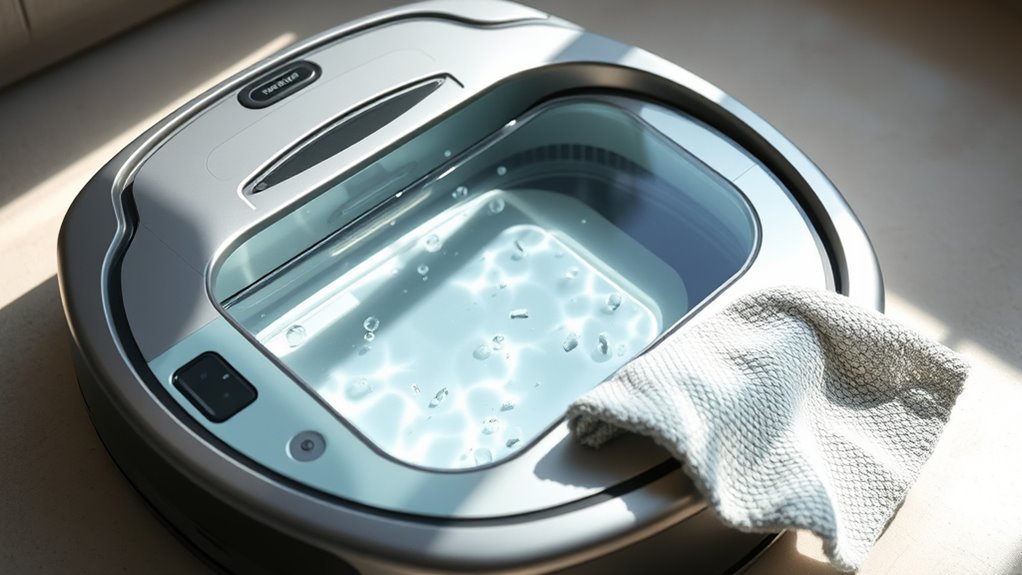

To keep your robot mop’s water tank clean and free of mold or odors, make sure to empty and dry it after each use. Rinse thoroughly and use a mixture of water and vinegar or disinfectant periodically to prevent buildup. Avoid leaving water in the tank for extended periods, especially in humid environments. Regular inspection and proper cleaning routines will help maintain peak performance—continue to learn more on keeping your device fresh and odor-free.

Get home appliances delivered free — and shop member deals
- Fast, free delivery on millions of items
- Access to Prime Big Deal Days deals on October 6–7
- Prime Video, Amazon Music and more included
Key Takeaways
- Empty and dry the tank after each use to prevent moisture buildup and mold growth.
- Regularly inspect for cracks, residue, or damage to maintain tank integrity.
- Use a water and vinegar mixture or disinfectant periodically to sanitize the tank.
- Gently scrub stubborn grime or mold with a soft brush or cloth during cleaning.
- Establish a routine to rinse, dry, and inspect the tank to ensure water stays fresh and odor-free.
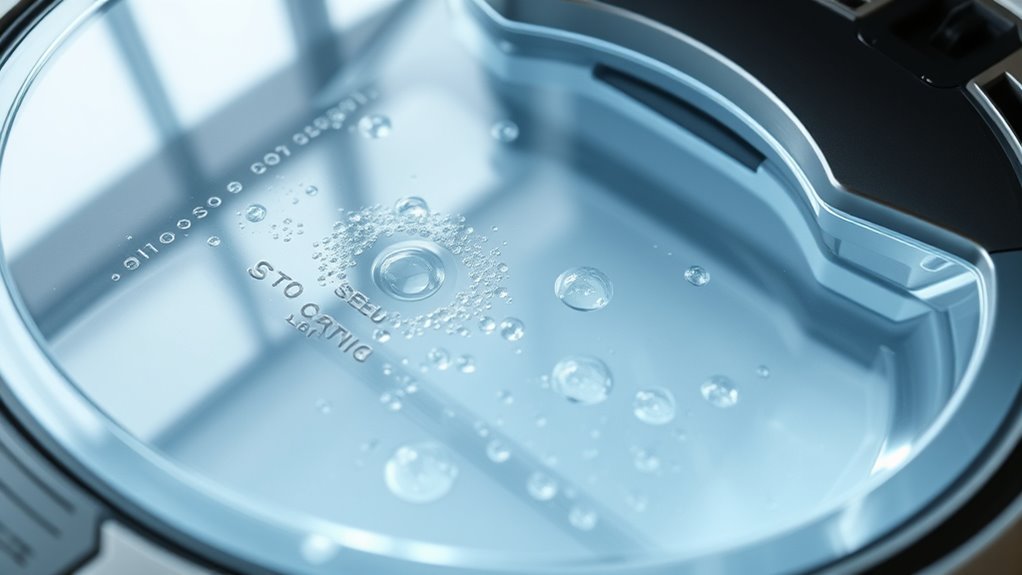
Robot mop water tanks are indispensable components that directly impact the cleaning efficiency of your robotic mop. When these tanks aren’t properly maintained, your device’s performance can decline, leaving your floors less than spotless. Regular tank cleaning is key to keeping your robotic mop functioning at its best and ensuring a hygienic cleaning process. Over time, mineral deposits, dirt, and debris can accumulate inside the tank, reducing water flow and potentially causing clogs. By routinely emptying and rinsing the tank, you prevent these buildups, maintaining peak water distribution during cleaning sessions.
Regularly empty and rinse your robot mop water tank to prevent clogs and ensure optimal cleaning performance.
Mold prevention is another critical aspect of caring for your robot mop water tank. Moisture and residual dirty water create a perfect environment for mold and bacteria to grow, which not only hampers cleaning performance but can also pose health risks. To prevent this, make sure to empty the tank after each use and dry it thoroughly before refilling. Using a mixture of water and vinegar or a gentle disinfectant periodically can help inhibit mold growth. Avoid leaving water sitting inside the tank for extended periods, especially in humid environments, as this accelerates mold development. Keeping the tank dry and clean is your best defense against unpleasant odors and potential mold spores.
In addition to regular cleaning, inspecting the tank for cracks, damage, or residue buildup is essential. Sometimes, mineral deposits or soap scum can cling to the interior surfaces, making it harder to achieve thorough cleaning. If you notice stubborn grime or mold, consider scrubbing the tank gently with a soft brush or cloth, using a mild cleaning solution. Rinsing thoroughly afterward ensures no cleaning residues remain that could interfere with the mop’s operation. Remember, a clean tank not only prevents mold but also guarantees the water used for mopping is fresh, which results in better odor control and a cleaner home. Incorporating proper maintenance routines can significantly extend the lifespan of your device.
Finally, establishing a routine maintenance schedule will save you time and effort in the long run. After every few uses, take a few minutes to empty, rinse, and dry the tank. This simple habit prevents mold buildup, reduces odors, and extends the lifespan of your robotic mop. Keeping your tank clean isn’t just about maintaining performance; it’s about creating a healthier environment and ensuring your home stays fresh and inviting. Prioritize tank cleaning and mold prevention to enjoy the full benefits of your robotic mop without the worry of unpleasant smells or mold-related issues.
As an affiliate, we earn on qualifying purchases.
Frequently Asked Questions
How Often Should I Replace the Water in the Tank?
You should replace the water in your robot mop tank every 1 to 3 days to guarantee proper tank maintenance. Regular water replacement prevents mold, odors, and bacteria buildup, keeping your device running efficiently. If you use the mop frequently, consider changing the water more often. Always empty and rinse the tank thoroughly before refilling to maintain peak cleaning performance and extend your robot’s lifespan.
Can I Use Cleaning Agents Other Than Water?
You can use alternative cleaning agents, but make sure they are safe for your robot mop and won’t damage mold-resistant materials. Check the manufacturer’s guidelines first, as some chemicals may harm the tank or sensors. Use mild, non-abrasive solutions, like diluted vinegar or specialized cleaning agents, to prevent mold and odors. Always rinse thoroughly afterward to keep your water tank clean and functioning properly.
Is It Safe to Leave Water in the Tank Overnight?
Worried about water evaporation and tank sterilization? It’s generally safe to leave water in your robot mop’s tank overnight, but it’s not ideal. Over time, stagnant water can promote mold and odors. To keep your tank clean and fresh, empty it after use and perform regular sterilization. This prevents buildup and bacteria, ensuring your robot’s always ready to clean without risking mold or unpleasant smells.
How Do I Detect Mold Growth Early?
To detect mold growth early, regularly inspect your robot mop’s water tank for visible signs like slimy patches or discoloration. Trust your senses—if you notice a musty smell or see any fuzzy spots, it’s an early warning sign of mold. Conduct mold detection by checking for unusual odors or cloudiness in the water. Addressing these signs promptly helps prevent mold from spreading and keeps your cleaning device safe and hygienic.
Are There Specific Materials That Prevent Mold Buildup?
Did you know that mold-resistant materials can reduce mold growth by up to 80%? To prevent mold buildup, opt for water tanks made with antimicrobial coatings or mold-resistant materials. These specially designed surfaces inhibit mold spores from attaching and growing. Using such materials helps keep your robot’s water tank cleaner and odor-free longer, reducing maintenance and ensuring a healthier environment for your home.
mold and odor prevention for robot mop
As an affiliate, we earn on qualifying purchases.
As an affiliate, we earn on qualifying purchases.
Conclusion
Keeping your robot mop’s water tank clean is like tending a garden—you need to regularly remove weeds to keep it thriving. I once neglected mine, and mold quickly took over, turning my spotless floors into a musty mess. Now, I clean the tank weekly, and it’s like pruning away bad habits—your robot stays fresh, odors disappear, and your home remains sparkling. A little maintenance goes a long way in keeping your cleaning routine hassle-free.
As an affiliate, we earn on qualifying purchases.
soft brush for robot mop cleaning
As an affiliate, we earn on qualifying purchases.
As an affiliate, we earn on qualifying purchases.
NFL season / tailgating Picks
team gear
As an affiliate, we earn on qualifying purchases.