After robot mopping, to dry floors quickly, check for residual dampness and manually wipe stubborn spots with microfiber cloths or squeegees. Use air movers, fans, or blowers to promote evaporation, positioning them at angles for even airflow. For large areas, consider commercial dryers. Once the surface feels dry, buff with a dry cloth to guarantee a streak-free finish. Want faster results? The next steps will provide more expert tips to get your floors spotless and safe in no time.

Get home appliances delivered free — and shop member deals
- Fast, free delivery on millions of items
- Access to Prime Big Deal Days deals on October 6–7
- Prime Video, Amazon Music and more included
Key Takeaways
- Manually remove excess moisture with a microfiber mop or squeegee immediately after robot mopping.
- Use air movers or fans to promote evaporation, positioning equipment for even airflow across the floor.
- For stubborn damp spots, employ absorbent cloths or towels to lift residual moisture.
- Avoid hot air settings on drying equipment to prevent damage to delicate flooring surfaces.
- Finish with manual buffing using a dry cloth for a streak-free, fully dry, and polished floor.

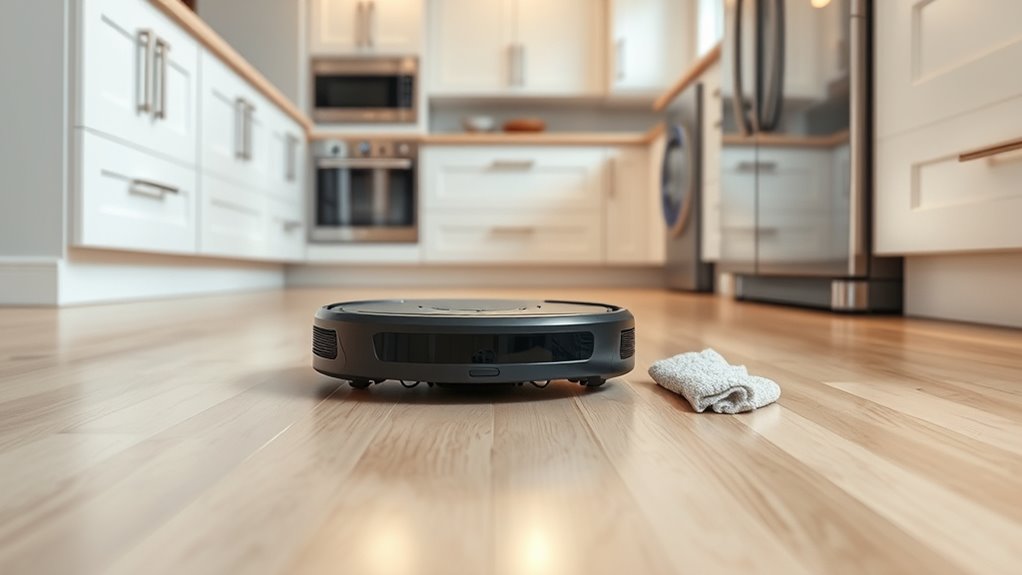
Have you ever wondered how to effectively dry a wet floor after spills or cleaning? When you’re dealing with floors that have just been mopped, especially by a robot mop, proper drying is essential to prevent slips and ensure the surface is ready for use. The key lies in mastering the right mop technique and selecting appropriate drying equipment. First, after your robot mop completes its task, assess the remaining moisture. Sometimes, robot mops leave behind a thin film of water or damp patches, especially on larger or textured floors. To address this, you need to employ a mop technique that complements the robot’s cleaning. Use a dry microfiber mop or a squeegee to go over the floor, pressing firmly and moving in straight, overlapping strokes. This helps lift excess water and accelerates the drying process. If you notice stubborn damp spots, don’t hesitate to switch to a more absorbent cloth or towel. The goal is to remove as much moisture as possible through manual intervention immediately after robotic cleaning. Incorporating proper drying techniques can significantly reduce the time needed to achieve a fully dry surface.
Once you’ve done this, turn to drying equipment to finish the job. Commercial-grade floor dryers or air movers are highly effective for large areas, especially in commercial or industrial settings. These machines work by blowing a steady stream of air across the surface, promoting evaporation and speeding up the drying process. For smaller spaces or less demanding situations, a high-powered fan or even a hairdryer set on cool can suffice—just make sure you’re not blowing hot air that might damage delicate flooring. Position the drying equipment at an angle to maximize airflow across the entire surface, ensuring even drying without leaving streaks or water spots. For best results, combine the use of drying equipment with manual techniques, such as buffing the floor with a dry cloth after air drying, to remove any residual moisture and achieve a streak-free finish.
microfiber floor cleaning cloths
As an affiliate, we earn on qualifying purchases.
As an affiliate, we earn on qualifying purchases.
Frequently Asked Questions
Can I Walk on the Floor Immediately After Robot Mopping?
You shouldn’t walk on the floor immediately after robot mopping to guarantee floor safety and prevent slipping. Allow the floor to dry completely, which typically takes a few minutes. This also helps protect your robot from unnecessary wear during maintenance. By giving the floor time to dry, you keep it safe and maintain your robot’s performance, reducing the risk of streaks or water damage.
What Products Can I Use to Speed up Drying?
Imagine your floor gleaming, dry to the touch, as if sunlight itself kissed its surface. To speed up drying, use absorbent mats that soak up excess moisture and drying sprays that evaporate water quickly. Place mats in high-traffic areas and spritz lightly with drying spray. This combo accelerates drying, making your floor safe and ready to enjoy without long waits or worries about slipping.
How Do Different Floor Types Affect Drying Time?
You’ll notice that different floor types affect drying time considerably. Marble absorbs moisture slowly due to its low absorption rate, so it dries quickly. In contrast, tile porosity varies; porous tiles like unglazed ceramic soak up more water, prolonging drying, while glazed tiles dry faster. Understanding these differences helps you choose the best drying method, whether air circulation or fans, to speed up the process efficiently.
Is It Safe to Use Fans or Heaters During Drying?
You can safely use fans or heaters during drying, but you need to be cautious. Proper air circulation helps speed up the process, yet heater safety is vital to prevent accidents or damage. Keep fans at a safe distance and avoid leaving heaters unattended. Make sure your heating device is appropriate for indoor use, and always follow manufacturer instructions to keep everything running smoothly and avoid any mishaps.
How Can I Prevent Mold After Floor Drying?
To prevent mold after floor drying, focus on moisture control by thoroughly ventilating the area and using dehumidifiers. Keep the space dry and well-ventilated for at least 24-48 hours, ensuring no lingering dampness. Regularly check for any signs of mold or moisture buildup, and address it promptly. Proper moisture control is key to mold prevention, helping your floors stay clean and safe long-term.
As an affiliate, we earn on qualifying purchases.
Conclusion
Now that you know how to quickly dry your floors after robot mopping, you’ll keep your space safe and spotless in no time. Just like a swift knight, act promptly to prevent water spots and slips. Remember, a dry floor is a happy floor—no more puddles or lingering dampness. So, grab a towel or turn on a fan, and you’ll be back to enjoying your clean, dry castle in a jiffy.
As an affiliate, we earn on qualifying purchases.
As an affiliate, we earn on qualifying purchases.
NFL season / tailgating Picks
team gear
As an affiliate, we earn on qualifying purchases.